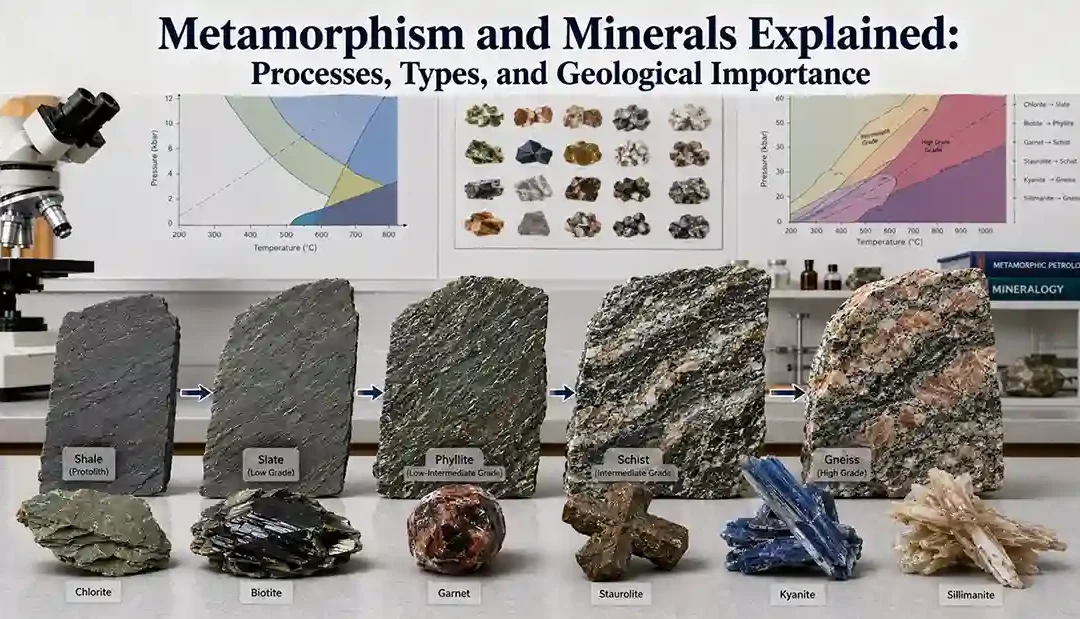
 Metamorphism is the geological process in which existing rocks and minerals are transformed by increasing temperature, pressure, and chemically active fluids without completely melting. During metamorphism, minerals become unstable under new conditions and...
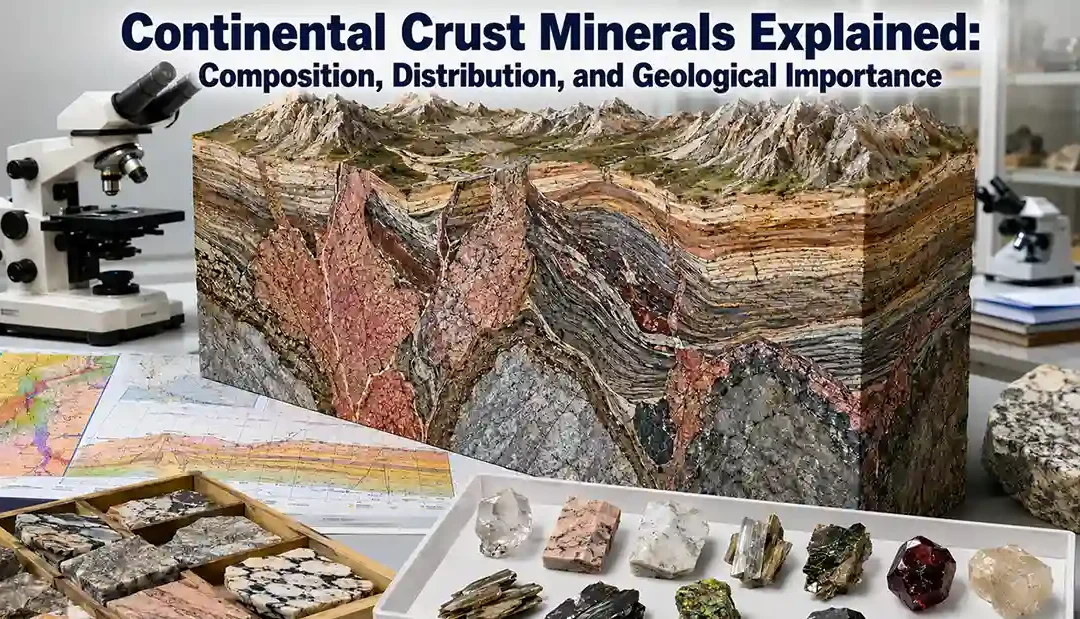 The continental crust is the thick, buoyant outer layer that forms Earth’s continents and continental shelves. Unlike the denser oceanic crust, continental crust is composed mainly of silica-rich (felsic to intermediate) rocks, making it less dense and capable...
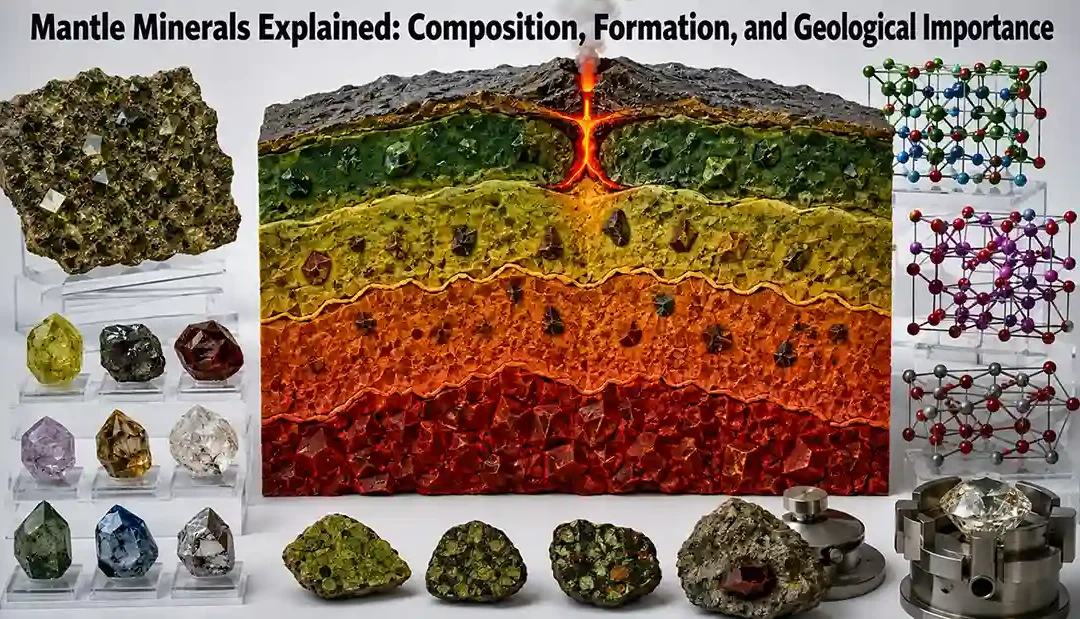 Earth’s mantle is the thickest layer of the planet, extending from the base of the crust to the outer core at a depth of approximately 2,900 kilometers. It accounts for nearly 84% of Earth’s volume and about 67% of Earth’s mass. Although it is mostly...
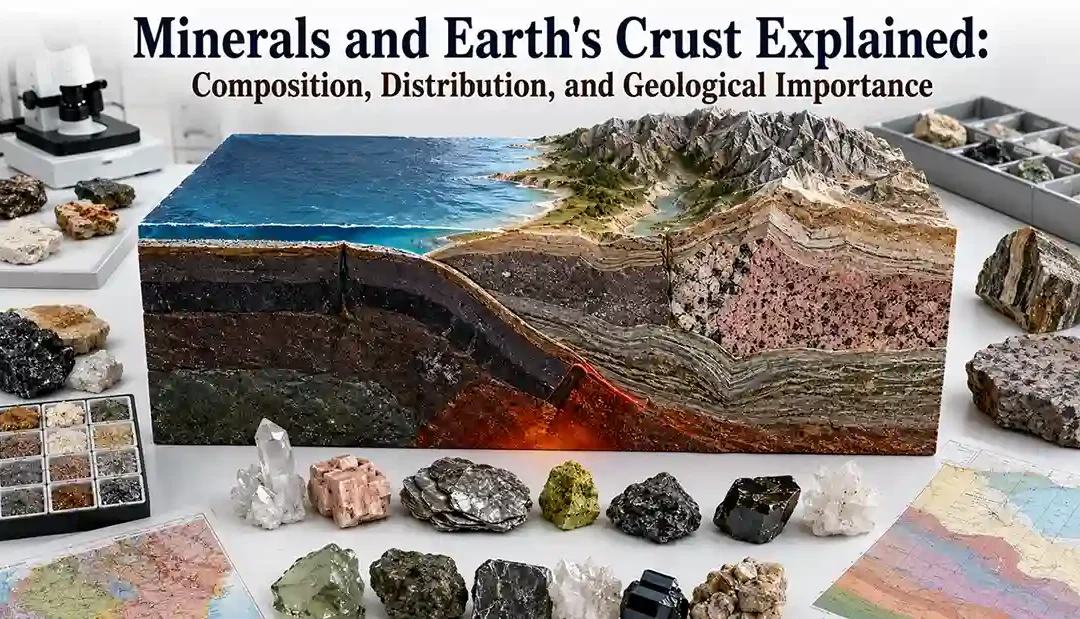 Earth’s crust is the thin, outermost solid layer of our planet and contains an extraordinary variety of minerals that form the building blocks of rocks. Although more than 6,000 minerals have been identified, only a few dozen are considered rock-forming minerals...
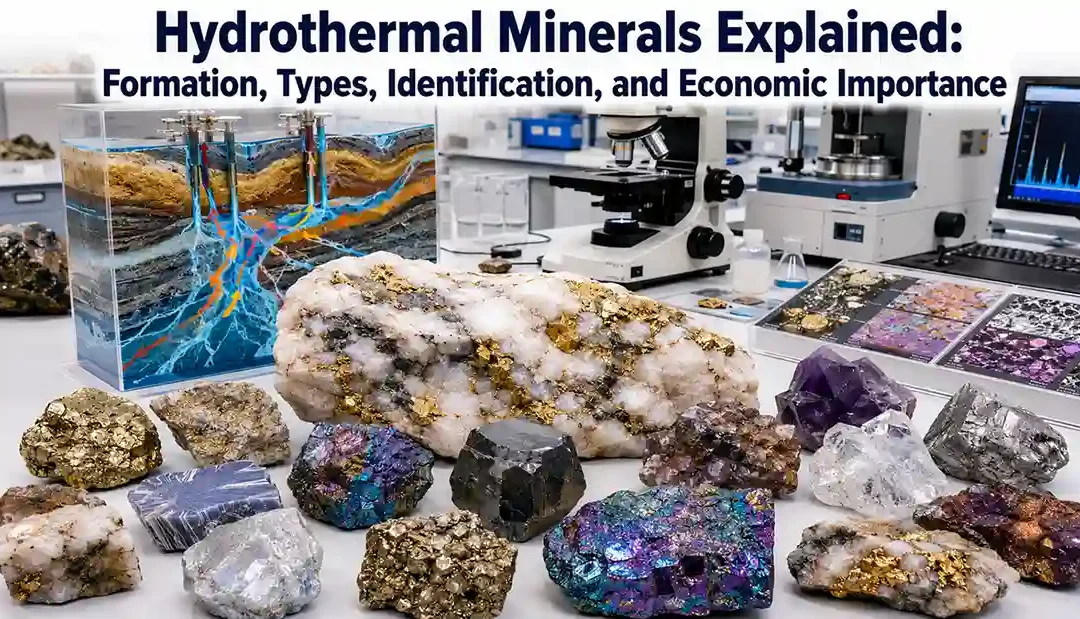 Hydrothermal minerals are minerals that crystallize from hot, mineral-rich fluids circulating through fractures, faults, and porous rocks within Earth’s crust. These fluids dissolve chemical elements from surrounding rocks or magma and transport them until...
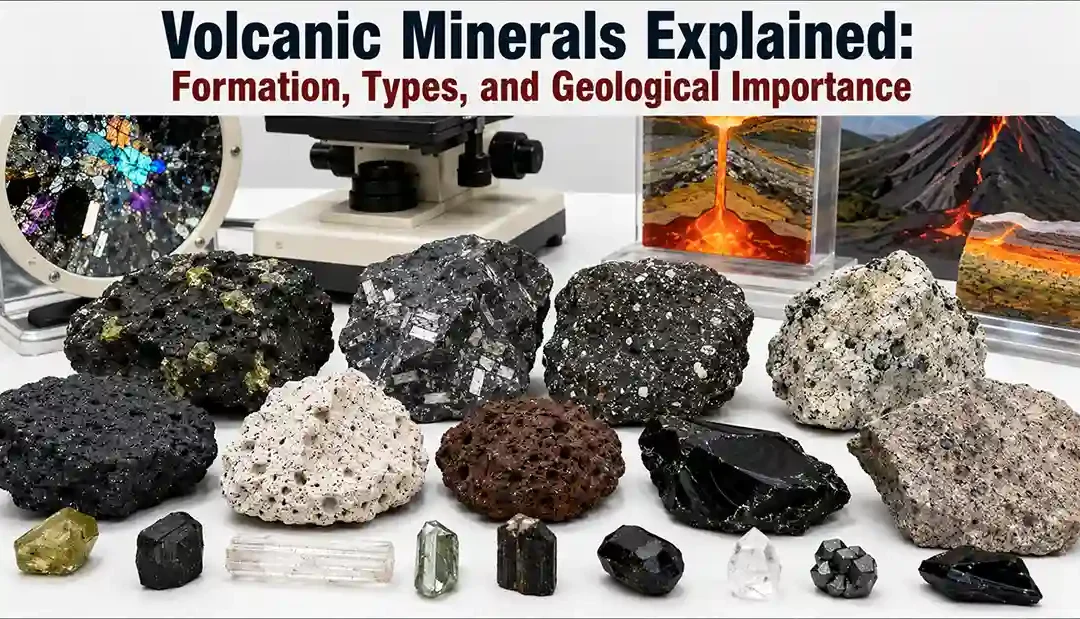 Volcanic minerals are the minerals that crystallize from lava during volcanic eruptions or from magma immediately before eruption. As molten rock rises toward Earth’s surface, pressure decreases and cooling accelerates, causing minerals to crystallize in a...
