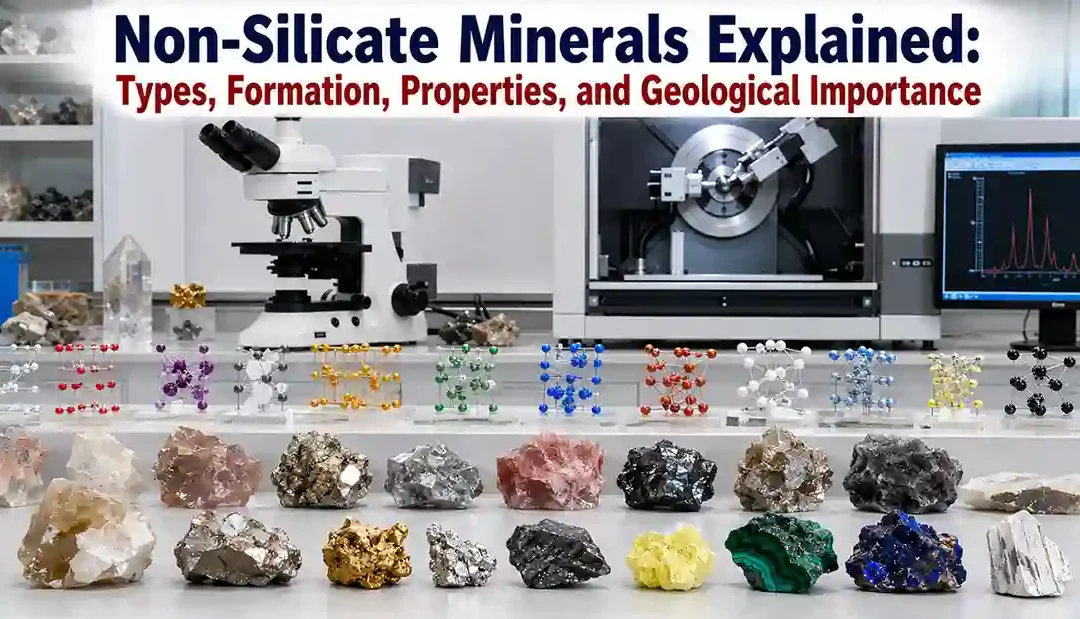
 Non-silicate minerals are all minerals that do not contain the silicon-oxygen tetrahedron (SiO₄⁴⁻) as their primary structural unit. Although they make up only about 10% of Earth’s crust, they include many of the world’s most economically valuable...
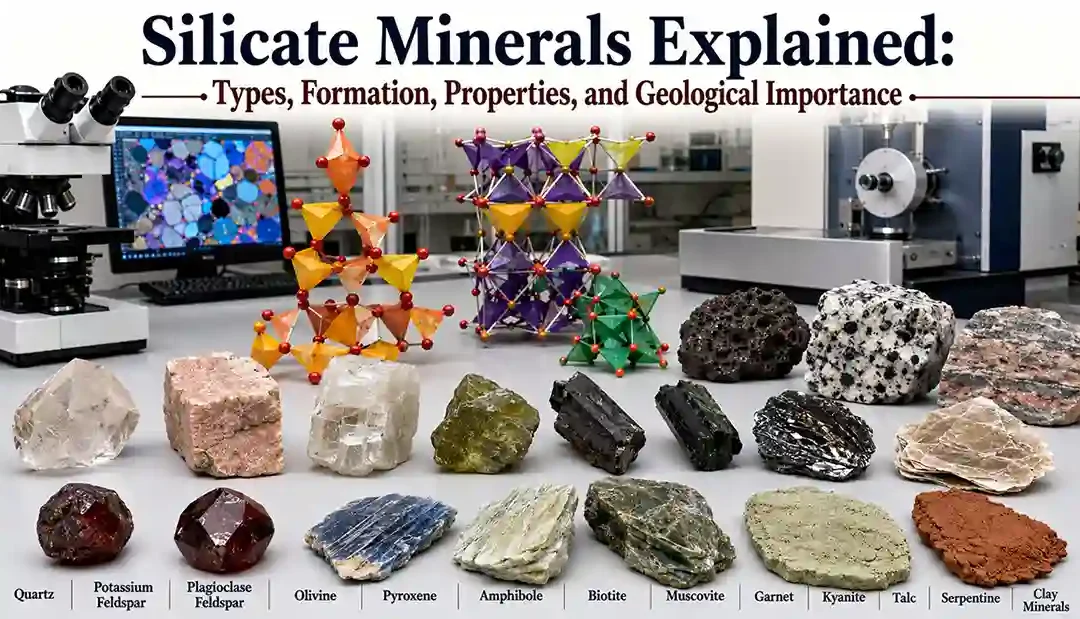 Silicate minerals are the most abundant mineral group on Earth, making up approximately 90% of Earth’s crust and a large portion of the mantle. They are the fundamental building blocks of most igneous, metamorphic, and many sedimentary rocks. Nearly every major...
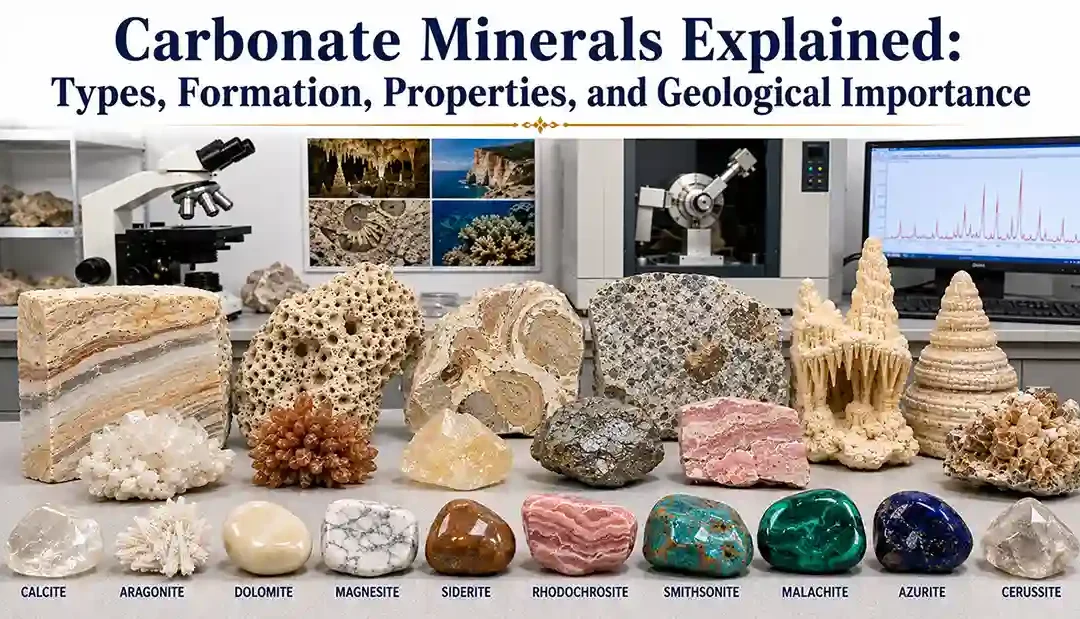 Carbonate minerals are one of the most important groups of minerals on Earth. They are characterized by the presence of the carbonate ion (CO₃²⁻) combined with metal cations such as calcium, magnesium, iron, manganese, zinc, copper, or lead. Carbonate minerals play a...
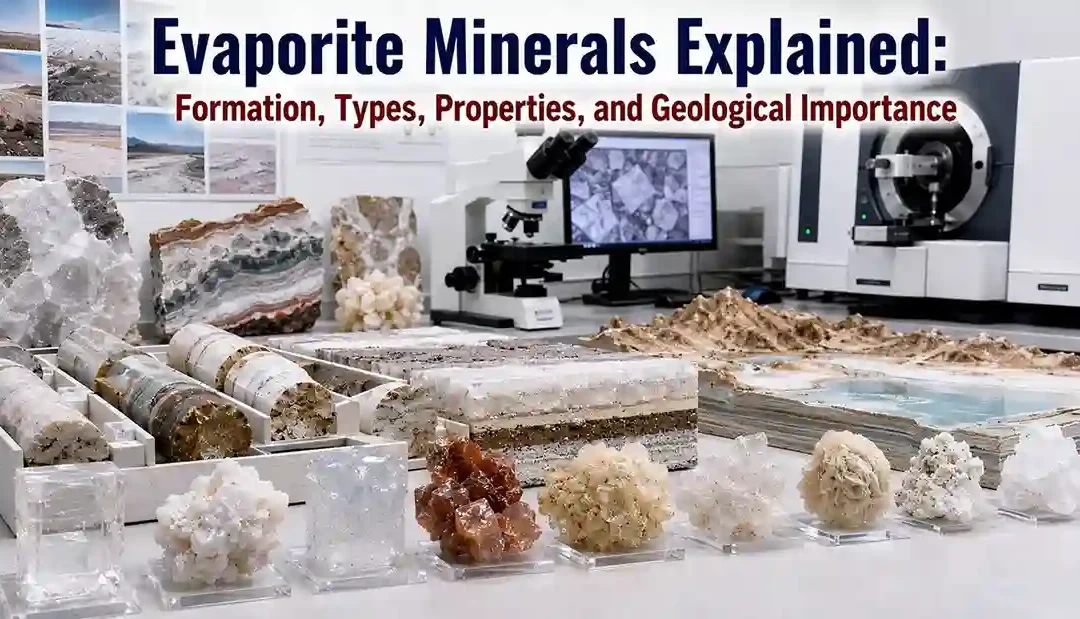 Evaporite minerals are sedimentary minerals that form when saline water evaporates, leaving dissolved minerals behind as crystalline deposits. They commonly develop in environments where evaporation exceeds precipitation, such as arid lakes, coastal lagoons, inland...
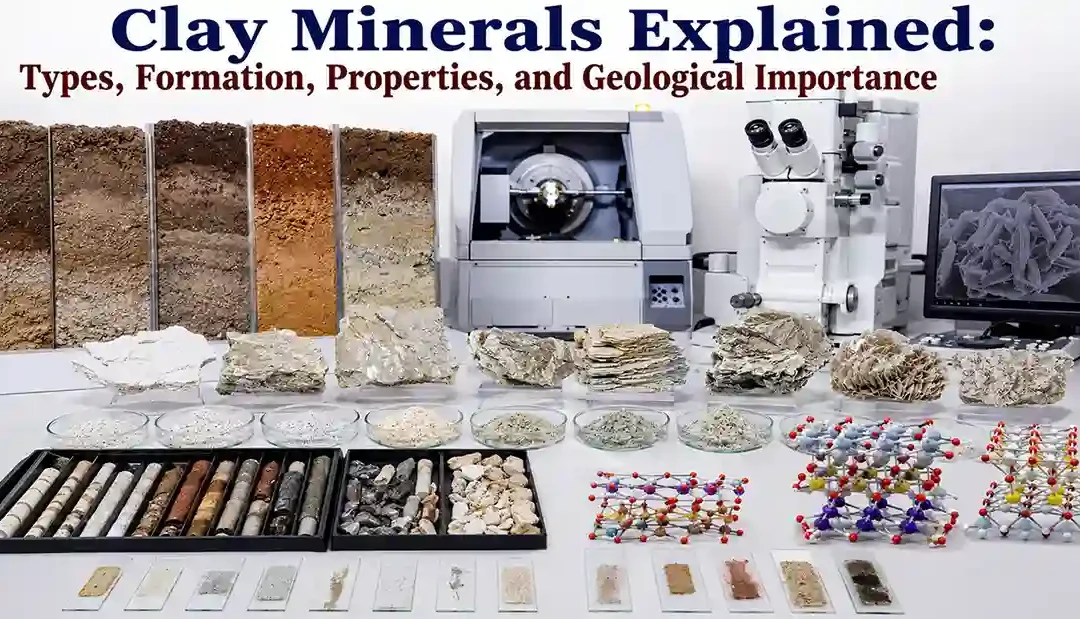 Clay minerals are extremely fine-grained, sheet-like silicate minerals that form primarily through the chemical weathering and alteration of rocks and primary minerals. Although they are usually less than 2 micrometers (µm) in size, clay minerals have an enormous...
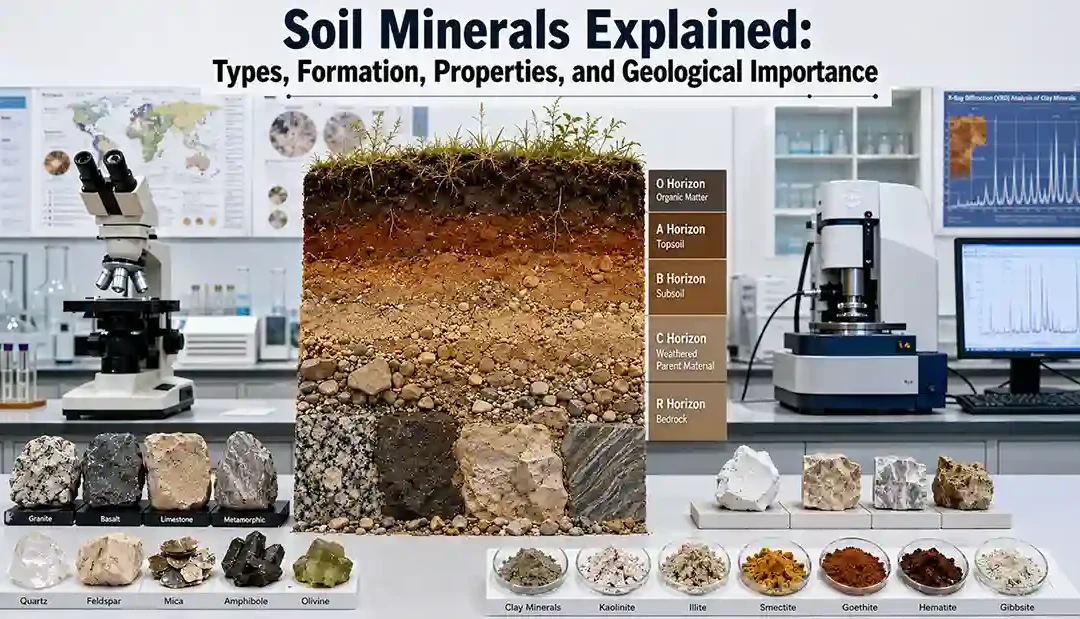 Soil minerals are the inorganic components of soil formed through the weathering of rocks and minerals over thousands to millions of years. They provide the structural framework of soils, influence nutrient availability, control water retention, regulate soil...
