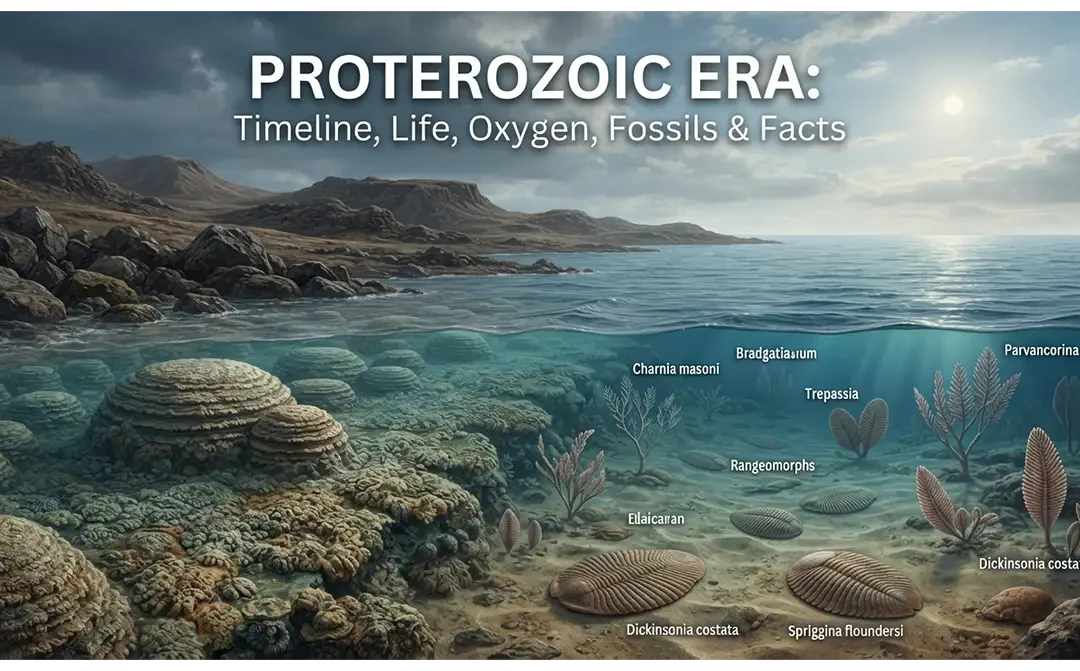
 The Proterozoic Era was a major chapter in Earth’s history when the atmosphere changed, continents developed, and life became increasingly complex. During this immense span of geological time, microscopic organisms transformed the planet, eukaryotic cells...
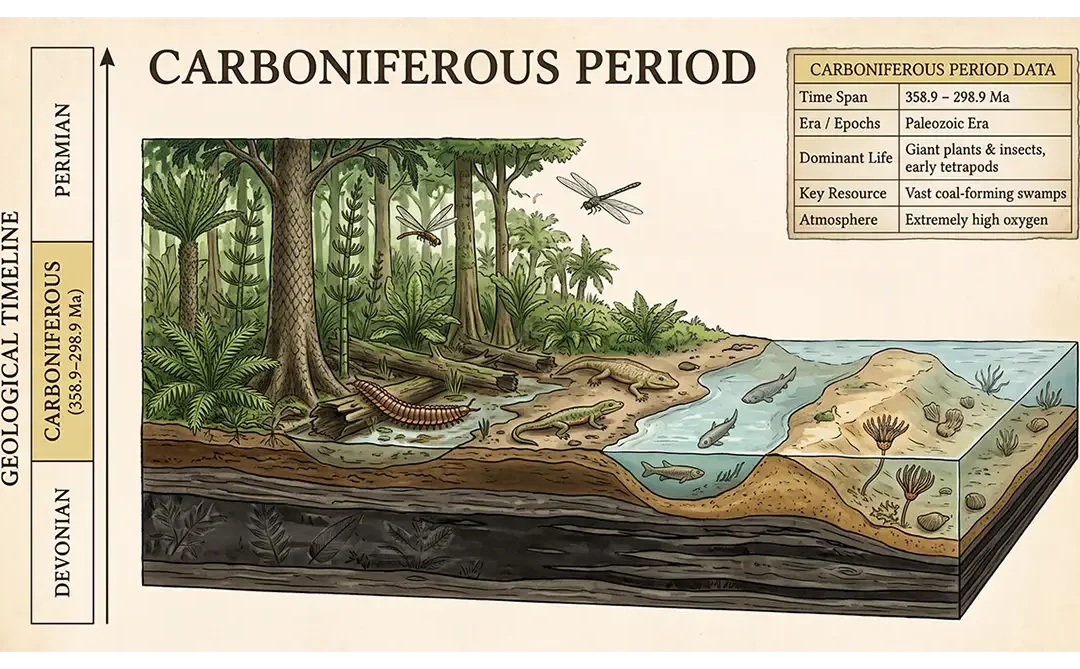 The Carboniferous Period was a major interval of the Paleozoic Era when extensive forests covered many humid regions, marine ecosystems flourished, and vertebrates became increasingly adapted to life on land. It lasted from about 358.9 to 298.9 million years ago and...
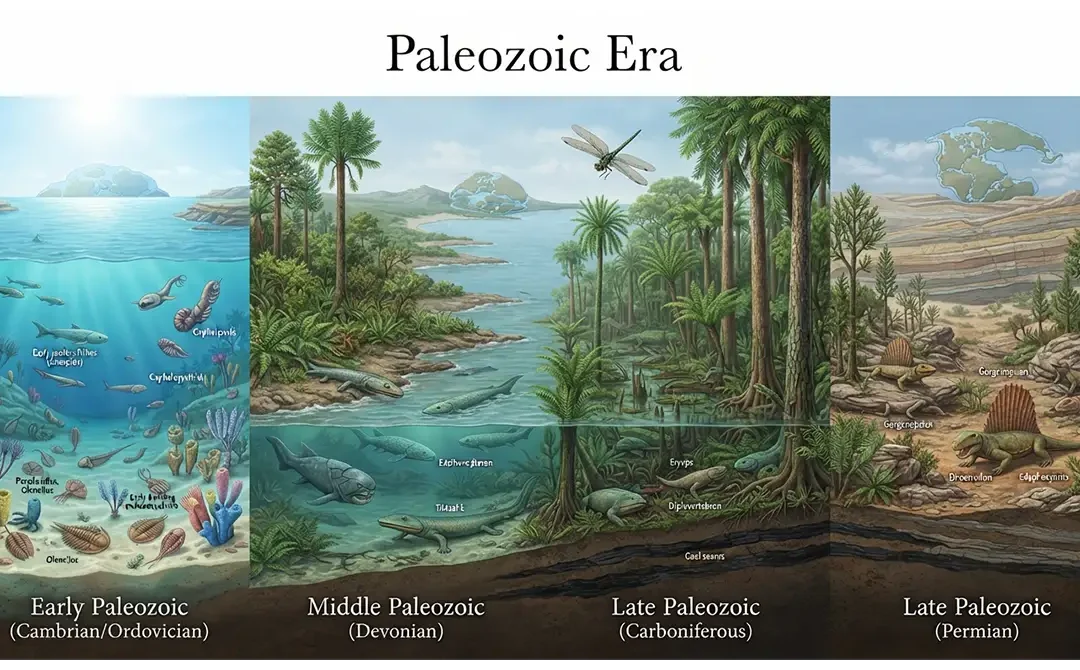 The Paleozoic Era was a major chapter in Earth’s history when marine ecosystems expanded, plants spread across continents, forests developed, and vertebrates gradually moved onto land. It began with the Cambrian Period and ended with the Permian Period, covering more...
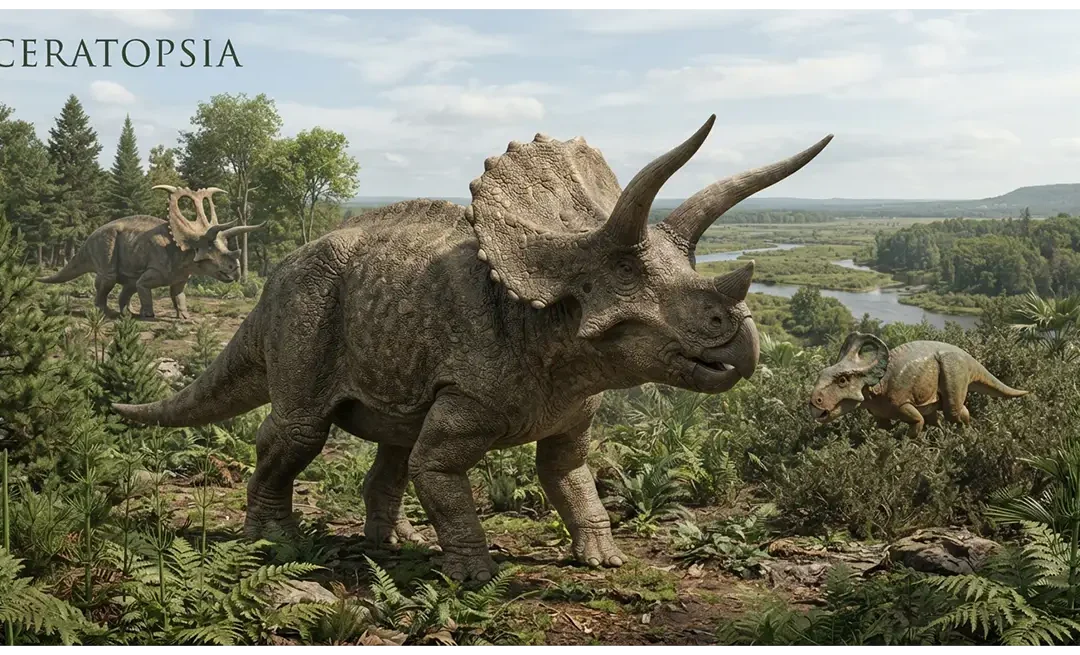 Ceratopsia was a diverse group of herbivorous dinosaurs known for their strong beaks, unusual skulls, and, in some members, large horns and bony frills. The group included small early forms such as Psittacosaurus as well as famous later dinosaurs such as Triceratops...
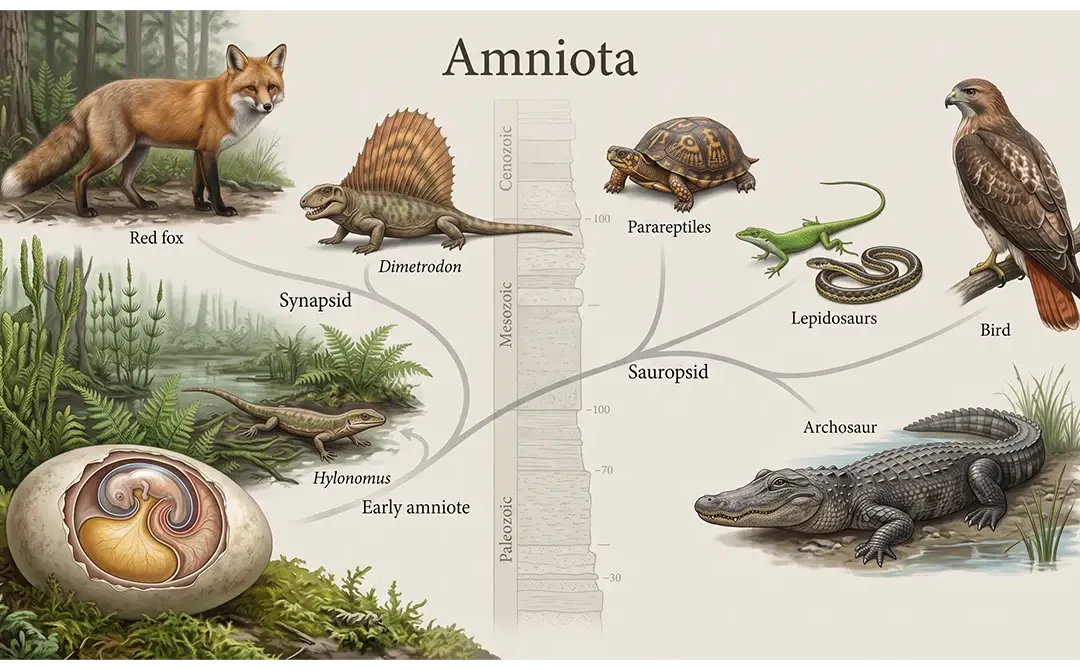 Amniota is a major group of land vertebrates that includes reptiles, birds, and mammals. Amniotes are distinguished by an evolutionary development called the amniotic egg, which allowed embryos to develop with greater protection from drying and other environmental...
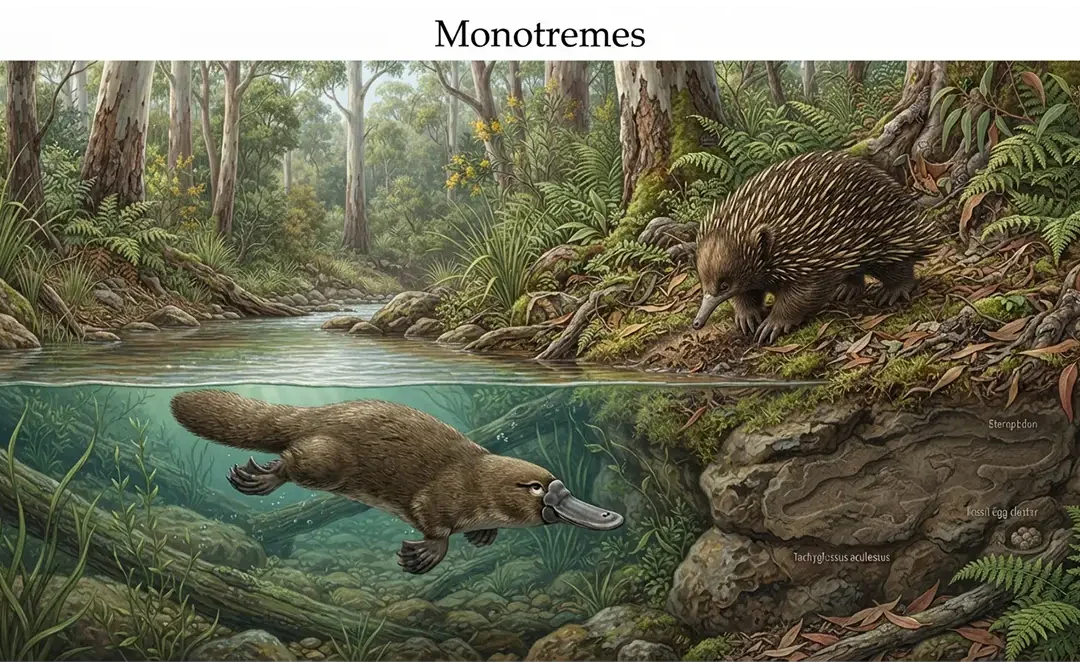 Monotremes are a small and unusual group of mammals that lay eggs instead of giving birth to live young. The living monotremes are the platypus and echidnas, which are found naturally in Australia and New Guinea. Although they reproduce differently from most other...
