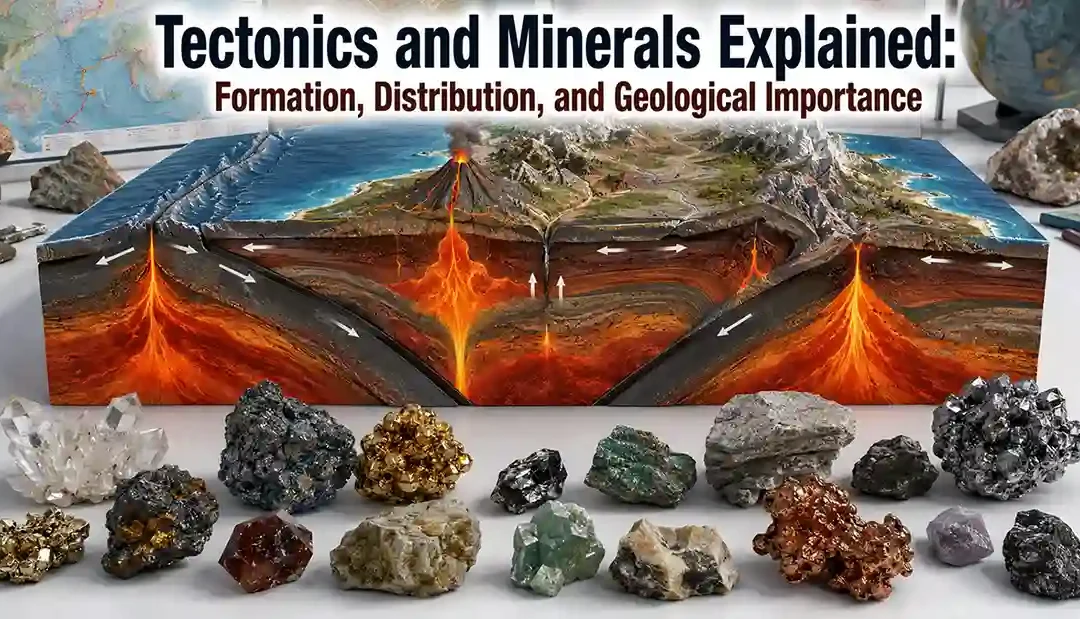
 Plate tectonics is the fundamental geological theory explaining the movement of Earth’s lithospheric plates and the formation of continents, oceans, mountains, volcanoes, and earthquakes. These tectonic processes also control where minerals form, how they...
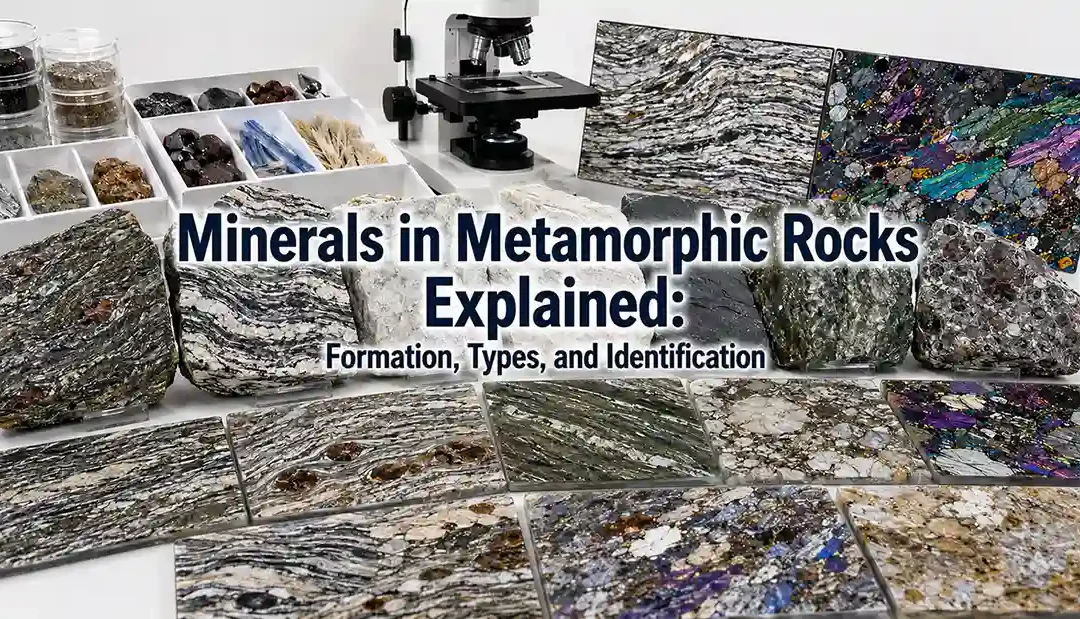 Metamorphic rocks form when pre-existing igneous, sedimentary, or older metamorphic rocks are transformed by elevated temperature, pressure, and chemically active fluids without completely melting. During metamorphism, unstable minerals break down and new minerals...
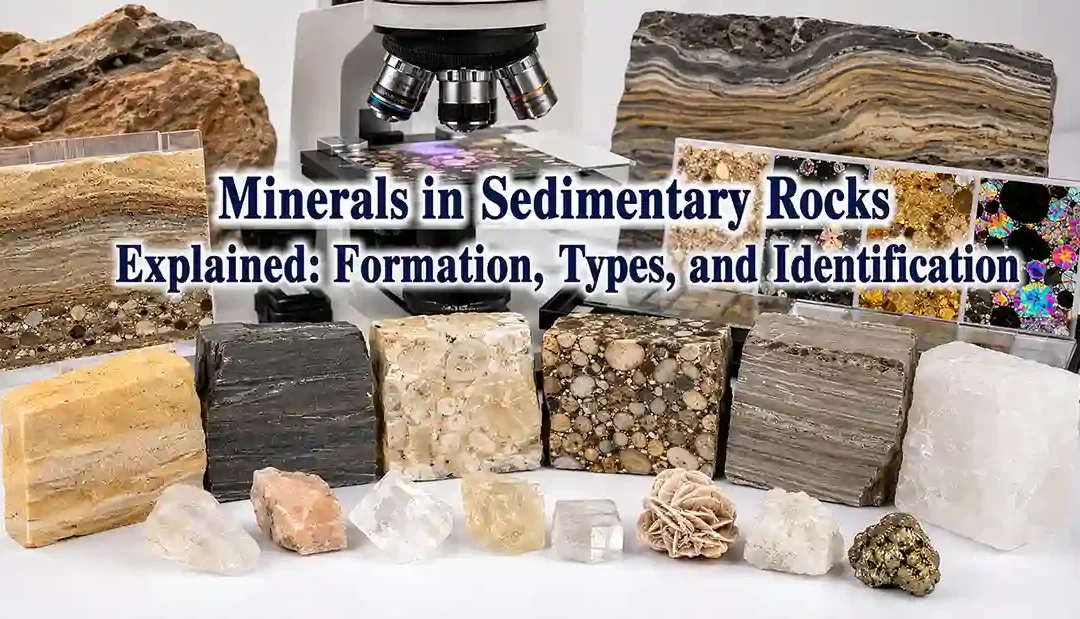 Sedimentary rocks form through the accumulation, transportation, deposition, and lithification of sediments or through the direct precipitation of minerals from water. Unlike igneous rocks that crystallize from magma, sedimentary rocks commonly contain minerals that...
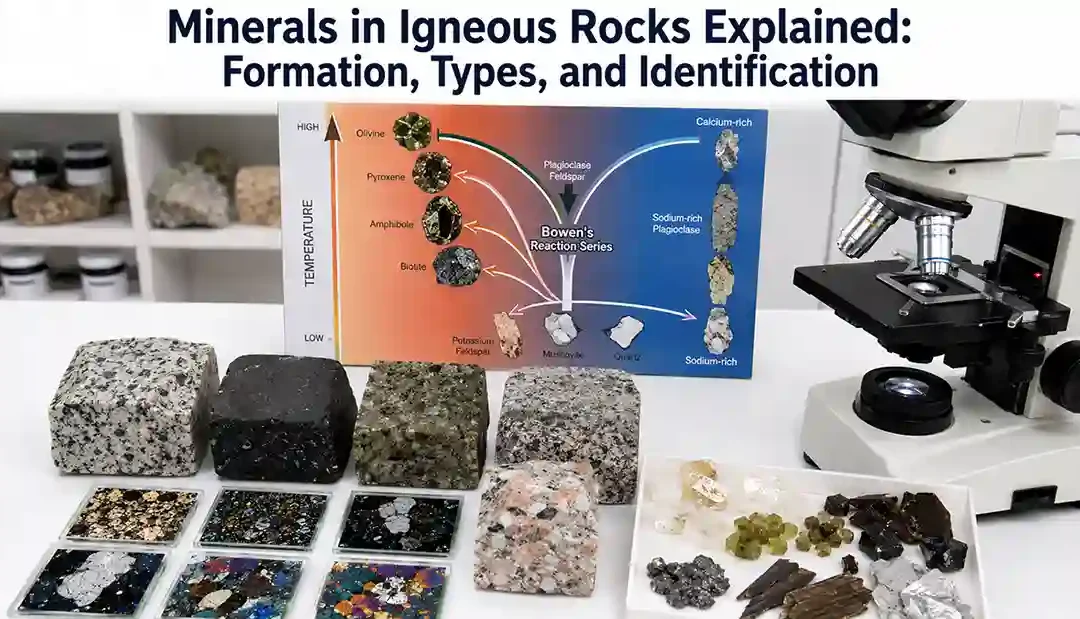 Igneous rocks form when molten magma or lava cools and solidifies. During cooling, different minerals crystallize at different temperatures, producing a wide variety of igneous rock compositions and textures. These minerals, known as rock-forming minerals, make up...
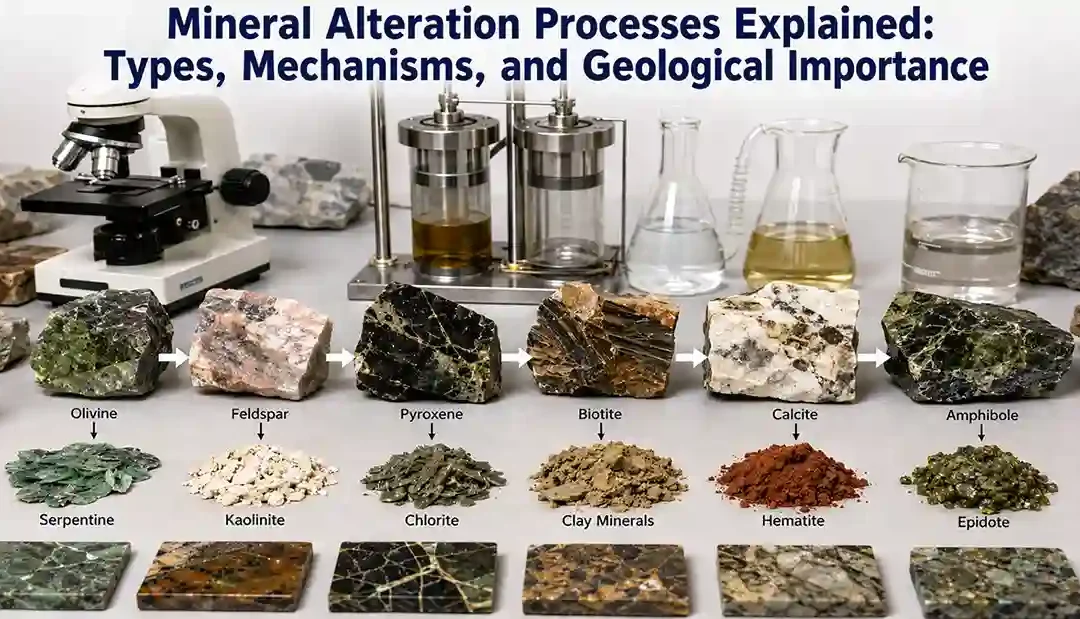 Mineral alteration is the process by which one mineral changes into another due to changes in temperature, pressure, fluid composition, or environmental conditions. Unlike simple physical weathering, alteration involves chemical reactions that modify a mineral’s...
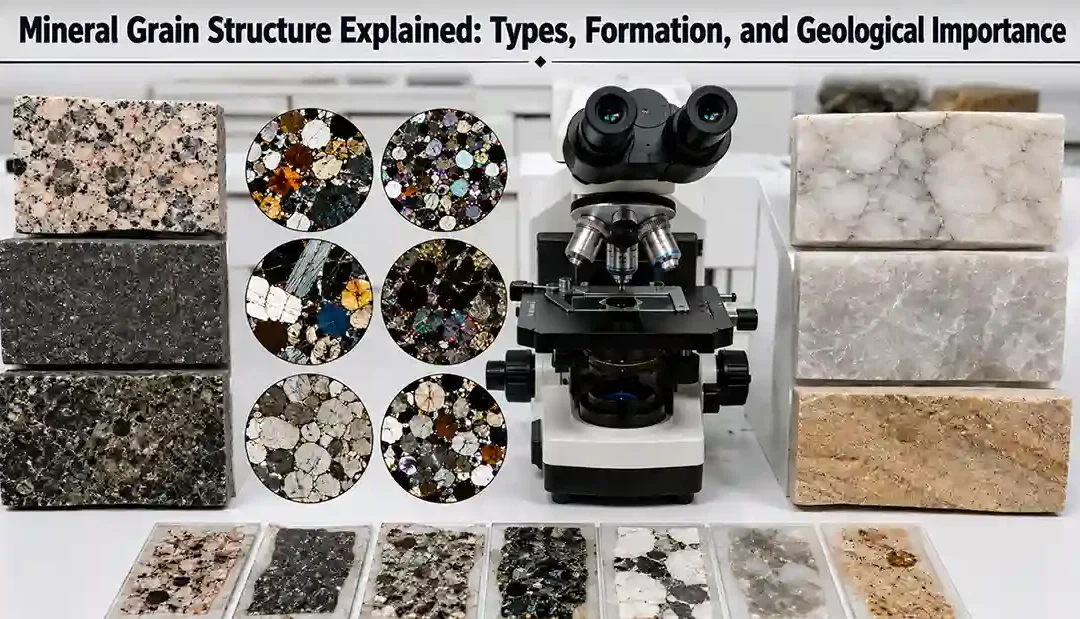 Mineral grain structure refers to the size, shape, arrangement, and relationships of individual mineral grains within a rock or mineral aggregate. Every rock is composed of one or more mineral grains that formed through crystallization, recrystallization, sediment...
