
Geological Hammers: Choose the Right Rock Hammer
A geological hammer is an essential tool for many types of geological fieldwork. Geologists use rock hammers to break suitable rock samples, expose fresh surfaces, examine mineral composition, and collect specimens for further study. Rock collectors, geology students, and outdoor enthusiasts also use them when exploring appropriate rock outcrops.
Not all geological hammers are the same. Some have a pointed pick for working with certain rocks, while others feature a chisel-shaped edge for tasks such as loosening material along a fracture or bedding plane. Head weight, handle design, durability, and balance all affect how a hammer performs in the field.
Choosing the right geological hammer means matching the tool to your work rather than simply buying the heaviest or most expensive option. Explore the products below, then use this guide to compare hammer types, important features, and safety considerations before making a purchase.
Best Geological Hammers for Fieldwork
The right rock hammer depends on the rocks you encounter, how frequently you work in the field, and the type of sampling you need to perform. When comparing products, consider the hammer's head shape, weight, handle construction, grip, and intended use.
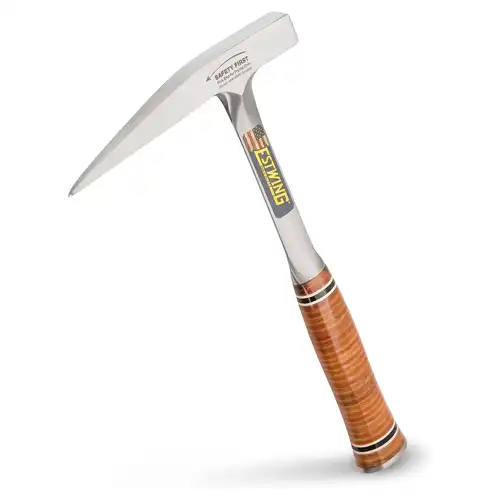
ESTWING Rock Pick, 13oz Smooth Face, Leather Grip, E13P
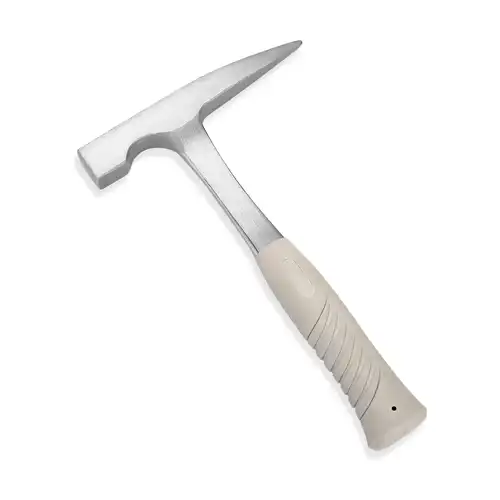
EFFICERE 22-Ounce All Steel Rock Pick Hammer with Pointed Tip
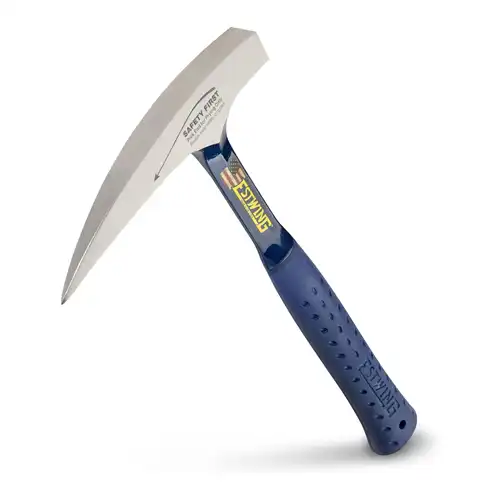
ESTWING Rock Pick, 22oz Pointed Tip, Blue Molded Grip
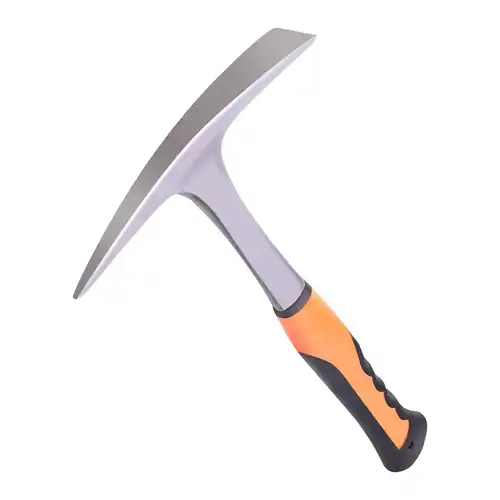
Rock Pick, Geologist Rock Pick, Mason's/Bricklayer's Hammer-28 oz
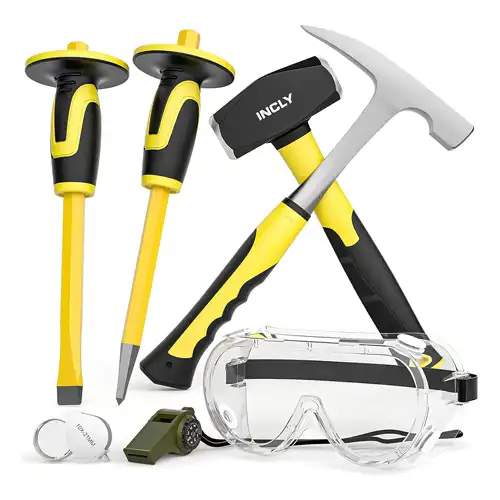
INCLY 7PCS Geology Rock Pick Equipment Kit
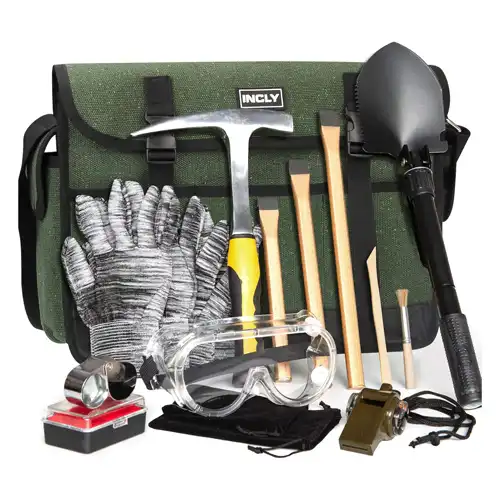
INCLY 15 PCS Geology Rock Pick Hammer Kit
Affiliate disclosure: As an Amazon Associate, Gelogia earns from qualifying purchases. We may earn a commission when you buy through our links, at no extra cost to you.
Types of Geological Hammers
Geological hammers come in several designs. Understanding the differences can help you choose a tool for your fieldwork.
Pointed-Pick Geological Hammer
A pointed-pick hammer has a pointed end opposite its striking face. This design is common in geological fieldwork and can help break suitable rock or expose a small area for examination.
Pick-ended hammers are used in many types of rock sampling, but their effectiveness depends on the rock's hardness, fracture pattern, and weathering. They are not a substitute for appropriate sampling methods in every geological setting.
Chisel-Edge Geological Hammer
A chisel-edge hammer has a flattened, wedge-shaped end opposite the striking face. This design can be helpful when working along natural fractures, bedding planes, or other suitable weaknesses in rock.
The chisel edge may be particularly useful in some layered sedimentary materials. However, not every rock splits cleanly along bedding, and excessive force can damage specimens or create hazardous flying fragments.
General-Purpose Rock Hammer
Some rock hammers are designed for a range of outdoor and collecting tasks. Their usefulness depends on the head geometry, weight, handle construction, and the manufacturer's intended application.
Before choosing a general-purpose model, make sure it is designed for striking rock. Do not assume that an ordinary household or construction hammer is suitable for geological sampling.
How to Choose a Geological Hammer
A reliable geological hammer should suit your fieldwork, feel manageable in your hand, and be designed for the impacts it will experience.
Hammer Weight and Balance
Head weight affects how much force you can deliver and how tiring the tool becomes during extended use. A heavier hammer can be demanding to carry and control, while a lighter one may not be appropriate for every sampling task.
For students and occasional fieldworkers, a manageable weight is often a sensible starting point. Consider the type of rock you work with and your ability to control the tool comfortably rather than selecting a hammer based on weight alone.
Head Shape and Material
The head shape determines how the hammer interacts with the rock. Pick-ended designs and chisel-edge designs serve somewhat different purposes, so choose the geometry that matches your intended work.
Look for clear information about the head material, construction, and intended application. The striking surfaces should be suitable for the manufacturer's specified use and should be inspected regularly for damage.
Handle and Grip
Handle construction affects comfort, balance, and control. Geological hammers may use steel, fiberglass, or other handle designs, depending on the model.
Consider grip texture, handle length, overall balance, and how securely the head is attached. A comfortable grip can help you maintain control, but no handle material makes a hammer completely immune to damage or failure.
Durability and Portability
Geologists often carry equipment over uneven ground, so overall weight and ease of storage matter. A protective sheath or suitable carrying arrangement can help prevent accidental contact with the hammer head and protect other equipment in your field bag.
For frequent use, check the manufacturer's instructions for inspection and maintenance. Avoid using a hammer with a loose head, cracked handle, damaged grip, or visibly chipped striking surface.
What Is a Geological Hammer Used For?
Geological hammers support several tasks during field investigations and rock collecting.
Collecting Rock Samples
A geological hammer can help obtain specimens from suitable rock exposures. Samples may be collected for hand-specimen examination, teaching, mineral identification, or further laboratory analysis.
Always consider whether sampling is permitted. Some outcrops are protected, located on private property, or subject to collecting restrictions. In certain environments, removing rock can also damage valuable geological features.
Examining Fresh Rock Surfaces
Weathering can alter a rock's surface through discoloration, mineral changes, and physical breakdown. Where sampling is appropriate, carefully exposing a fresh surface may reveal features that are less visible on the weathered exterior.
These features can include grain size, mineral distribution, texture, and relationships between different components. A hammer alone cannot establish a rock's identity; observations should be combined with other geological evidence.
Field Education and Geological Mapping
During field classes, geological hammers can help students obtain suitable specimens and investigate differences between rock units. Observations can then be recorded alongside field notes, photographs, and location information.
A hammer is only one part of a geological field kit. A hand lens, field notebook, compass clinometer, sample bags, and appropriate protective equipment may also be useful, depending on the investigation.
Geological Hammer Safety
Using a geological hammer involves risks from flying rock fragments, slipping tools, and damaged equipment. Protective measures are essential whenever rock is struck.
- Wear appropriate eye protection: Use impact-rated safety glasses or goggles suitable for the task. Ordinary prescription glasses alone may not provide adequate protection.
- Inspect the hammer before use: Do not use a hammer with a loose head, cracked handle, damaged grip, or chipped striking face.
- Protect nearby people: Keep other people away from the striking area and make sure fragments cannot hit bystanders.
- Use appropriate technique: Maintain a stable stance, keep a secure grip, and use controlled strikes rather than swinging beyond your control.
- Avoid unsafe materials: Do not strike rocks near unstable cliffs, loose overhangs, or other hazardous terrain. Be cautious around rocks that may contain hazardous minerals or fibers.
- Respect the site: Follow local collecting rules, land-access requirements, and site-specific safety procedures.
Never strike two hardened steel tools together unless the manufacturer explicitly specifies that the combination is safe. High-impact contact can cause dangerous metal fragments to break away.
Geological Hammer vs. Regular Hammer
Although geological hammers and ordinary hammers may look similar, they are designed for different tasks.
| Feature | Geological hammer | General-purpose hammer |
|---|---|---|
| Main application | Geological sampling and rock examination | Construction, woodworking, or general striking tasks |
| Head design | Often includes a pick or chisel edge | Commonly designed for nails or general impact |
| Field use | Designed for geological work when used as intended | Suitability for striking rock depends on the specific tool |
| Selection priority | Head geometry, balance, durability, and rock-sampling needs | The intended construction or household task |
Choose a tool specifically intended for geological work when you plan to collect rock specimens. The correct design can make field sampling more practical, but technique, rock conditions, and safety remain important.
Choose a Geological Hammer for Your Field Kit
The best geological hammer is one that matches your fieldwork, is comfortable to control, and is designed for the type of sampling you intend to perform. Consider head shape, weight, handle design, durability, and the manufacturer's guidance before making your choice.
Compare the products above and select a tool suited to your geological work. Remember to use proper protective equipment, inspect the hammer regularly, and follow the rules that apply to your field site.