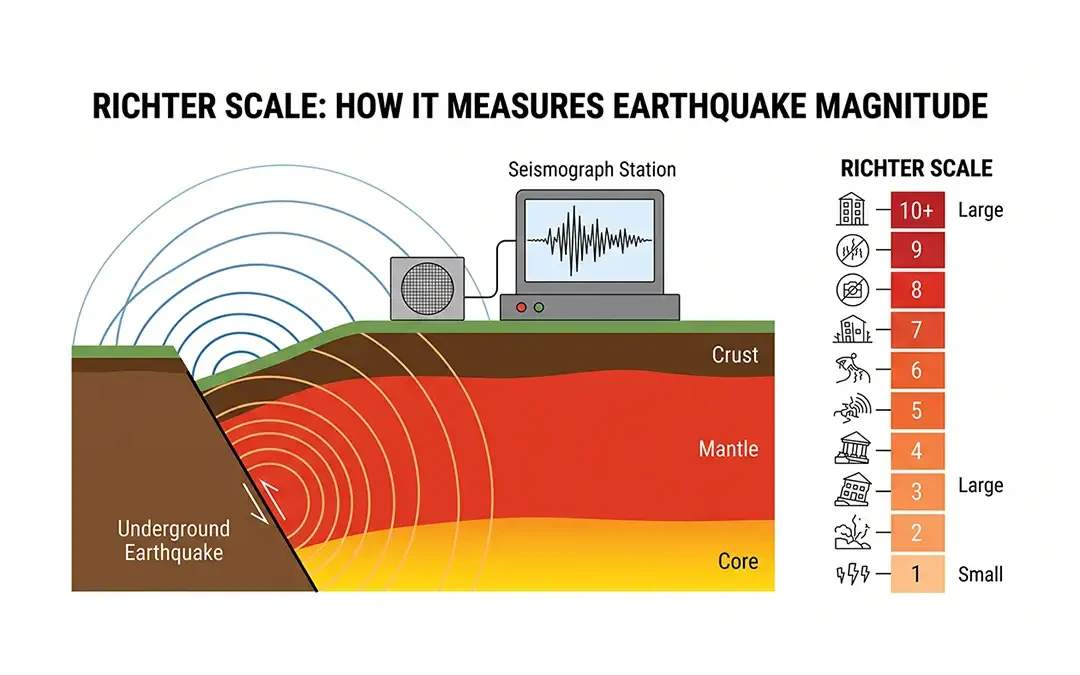
 The Richter scale is a logarithmic scale originally developed to measure the size of earthquakes from the amplitude of seismic waves recorded by a seismograph. Charles F. Richter developed the scale in 1935 for earthquakes in Southern California. Today, the Richter...
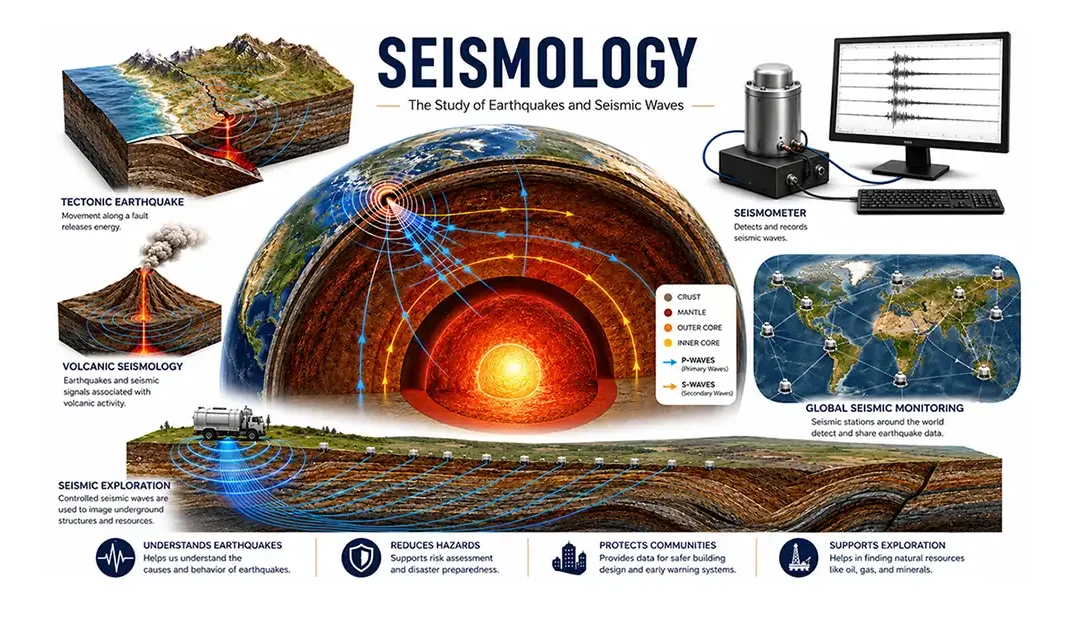 Seismology is the study of earthquakes. Much of the information about the nature of faulting during an earthquake comes from the resulting seismograms. Most earthquakes occur due to plate motion, and understanding the direction and magnitude of this movement helps...
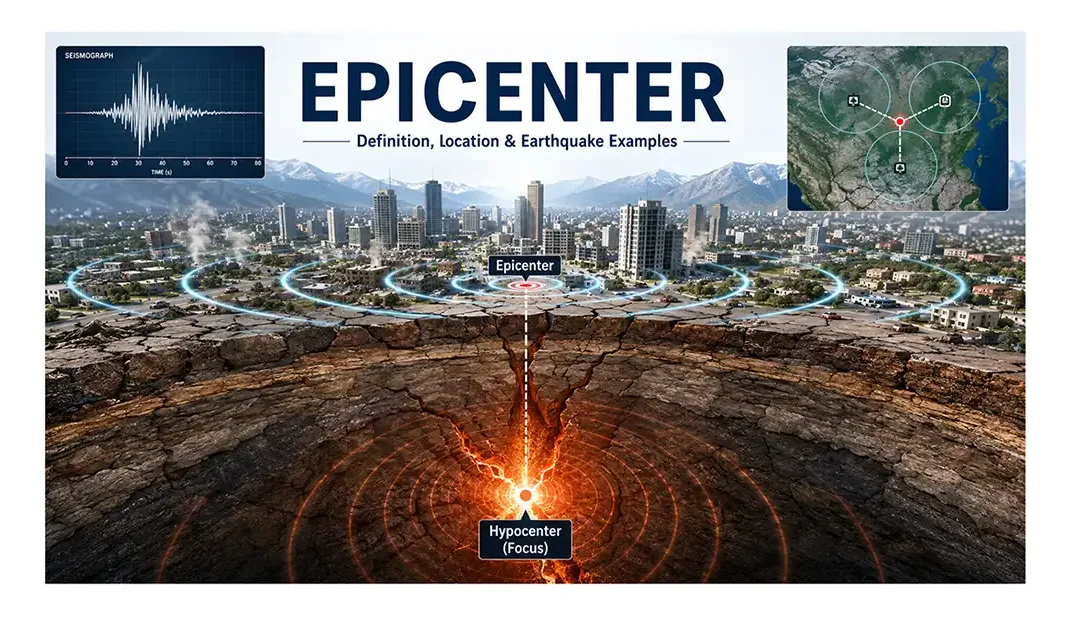 After a major earthquake, one location almost always appears in news headlines—the epicenter. Whether the event strikes beneath a city, a remote mountain range, or the ocean floor, reporters quickly identify the epicenter to show where the earthquake happened. Yet...
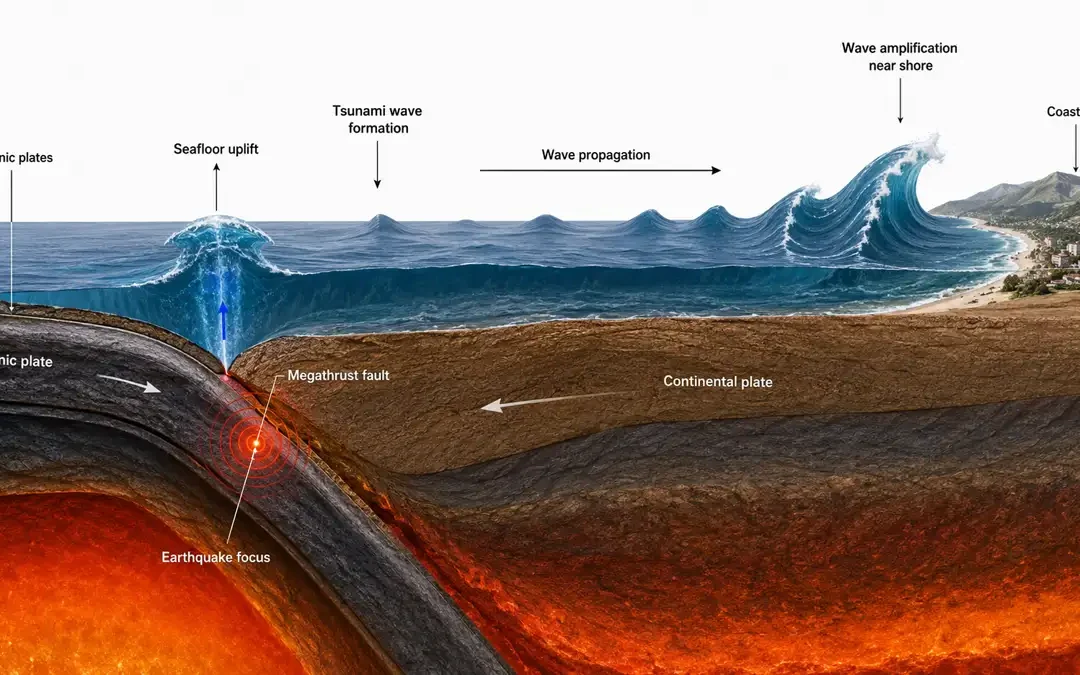 A tsunami is primarily caused by the sudden displacement of a large volume of seawater. Around 80% of destructive tsunamis are triggered by powerful underwater earthquakes occurring at subduction zones, where one tectonic plate slips beneath another. Other causes...
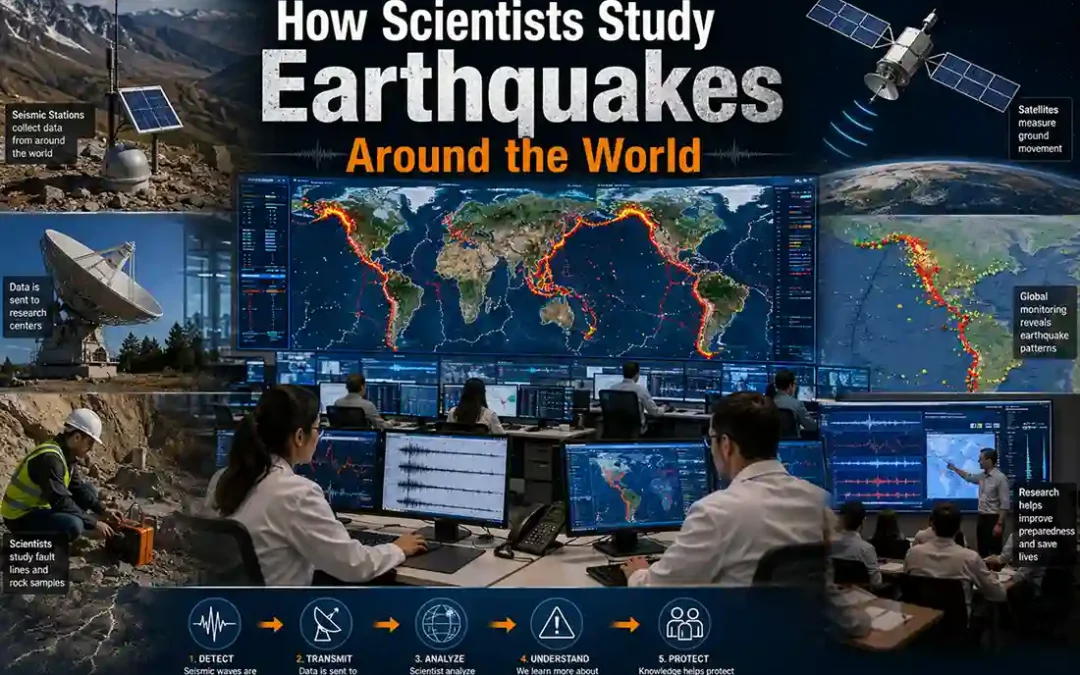 Scientists study earthquakes to understand how and why Earth’s crust suddenly releases energy. By analyzing seismic waves, tectonic plate movement, fault systems, and ground shaking, researchers can learn how earthquakes begin and how they affect different regions....
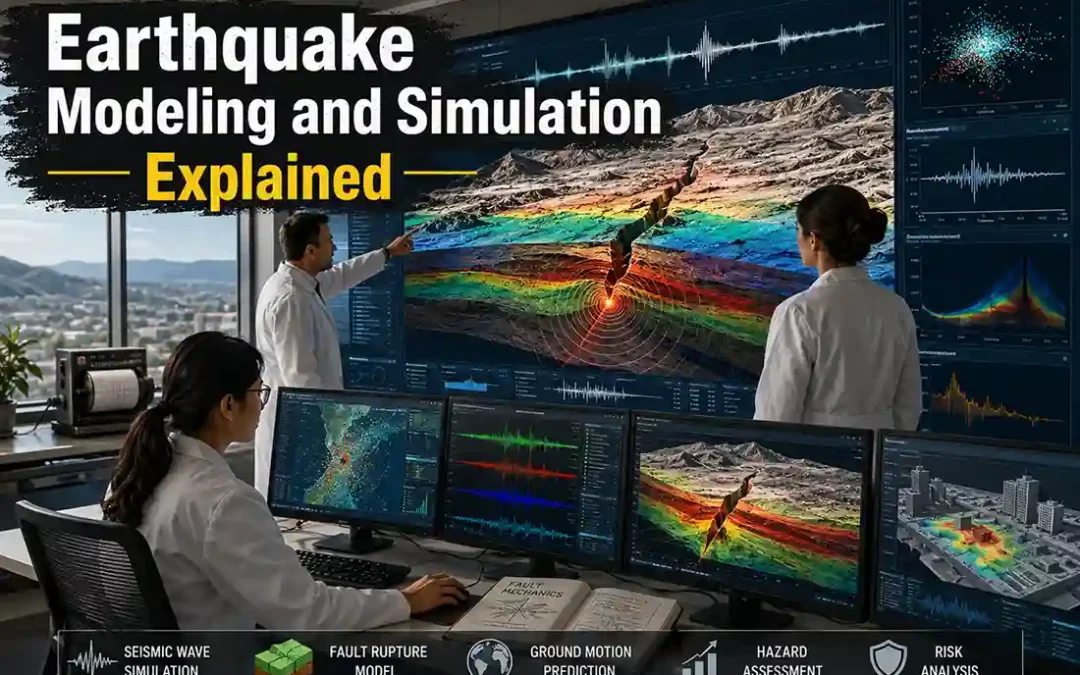 Earthquake modeling and simulation help scientists understand how earthquakes begin, spread, and affect the ground. Using computers, seismic data, and geological information, researchers create digital earthquake scenarios that simulate fault rupture and seismic wave...