
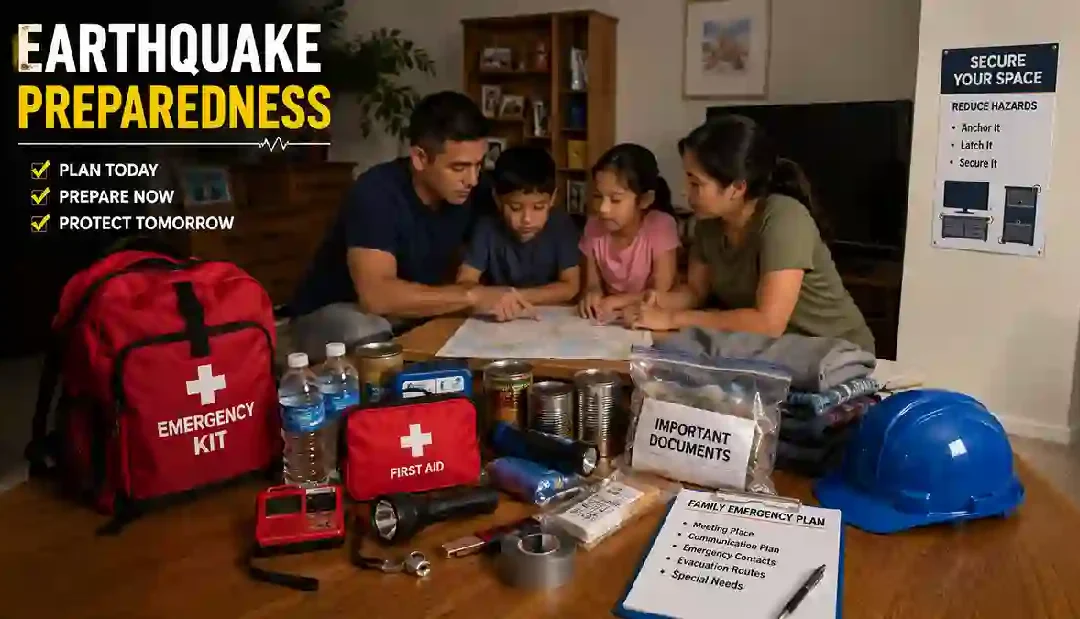
Earthquakes happen suddenly and often without warning. That’s why preparation matters so much.
A well-prepared home and emergency plan can:
- reduce injuries
- improve survival
- protect families
- speed up recovery after a disaster
Earthquake preparedness is especially important in regions near:
- active fault zones
- subduction zones
- tectonic plate boundaries
If you’re new to earthquakes, begin here → what is an earthquake
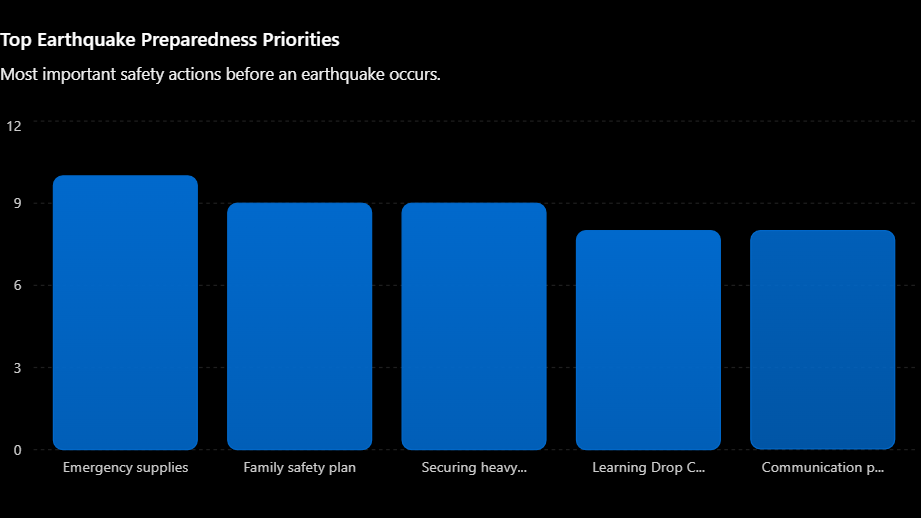
Most Important Earthquake Preparation Priorities
Top Earthquake Preparedness Priorities: The most important safety actions to take before an earthquake occurs.
Build an Earthquake Emergency Kit
One of the most important preparedness steps is creating an emergency supply kit.
Basic Earthquake Emergency Supplies
| Item | Why It Matters |
|---|---|
| Water | Drinking and sanitation |
| Non-perishable food | Emergency nutrition |
| Flashlight | Power outages |
| Batteries | Backup power |
| First aid kit | Medical emergencies |
| Phone charger/power bank | Communication |
| Medications | Health needs |
| Important documents | Identification & insurance |
Experts often recommend enough supplies for at least 72 hours.
Secure Your Home Before an Earthquake
Many earthquake injuries come from falling objects inside homes.
Secure:
- bookshelves
- TVs
- cabinets
- mirrors
- water heaters
Safety Tip
Heavy objects should be attached securely to walls whenever possible.
Learn more → earthquake intensity scale comparison
Create a Family Emergency Communication Plan
During disasters:
- phone networks may fail
- roads may close
- family members may become separated
Important Planning Steps
- choose emergency meeting points
- memorize emergency contacts
- identify out-of-area contact persons
- discuss evacuation plans
Planning ahead reduces panic during emergencies.
Learn “Drop, Cover, and Hold On”
The safest earthquake response for most situations is:
Drop
Get low before shaking knocks you down.
Cover
Protect yourself under sturdy furniture.
Hold On
Hold onto your shelter until the shaking stops.
Practicing this response improves reaction speed during real earthquakes.
Learn more → what to do during an earthquake
Know If You Live Near Tsunami Risk Areas
If you live near the coast:
- learn tsunami evacuation routes
- identify high ground locations
- follow official warning systems
Important Fact
Large offshore earthquakes may trigger tsunamis within minutes.
Learn more → earthquake early warning systems
Prepare Your Workplace and School
Earthquake preparation should include:
- evacuation routes
- emergency drills
- safety supply storage
- communication procedures
Schools Often Practice:
- Drop, Cover, and Hold On drills
- emergency reunification plans
Regular drills improve preparedness.
Prepare Your Vehicle
Keep basic emergency supplies inside your vehicle.
Useful Items
- flashlight
- bottled water
- blanket
- phone charger
- first aid kit
Roads and transportation systems may become damaged after earthquakes.
Common Earthquake Preparation Mistakes
| Mistake | Risk |
|---|---|
| No emergency kit | Lack of supplies |
| Unsecured furniture | Falling injuries |
| No family plan | Confusion during emergencies |
| Ignoring local risks | Delayed response |
| No flashlight or radio | Loss of information |
Small preparations can make a major difference.
Earthquake Insurance and Financial Preparation
In some high-risk regions, people also prepare financially through:
- earthquake insurance
- digital backups of documents
- emergency savings
Recovery after major earthquakes can be expensive and time-consuming.
Countries Known for Strong Earthquake Preparedness
Some countries invest heavily in earthquake readiness.
Examples include:
- Japan
- New Zealand
- Chile
- United States (California)
Preparedness programs often include:
- strict building codes
- nationwide drills
- public education systems
Explore → earthquake monitoring technology
Earthquake Drills Save Lives
Regular earthquake drills help people:
- react faster
- reduce panic
- remember safety procedures
Many Schools and Workplaces Practice:
- evacuation routes
- emergency communication
- protective actions during shaking
Repetition improves emergency response.
Can Earthquakes Be Predicted Early Enough?
Scientists cannot predict exact earthquakes.
That’s why preparation remains one of the best protections.
Early warning systems may provide only seconds of notice.
Learn more → earthquake prediction methods
Water, food, flashlight, batteries, first aid supplies, and medications.
Because falling objects cause many indoor injuries.
Drop, Cover, and Hold On.
Regularly — especially in high-risk regions.
Final Thoughts
Earthquake preparedness is one of the most effective ways to reduce injuries and improve safety during seismic disasters. By securing homes, building emergency kits, practicing safety drills, and creating family plans, people can respond more calmly and effectively when earthquakes strike.
Understanding how to prepare for an earthquake helps transform uncertainty into readiness before the ground ever begins to shake.