
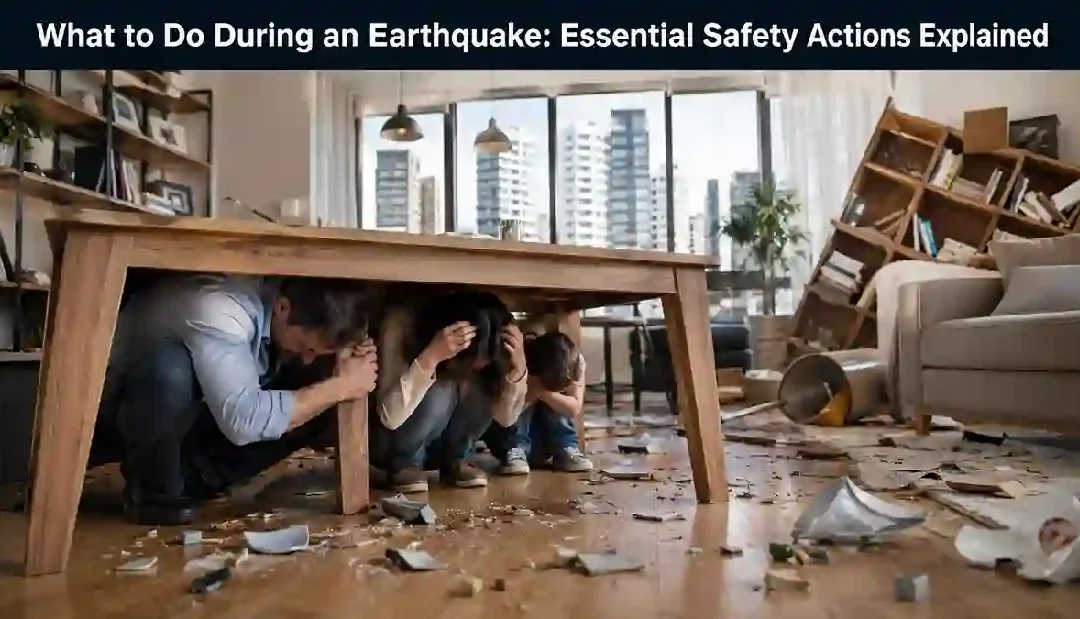
Earthquakes happen suddenly and often without warning.
In just a few seconds:
- buildings may shake violently
- objects can fall
- power systems may fail
- roads and structures may become dangerous
Knowing what to do during an earthquake can greatly reduce injuries and improve survival. The most important rule is stay calm and protect yourself immediately.
If you’re new to earthquakes, begin here → what is an earthquake
The Most Important Earthquake Safety Rule
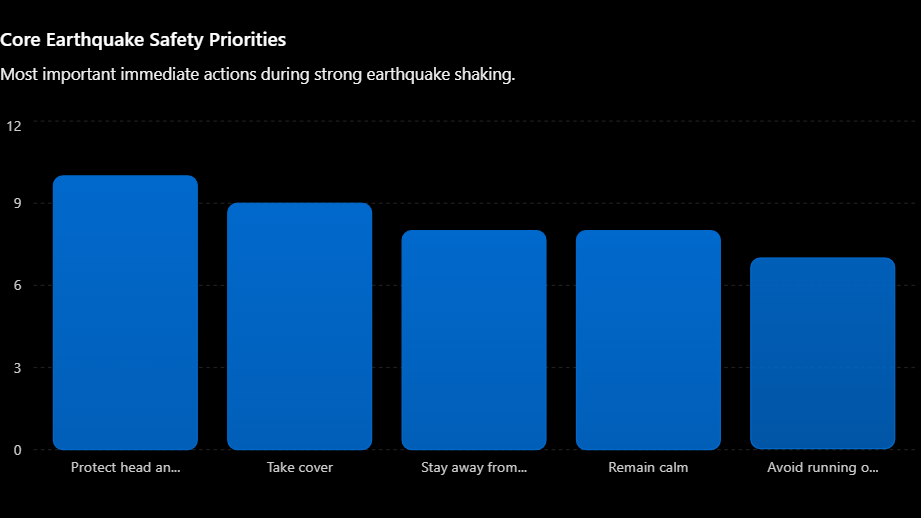
Core Earthquake Safety Priorities
Most important immediate actions during strong earthquake shaking.
The “Drop, Cover, and Hold On” Method
The safest action during most earthquakes is:
Drop
Get low to the ground before shaking knocks you down.
Cover
Take cover under:
- a sturdy table
- a strong desk
- solid furniture
Protect:
- your head
- neck
- face
Hold On
Hold onto your shelter until the shaking stops. Furniture may move during strong shaking. Stay protected until the earthquake ends.
What To Do Indoors During an Earthquake
If you are indoors:
DO:
- Drop, Cover, and Hold On
- Stay inside
- Move away from windows and glass
- Protect your head and neck
DO NOT:
- Run outside during shaking
- Use elevators
- Stand near shelves or heavy objects
Most injuries happen from falling debris and broken glass.
What To Do Outdoors During an Earthquake
If you are outside:
Move To:
- open spaces
- areas away from buildings
- clear ground away from power lines
Avoid:
- bridges
- streetlights
- glass buildings
- falling debris
Stay in the open until shaking completely stops.
What To Do If You Are Driving
If you are in a vehicle:
DO:
- Pull over safely
- Stop away from bridges and power lines
- Stay inside the vehicle
DO NOT:
- Stop under overpasses
- Exit the car during strong shaking unless necessary
Vehicles provide some protection from falling debris.
What To Do In Tall Buildings
Tall buildings may sway during earthquakes.
Important Safety Tips
- Stay inside
- Move away from windows
- Do not use elevators
- Take cover immediately
Stairways may become crowded or dangerous during shaking.
What To Do Near the Coast (Tsunami Risk)
If strong shaking occurs near the ocean, move to higher ground after the earthquake. Large offshore earthquakes may generate tsunamis.
Tsunami Warning Signs
- strong long-lasting shaking
- sudden ocean retreat
- official tsunami alerts
Learn more → earthquake early warning systems
What To Do After the Earthquake Stops
After shaking ends:
Check For:
- injuries
- fires
- gas leaks
- damaged structures
Be Prepared For:
- aftershocks
- power outages
- communication failures
Avoid damaged buildings until authorities say they are safe.
Learn more → earthquake aftershocks explained
Common Earthquake Mistakes
| Dangerous Action | Why It’s Risky |
|---|---|
| Running outside during shaking | Falling debris danger |
| Using elevators | Power failure risk |
| Standing near windows | Glass injuries |
| Panicking | Delayed reactions |
| Ignoring aftershocks | Continued hazard |
Calm, fast decisions improve safety.
Earthquake Emergency Kits
Prepared regions often recommend emergency kits containing:
- water
- flashlight
- batteries
- first aid supplies
- medications
- emergency food
- phone chargers
Preparedness greatly improves earthquake survival.
Why Earthquake Safety Education Matters
Countries with strong earthquake preparedness programs often reduce injuries and deaths significantly.
Examples include:
- Japan
- New Zealand
- California
These regions practice:
- emergency drills
- public education
- building safety systems
Learn more → earthquake monitoring technology
Earthquake Safety for Children
Children should learn:
- Drop, Cover, and Hold On
- safe evacuation areas
- emergency contact plans
Regular drills help children react quickly during real earthquakes.
Can Earthquakes Be Predicted Before They Happen?
Scientists cannot predict exact earthquakes.
However:
- early warning systems may provide seconds of warning
- preparedness remains the best protection
Learn more → earthquake prediction methods
Drop, Cover, and Hold On.
Usually no — falling debris outside can be extremely dangerous.
Windows, elevators, and unstable objects.
Check for injuries, hazards, and possible aftershocks.
Final Thoughts
Knowing what to do during an earthquake can save lives within seconds. The most effective earthquake safety response is to stay calm, protect yourself immediately, and avoid dangerous areas during and after shaking.
Understanding earthquake safety helps people react faster, reduce injuries, and stay safer during one of Earth’s most sudden natural disasters.