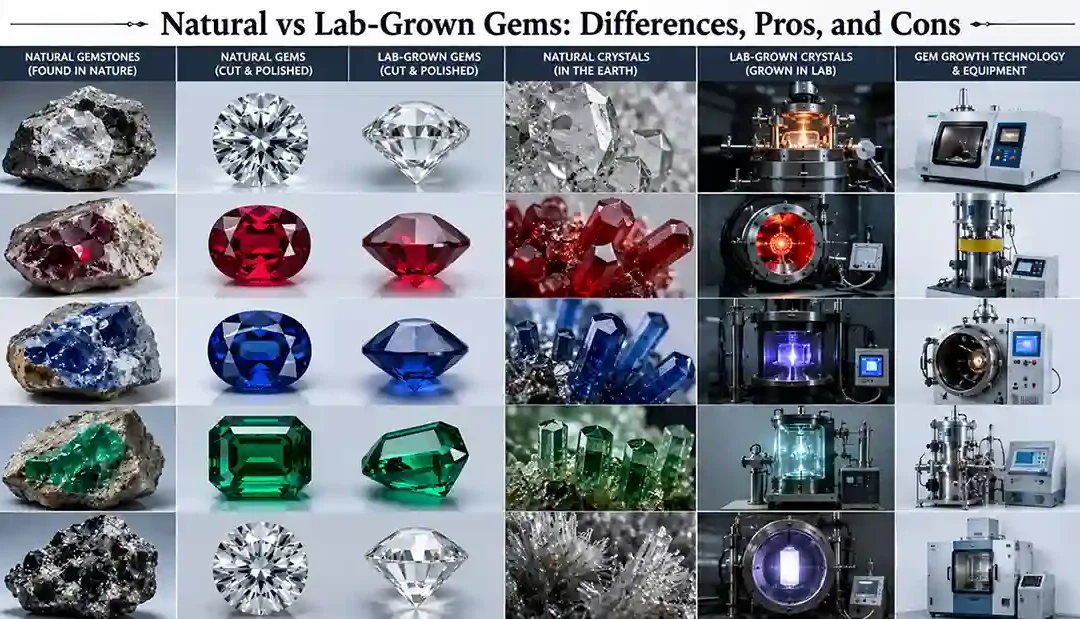
 Natural and lab-grown gemstones may appear nearly identical, but they have very different origins. Natural gemstones form deep within the Earth over millions of years through geological processes, while lab-grown gemstones are created in controlled laboratories using...
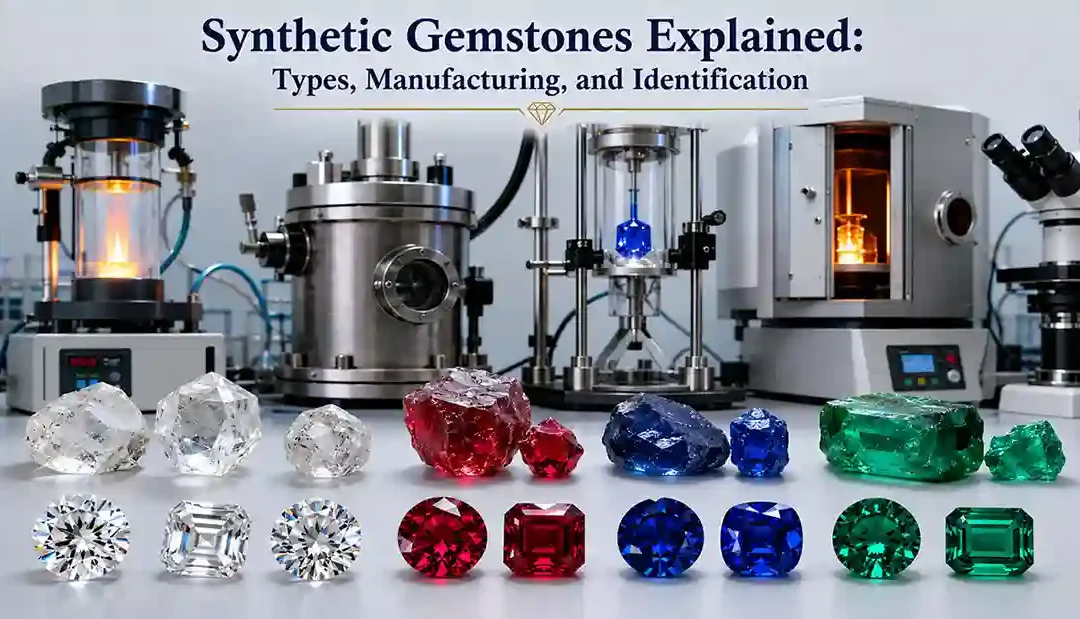 Synthetic gemstones are gemstones created in laboratories using controlled scientific processes that replicate the natural conditions under which gemstones form. Unlike imitation stones, synthetic gemstones have the same chemical composition, crystal structure, and...
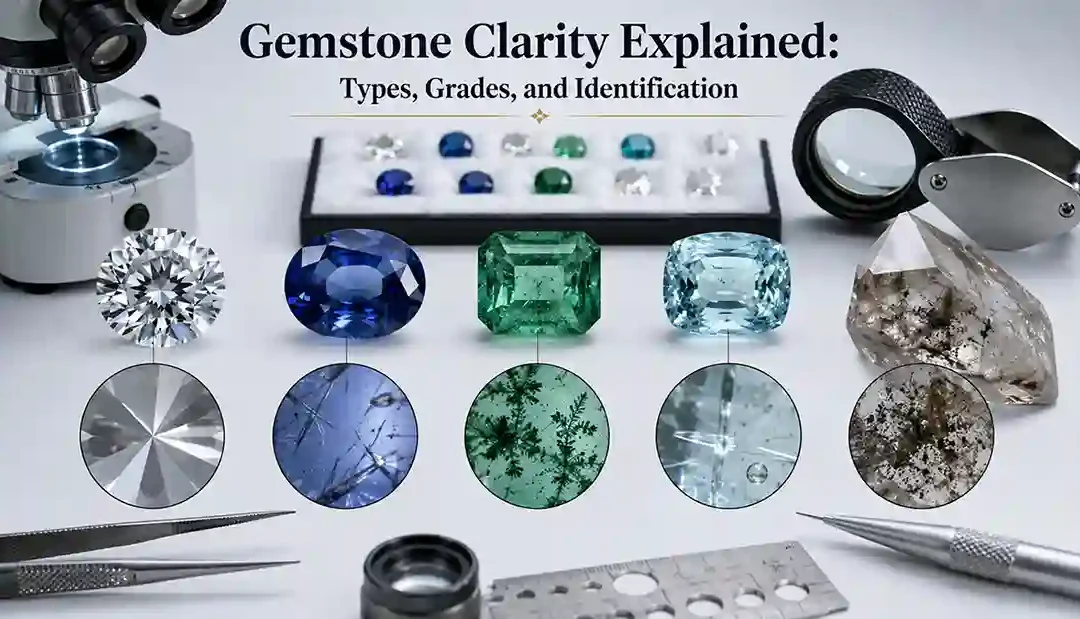 Gemstone clarity is one of the most important factors used to evaluate a gemstone’s beauty, quality, and value. It refers to the presence or absence of internal features called inclusions and external imperfections known as blemishes. Although perfectly flawless...
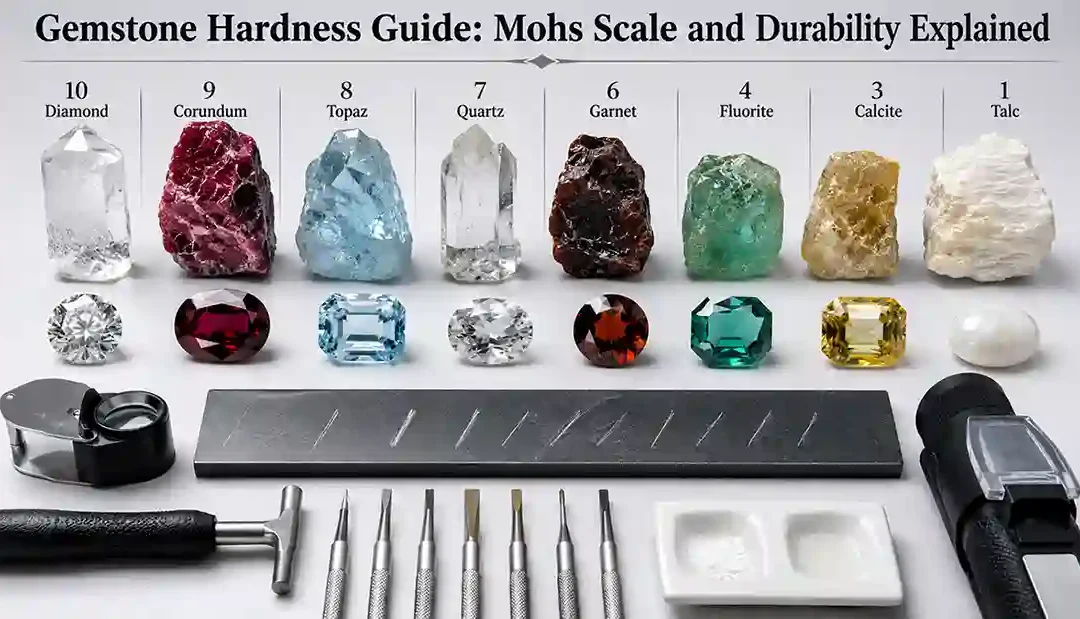 Hardness is one of the most important properties used to identify gemstones and minerals. It measures a gemstone’s resistance to scratching and helps gemologists determine durability, suitability for jewelry, and mineral identity. The most widely used hardness...
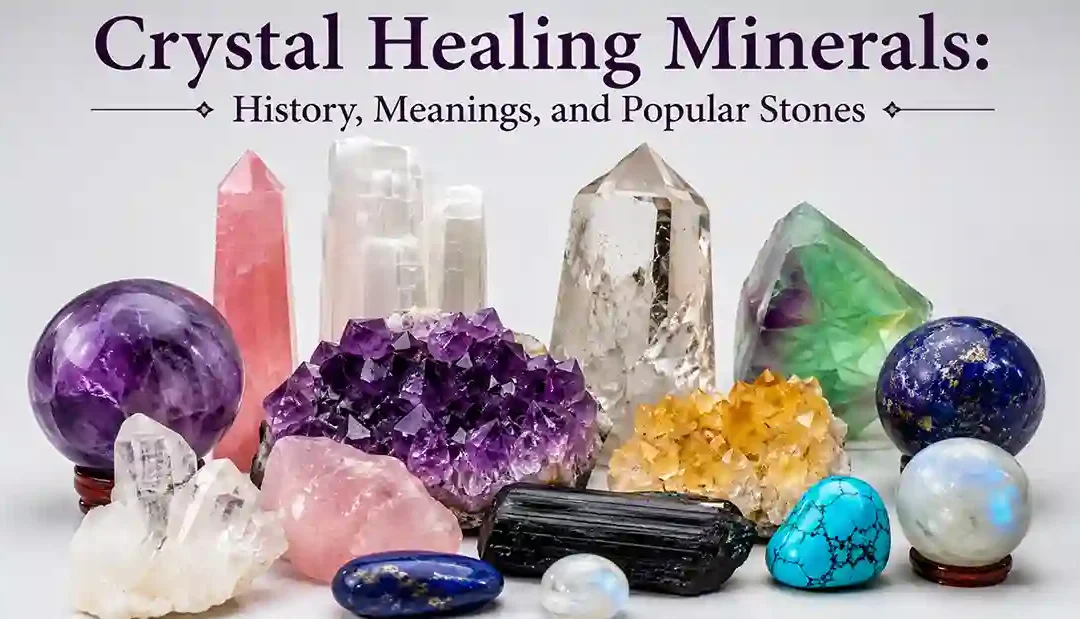 Crystal healing is the practice of using minerals and gemstones as part of spiritual, cultural, and wellness traditions. For thousands of years, civilizations around the world have believed that certain crystals possess symbolic or energetic properties that may...
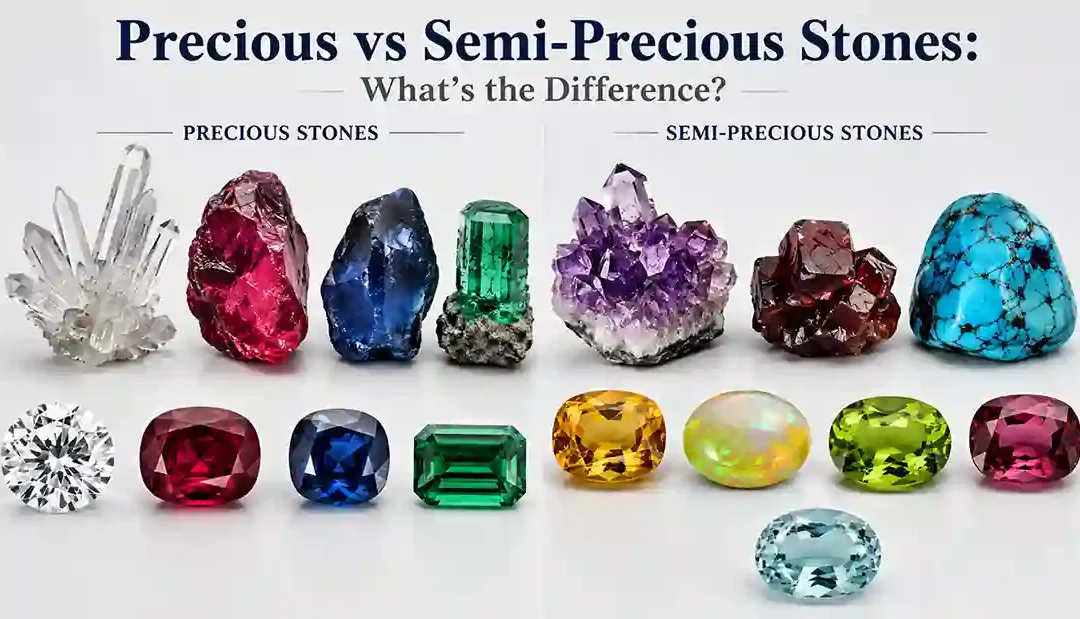 The terms precious and semi-precious stones have been used for centuries to classify gemstones. Traditionally, only four gemstones were considered precious, while all others were grouped into the semi-precious category. However, modern gemologists recognize that this...
