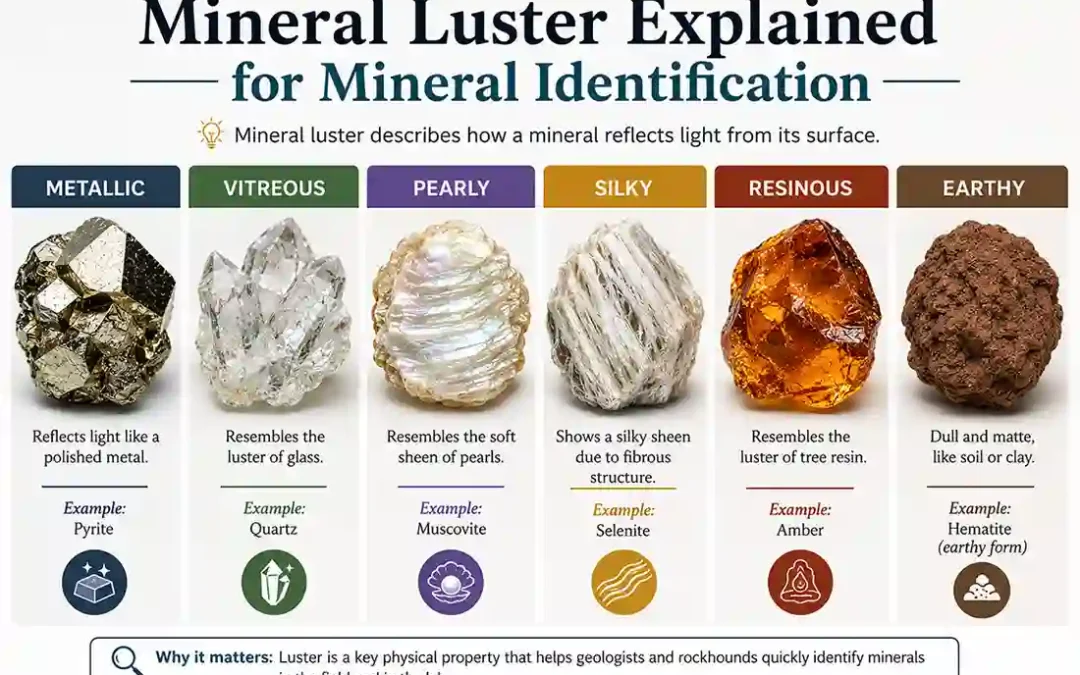
 Luster is one of the most useful physical properties used in mineral identification. It describes how light reflects from a mineral’s surface and often provides a quick clue about a mineral’s composition and structure. When geologists examine a mineral, they...
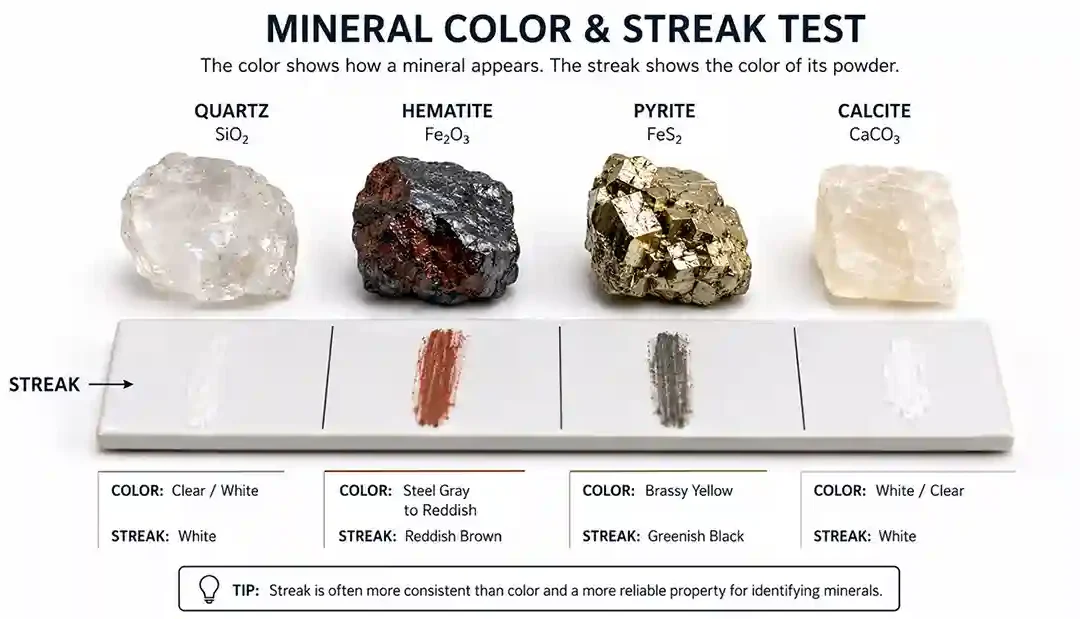 Color is often the first characteristic people notice when examining a mineral. However, color alone is not always reliable because impurities can change a mineral’s appearance. To improve identification accuracy, geologists use another important property called...
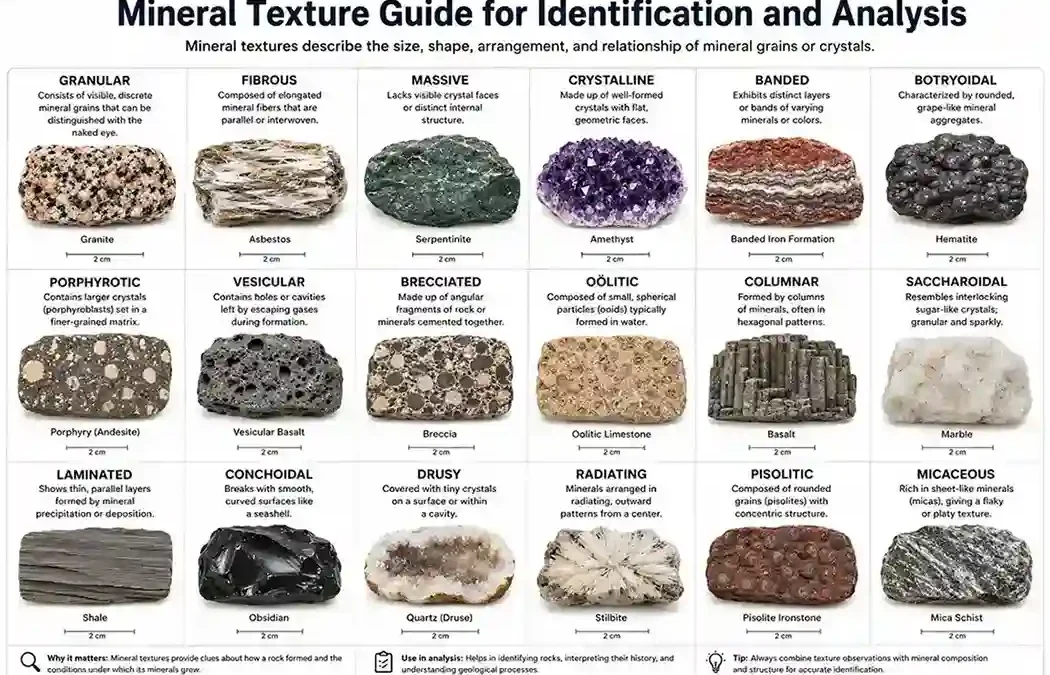 Mineral texture refers to the appearance, arrangement, size, and relationship of mineral grains or crystals within a specimen. Texture provides important clues about how a mineral formed and the geological environment in which it grew. Geologists study mineral...
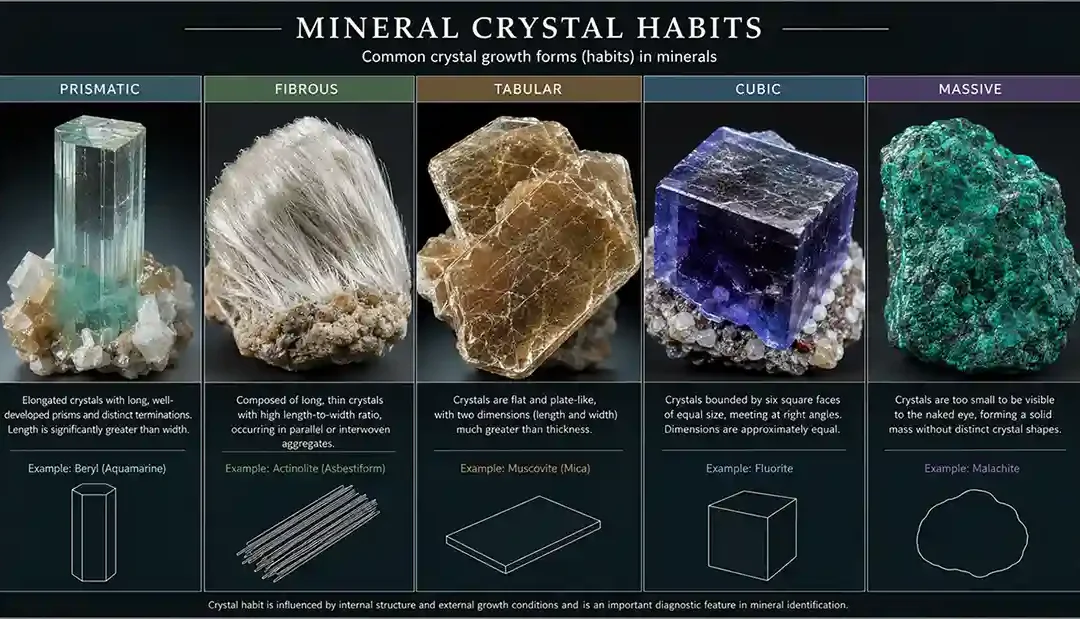 Mineral habit describes the typical external shape or growth form of a mineral crystal. Even when minerals share the same chemical composition, they may grow in different shapes depending on environmental conditions. Crystal habit helps geologists: identify minerals...
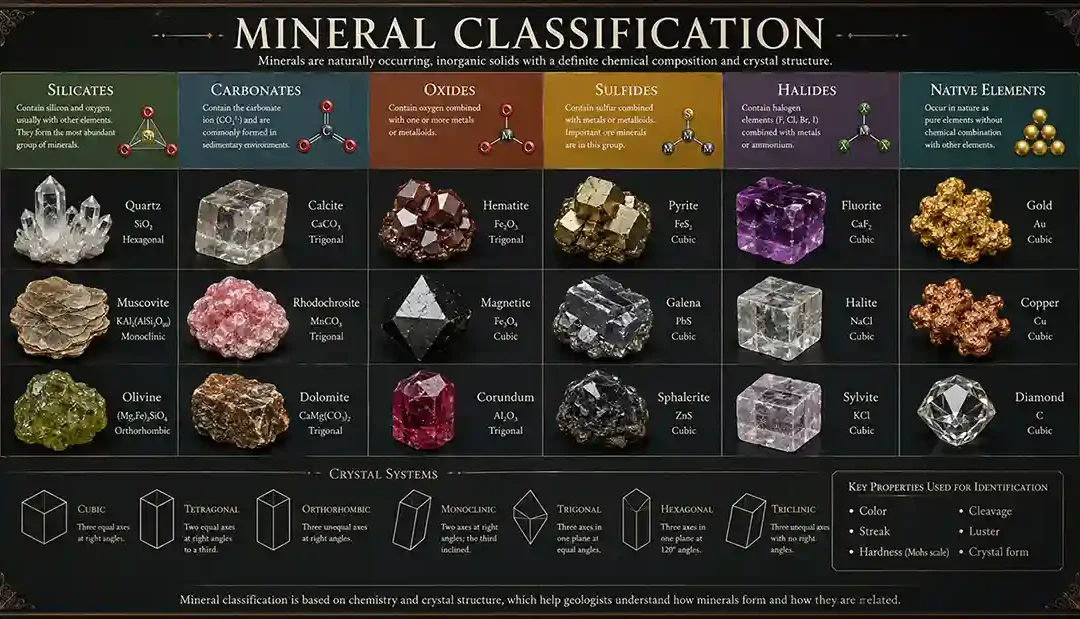 Scientists classify minerals into groups based mainly on their chemical composition and crystal structure. This organization system is called the mineral classification system. Because thousands of minerals exist on Earth, classification helps geologists: identify...