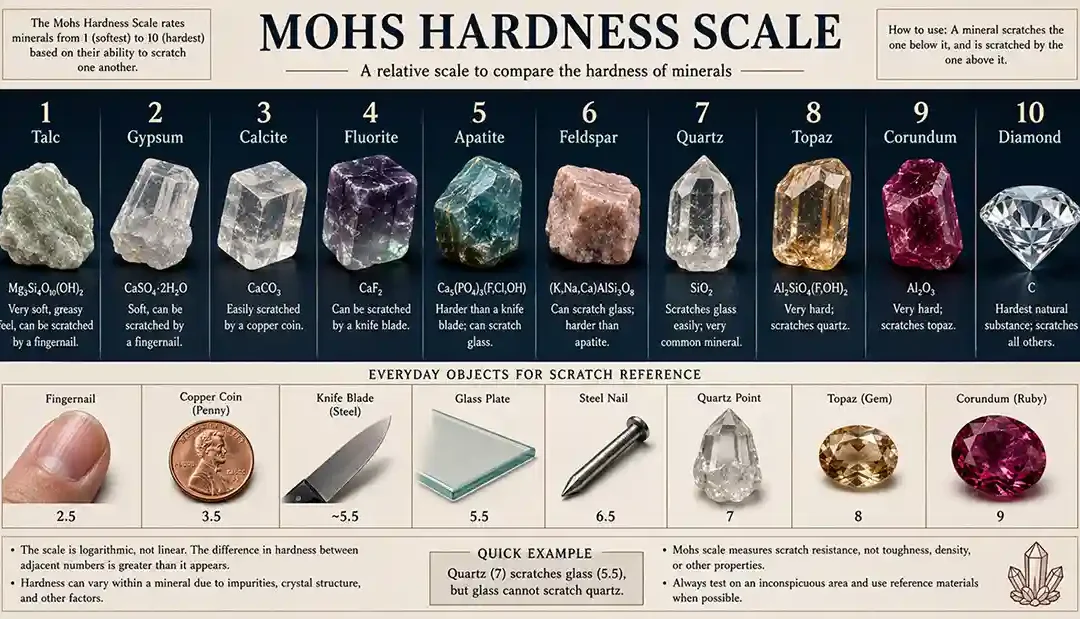
 The Mohs Hardness Scale is one of the most widely used systems for identifying minerals. Developed by German mineralogist Friedrich Mohs in 1812, the scale measures a mineral’s resistance to scratching. Instead of using complicated laboratory equipment,...
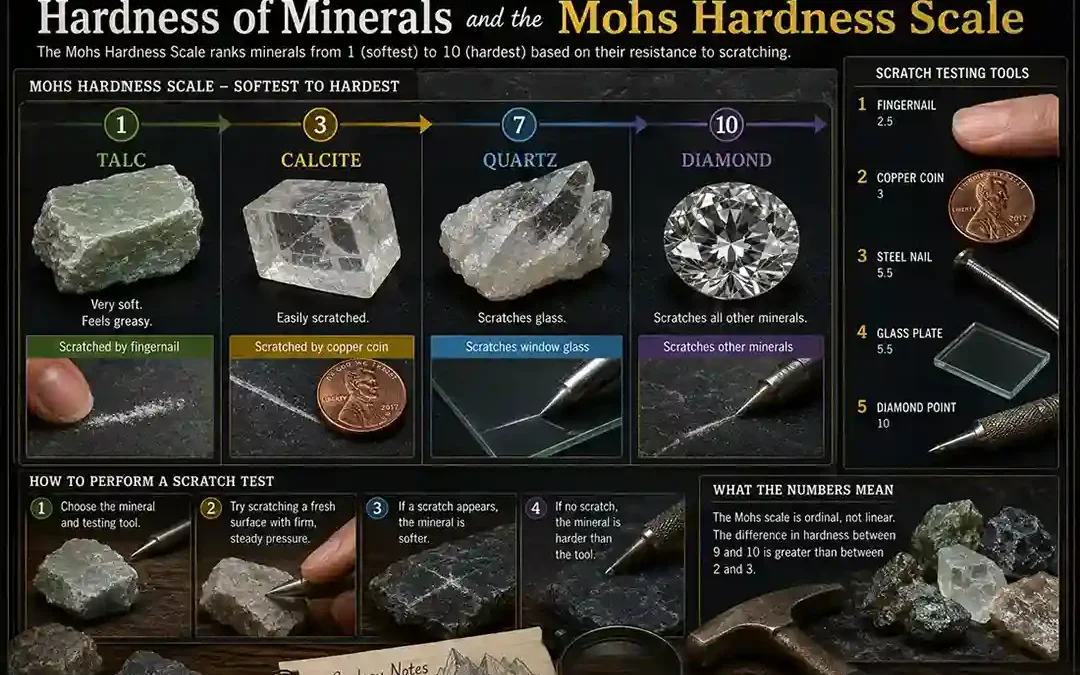 Hardness is one of the most important physical properties used in mineral identification. It measures a mineral’s resistance to scratching and helps geologists distinguish between minerals that may otherwise look similar. The most widely used system for...
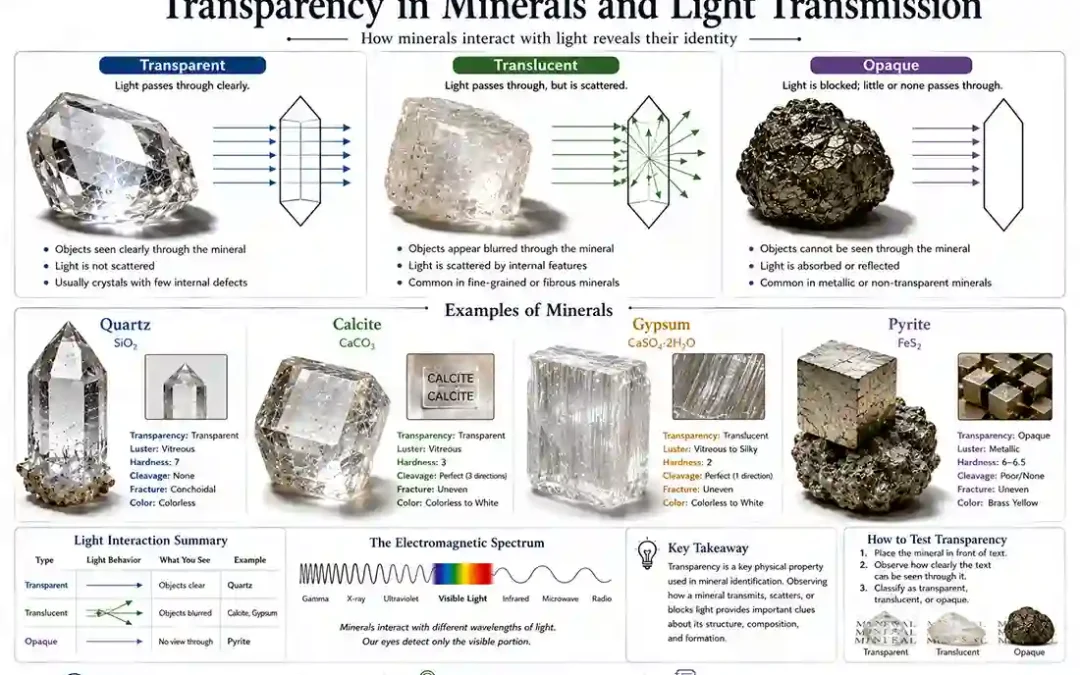 Transparency is an important optical property used in mineral identification. It describes how much light can pass through a mineral specimen. Some minerals allow light to pass through completely, while others block light entirely. By observing transparency,...
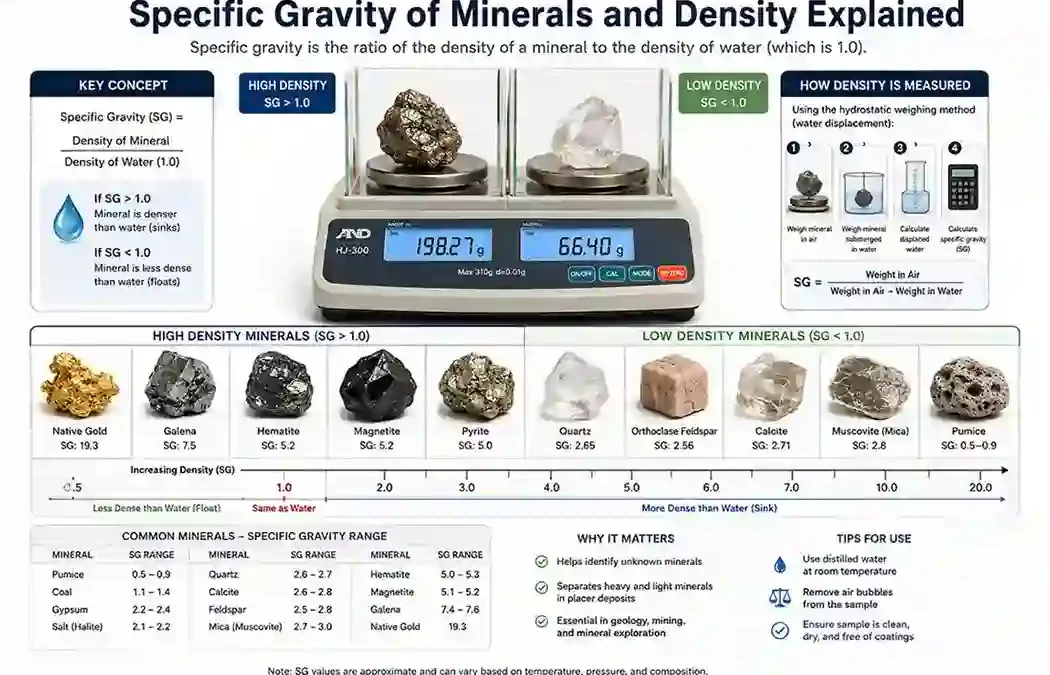 Some minerals feel surprisingly heavy, while others seem unusually light for their size. This difference is related to a property called specific gravity. Specific gravity measures how dense a mineral is compared to water. It helps geologists identify minerals,...
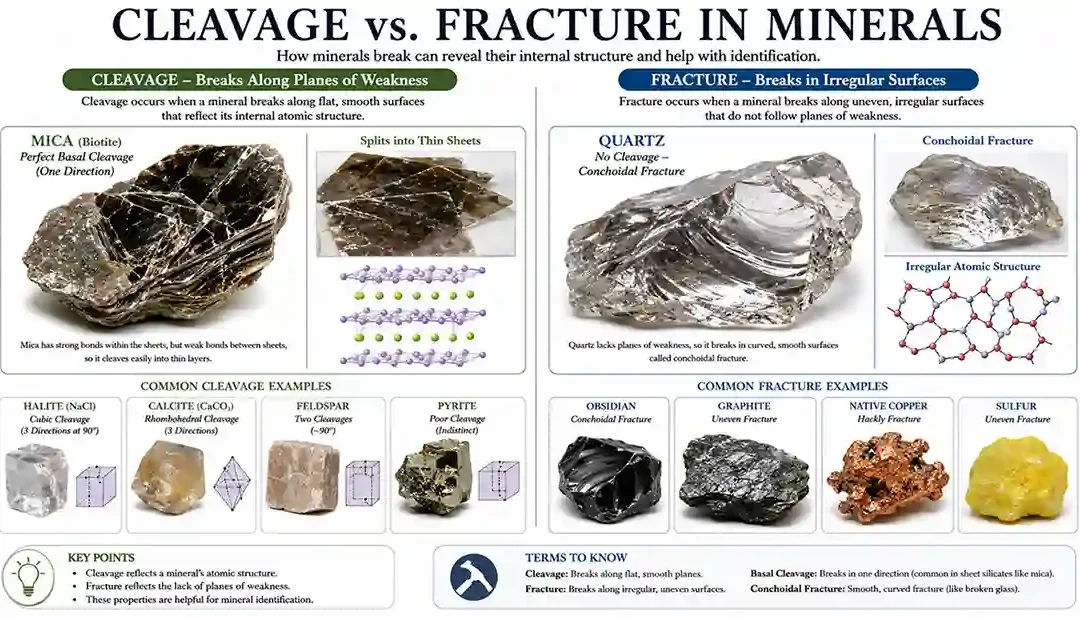 When minerals break, they do not all break in the same way. Some minerals split along smooth, flat surfaces, while others break irregularly and produce rough or curved edges. Geologists use two important properties to describe how minerals break: Cleavage Fracture...
