
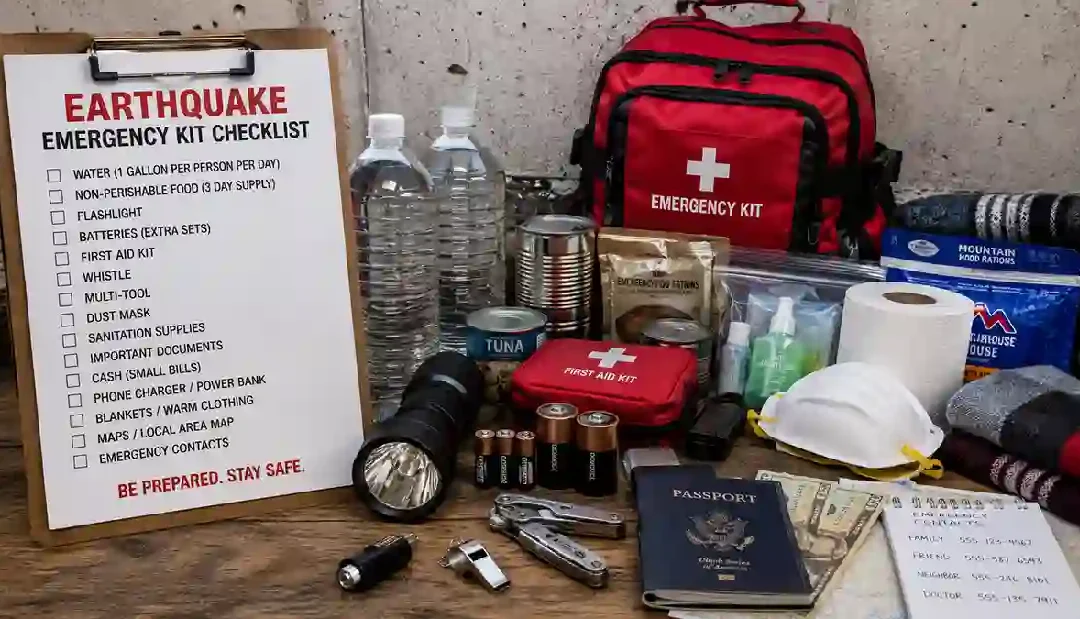
Earthquakes can disrupt daily life within seconds. After a major earthquake, people may face:
- power outages
- damaged roads
- communication failures
- limited access to food and water
- emergency service delays
That’s why having an earthquake emergency kit is extremely important.
A well-prepared emergency kit helps families stay safer and more independent during the critical hours after a disaster.
If you’re new to earthquakes, begin here → what is an earthquake
Most Important Earthquake Emergency Supplies
Top Emergency Kit Priorities
Most important items for earthquake preparedness and survival.
| Item | Importance |
|---|---|
| Water | 10 |
| First aid kit | 9 |
| Emergency food | 9 |
| Flashlight | 8 |
| Phone charger | 8 |
Core Earthquake Emergency Kit Checklist
1. Emergency Water Supply
Water is one of the most important emergency supplies.
Recommended:
- bottled water
- water purification tablets
- portable water filters
General Guideline
Many emergency organizations recommend at least 3 days of water per person.
2. Non-Perishable Emergency Food
Choose foods that:
- last a long time
- require little preparation
- are easy to store
Examples
- canned food
- protein bars
- dried fruit
- nuts
- ready-to-eat meals
Don’t forget a manual can opener.
3. First Aid Supplies
Earthquakes may cause injuries from:
- falling debris
- broken glass
- collapsed structures
Useful First Aid Items
- bandages
- antiseptic wipes
- gloves
- pain relievers
- prescription medications
Medical supplies are critical during disaster response.
4. Flashlights & Backup Lighting
Power outages are common after major earthquakes.
Recommended Items
- LED flashlights
- headlamps
- spare batteries
- portable lanterns
Avoid candles if gas leaks may exist.
5. Emergency Communication Tools
Communication may become difficult after earthquakes.
Important Tools
- battery-powered radio
- phone chargers
- power banks
- emergency contact list
Emergency alerts may provide evacuation or tsunami information.
Additional Recommended Earthquake Supplies
| Item | Why It Helps |
|---|---|
| Multi-tool | Repairs & utility tasks |
| Blankets | Warmth during outages |
| Dust masks | Air quality after collapse |
| Hygiene supplies | Sanitation |
| Extra clothing | Weather protection |
| Cash | Electronic payments may fail |
Earthquake Supplies for Home Safety
Some earthquake supplies should stay permanently accessible.
Important Home Safety Items
- fire extinguisher
- utility shutoff tools
- sturdy shoes
- gloves
- emergency whistle
Broken glass and debris can make homes dangerous after earthquakes.
Emergency Kits for Vehicles
Roads may become blocked after major earthquakes.
Vehicle Emergency Kit Ideas
- bottled water
- flashlight
- phone charger
- blanket
- snacks
- first aid kit
Cars can become temporary shelters during emergencies.
Coastal Earthquake & Tsunami Preparedness
If you live near the coast:
Include:
- evacuation maps
- waterproof document storage
- emergency whistles
- portable radios
Tsunamis may arrive minutes after strong offshore earthquakes.
Learn more → what to do after an earthquake
Earthquake Emergency Kit Maintenance
Emergency kits should be checked regularly.
Replace:
- expired food
- old batteries
- outdated medications
- damaged supplies
A neglected emergency kit may fail when needed most.
Earthquake Preparedness for Families
Families should also prepare:
- emergency meeting locations
- contact plans
- evacuation routes
Children should know:
- basic earthquake safety
- emergency contacts
- safe shelter locations
Learn more → how to prepare for an earthquake
Countries With Strong Preparedness Culture
Regions with high earthquake risk often promote emergency kits heavily.
Examples include:
- Japan
- California
- New Zealand
- Chile
Prepared communities generally recover faster after disasters.
Why Emergency Kits Matter
Earthquakes may disrupt:
- water systems
- electricity
- transportation
- stores and supply chains
Emergency kits help people remain safer and more self-sufficient during the first critical days after a disaster.
Can Early Warning Systems Replace Preparedness?
No.
Earthquake early warning systems may provide only seconds of notice.
Preparedness remains essential because:
- major infrastructure can fail
- emergency services may become overwhelmed
- aftershocks may continue for days
Learn more → earthquake early warning systems
Water.
At least 72 hours is commonly recommended.
Yes — electronic systems may fail after earthquakes.
Because gas leaks may increase fire risk.
Final Thoughts
An earthquake emergency kit is one of the most important tools for disaster preparedness. Having essential supplies ready before an earthquake occurs can improve safety, reduce panic, and help families remain more independent during emergencies and aftershocks.
Understanding earthquake preparedness helps people respond more calmly and effectively when sudden seismic disasters occur.