
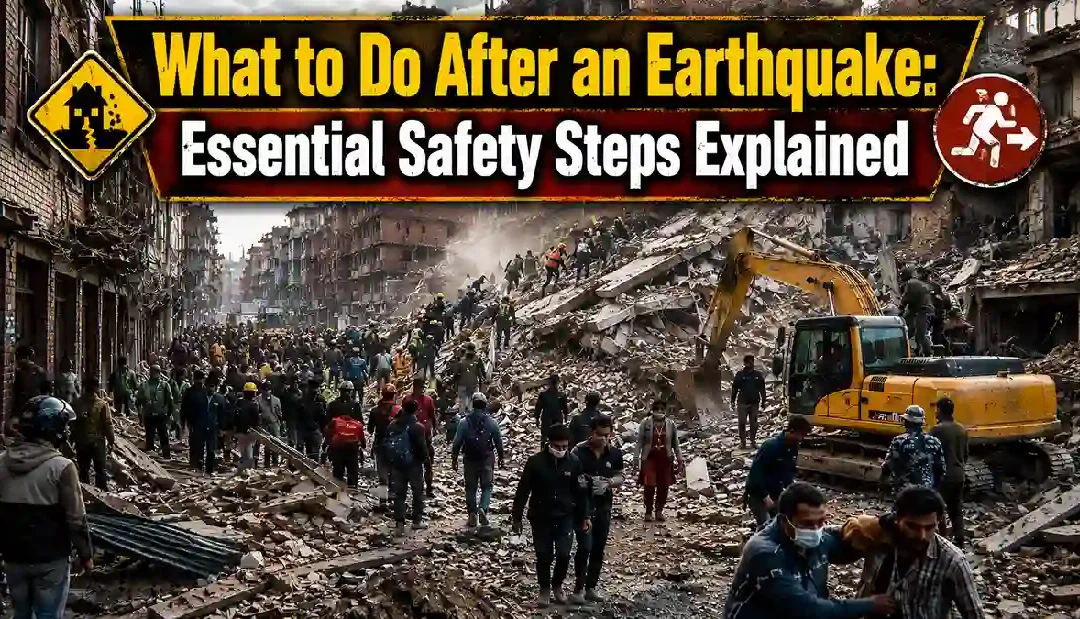
When the shaking stops, the danger may not be over. After an earthquake, people may face:
- aftershocks
- damaged buildings
- gas leaks
- fires
- power outages
- blocked roads
The minutes and hours after an earthquake are extremely important. Knowing what to do afterward can help prevent injuries and improve safety for you and others around you.
If you’re new to earthquakes, begin here → what is an earthquake
First Priorities After an Earthquake
Top Priorities After an Earthquake: Most important actions immediately after the earthquake shaking stops.
| Action | Importance |
|---|---|
| Protect yourself from aftershocks | 10 |
| Check for injuries | 9 |
| Avoid damaged buildings | 9 |
| Watch for fires or gas leaks | 8 |
| Follow emergency alerts | 8 |
Stay Alert for Aftershocks
The most important thing to remember is that aftershocks can happen minutes, hours, or even days later.
Some aftershocks may still be strong enough to:
- collapse weakened buildings
- trigger landslides
- cause additional injuries
Safety Tip
If shaking starts again, drop, cover, and hold on immediately.
Learn more → earthquake aftershocks explained
Check Yourself and Others for Injuries
After the earthquake:
Check For:
- cuts and bleeding
- trapped individuals
- serious injuries
- unconscious people
Important Tips
- Give first aid if trained
- Call emergency services if available
- Avoid moving seriously injured people unless necessary
Helping calmly can save lives.
Stay Away From Damaged Buildings
Buildings may still be unstable after the main earthquake.
Avoid:
- cracked structures
- leaning walls
- broken stairways
- damaged bridges
Structural collapse can happen during aftershocks.
Check for Fires and Gas Leaks
Earthquakes can damage utility systems.
Warning Signs
- smell of gas
- sparks or exposed wires
- smoke or fire
Safety Actions
- turn off utilities if safe
- avoid flames
- leave dangerous areas immediately
Fires are a major secondary earthquake hazard.
Listen for Emergency Information
Use trusted information sources such as:
- emergency radio
- official government alerts
- local emergency services
Important Updates May Include:
- tsunami warnings
- evacuation instructions
- road closures
- shelter information
Avoid spreading rumors or unverified information.
Watch for Tsunami Warnings Near the Coast
If the earthquake happened near the ocean, move to higher ground immediately if tsunami warnings exist.
Natural Warning Signs
- strong long-lasting shaking
- sudden ocean retreat
- loud ocean roar
Tsunamis can arrive minutes after major offshore earthquakes.
Check Your Home Carefully
Before re-entering a building:
Look For:
- cracked walls
- ceiling damage
- water leaks
- electrical hazards
Do NOT:
- use open flames if gas leaks are possible
- touch damaged electrical wires
- enter heavily damaged structures
Travel Carefully After an Earthquake
Roads and transportation systems may be damaged.
Watch For:
- cracked roads
- fallen debris
- bridge damage
- traffic signal failures
Travel only if necessary.
Earthquake Recovery Priorities
| Priority | Why It Matters |
|---|---|
| Medical safety | Prevent injuries |
| Structural safety | Avoid collapse risk |
| Utility safety | Reduce fire/explosion danger |
| Emergency information | Improve decision-making |
| Aftershock awareness | Continued protection |
Why Aftershocks Are So Dangerous
Aftershocks are especially dangerous because:
- buildings are already weakened
- people may panic
- rescue operations become difficult
Some major disasters have caused additional deaths during aftershock periods.
Earthquake Recovery Around the World
Countries with advanced earthquake preparedness systems often recover faster.
Examples include:
- Japan
- New Zealand
- United States (California)
Prepared regions use:
- emergency drills
- building inspections
- coordinated disaster response systems
Learn more → earthquake monitoring technology
Psychological Effects After Earthquakes
Strong earthquakes may cause:
- fear
- anxiety
- stress
- sleep disruption
Important Reminder
Feeling nervous after a major earthquake is common.
Staying informed and prepared can help reduce panic during aftershocks.
Can Another Major Earthquake Happen Soon After?
Sometimes.
Large earthquakes can redistribute stress along nearby faults.
This may:
- trigger aftershocks
- increase regional seismic activity
- activate nearby fault systems
Learn more → foreshocks vs mainshock vs aftershocks
Protect yourself from possible aftershocks and check for injuries.
Not always — damaged structures may collapse during aftershocks.
Because weakened buildings can fail more easily after the main earthquake.
Only if buildings are damaged or officials recommend evacuation.
Final Thoughts
The period after an earthquake can remain dangerous because of aftershocks, damaged infrastructure, fires, and other hazards. Knowing what to do after an earthquake helps people stay safer, protect others, and respond more effectively during the critical hours following a seismic event.
Preparedness, calm decision-making, and reliable emergency information are some of the most important tools for earthquake survival and recovery.