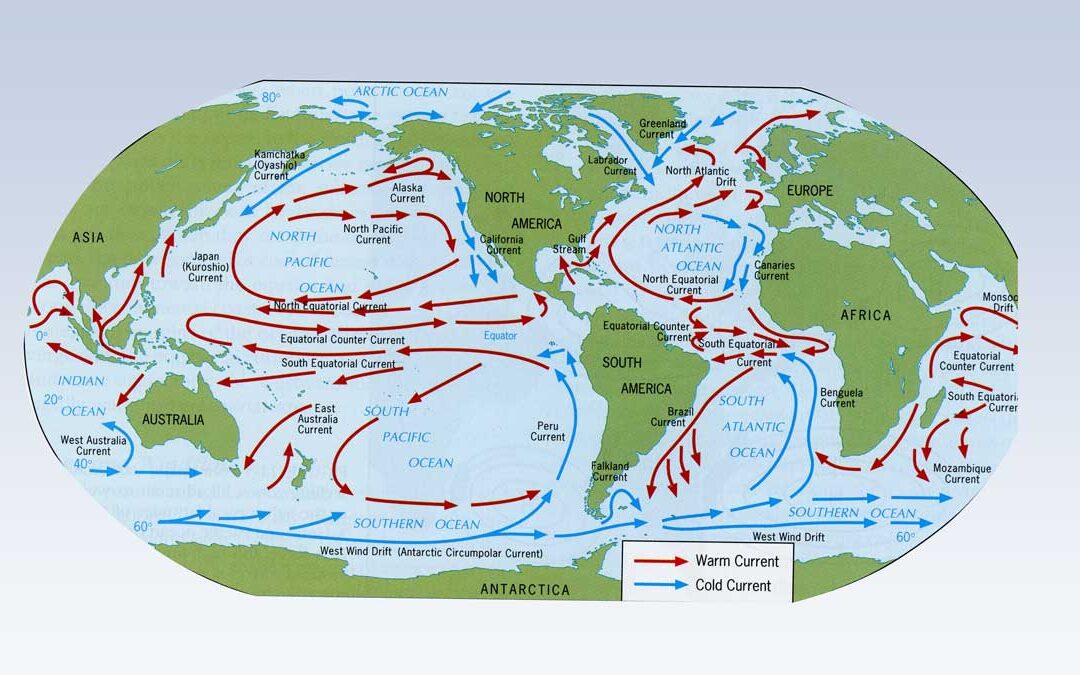
 The types of oceanic gyres provide important information about ocean movement and its consequences on the planet. Wind patterns and the Earth’s rotation push large, round water structures known as oceanic gyres. We classify them into subtropical gyres, which dominate...
 Ocean Currents can be generated by wind, density differences in water masses caused by temperature and salinity variations, gravity, and earthquakes. However, the factors of ocean currents are primarily influenced by four main elements. Factors of Ocean Currents:...
 Understanding the types of ocean currents is crucial to appreciating their profound impact on our planet. This post explores the concept of ocean currents, their classification into surface and deep currents, and the unique characteristics that define each type. Types...
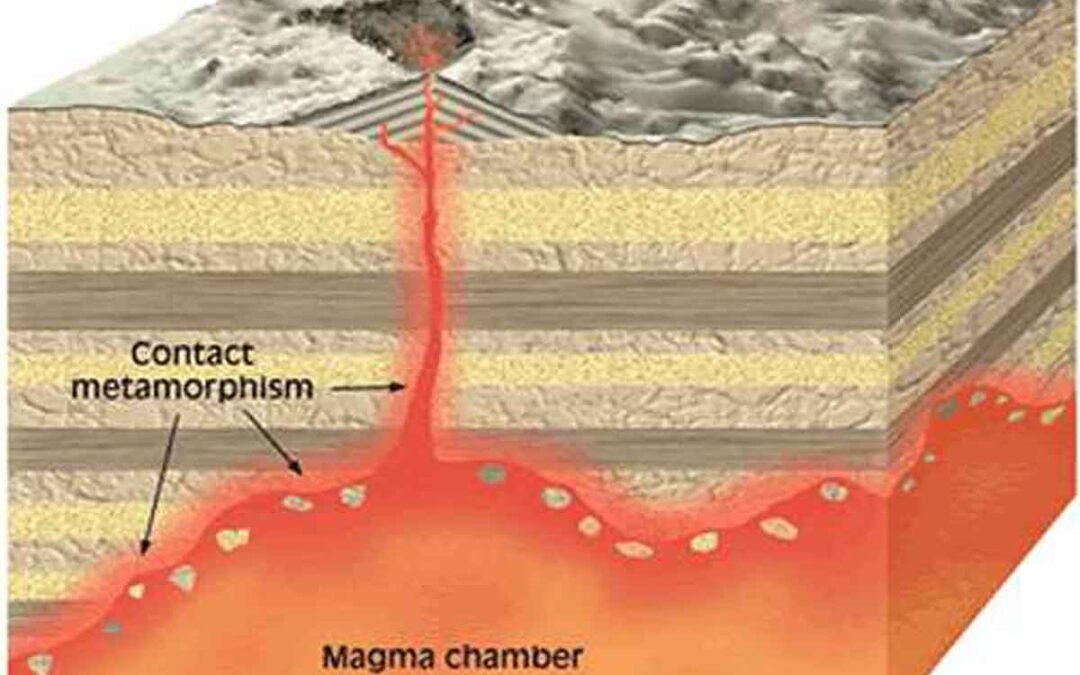 Contact Metamorphism is a type of metamorphism of a local extent that affects the country rocks around the magma bodies injected along fractures or natural zones of weakness between rock layers. The magmas are the sources of heat, mass, and mechanical energy necessary...
 Gravity and force are two powerful forces that shape the world as we know it. From holding us to the ground to keeping planets in orbit, gravity and force are fundamental to our universe’s natural laws. What is Gravity? Gravitation refers to the attractive force...
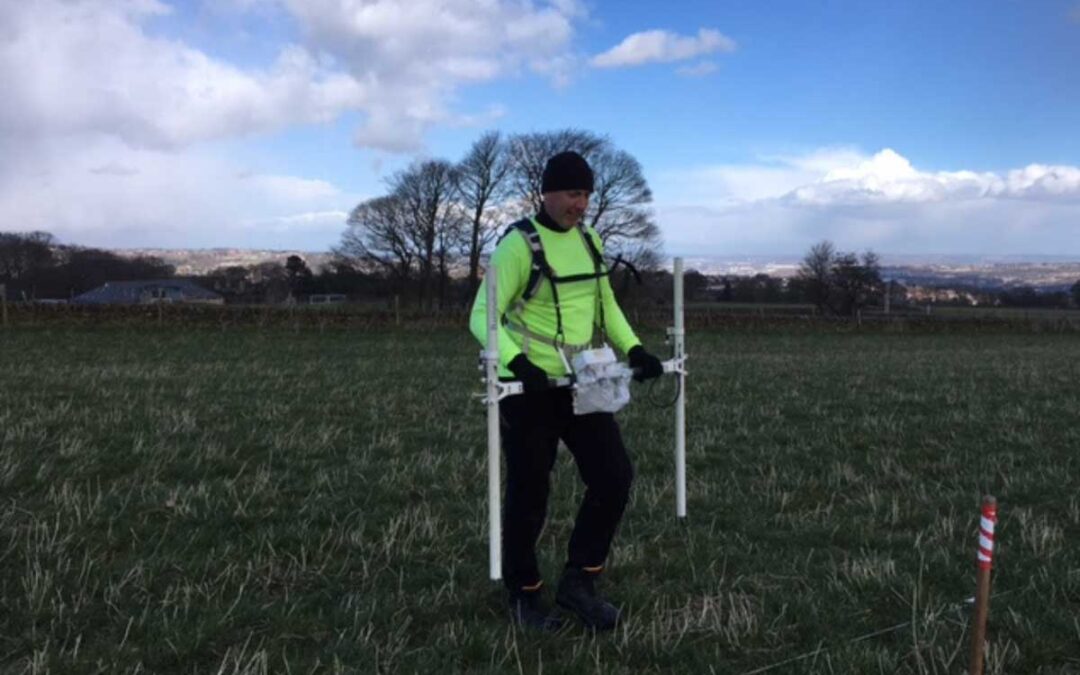 A geophysical survey is the systematic collection of geophysical data for spatial studies. Detection and analysis of geophysical signals form the core of geophysical signal processing. The geophysical survey uses various sensing instruments, and data may be collected...
