 The Quaternary Period represents the active, modern stage of Earth’s geologic history. It is defined by dramatic climatic swings where massive continental ice sheets repeatedly expanded and retreated, driving global sea levels to rise and plunge by more than 120...
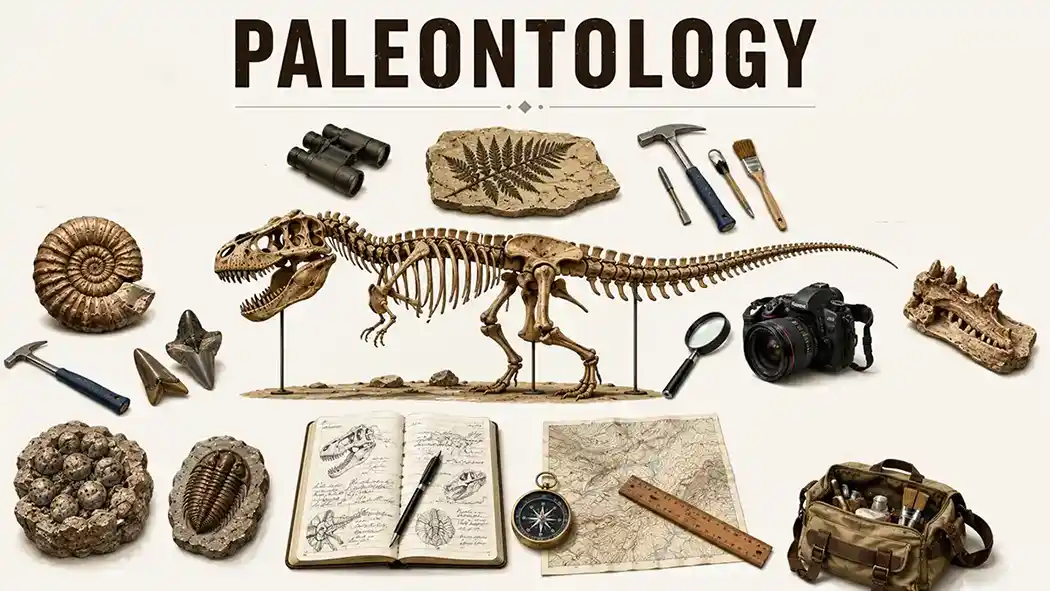 Paleontology is the scientific study of fossils, more broadly, the study of prehistoric organisms. In fact, professional conferences and publications often fall into these categories. This post gives an idea of what paleontology is and why it is essential to...
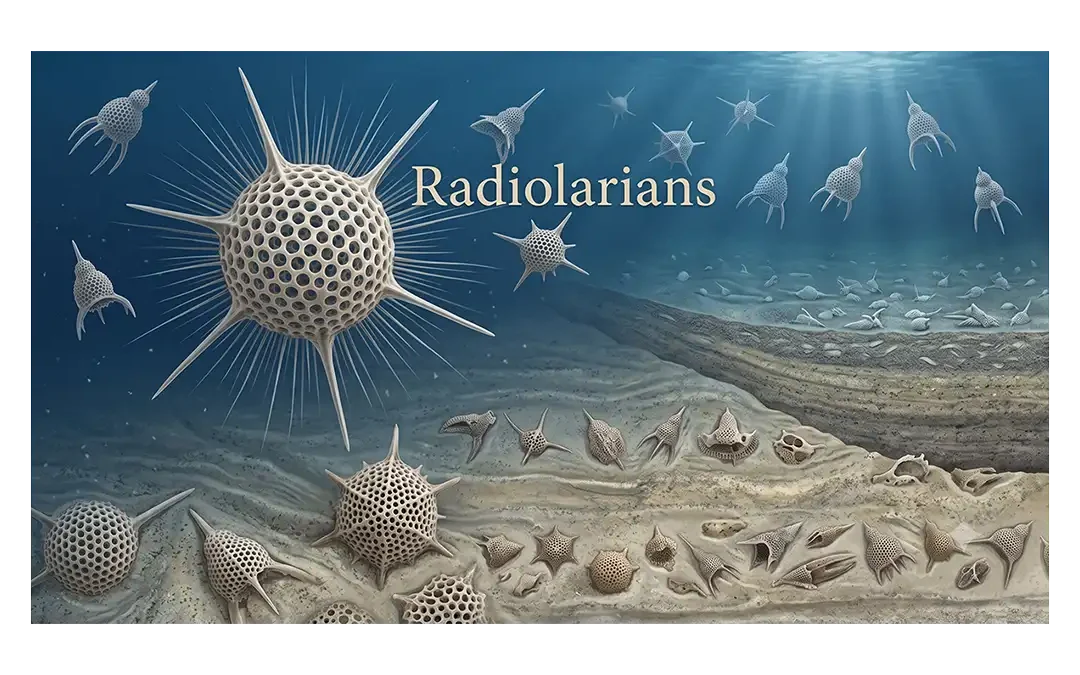 Radiolarian is a microscopic marine organism known for its intricate mineral skeleton and importance in the geological record. Radiolarians live mainly in the open ocean, where they form part of the plankton community. When they die, their mineralized skeletons can...
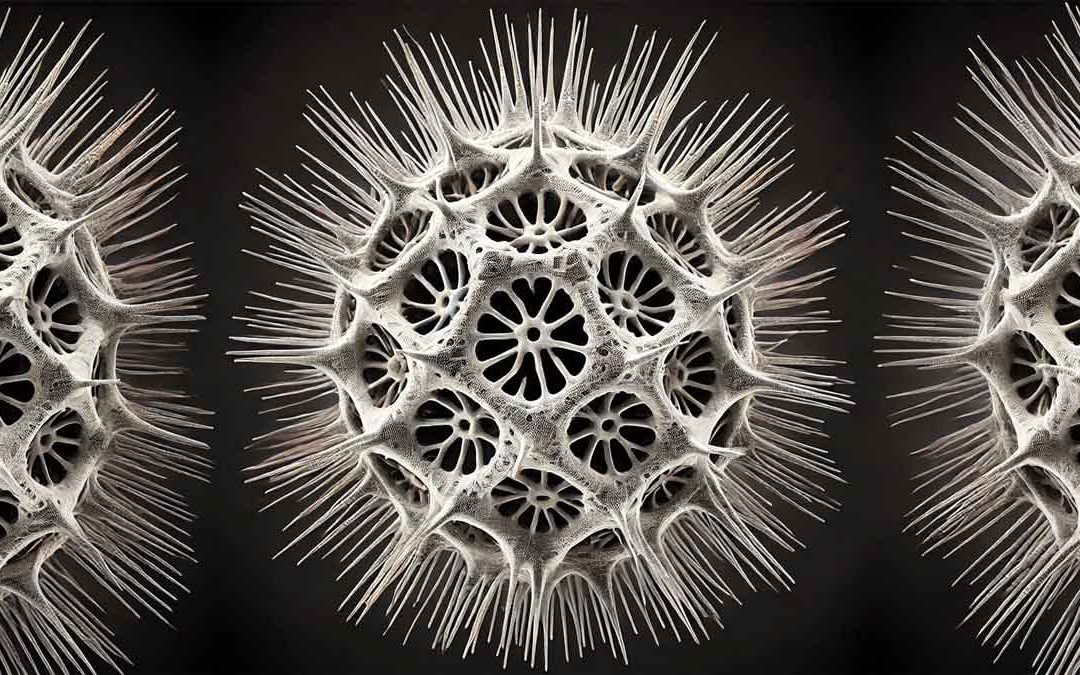 Radiolaria: Radiolaria are free-floating protists with roughly spherical cells and thread-like pseudopodia extending radially over a delicate endoskeleton. Moder Radiolarians are marine with representatives in Cambrian times. Radiolarians provide the most useful data...
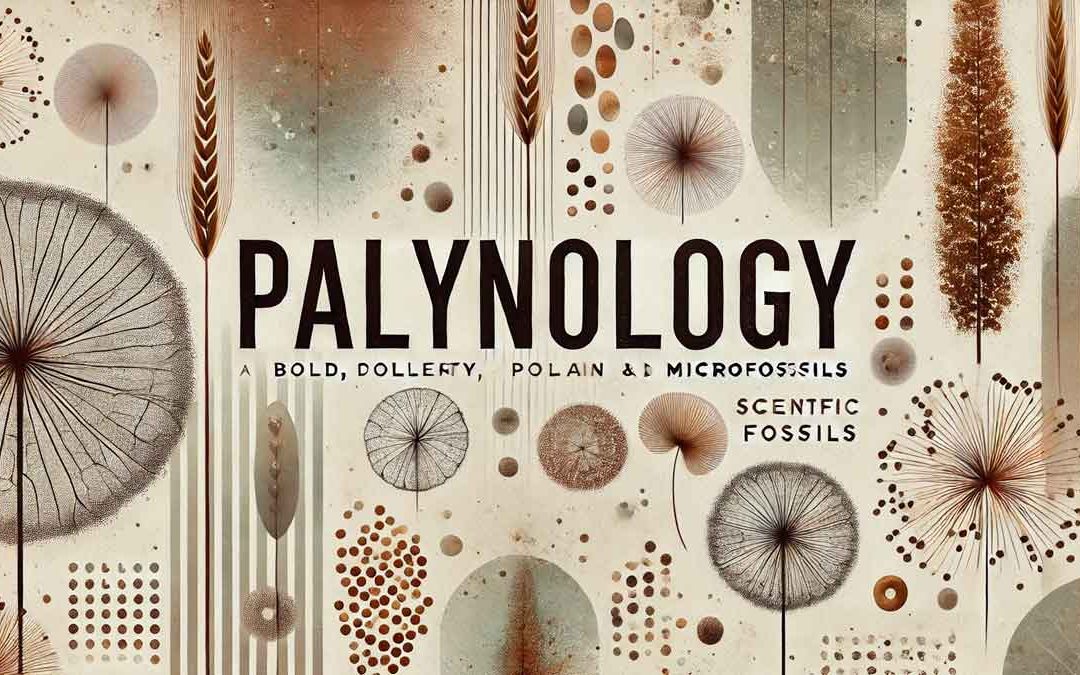 Applications of palynology: Biostratigraphy & geochronology: Geologists use palynological studies in biostratigraphy to correlate strata & determine the relative age of given bed or stratigraphic sequences. Paleoecology & climate change: Reconstructing...
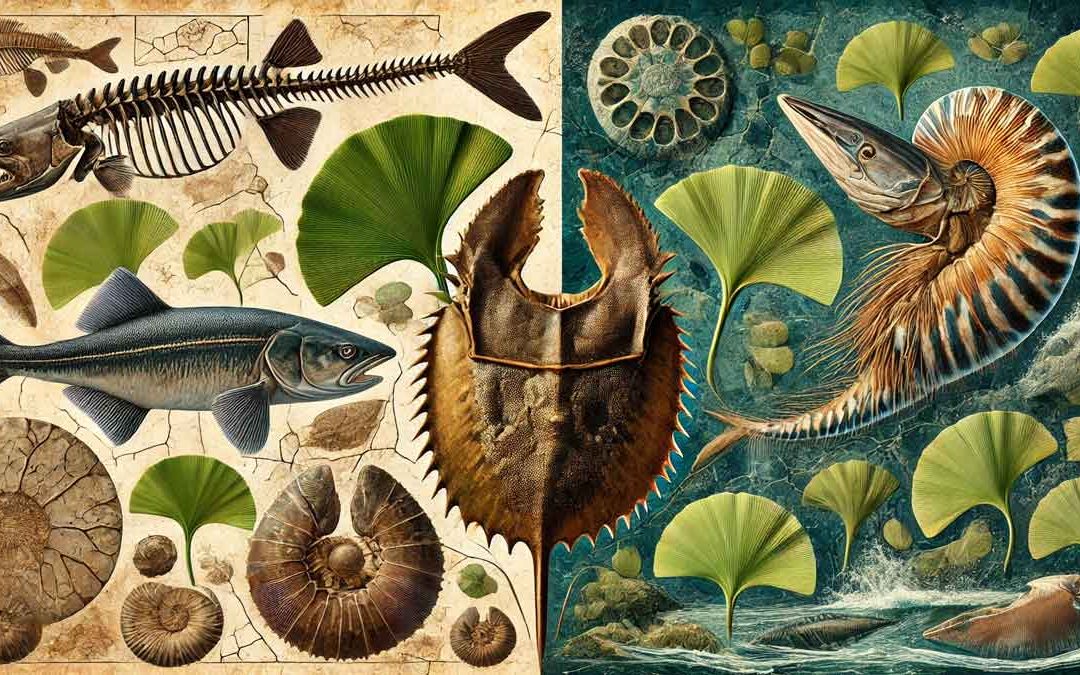 Classification of Living Fossils: Living fossils are classified by two main characteristics. Living organisms that are members of a taxon that has remained recognizable in the fossil record over an unusually long time span. They show little morphological divergence,...
