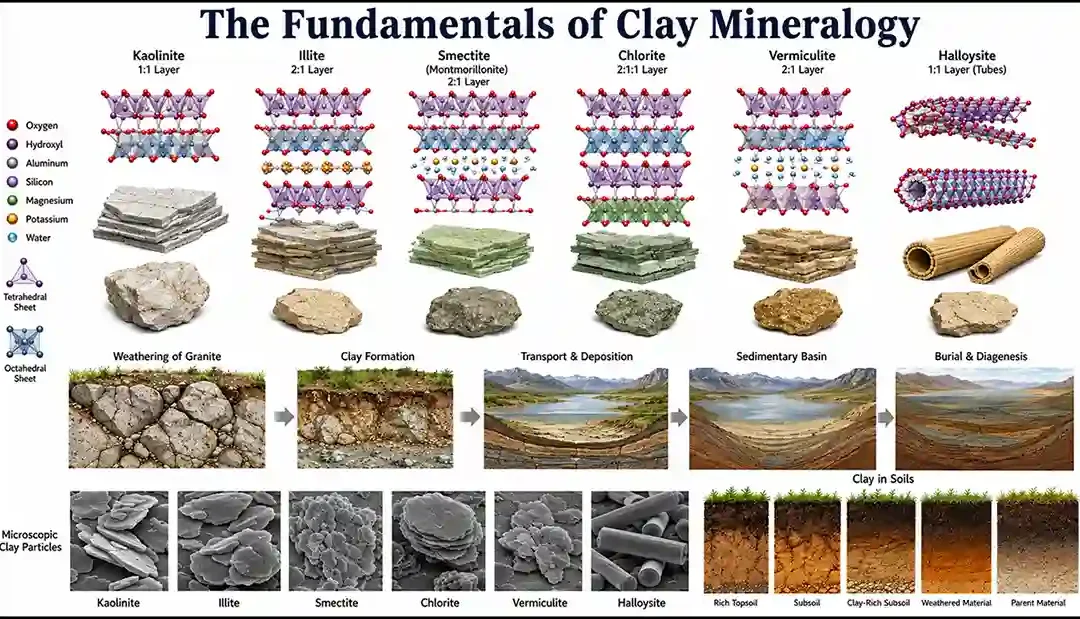
 Clay minerals are among the most abundant and scientifically important minerals on Earth. They form through the weathering of rocks and are major components of soils, sediments, sedimentary rocks, and hydrothermal alteration zones. Although individual clay particles...
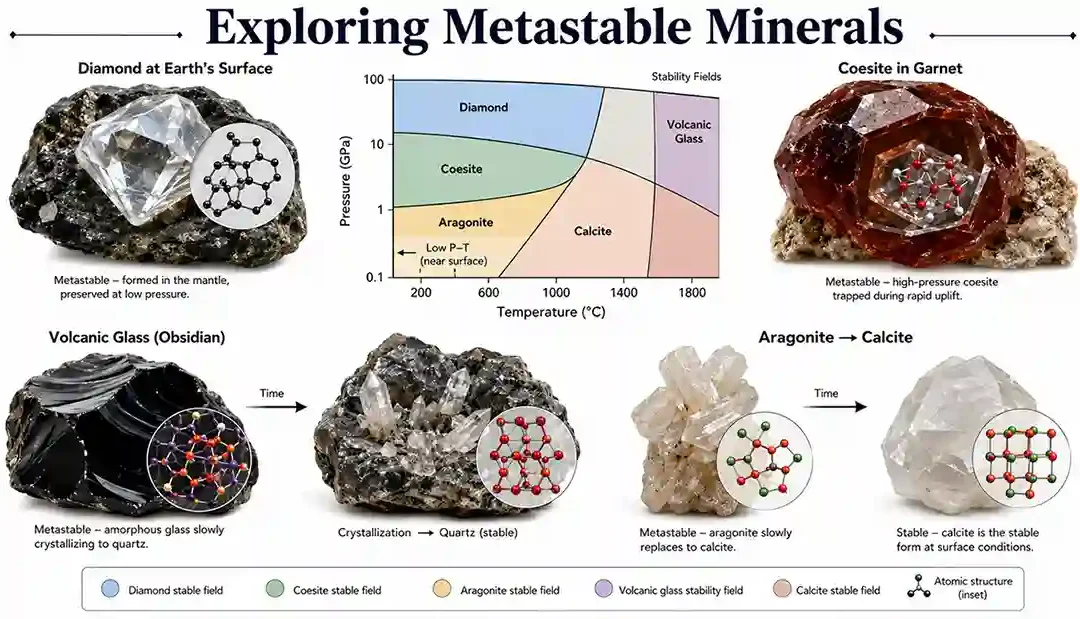 Many minerals continue to exist even after the environmental conditions under which they formed have changed. Although they are no longer the most stable phase, they remain preserved because their transformation into a more stable mineral is extremely slow. These...
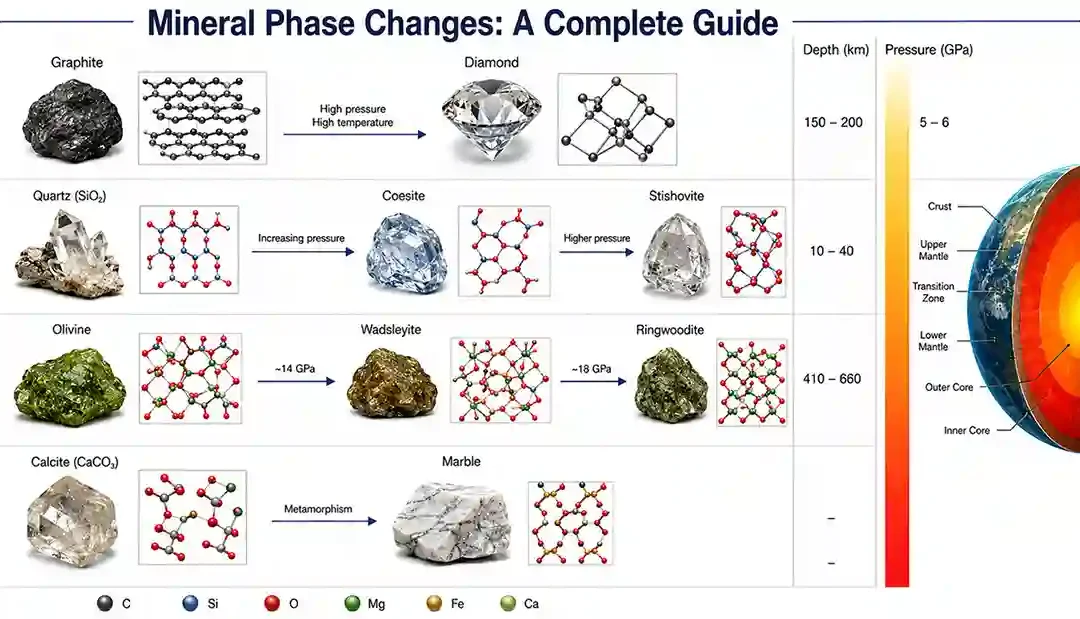 Minerals are not always stable under every geological condition. As temperature, pressure, or chemical composition changes, minerals may transform into new crystal structures while often retaining the same chemical composition. These transformations are known as...
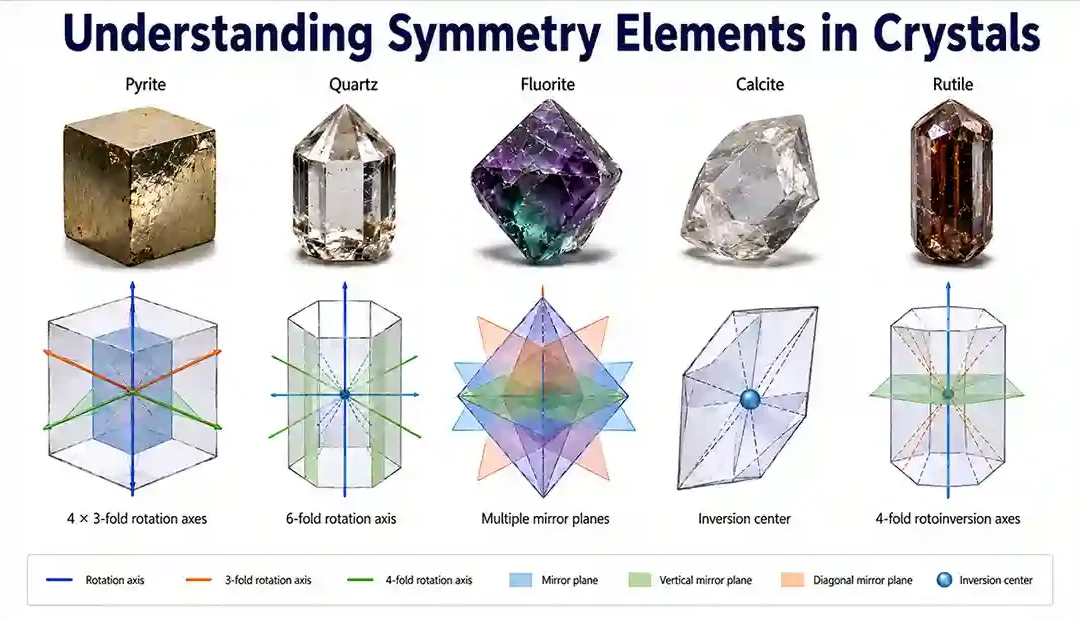 Symmetry is one of the most fundamental concepts in crystallography. Every crystal possesses a specific arrangement of atoms that repeats in a regular pattern, giving rise to predictable symmetry. These symmetrical features are described by symmetry elements, which...
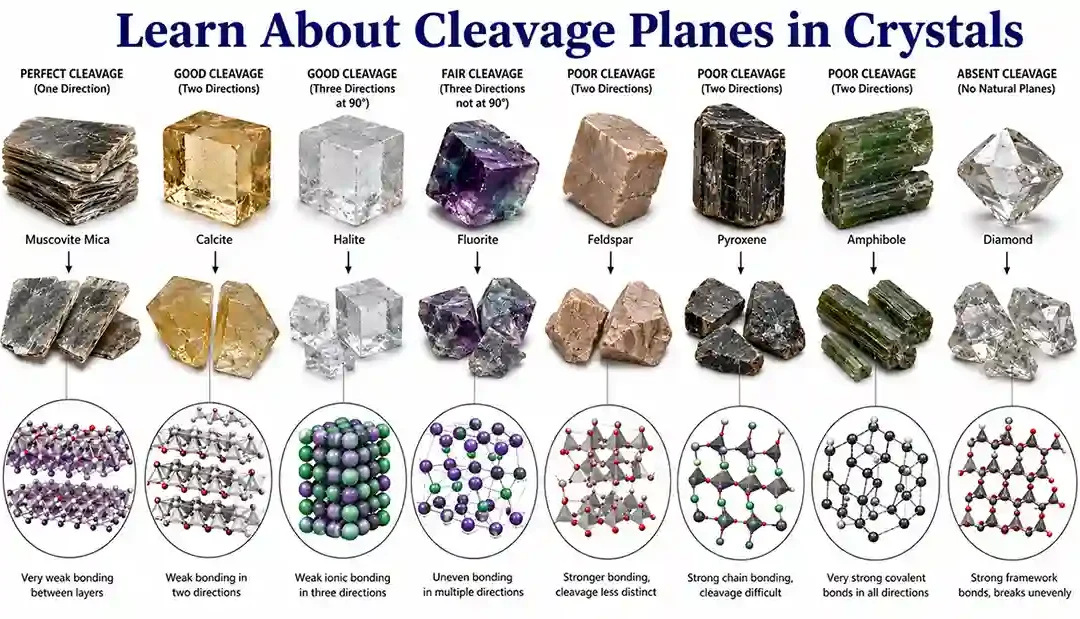 Cleavage is one of the most important physical properties used to identify minerals. It describes a mineral’s tendency to break along flat, smooth, parallel surfaces called cleavage planes. These planes form because atomic bonds are weaker in certain directions...
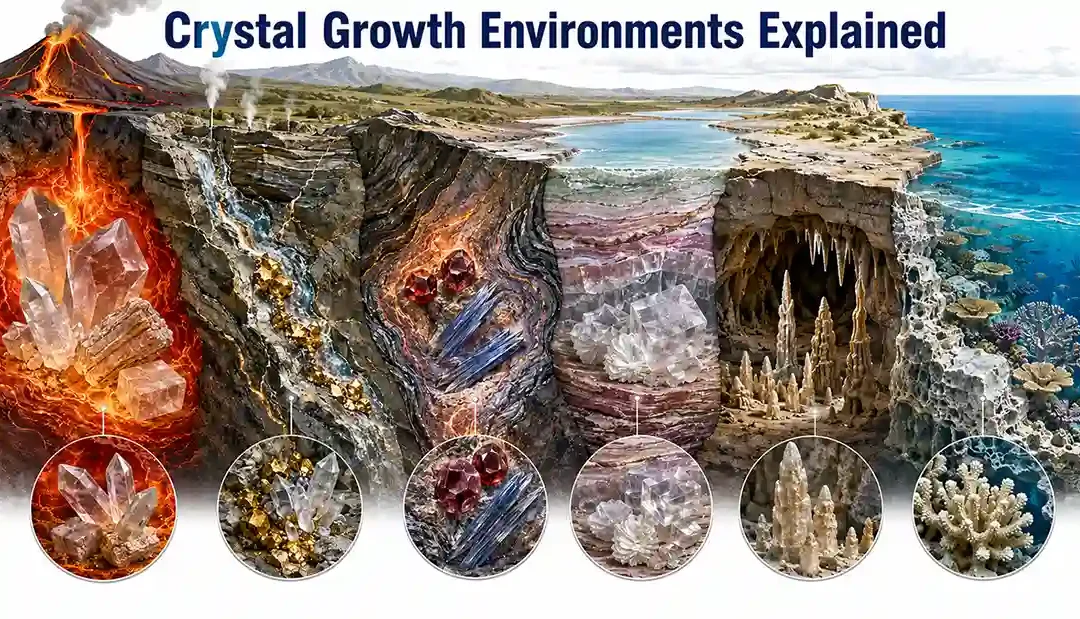 Crystals form in a wide variety of geological environments, each providing the conditions necessary for atoms to organize into ordered crystal structures. These crystal growth environments differ in temperature, pressure, fluid chemistry, cooling rate, and available...
