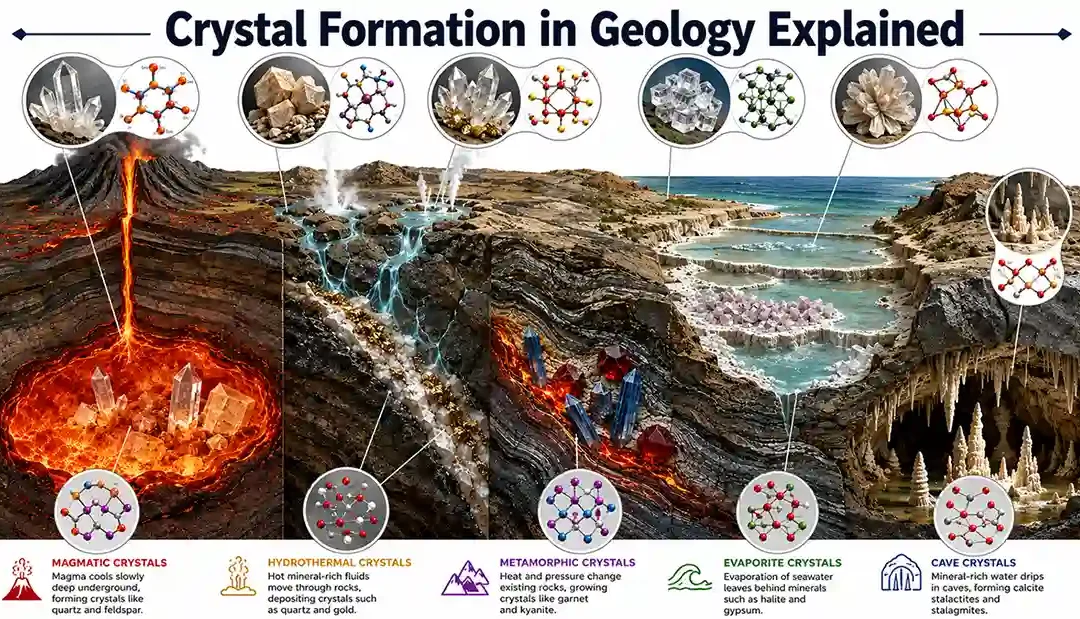
 Crystals are one of nature’s most remarkable creations. Every crystal begins as tiny atoms, ions, or molecules that gradually organize into a highly ordered and repeating three-dimensional pattern known as a crystal lattice. Over time, these microscopic building...
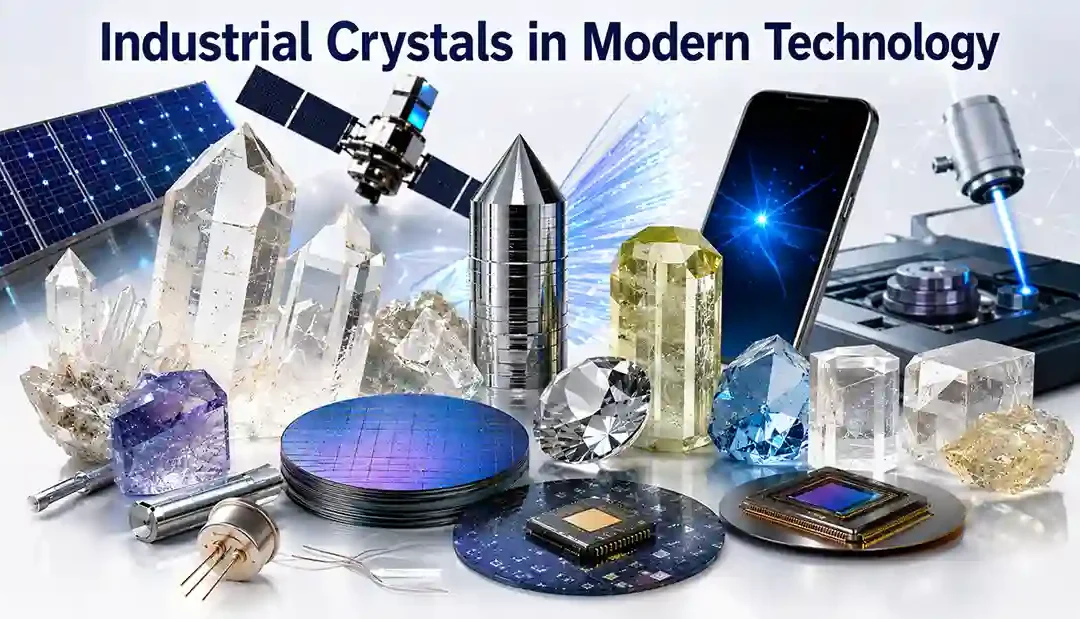 Industrial crystals are naturally occurring or laboratory-grown crystals that are used in manufacturing, electronics, construction, medicine, optics, energy production, and many other industries. Unlike gemstones, which are valued primarily for their beauty,...
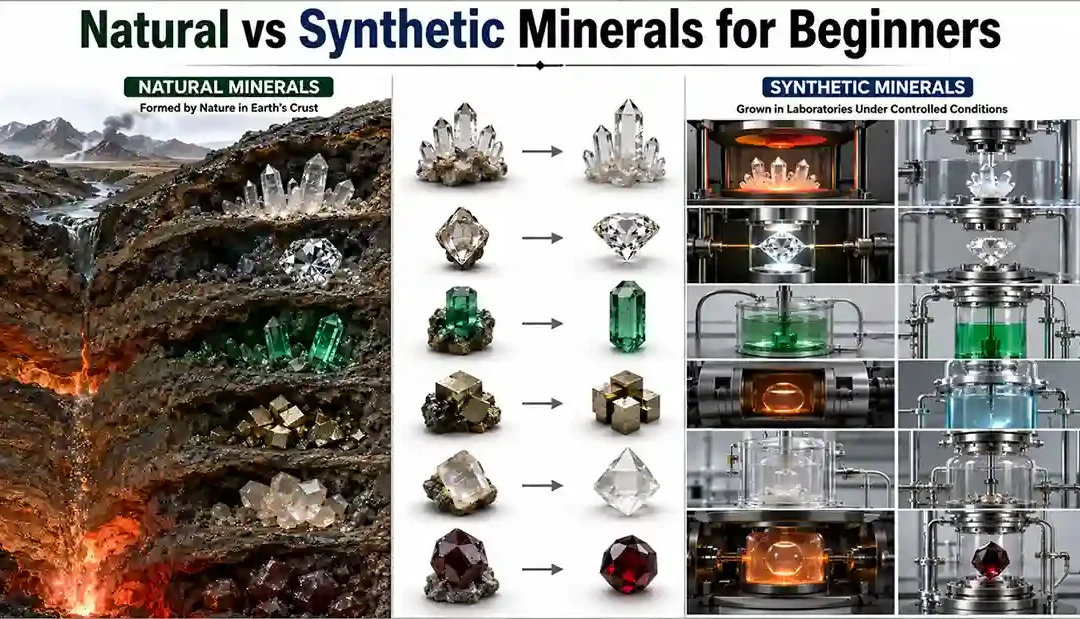 Minerals can form naturally through geological processes or be produced artificially under controlled laboratory conditions. Natural minerals develop over thousands to millions of years through processes such as magma crystallization, hydrothermal activity,...
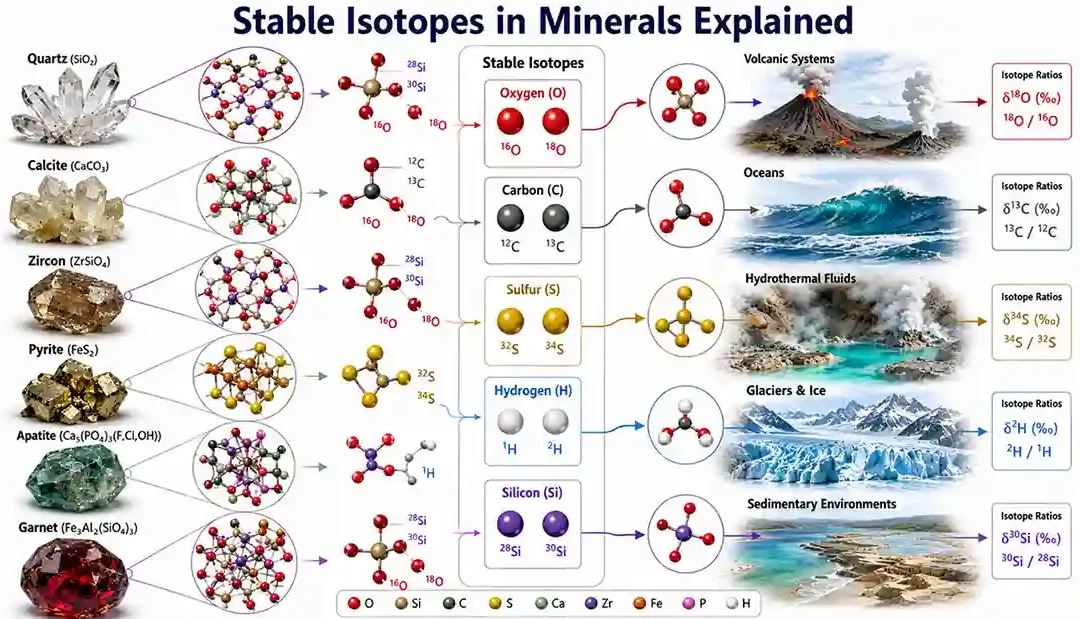 Stable isotopes are naturally occurring forms of chemical elements that have the same number of protons but different numbers of neutrons. Unlike radioactive isotopes, stable isotopes do not decay over time, making them valuable tools for studying geological processes...
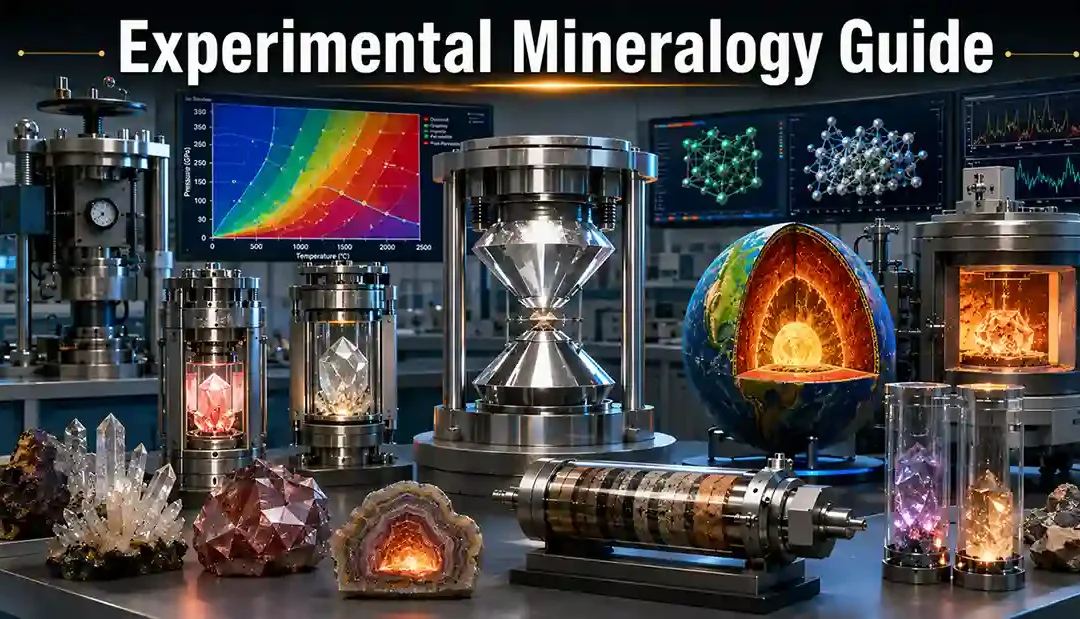 Experimental mineralogy is the branch of mineralogy that recreates natural geological conditions in a laboratory to understand how minerals form, grow, transform, and remain stable. Instead of relying only on field observations, scientists reproduce the high...
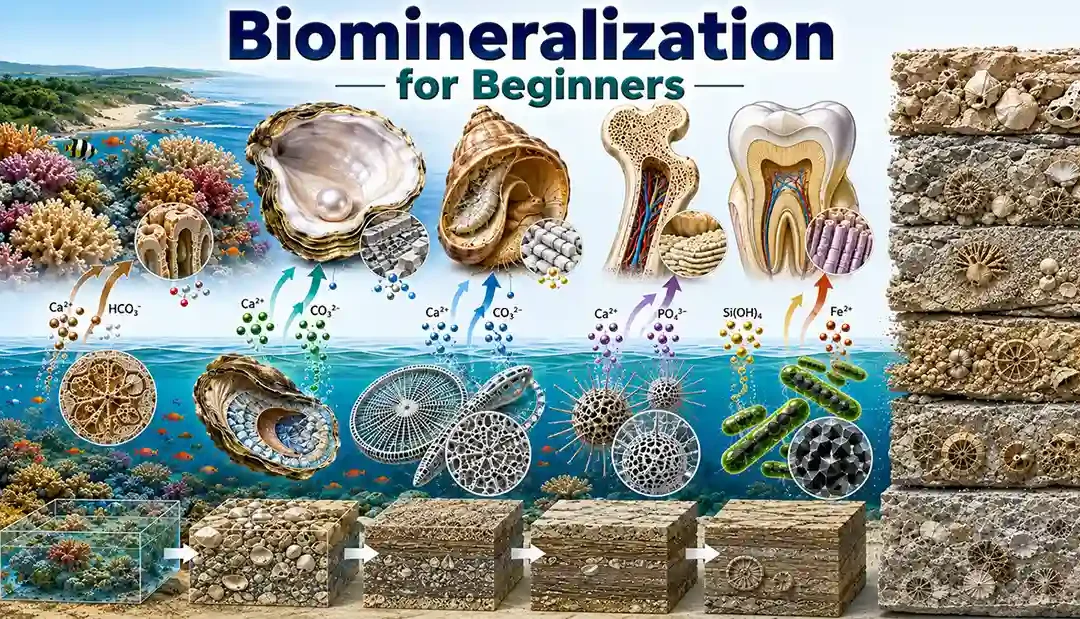 Biomineralization is the natural process by which living organisms produce minerals within or around their bodies. Through carefully controlled biological and chemical processes, organisms combine dissolved ions from water or body fluids to build hard structures such...
