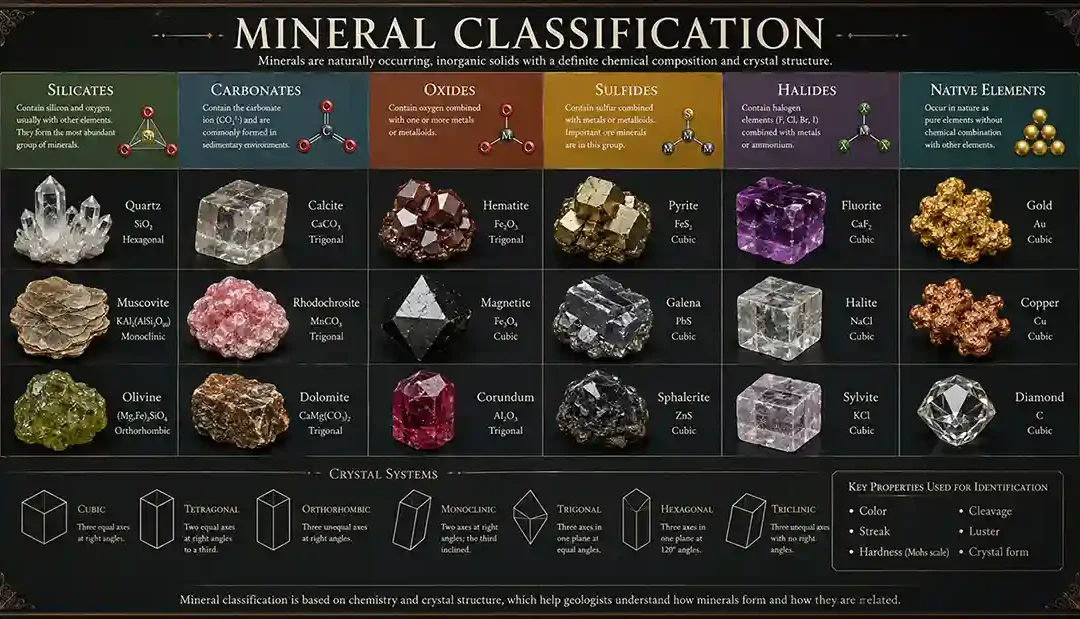
 Scientists classify minerals into groups based mainly on their chemical composition and crystal structure. This organization system is called the mineral classification system. Because thousands of minerals exist on Earth, classification helps geologists: identify...
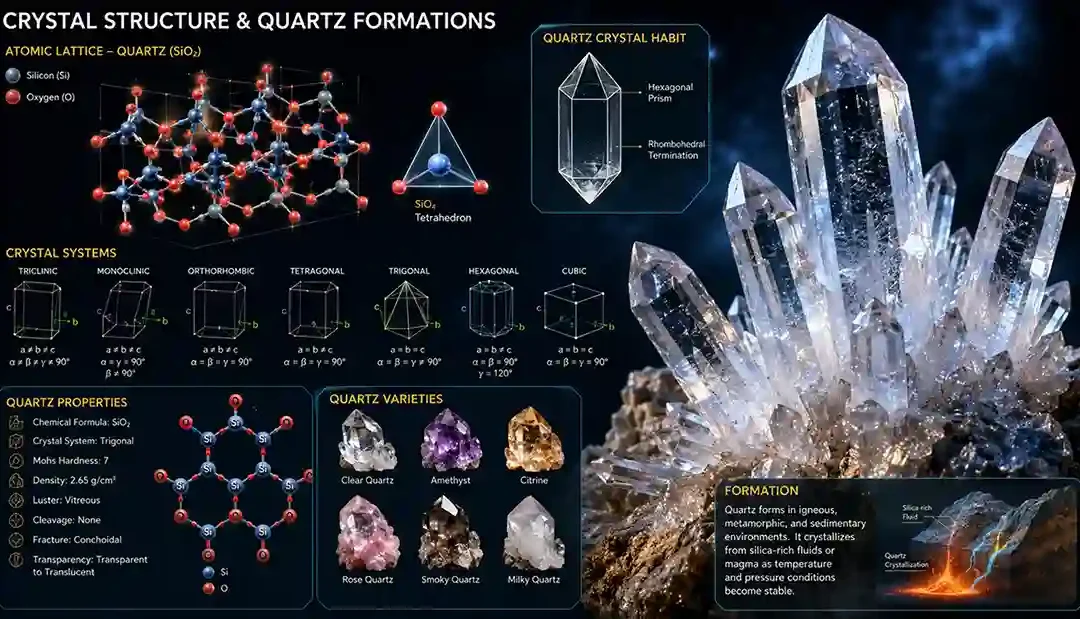 Crystal structure is one of the most important characteristics of minerals. It describes how atoms are arranged inside a mineral in a repeating geometric pattern called a crystal lattice. This atomic arrangement controls many mineral properties, including: crystal...
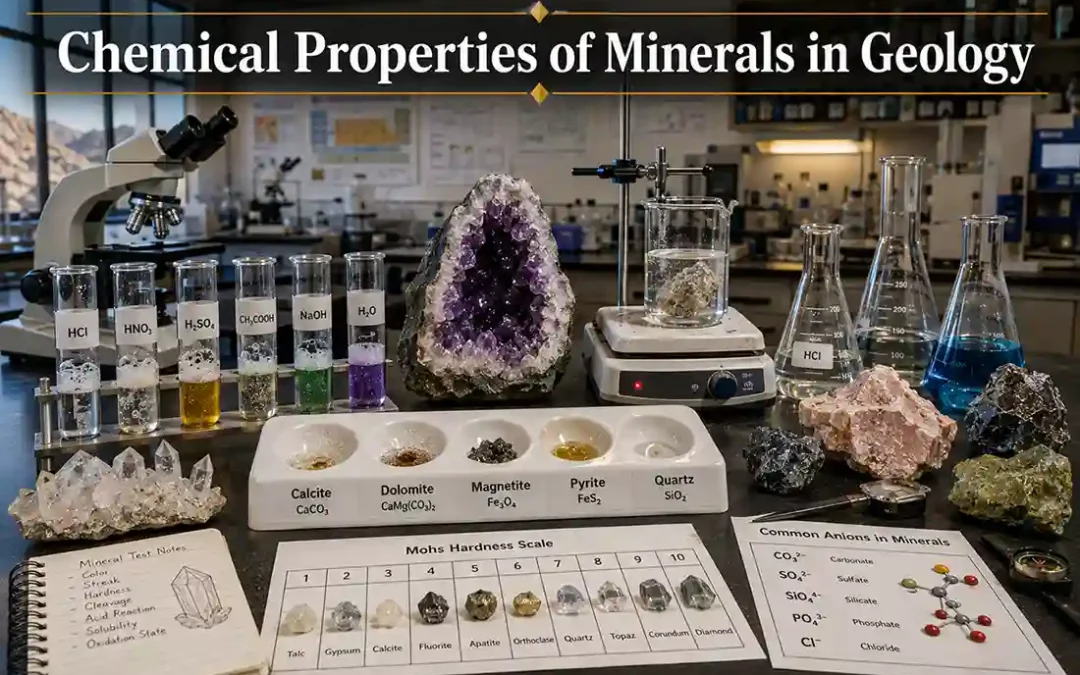 Minerals are not only identified by physical appearance — they also have important chemical properties that help scientists understand their composition, behavior, and formation. Chemical properties describe: what minerals are made of how they react with substances...
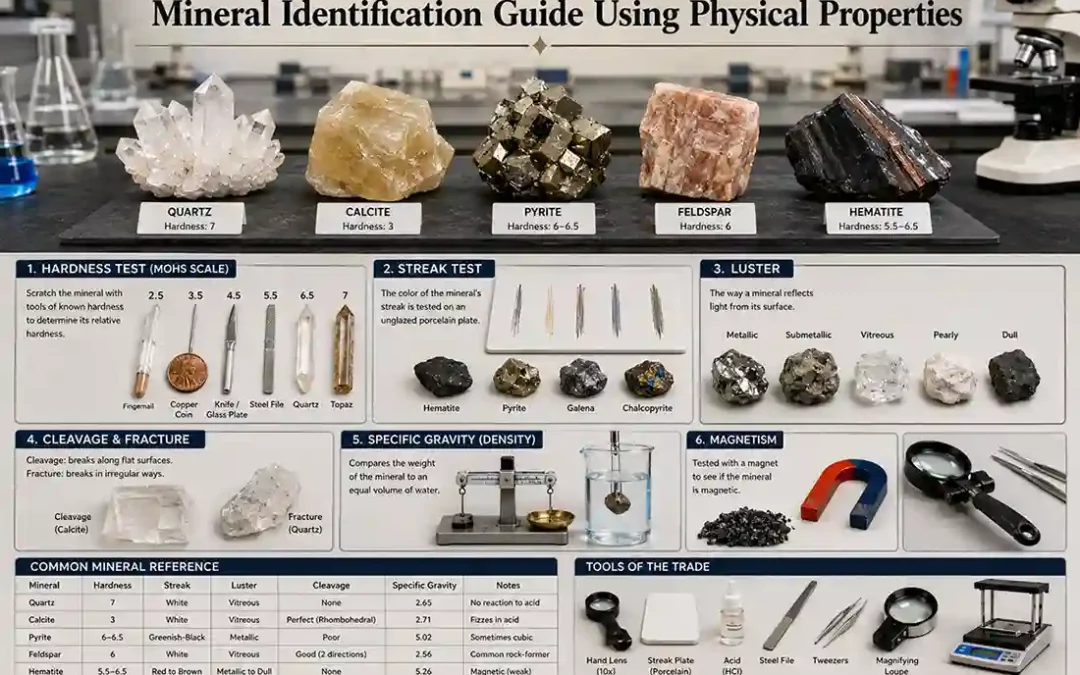 Mineral identification is one of the most important skills in geology and Earth science. Geologists identify minerals by studying their physical and chemical properties rather than relying only on appearance. Because many minerals can look similar, scientists use...
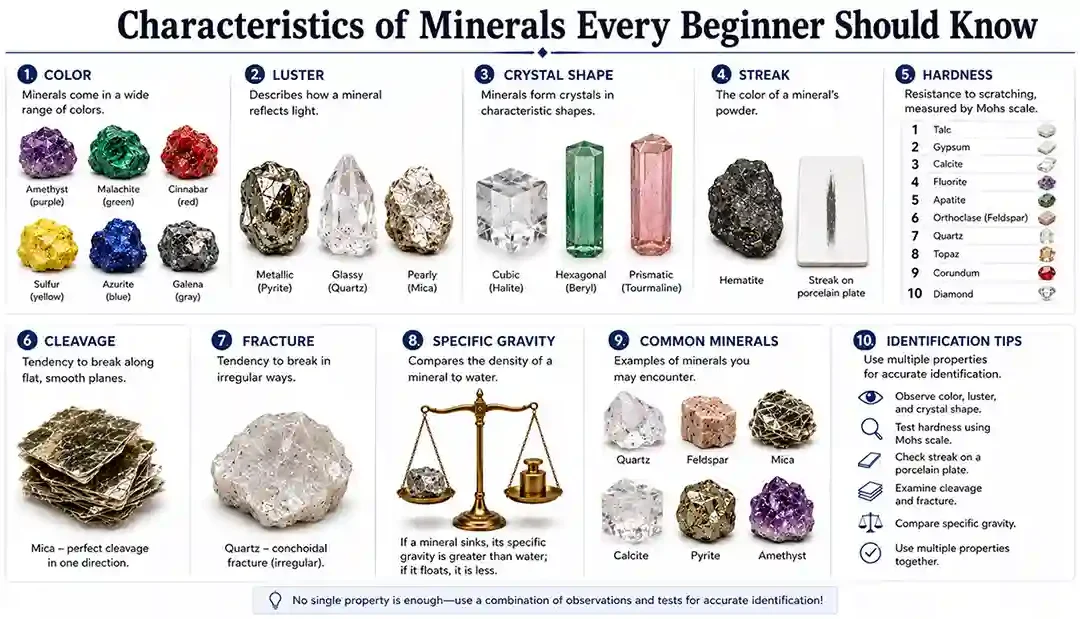 Minerals can look very different from one another, and scientists use their physical and chemical properties to identify them accurately. These features are called the characteristics of minerals. By studying mineral characteristics, geologists can: identify unknown...
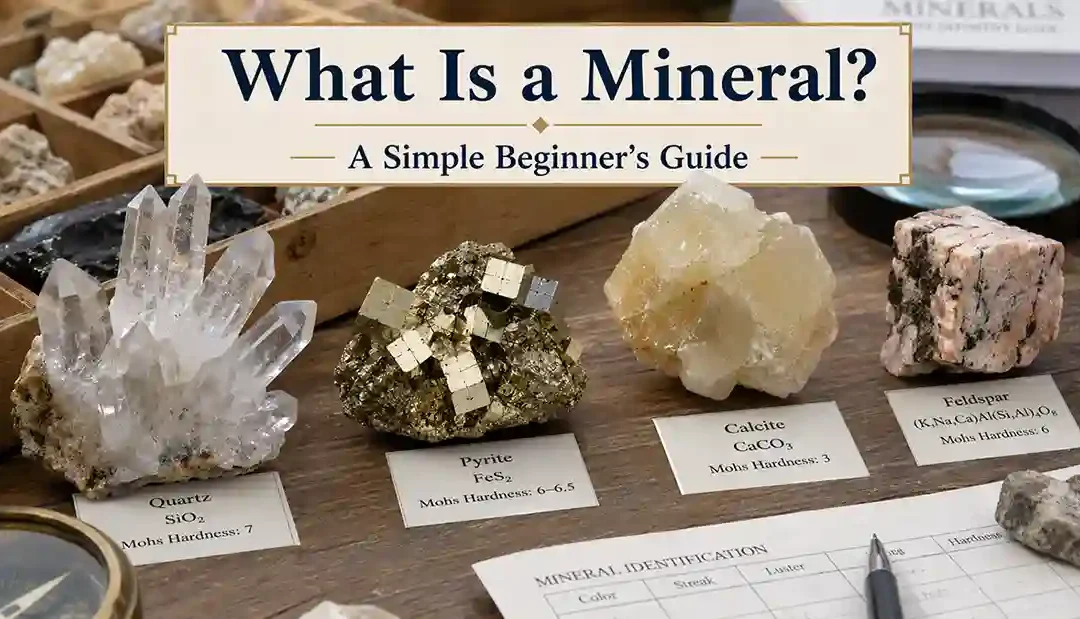 Minerals are the basic building blocks of rocks and one of the most important parts of Earth’s crust. Everything from mountains and soil to smartphones and buildings depends on minerals in some way. In geology, a mineral is a naturally occurring solid substance with a...
