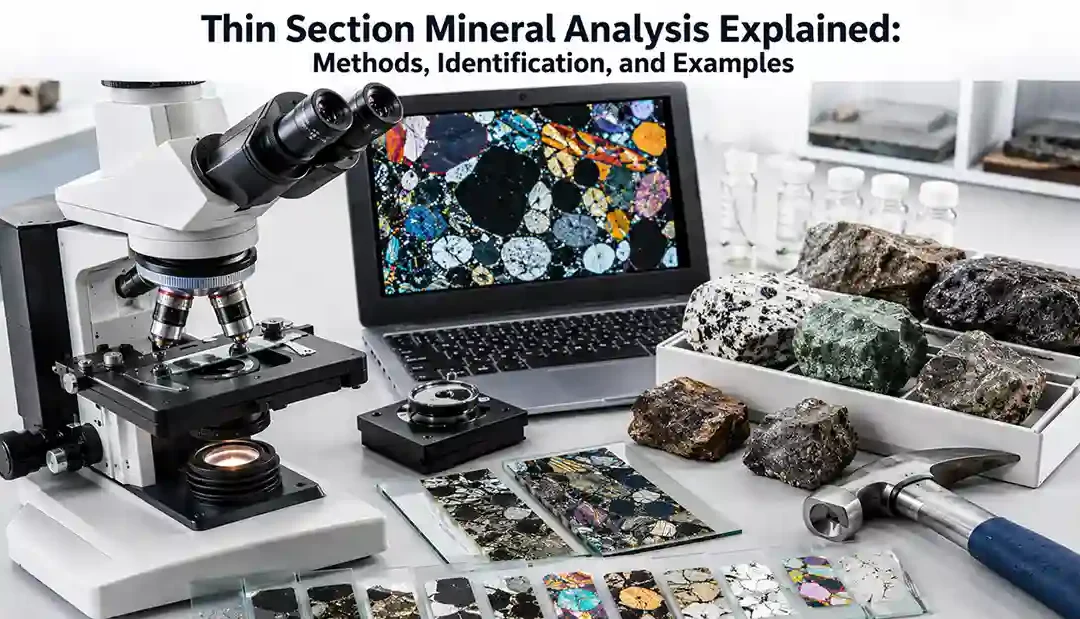
 Thin section mineral analysis is one of the most important laboratory techniques in mineralogy, petrology, and geology. It involves preparing an extremely thin slice of rock—typically 30 micrometers (0.03 mm) thick—and examining it under a polarized light microscope....
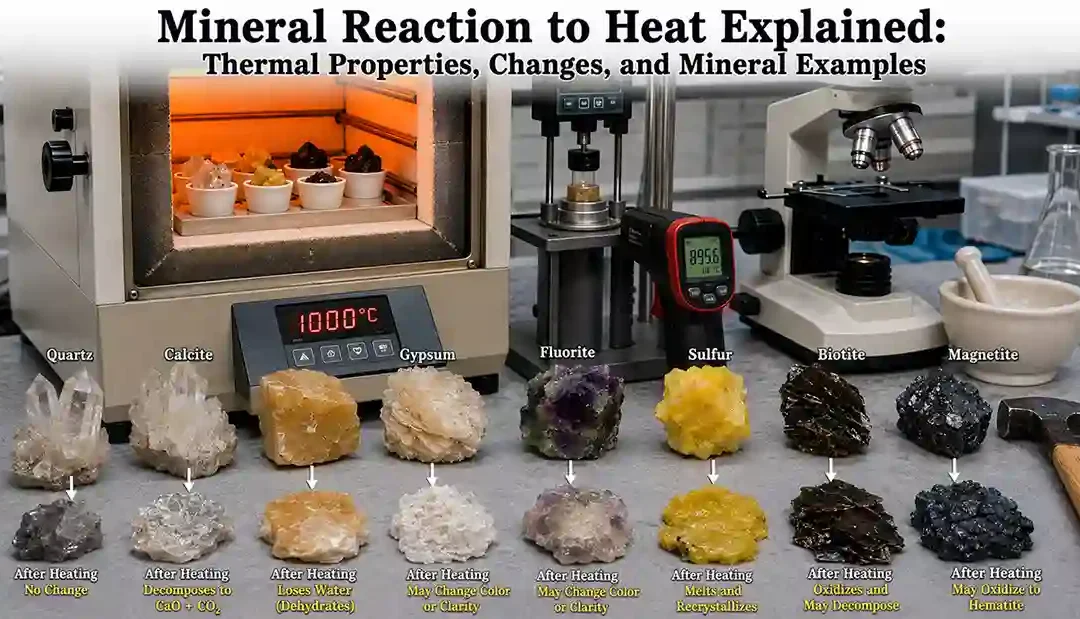 Heat plays a fundamental role in the formation, transformation, and destruction of minerals. From the crystallization of minerals in cooling magma to the alteration of rocks during metamorphism, changes in temperature continuously reshape Earth’s crust. When...
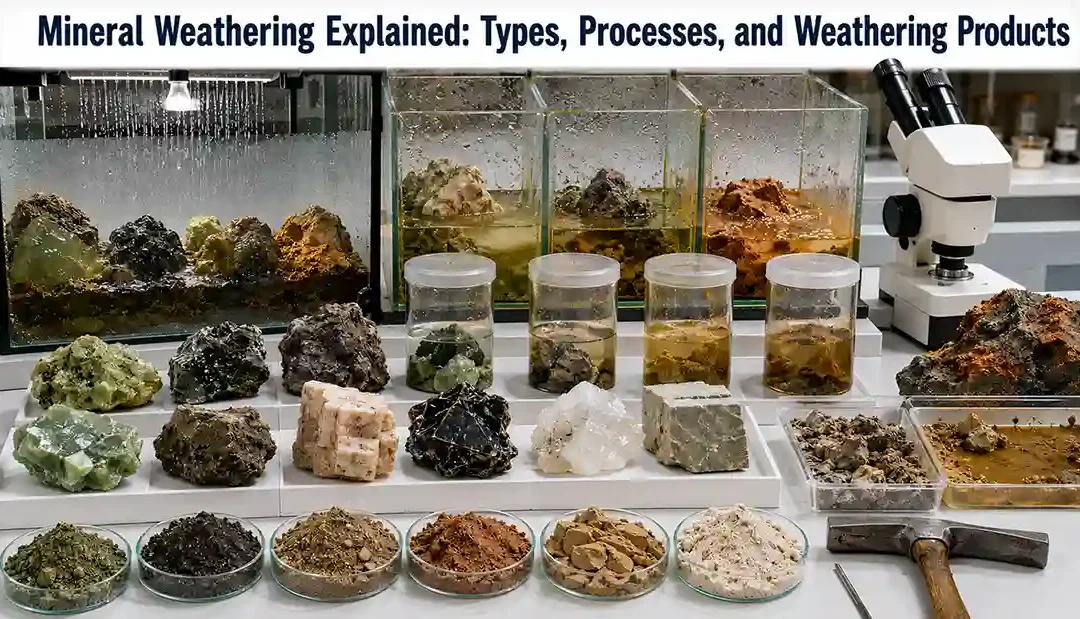 Mineral weathering is the natural process through which minerals break down, dissolve, or transform when exposed to Earth’s surface conditions. Minerals that formed deep underground under high temperatures and pressures become unstable when they encounter air,...
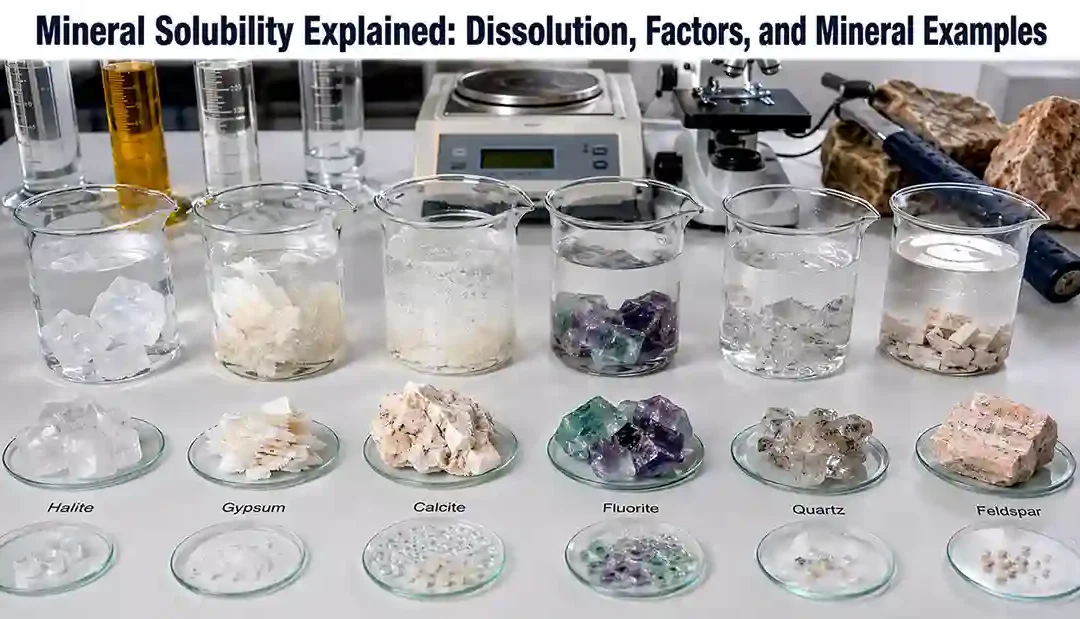 Mineral solubility is the ability of a mineral to dissolve in water or other natural fluids under specific environmental conditions. It is one of the most important chemical properties in mineralogy because it controls weathering, cave formation, groundwater...
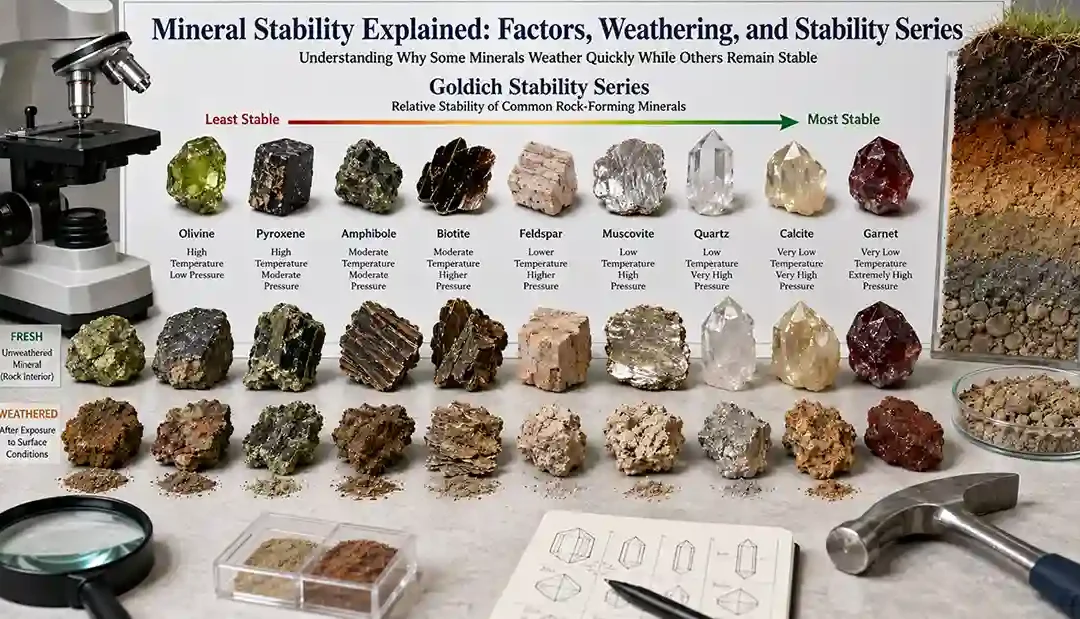 Mineral stability describes how resistant a mineral is to physical and chemical changes under Earth’s surface conditions. Although many minerals form deep within the Earth at high temperatures and pressures, they may become unstable when exposed to the cooler,...
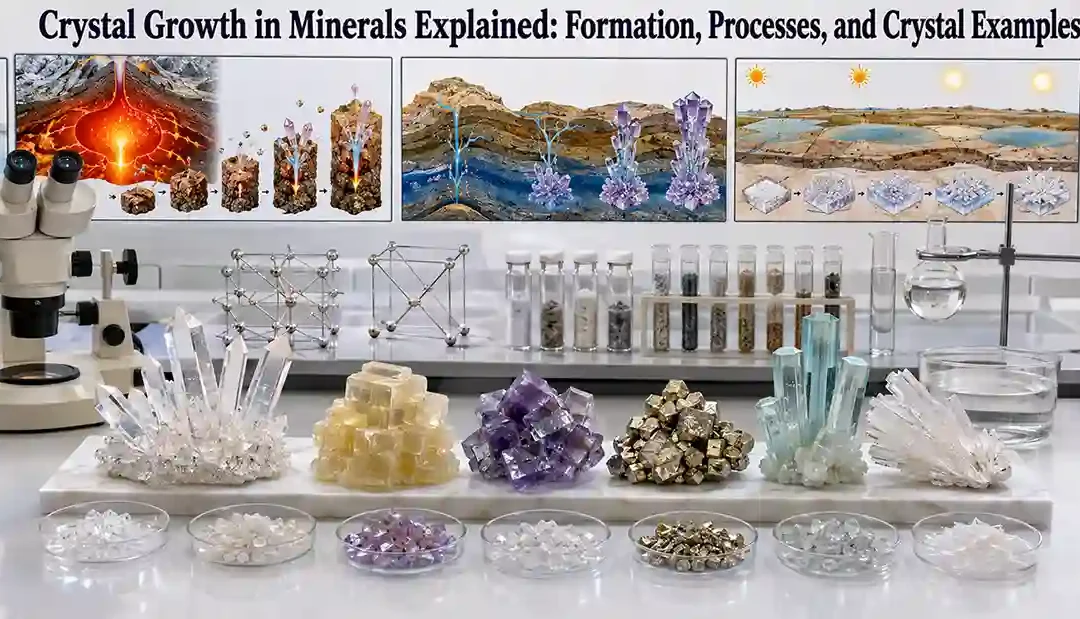 Crystal growth is the natural process through which minerals develop their characteristic crystal shapes and internal atomic structures. Every mineral crystal begins as atoms, ions, or molecules that gradually arrange themselves into an orderly repeating pattern...
