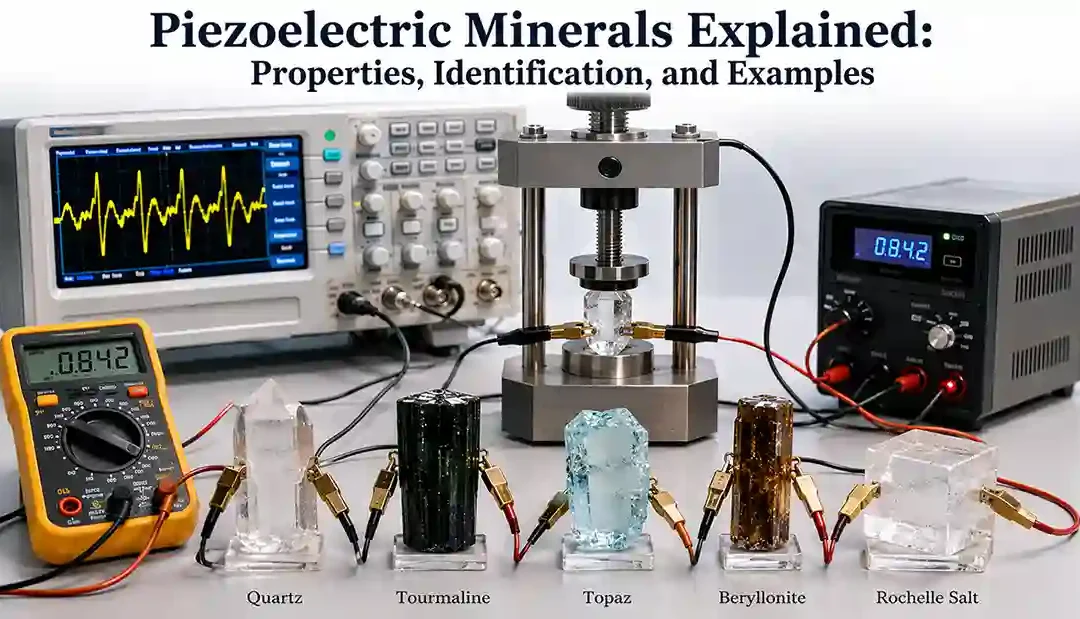
 Piezoelectricity is one of the most fascinating electrical properties found in certain minerals. When mechanical pressure is applied to specific crystals, they generate a small electrical charge. Conversely, when an electric field is applied, these crystals can change...
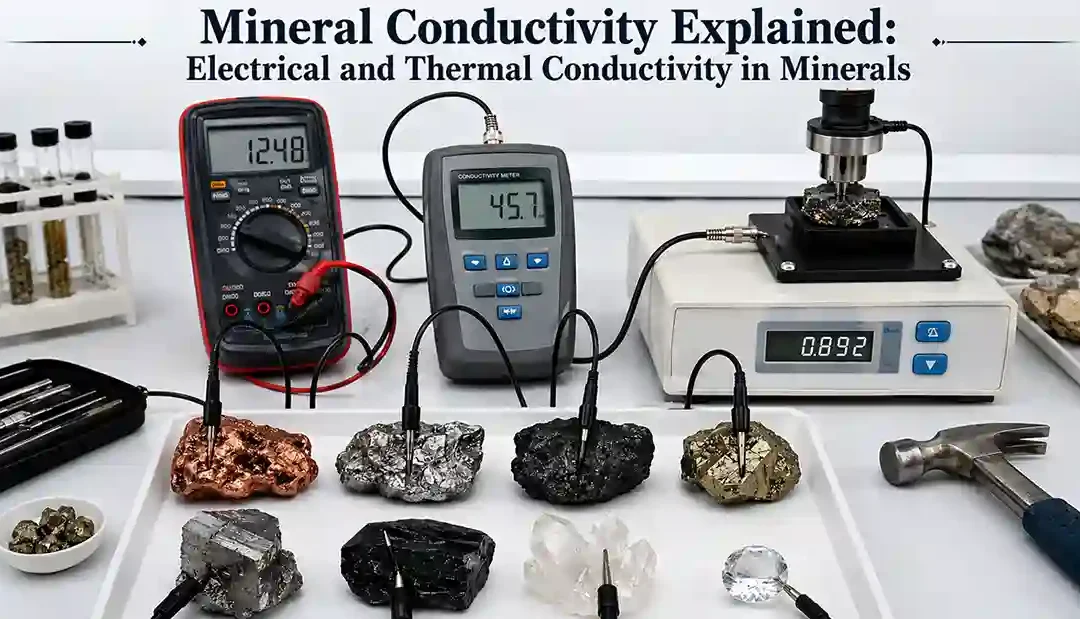 Conductivity is an important physical property that describes how easily a mineral transfers electricity or heat. While most minerals are poor electrical conductors, some native metals and carbon-rich minerals conduct electricity extremely well. Likewise, certain...
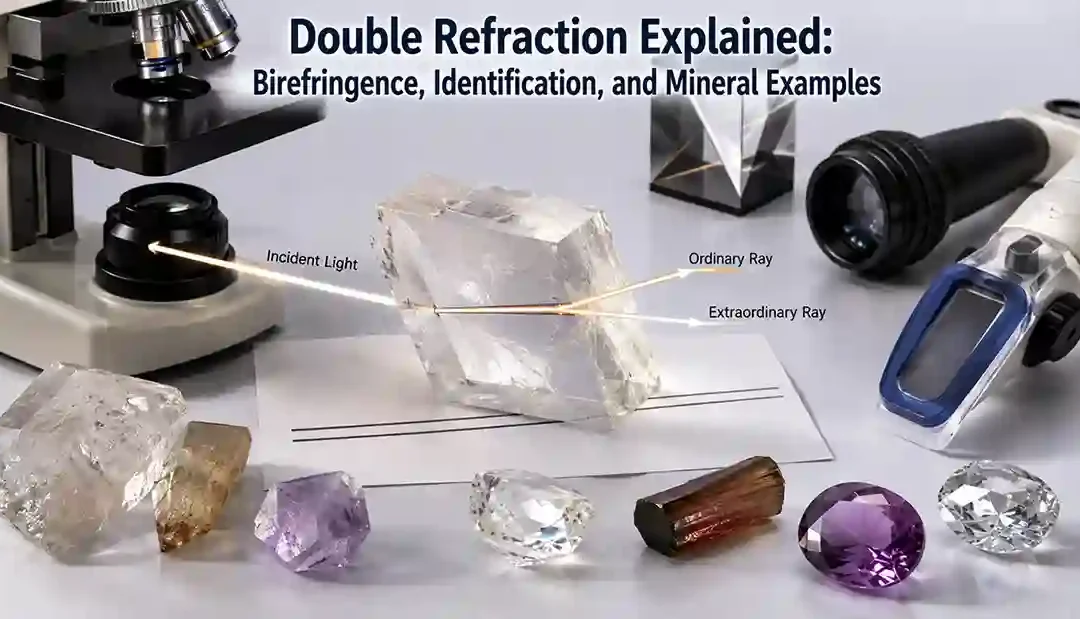 Double refraction, also known as birefringence, is one of the most important optical properties used in mineralogy and gemology. It occurs when light entering certain minerals splits into two separate rays that travel at different speeds and in different directions....
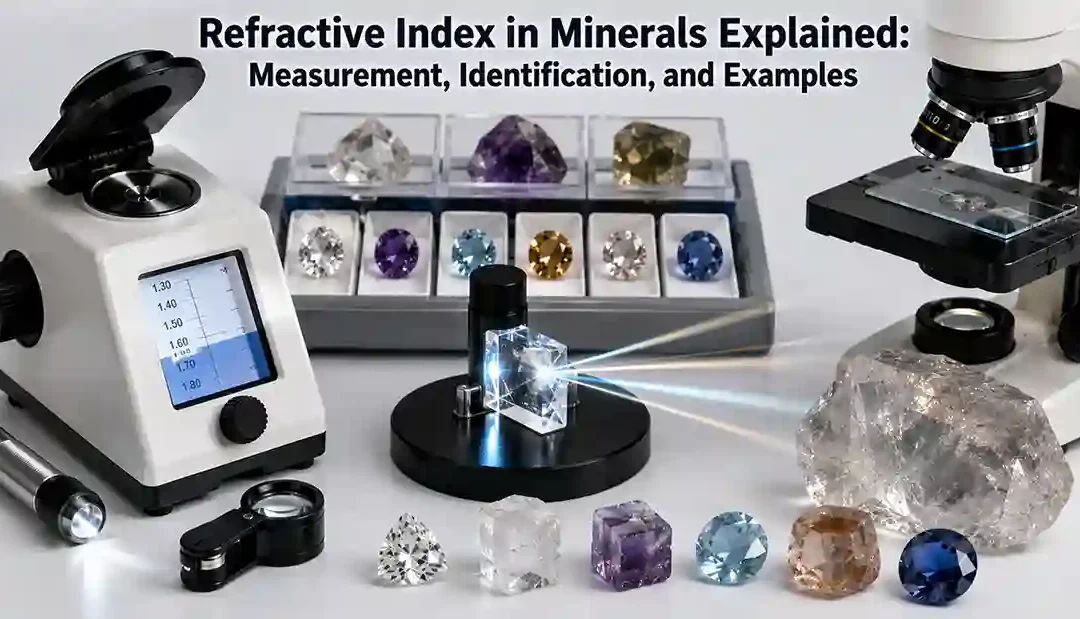 Refractive index (RI) is one of the most important optical properties used in mineralogy and gemology. It measures how much light slows down and bends as it passes from air into a mineral. Every transparent or translucent mineral has a characteristic refractive index...
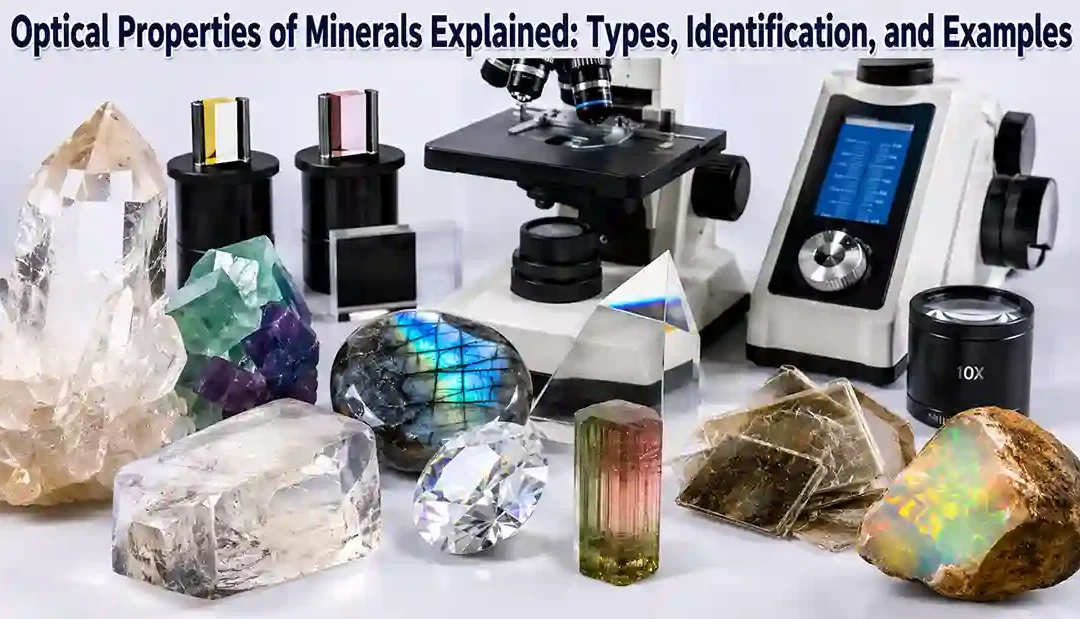 The optical properties of minerals describe how minerals interact with visible light. These properties include color, luster, transparency, refractive index, birefringence, pleochroism, fluorescence, and optical phenomena such as iridescence and chatoyancy. Because...
 Radioactive minerals are naturally occurring minerals that contain unstable radioactive elements such as uranium (U), thorium (Th), or, less commonly, potassium (K). As these elements decay over time, they release radiation in the form of alpha particles, beta...
