
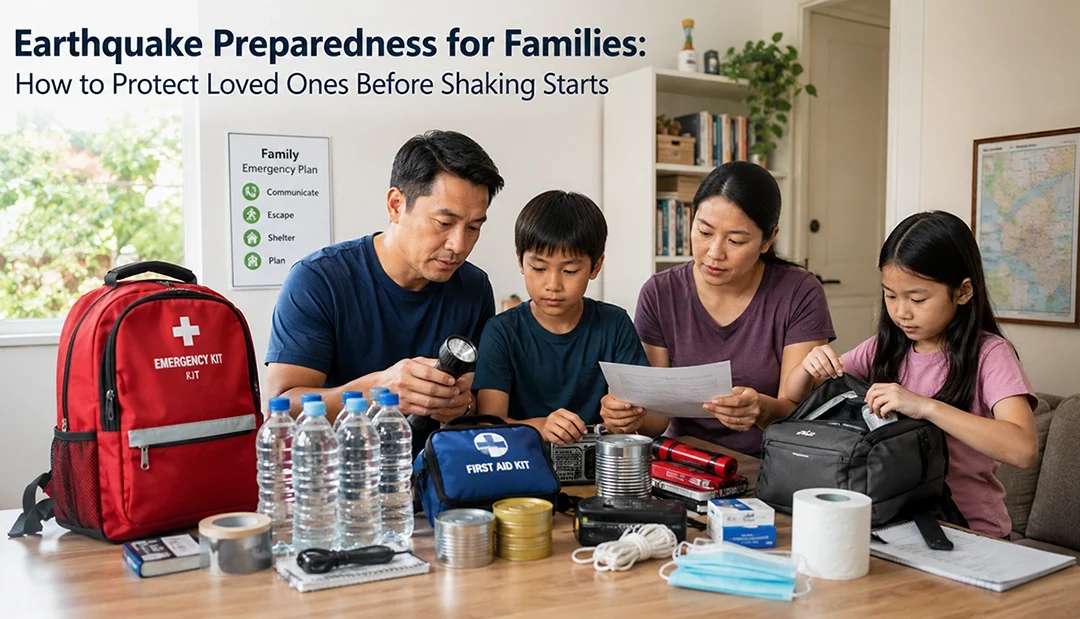
Earthquakes can happen suddenly and without warning. For families, earthquakes may create:
- panic and confusion
- separation during emergencies
- damaged homes
- power outages
- limited communication
The good news is that family preparedness can greatly improve safety during earthquakes.
Planning ahead helps families:
- react faster
- reduce fear
- protect children
- recover more effectively after disasters
If you’re new to earthquakes, begin here → what is an earthquake
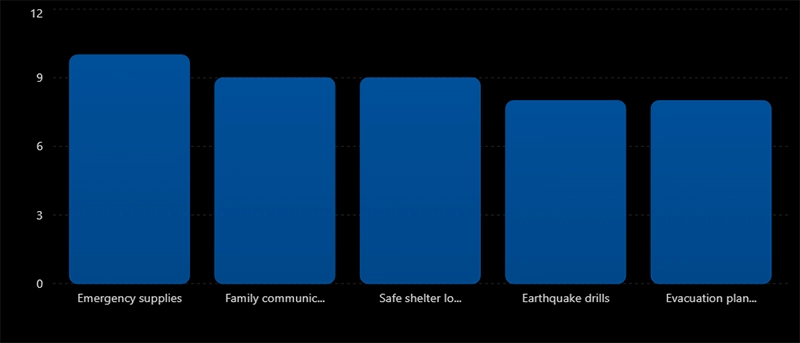
Most Important Family Earthquake Preparedness Priorities
Top Family Earthquake Preparedness Priorities
Most important earthquake safety actions for households and families.
Build a Family Earthquake Emergency Kit
Every household should prepare emergency supplies before earthquakes happen.
Important Emergency Items
- drinking water
- non-perishable food
- flashlights
- batteries
- first aid kit
- medications
- phone chargers
- emergency contact information
Experts often recommend supplies for at least 72 hours.
Learn more → earthquake emergency kit checklist
Make Your Home Safer for Earthquakes
Many earthquake injuries happen because of falling household objects.
Secure:
- bookshelves
- cabinets
- TVs
- mirrors
- appliances
Safety Tip
Keep heavy objects away from beds and children’s sleeping areas.
Learn more → earthquake safety tips at home
Teach Everyone “Drop, Cover, and Hold On”
Every family member should know: Drop, Cover, and Hold On
Drop
Get low immediately.
Cover
Protect yourself under sturdy furniture.
Hold On
Stay protected until the shaking stops. Practicing this response helps families react faster during real earthquakes.
Create a Family Emergency Communication Plan
During disasters:
- phone systems may fail
- roads may close
- family members may become separated
Important Planning Steps
- choose emergency meeting locations
- memorize important phone numbers
- identify an out-of-area contact person
- discuss evacuation routes
Good communication planning reduces confusion.
Create a Family Emergency Communication Plan
During disasters:
- phone systems may fail
- roads may close
- family members may become separated
Important Planning Steps
- choose emergency meeting locations
- memorize important phone numbers
- identify an out-of-area contact person
- discuss evacuation routes
Good communication planning reduces confusion.
Earthquake Preparedness for Children
Children should learn:
- how earthquakes happen
- safe shelter locations
- emergency contact information
- basic safety drills
Practice Helps Children:
- stay calmer
- reduce panic
- react faster during emergencies
Learn more → earthquake safety for schools
Don’t Forget Pets During Earthquake Planning
Pets also need emergency preparation.
Important Pet Supplies
- food
- water
- medications
- leashes or carriers
- vaccination records
Pets may become frightened or disoriented after earthquakes.
Coastal Family Preparedness and Tsunami Safety
Families living near coastlines should:
- know tsunami evacuation routes
- identify higher ground locations
- understand tsunami warning signs
Natural Warning Signs
- strong prolonged shaking
- sudden ocean retreat
- loud ocean sounds
Tsunamis may follow major offshore earthquakes.
Common Family Earthquake Preparedness Mistakes
| Mistake | Risk |
|---|---|
| No emergency kit | Lack of supplies |
| No family meeting plan | Separation confusion |
| Unsecured furniture | Falling injuries |
| No earthquake drills | Slower reactions |
| Ignoring tsunami risk | Delayed evacuation |
Simple preparation can greatly improve safety.
Why Family Earthquake Drills Matter
Regular family drills help everyone:
- react automatically
- reduce panic
- remember safe shelter areas
- improve evacuation coordination
Drills Often Practice:
- Drop, Cover, and Hold On
- emergency exits
- family communication plans
Repetition improves disaster readiness.
Countries With Strong Family Earthquake Preparedness Culture
Countries with major earthquake risk often encourage family preparedness programs.
Examples include:
- Japan
- New Zealand
- Chile
- United States (California)
Prepared communities generally recover faster after disasters.
Why Emotional Preparedness Matters
Earthquakes can create fear and stress, especially for children. Families that discuss earthquake safety openly are often better prepared emotionally during emergencies. Calm preparation improves decision-making during disasters.
Can Early Warning Systems Help Families?
Some regions use:
- earthquake early warning systems
- mobile alerts
- emergency notifications
These systems may provide:
- a few seconds of warning
- enough time to take cover safely
Learn more → earthquake early warning systems
Water, food, first aid supplies, flashlights, batteries, and medications.
Because disasters may separate family members temporarily.
Yes — drills help children react faster and stay calmer.
Because falling objects are a major cause of injuries indoors.
Final Thoughts
Earthquake preparedness for families helps reduce fear, improve safety, and strengthen emergency response during sudden seismic disasters. Simple actions like preparing emergency kits, practicing drills, and planning evacuation routes can make a major difference when earthquakes strike unexpectedly.
Prepared families are often calmer, safer, and better able to recover after major earthquakes.