
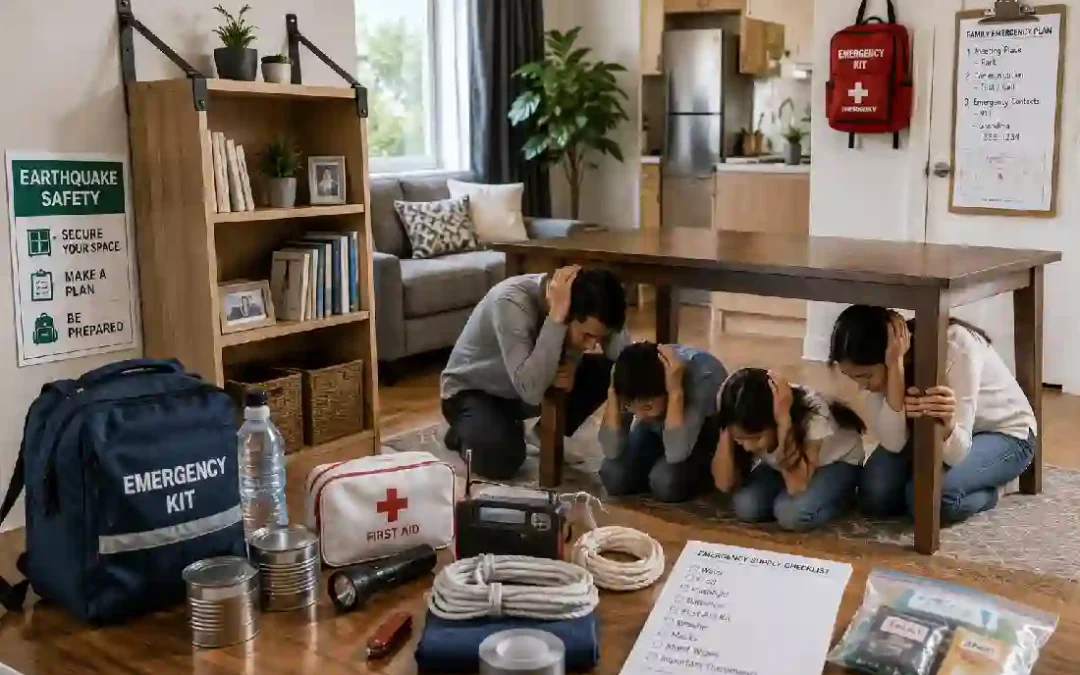
During an earthquake, many injuries happen inside homes. Falling objects, broken glass, collapsing shelves, and blocked exits can quickly turn ordinary rooms into dangerous spaces. The good news is that simple home safety improvements can greatly reduce earthquake risks.
Preparing your home before an earthquake happens is one of the smartest ways to protect your family and reduce panic during emergencies.
If you’re new to earthquakes, begin here → what is an earthquake
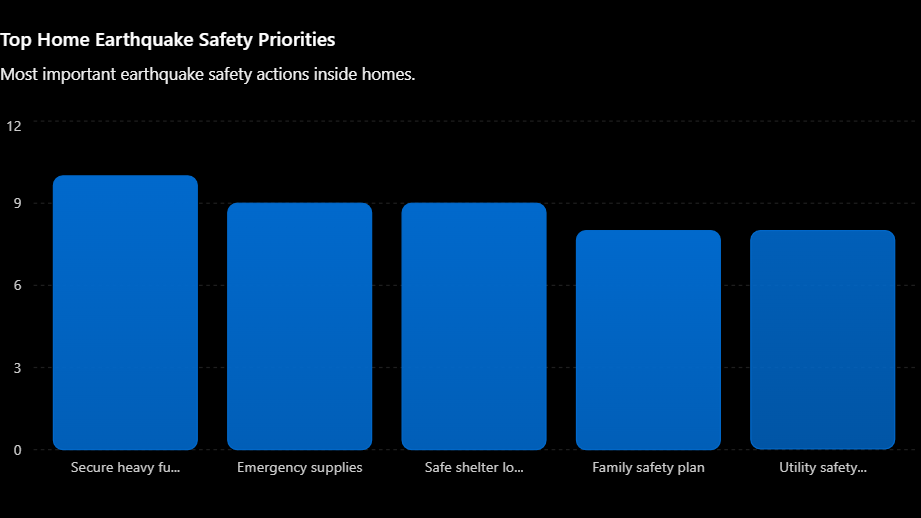
Most Important Home Earthquake Safety Priorities
Top Home Earthquake Safety Priorities
The most important earthquake safety actions inside homes.
Secure Heavy Furniture and Appliances
Heavy furniture can fall during strong shaking.
Secure Items Such As:
- bookshelves
- cabinets
- televisions
- refrigerators
- water heaters
Safety Tip
Anchor heavy furniture to walls whenever possible. Falling objects are one of the leading causes of indoor earthquake injuries.
Stay Aware of Glass and Windows
Windows and mirrors may shatter during earthquakes.
Safer Areas Include:
- interior walls
- sturdy tables
- protected corners
Avoid:
- large windows
- hanging mirrors
- glass shelves
Broken glass can cause serious injuries.
Identify Safe Shelter Spots Inside the Home
Every home should have safe earthquake shelter locations.
Good Shelter Areas
- under sturdy tables
- under strong desks
- away from heavy objects
Unsafe Areas
- near windows
- near tall shelves
- beside unstable furniture
Practice “Drop, Cover, and Hold On.”
Learn more → what to do during an earthquake
Keep an Emergency Kit Easily Accessible
Every home should store emergency supplies.
Important Items
- water
- flashlight
- batteries
- first aid kit
- emergency food
- phone chargers
Store kits where they are easy to access after strong shaking.
Learn more → earthquake emergency kit checklist
Learn How to Shut Off Utilities
Earthquakes may damage:
- gas lines
- electrical systems
- water pipes
Important Safety Skills
Know how to:
- turn off gas if needed
- disconnect electricity safely
- identify leak warning signs
Utility damage can increase fire risk after earthquakes.
Create a Family Emergency Plan
Family members may become separated during emergencies.
Important Planning Steps
- choose meeting locations
- memorize emergency contacts
- discuss evacuation plans
- practice emergency drills
Planning ahead reduces confusion during disasters.
Make Bedrooms Safer
Bedrooms are especially important because earthquakes may happen at night.
Safety Tips
- avoid hanging heavy objects above beds
- keep shoes nearby for broken glass
- place flashlights near beds
Small changes can improve nighttime safety significantly.
Keep Exit Paths Clear
After earthquakes:
- debris may block hallways
- furniture may shift
- exits may become difficult to access
Keep:
- hallways uncluttered
- emergency exits accessible
- heavy items away from doorways
Fast evacuation may become important after severe shaking.
Common Home Earthquake Safety Mistakes
| Mistake | Possible Risk |
|---|---|
| Unsecured furniture | Falling injuries |
| No emergency kit | Lack of supplies |
| Blocking exits | Trapped occupants |
| Hanging heavy objects over beds | Head injuries |
| No family safety plan | Panic and confusion |
Simple prevention measures reduce many risks.
Earthquake Safety for Children at Home
Children should learn:
- Drop, Cover, and Hold On
- emergency contact information
- safe shelter areas
Practice Drills Help Children:
- react faster
- stay calmer
- understand safety procedures
Repetition improves emergency readiness.
Why Prepared Homes Are Safer
Countries with strong earthquake preparedness programs often encourage:
- safer home design
- furniture anchoring
- emergency drills
- public education
Examples include:
- Japan
- New Zealand
- California
Prepared households generally recover faster after earthquakes.
Can Earthquake-Proof Homes Prevent Damage Completely?
No building is completely earthquake-proof.
But earthquake-resistant safety improvements can:
- reduce collapse risk
- lower injuries
- improve survival rates
Preparedness greatly improves overall safety.
Can Earthquakes Be Predicted Before They Happen?
Scientists cannot predict exact earthquakes.
That’s why home preparedness remains one of the best protections available.
Learn more → earthquake prediction methods
Under sturdy furniture away from windows.
Because falling furniture causes many earthquake injuries.
Yes — emergency supplies are essential after disasters.
Drop, Cover, and Hold On drills and emergency plans.
Final Thoughts
Earthquake safety at home begins long before the ground starts shaking. Simple actions like securing furniture, preparing emergency supplies, and practicing safety drills can significantly reduce injuries and improve family preparedness during earthquakes.
Understanding home earthquake safety helps transform homes into safer spaces during one of nature’s most sudden disasters.