
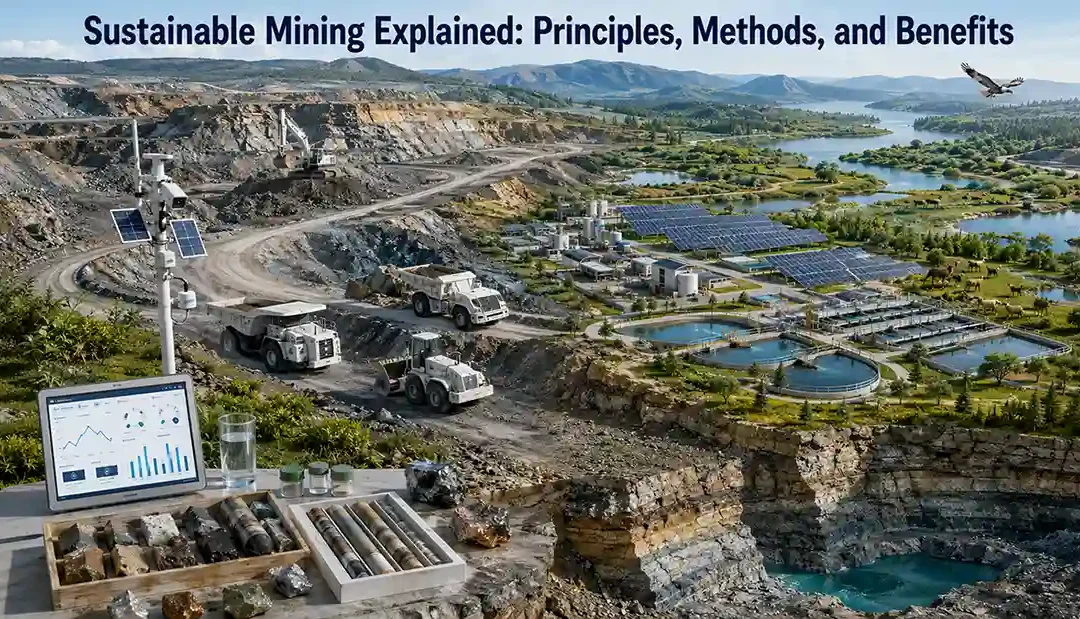
Mining provides the minerals and metals needed for modern society, but it can also affect land, water, ecosystems, and local communities. Sustainable mining aims to balance resource extraction with environmental protection, social responsibility, and long-term economic benefits.
As demand for critical minerals increases for renewable energy, electric vehicles, and modern technology, sustainable mining has become one of the most important goals of the global mining industry.
Today, mining companies increasingly focus on reducing environmental impacts while ensuring that mineral resources remain available for future generations.
What Is Sustainable Mining?
Sustainable mining is the responsible extraction of mineral resources while minimizing environmental impacts, protecting communities, and maintaining economic viability.
It focuses on:
- environmental stewardship
- social responsibility
- economic sustainability
- resource efficiency
- long-term land management
The goal is to meet present resource needs without compromising future generations.
Why Sustainable Mining Matters
Mining supplies materials essential for:
- renewable energy
- electric vehicles
- construction
- infrastructure
- technology
- healthcare
However, mining can also impact:
- ecosystems
- water resources
- air quality
- local communities
Sustainable mining helps reduce these impacts while maintaining resource production.
Traditional Mining vs Sustainable Mining
| Feature | Traditional Mining | Sustainable Mining |
|---|---|---|
| Land Use | Higher Impact | Reduced Impact |
| Water Management | Limited | Advanced Systems |
| Energy Source | Fossil Fuels | Renewable Energy |
| Waste Management | Basic | Optimized |
| Reclamation | Often Delayed | Integrated Planning |
The Three Pillars of Sustainable Mining
Environmental Sustainability
Protecting ecosystems and natural resources.
Social Sustainability
Supporting workers and local communities.
Economic Sustainability
Maintaining long-term profitability and resource availability.
Successful mining projects balance all three areas.
Environmental Challenges in Mining
Mining operations may affect:
Land
Landscape modification and habitat loss.
Water
Potential contamination and consumption.
Air
Dust and emissions.
Biodiversity
Impacts on plants and wildlife.
Sustainable mining seeks to minimize these effects.
Sustainable Mining Practices
Modern sustainable mines use many strategies.
Efficient Mine Planning
Reduce unnecessary disturbance.
Waste Reduction
Improve resource recovery.
Water Recycling
Reuse process water.
Energy Efficiency
Reduce energy consumption.
Land Reclamation
Restore disturbed areas.
Water Management in Sustainable Mining
Water is one of the most important environmental considerations.
Common strategies include:
Water Recycling
Reuse water during processing.
Water Treatment
Remove contaminants before discharge.
Closed-Loop Systems
Reduce freshwater demand.
Monitoring Programs
Protect surrounding water resources.
Renewable Energy in Mining
Many mining operations now use:
Solar Power
Mine-site electricity generation.
Wind Energy
Supplementary power systems.
Battery Storage
Energy management.
Electric Equipment
Reduced fuel consumption.
Renewable energy helps reduce greenhouse gas emissions.
Sustainable Mining and Critical Minerals
Sustainable mining is especially important for:
- lithium
- cobalt
- nickel
- rare earth elements
- copper
These minerals are essential for:
- electric vehicles
- solar panels
- wind turbines
- battery storage systems
Learn more → critical minerals for technology
Mine Reclamation
Mine reclamation is a key component of sustainable mining.
Activities include:
- reshaping landforms
- replacing topsoil
- planting vegetation
- restoring habitats
- stabilizing slopes
Many modern mines begin reclamation before mining is completed.
Biodiversity Protection
Mining companies increasingly implement:
Habitat Conservation
Protect sensitive areas.
Wildlife Corridors
Support animal movement.
Ecosystem Restoration
Rebuild natural environments.
Monitoring Programs
Track environmental recovery.
Sustainable Waste Management
Mining generates:
- waste rock
- tailings
- processing residues
Sustainable approaches include:
Tailings Management
Safe storage facilities.
Waste Reduction
Improved resource recovery.
Recycling
Reuse of materials where possible.
Community Engagement
Sustainable mining includes working with:
- local communities
- indigenous groups
- governments
- stakeholders
Key goals include:
- job creation
- infrastructure development
- education support
- transparent communication
ESG in Mining
ESG stands for:
Environmental
Reducing ecological impacts.
Social
Supporting communities and workers.
Governance
Responsible management and transparency.
ESG principles are increasingly important for mining companies and investors.
Sustainable Mining Technologies
Modern technologies include:
- autonomous vehicles
- electric mining trucks
- drone monitoring
- AI-powered resource management
- environmental sensors
- renewable energy systems
These innovations improve efficiency and sustainability.
Benefits of Sustainable Mining
Reduced Environmental Impact
Less disturbance to ecosystems.
Improved Community Relations
Better stakeholder engagement.
Long-Term Resource Development
More efficient resource use.
Lower Carbon Emissions
Cleaner operations.
Enhanced Economic Stability
Long-term project success.
Benefits of Sustainable Mining
| Benefit | Outcome |
|---|---|
| Water Recycling | Reduced Water Use |
| Reclamation | Land Restoration |
| Renewable Energy | Lower Emissions |
| ESG Programs | Improved Trust |
| Waste Reduction | Better Efficiency |
Future of Sustainable Mining
Future mining will increasingly focus on:
- net-zero emissions
- electrification
- renewable energy
- circular economy practices
- advanced environmental monitoring
- responsible critical mineral production
Sustainability is becoming a core part of modern mining operations.
Sustainable mining is the responsible extraction of mineral resources while minimizing environmental impacts and supporting communities.
It helps reduce environmental damage, protects ecosystems, and ensures long-term resource availability.
Mine reclamation is the process of restoring land after mining activities have ended.
Many mines use solar, wind, battery storage, and electric equipment to reduce emissions.
ESG stands for Environmental, Social, and Governance principles that guide responsible mining practices.
Final Thoughts
Sustainable mining represents the future of responsible resource development. By combining environmental protection, community engagement, technological innovation, and economic viability, sustainable mining helps ensure that society can continue accessing essential mineral resources while minimizing long-term impacts.
As demand for critical minerals continues to grow, sustainable mining will play a central role in supporting renewable energy, advanced technologies, and global economic development.
Continue learning with → mining-and-mineral-extraction, and economic-geology-explained.