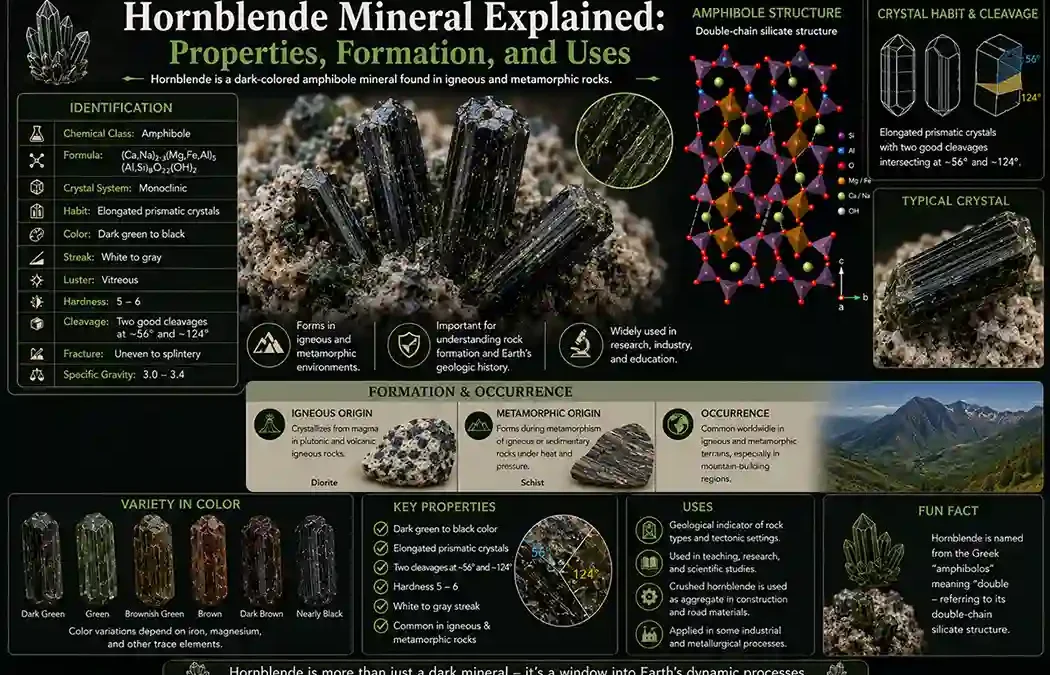
 Hornblende is the most common member of the amphibole mineral group and one of the most important rock-forming minerals in geology. It is typically dark green to black and is commonly found in igneous and metamorphic rocks. Hornblende is important because it: forms in...
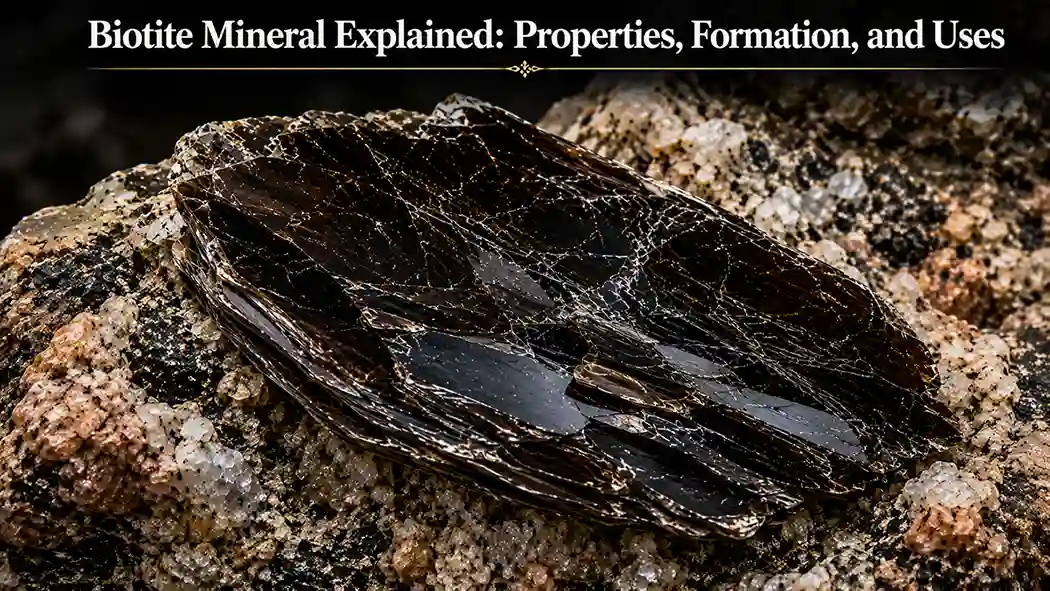 Biotite is a common dark-colored mica mineral found in a wide variety of igneous and metamorphic rocks. It is easily recognized by its black to dark brown color, sheet-like structure, and perfect basal cleavage. As a member of the mica group, biotite splits into thin...
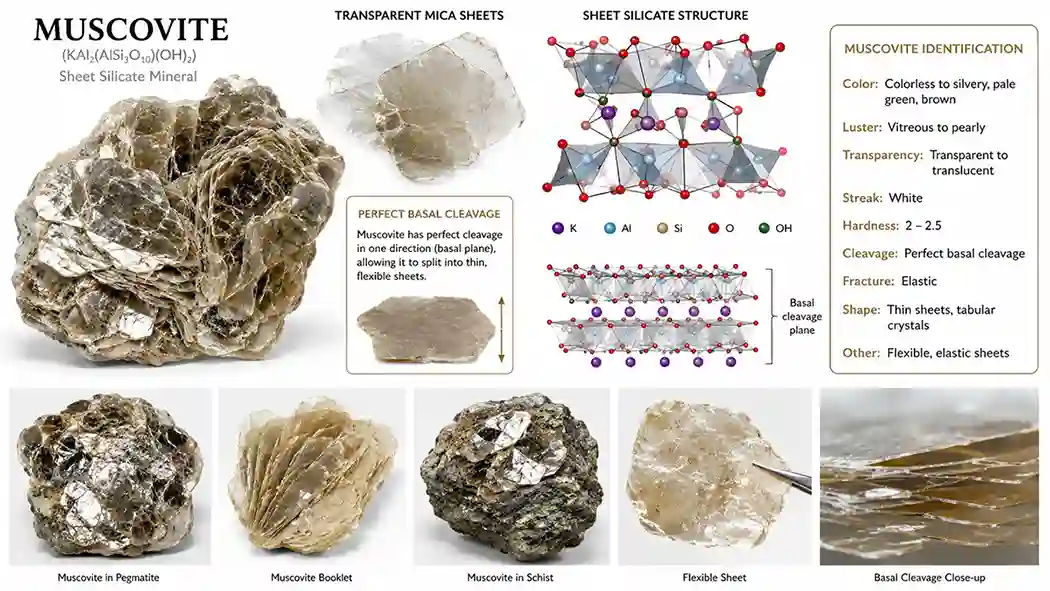 Muscovite is the most common mineral in the mica group and is easily recognized by its thin, transparent sheets and perfect cleavage. It is a potassium-rich aluminum silicate mineral that occurs in a wide variety of igneous, metamorphic, and sedimentary rocks. Because...
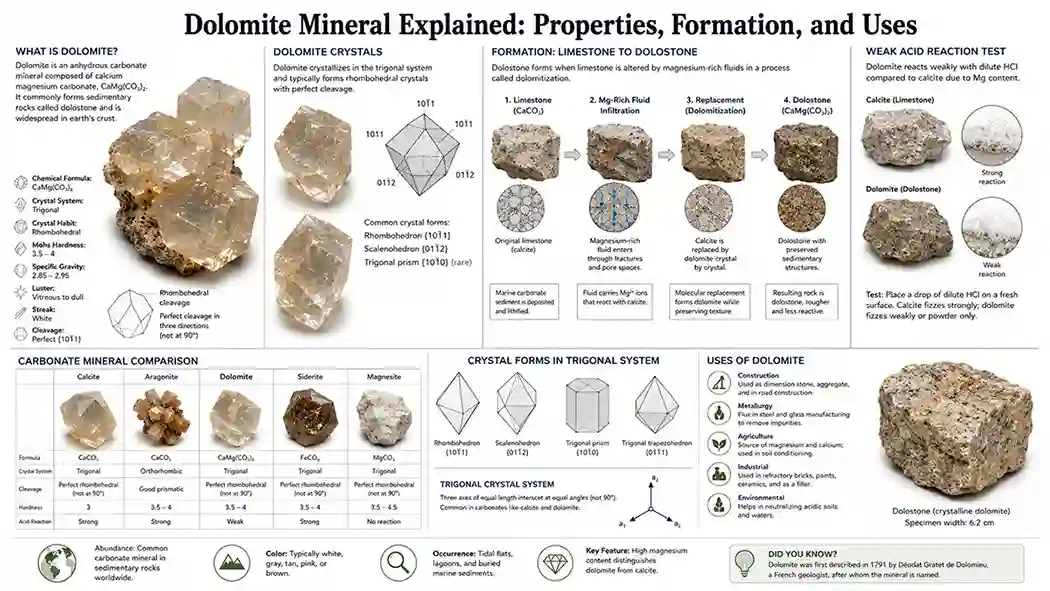 Dolomite is an important carbonate mineral composed of calcium magnesium carbonate. It is a major rock-forming mineral found in sedimentary environments and is the primary constituent of the rock known as dolostone. Dolomite plays a significant role in: sedimentary...
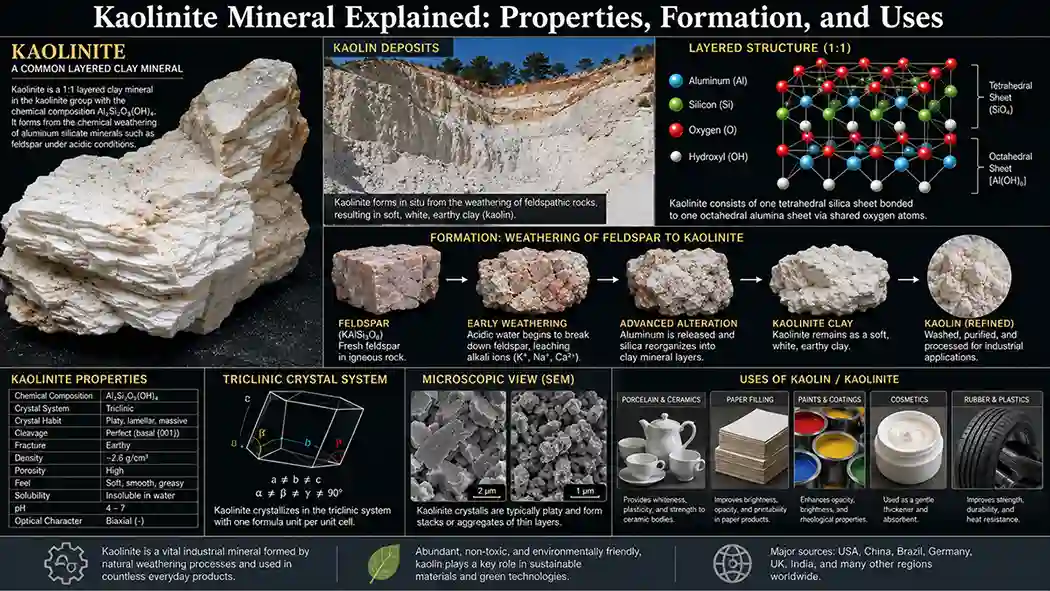 Kaolinite is one of the most important clay minerals on Earth. It forms through the weathering of feldspar-rich rocks and is a major component of many soils, sedimentary deposits, and industrial clay resources. The mineral is best known as the primary component of:...
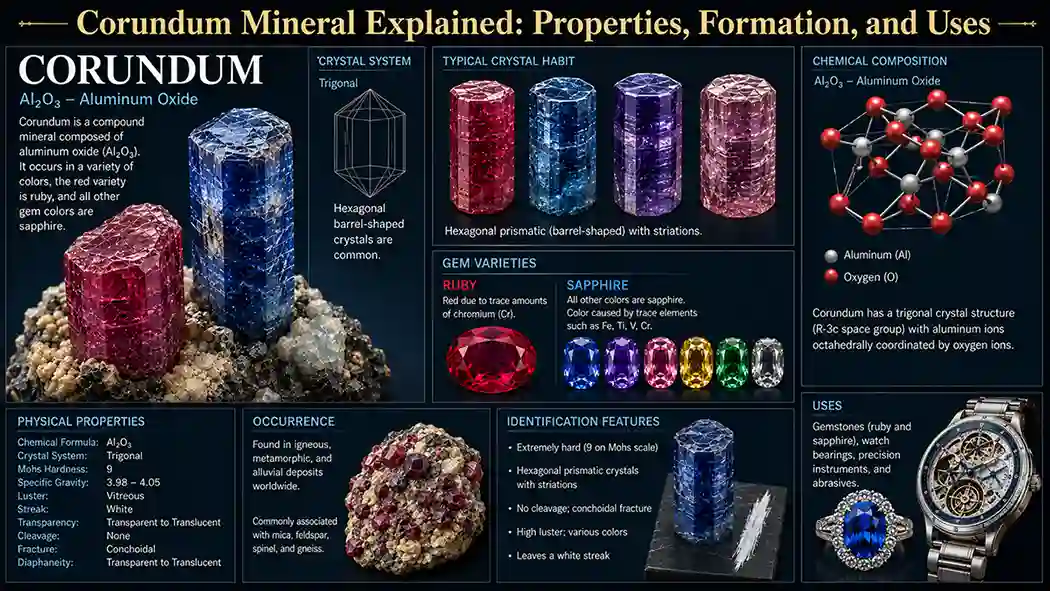 Corundum is one of the most valuable and scientifically important minerals on Earth. It is best known as the mineral that forms the gemstones ruby and sapphire, two of the most prized gems in the world. Composed of aluminum oxide, corundum is exceptionally hard and...
