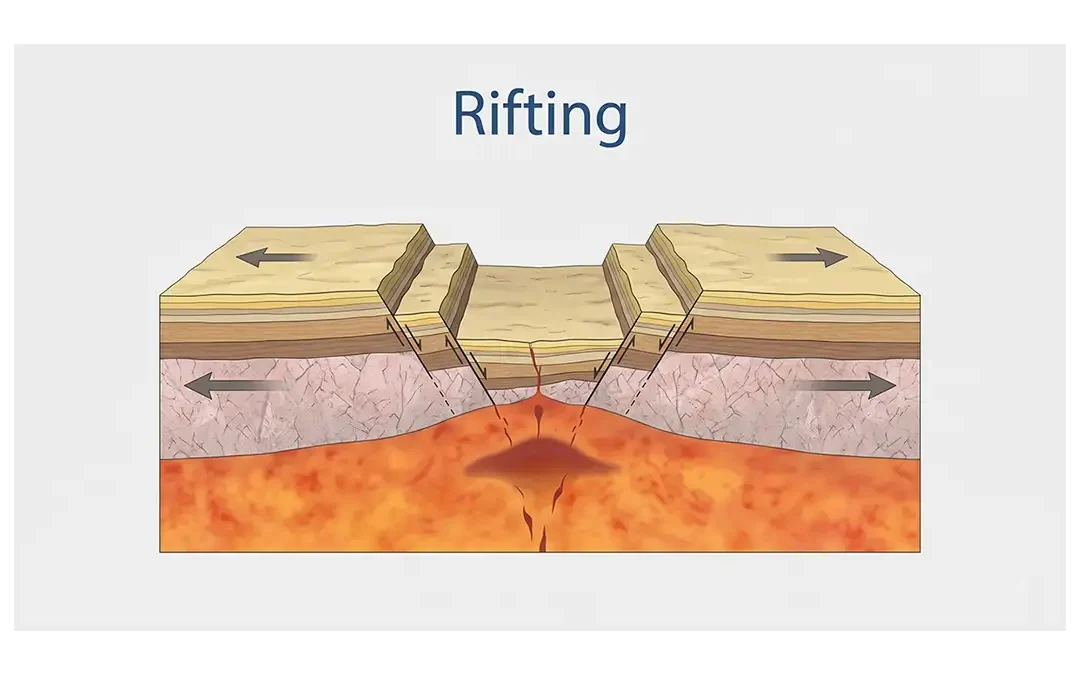
 Rifting is a geological process in which the Earth’s lithosphere is stretched and pulled apart. As the crust extends, it becomes thinner and may develop faults, earthquakes, volcanic activity, and elongated depressions called rift valleys. Rifting commonly...
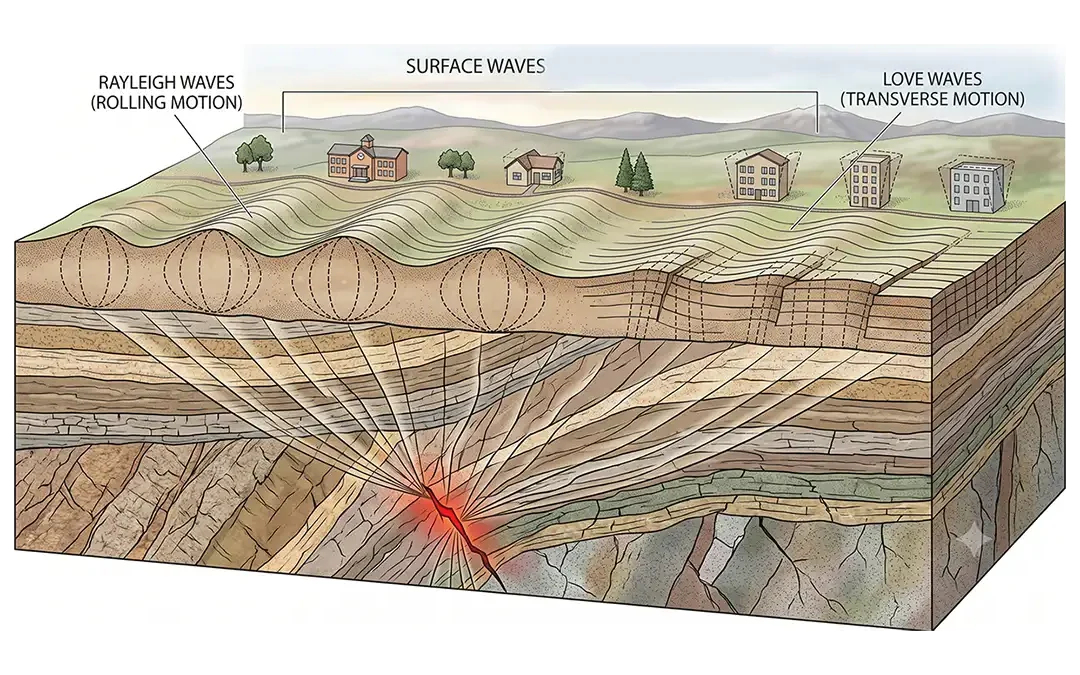 Surface waves are seismic waves that travel along or close to Earth’s surface. They are produced by earthquakes and other seismic events and are different from body waves, which travel through Earth’s interior. Surface waves are important because they can produce...
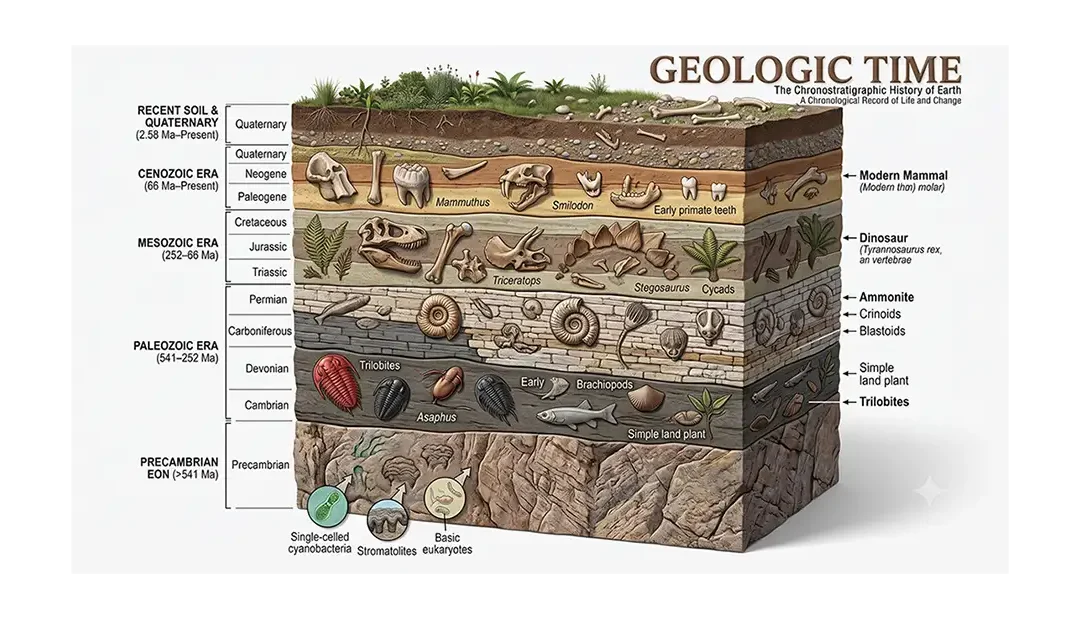 Geologic Time provides the timeline scientists use to track Earth’s 4.6-billion-year history. Humans measure time in years or centuries, but Earth’s story spans millions and billions of years. During this vast period, mountains form, oceans open, and new plants and...
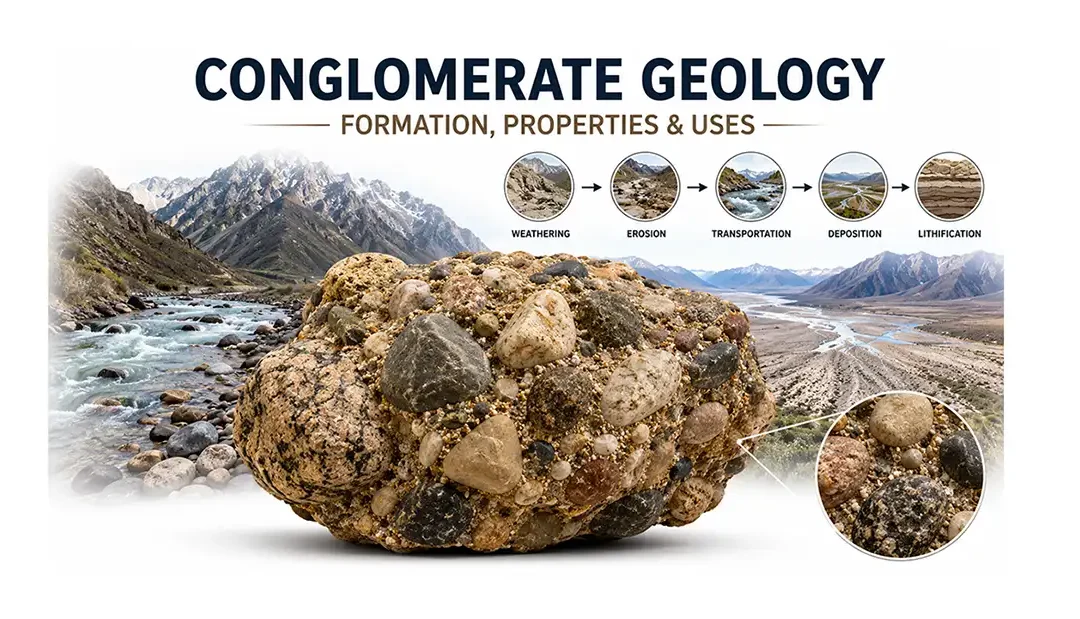 Among the many types of sedimentary rocks, conglomerate is one of the easiest to recognize because of its distinctive appearance. It consists of large, rounded rock fragments cemented together by finer sediments or mineral deposits, giving it a coarse and often...
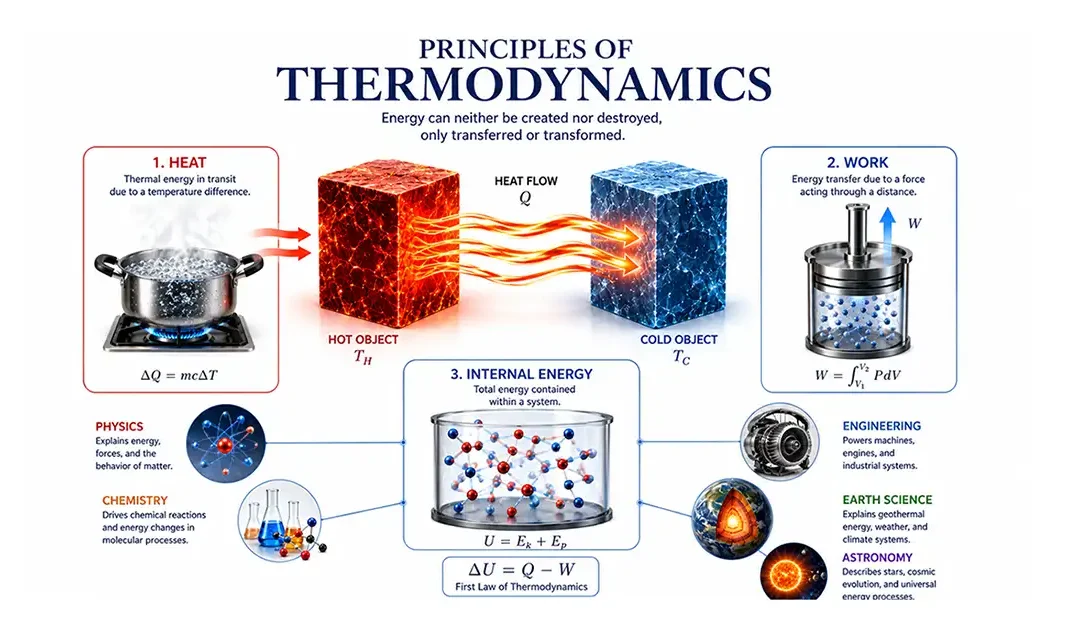 Every time you boil water, refrigerate food, drive a car, or even breathe, the principles of thermodynamics are at work. Although the term may sound highly technical, thermodynamics is simply the branch of science that explains how heat, energy, and work interact....
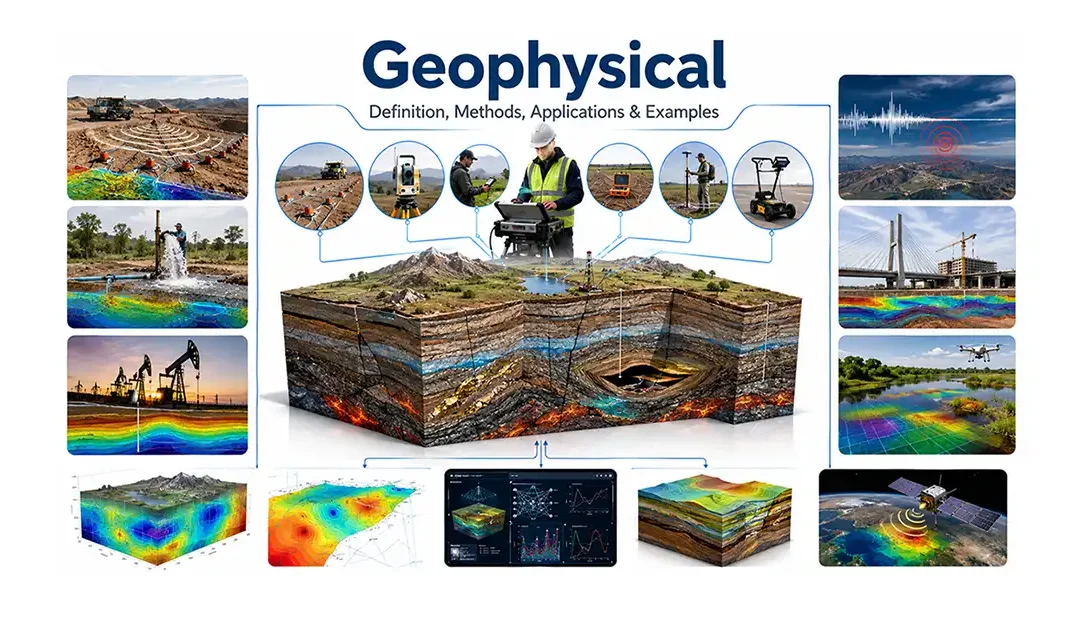 Every day, scientists investigate what lies beneath the Earth’s surface without digging deep into the ground. They can locate hidden mineral deposits, detect underground water, map buried faults, and even study the structure of the Earth’s interior. Much...