
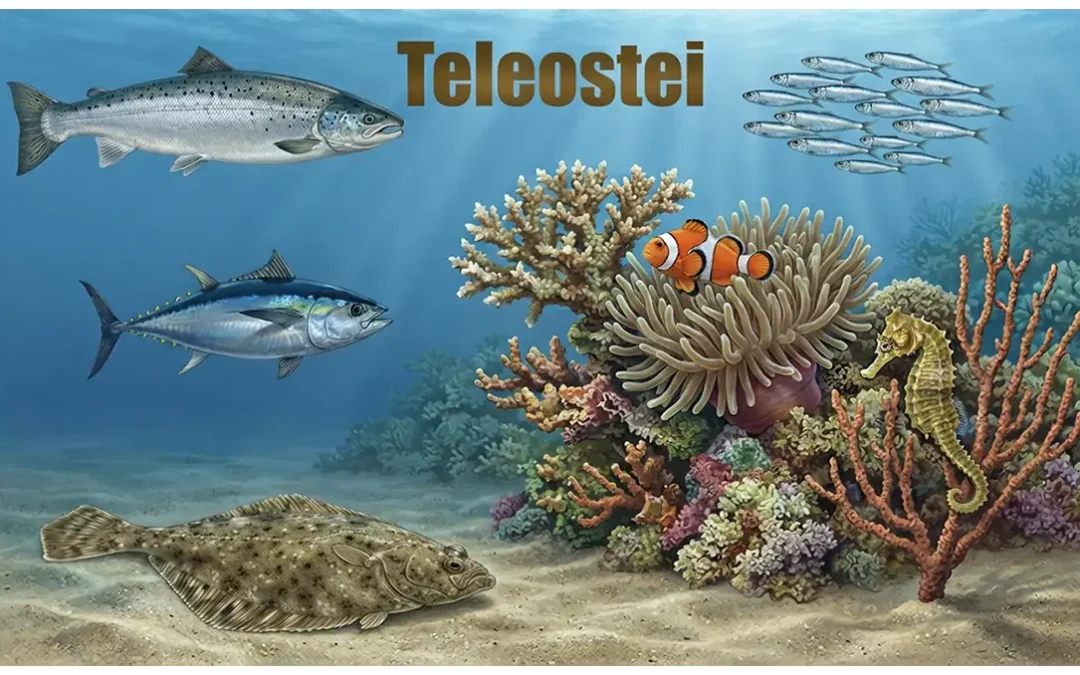
Teleostei is a major group of fishes that includes the vast majority of living fish species. From tiny freshwater minnows to powerful tunas, colorful reef fish, seahorses, and deep-sea predators, teleosts occupy an extraordinary range of aquatic environments.
These animals belong to Actinopterygii, the group commonly known as ray-finned fishes. Their evolutionary success is associated with a wide variety of body shapes, specialized feeding structures, efficient swimming mechanisms, and reproductive strategies. Although many teleosts share recognizable features, individual species have evolved different adaptations to survive in their particular environments.
Teleosts are important components of aquatic food webs and support fisheries, aquaculture, and scientific research. Their fossil record also helps scientists understand how modern fish diversity developed over geological time.
In this article, we explore the defining characteristics of Teleostei, its major groups, body functions, evolutionary history, habitats, and ecological importance.
What Is Teleostei?
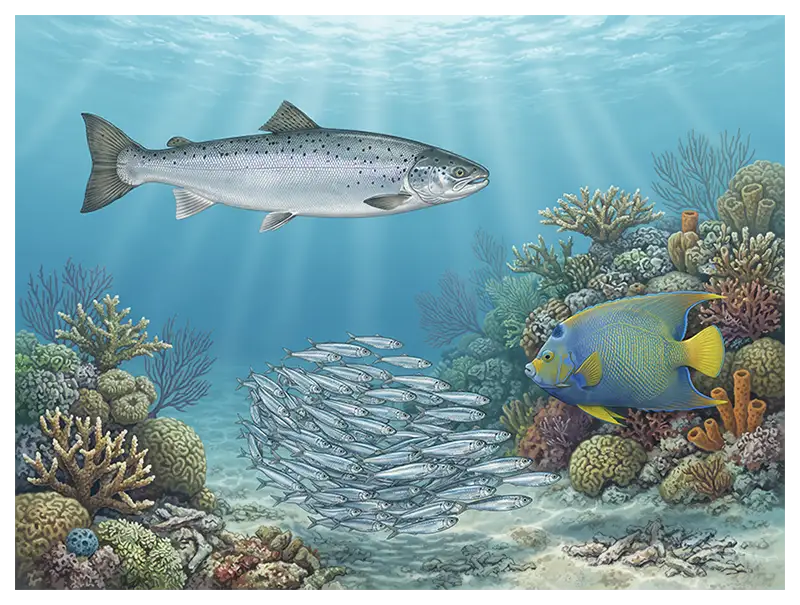
Teleostei is a large evolutionary group within Actinopterygii, the ray-finned fishes. Its members include familiar animals such as salmon, cod, carp, catfish, tuna, eels, seahorses, and clownfish.
The name Teleostei comes from Greek roots meaning approximately “complete bone.” It refers to aspects of the group's skeletal organization, although the skeletons of living teleosts vary and are not composed entirely of solid bone.
Teleosts are distinguished from other fishes by a combination of anatomical and evolutionary characteristics. Many have a relatively flexible tail skeleton, movable jaws, and a caudal fin supported by bony elements. Their body structures have changed in numerous ways as different lineages adapted to different feeding strategies and habitats.
Where does Teleostei fit in animal classification?
The basic classification is:
- Kingdom: Animalia
- Phylum: Chordata
- Major vertebrate group: Vertebrata
- Class-level group: Actinopterygii
- Major subgroup: Teleostei
The exact rank assigned to these groups can differ among classification systems, but their evolutionary relationships are well established.
Actinopterygii includes teleosts as well as other ray-finned fishes that are not teleosts, such as sturgeons, gars, and bichirs. Sharks and rays belong to a separate major group of fishes called Chondrichthyes, whose skeletons are primarily cartilaginous.
Why are teleosts so diverse?
Teleosts have evolved an exceptional variety of body forms and lifestyles. Some are fast-swimming predators, others graze on algae, and many feed on plankton or small invertebrates. Certain species live in rivers and lakes, while others inhabit coral reefs, open oceans, polar waters, or the deep sea.
This diversity has allowed teleosts to occupy many ecological roles. Their success does not depend on one special adaptation shared by every species, but on the many different traits that have evolved within the group.
What Are the Main Characteristics of Teleosts?
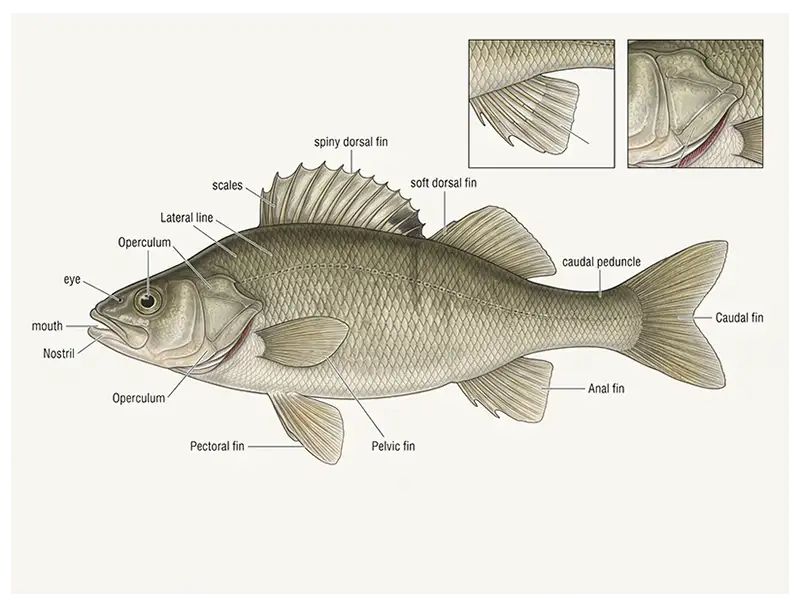
Teleosts share several important anatomical features, although their bodies have diversified to suit different environments and lifestyles. The following characteristics describe common patterns rather than rules that apply without exception to every species.
Bony skeleton
Most teleosts have skeletons containing substantial amounts of bone. Their skeleton supports the body, protects internal organs, and provides attachment points for muscles used during swimming.
The vertebral column helps support the trunk and tail, while the skull protects the brain and supports the jaws. The arrangement of bones differs among species, reflecting differences in feeding methods and movement.
Fins supported by rays
Teleost fins commonly contain thin, flexible rays that help maintain shape while allowing controlled movement. The dorsal fin along the back can improve stability, while the anal fin on the underside helps control body position.
Paired pectoral and pelvic fins assist with steering, braking, hovering, and maneuvering. The caudal fin, or tail fin, supplies much of the forward thrust in many species.
Fin shape varies with swimming style. Fast-swimming tuna have streamlined bodies and powerful tails, while flatfishes have body forms adapted to life near the seafloor.
Flexible jaws and varied teeth
Many teleosts have highly mobile jaws that help them capture food in different ways. Some can extend their mouths rapidly to draw in prey, while others use specialized teeth to crush shells, scrape algae, or grip slippery animals.
Their mouth position often reflects feeding behavior. A mouth pointing upward may help a fish take food near the water surface, while a downward-facing mouth can be useful for feeding on the bottom.
Not all teleosts have obvious teeth. Some species use specialized structures in the throat or mouth to process food, and certain feeding specialists rely on filtering or grazing rather than capturing individual prey.
Scales and protective coverings
Many teleosts have scales that protect the body and help reduce damage during movement. The form and arrangement of these scales vary among groups.
Some have thin, flexible cycloid scales with smooth edges, while others possess ctenoid scales with tiny comb-like projections. Certain teleosts have reduced scales, and some lack them altogether.
Mucus covering the skin provides additional protection and helps reduce friction as the fish moves through water. It can also form part of the body's defense against pathogens.
Gills and aquatic respiration
Most teleosts breathe using gills. Water passes over delicate gill surfaces where oxygen enters the bloodstream and carbon dioxide leaves it. Many species move water over the gills by coordinating mouth movements with the opening and closing of gill covers. This allows gas exchange even when the fish is not swimming quickly.
Oxygen requirements differ among species. Some are adapted to cool, oxygen-rich streams, while others tolerate warmer or less oxygenated waters. A few teleosts can also use air-breathing structures or other adaptations to survive in challenging conditions.
A diverse range of body shapes
Teleosts are not limited to one body form. Tuna and mackerel have streamlined shapes suited to sustained swimming, angelfish often have laterally compressed bodies for maneuvering among reefs, and flatfishes have flattened bodies adapted to resting on the seafloor.
Eels have elongated bodies that help them move through narrow spaces. Seahorses have upright bodies and specialized tails that can wrap around vegetation. These differences demonstrate how a shared evolutionary ancestry can produce a wide variety of physical designs.
How Does a Teleost Fish's Body Work?
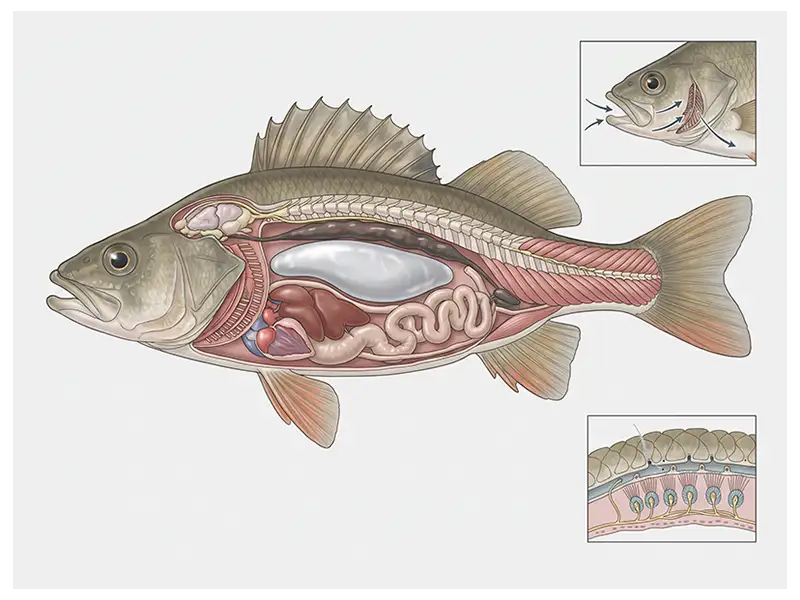
A teleost's body contains specialized systems that work together to support movement, respiration, feeding, and responses to the environment. Although the details differ between species, several structures are especially important.
The gills
Gills perform the essential task of gas exchange. Water moves across thin, richly supplied surfaces called gill lamellae, allowing dissolved oxygen to enter the blood.
Blood and water generally flow in opposite directions across these surfaces. This arrangement helps maintain an oxygen concentration gradient, supporting efficient oxygen uptake.
The gills also contribute to regulating salts and water balance and removing some waste products. Their role is therefore broader than breathing alone.
The swim bladder
Many teleosts possess a swim bladder, an internal gas-filled organ that helps regulate buoyancy. By adjusting the amount of gas it contains, a fish can remain at a particular depth without constantly swimming to resist sinking.
In some species, gas is added to or removed from the bladder through specialized blood vessels or a connection with the digestive tract. Other teleosts have lost this organ or have modified it for additional functions. Some fishes use swim bladder structures in sound production or hearing. The precise role depends on the species and its anatomy.
The lateral line
The lateral line is a sensory system that detects water movement and pressure changes around the body. It consists of specialized sensory organs arranged along the head and body, often visible as a line of pores.
This system helps fish detect nearby moving objects, respond to currents, coordinate schooling, and navigate in conditions where vision is limited.
The lateral line is different from the inner ear. Both systems provide information about movement and the surrounding environment, but they detect different kinds of physical signals.
The digestive system
Food enters through the mouth and passes into the digestive tract, where it is broken down and nutrients are absorbed. The stomach, intestine, and other digestive organs vary in size and arrangement according to diet.
Carnivorous fish may have relatively short digestive tracts suited to processing animal tissue, while many plant-eating or detritus-feeding species have longer intestines. These are broad tendencies rather than universal rules.
The liver and pancreas contribute substances needed for digestion and nutrient processing. Together, these organs help supply the energy and materials required for growth, movement, and reproduction.
Muscles and swimming
Swimming depends on coordinated muscle contractions that move the body and tail from side to side. In many species, a wave of movement travels along the trunk and drives the fish forward.
Fast-swimming species often have powerful muscles and body shapes that reduce drag. Fish that hover or make rapid turns rely more heavily on precise fin movements.
The arrangement of muscles, vertebrae, and fins allows teleosts to use many swimming styles, from sustained cruising to short bursts of acceleration.
What Are the Major Groups of Teleosts?
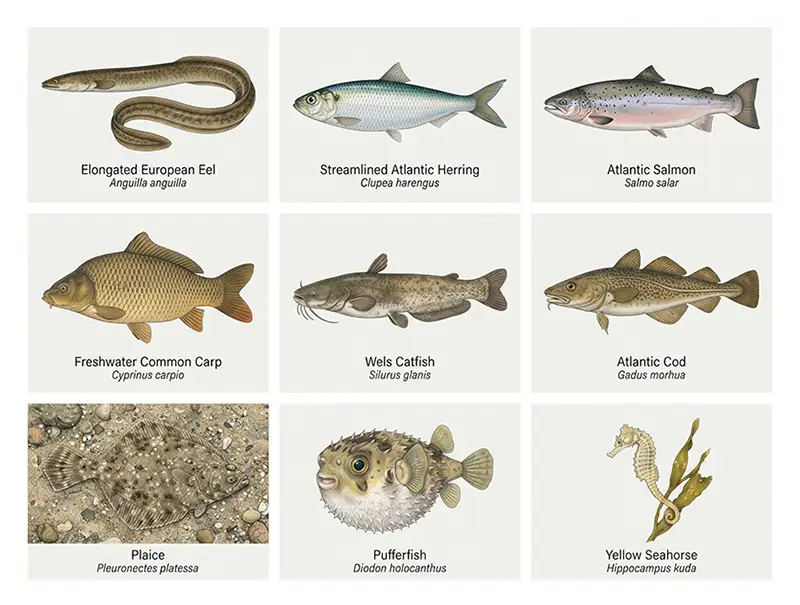
Teleosts include many evolutionary lineages, from ancient-diverging groups to highly diverse modern radiations. The examples below represent familiar branches rather than a complete classification of the group.
Eels
Eels belong to the order Anguilliformes. Their long, flexible bodies help them move through rocky crevices, sediment, and other confined spaces. True eels include moray eels and freshwater eels. Many are marine, while some species migrate between freshwater and saltwater during their life cycles.
Their elongated shape distinguishes them from many other teleosts, although other fish groups have independently evolved eel-like bodies.
Herrings and relatives
Herrings, sardines, and anchovies are examples of small or medium-sized fishes that often form large schools. Many feed on plankton or other small organisms suspended in water.
These fishes can be extremely abundant and are important prey for larger fish, seabirds, and marine mammals. Some species also support major commercial fisheries. Their schooling behavior can reduce the risk of an individual being captured by a predator and helps them move efficiently while feeding.
Carps and minnows
Carps, minnows, and many related freshwater fishes belong to Cypriniformes. This group includes species found in rivers, lakes, ponds, and streams across much of the world.
Their diets vary. Some feed on algae and plant material, others consume small invertebrates, and many are omnivorous. Carp have long been important in aquaculture, while smaller cypriniform fishes are common components of freshwater ecosystems.
Catfishes
Catfishes belong to Siluriformes and are recognized by their barbels, which resemble whiskers. These sensory structures help many species detect food and explore their surroundings.
Many catfishes live near the bottom, where they search for invertebrates, plant material, or other food. However, the group includes diverse forms, including active predators and species that inhabit open water.
Catfishes occur on several continents and occupy a wide range of freshwater environments, with some species also living in coastal or marine habitats.
Salmon and trout
Salmon, trout, and their relatives belong to Salmoniformes. Many are adapted to cool, oxygen-rich waters. Some salmon species migrate from the sea into rivers to reproduce. Others spend their entire lives in freshwater, and migration patterns differ among species and populations. Salmon are important predators and prey in aquatic ecosystems. Migrating individuals can also transport nutrients between marine and freshwater environments.
Cods and their relatives
Cods belong to Gadiformes, a group that includes many marine fishes. Several species live near the seafloor and feed on smaller fish, crustaceans, and other invertebrates.
Cod and related fishes have played major roles in human fisheries. Their population sizes can be affected by fishing pressure, habitat changes, and shifts in ocean conditions. Not all gadiforms have the same habitat or diet, but many are important components of marine food webs.
Perches and other spiny-rayed fishes
Perch-like fishes belong to a broad range of teleost lineages, many of which are grouped within or associated with the large radiation traditionally known as percomorphs.
This diverse assemblage includes familiar fishes such as groupers, many reef fishes, mackerels, and numerous other forms. Their body shapes and feeding methods vary widely. Many species have spiny rays in their fins, but the presence of spines alone does not define every member of this broad evolutionary grouping.
Flatfishes
Flatfishes, including flounders, soles, and halibuts, belong to Pleuronectiformes. As they develop, one eye typically migrates toward the other side of the head, allowing the adult to rest with both eyes facing upward.
Their flattened bodies help them remain close to the seafloor, where they can camouflage themselves and ambush prey. Many flatfishes are important commercial species, and their unusual development is a well-known example of anatomical adaptation in teleosts.
Pufferfishes and relatives
Pufferfishes belong to Tetraodontiformes, an order that also includes triggerfishes, boxfishes, and ocean sunfishes. Many pufferfish can inflate their bodies by taking in water or air when threatened. Some species contain potent toxins, while others rely on armor-like scales, spines, or other defenses.
The group includes diverse feeding strategies, from crushing hard-shelled prey to consuming other animal material. Its members illustrate the many specialized forms that have evolved within Teleostei.
Seahorses
Seahorses belong to the family Syngnathidae, which also includes pipefishes and seadragons. They have elongated snouts and distinctive body forms suited to life among seagrasses, seaweeds, and other underwater structures.
Seahorses often use their tails to grip vegetation, helping them remain in place in moving water. In these fishes, males carry developing embryos in a specialized brood pouch or related reproductive structure. Their unusual shape and reproductive biology make them some of the most recognizable teleosts.
When Did Teleosts Evolve?
The evolutionary history of teleosts extends back to the Mesozoic Era, when early members of the group began to diversify. Fossils provide evidence of their anatomical changes and help scientists reconstruct how modern lineages developed.
Early teleosts
Early teleost fossils are known from the Mesozoic, including the Triassic and Jurassic periods. These ancient fishes differed in various ways from many living species, but they already displayed important features associated with teleost anatomy.
Fossil remains include scales, jaws, teeth, and articulated skeletons. Because hard structures are more likely to be preserved than soft tissues, the fossil record is incomplete and does not capture every stage of early evolution. Scientists compare these fossils with living fishes to determine which features are ancestral and which appeared later.
Diversification during the Mesozoic
Teleosts diversified substantially during the Jurassic and Cretaceous periods. Different lineages developed varied jaw structures, body shapes, swimming abilities, and feeding strategies.
This diversification helped teleosts occupy many ecological roles in marine and freshwater environments. Some became active predators, while others specialized in feeding on plankton, algae, or bottom-dwelling organisms. The expansion of teleost diversity occurred alongside changes in aquatic ecosystems and the evolution of other fish groups.
Evolution after the Cretaceous
Following the mass extinction at the end of the Cretaceous Period, about 66 million years ago, many surviving teleost lineages continued to diversify.
The event reshaped marine and terrestrial ecosystems, although the effects differed among groups and habitats. Over subsequent geological time, teleosts developed an even wider range of body forms and ecological strategies. Today, they dominate the diversity of living fishes, but this success resulted from many separate evolutionary events rather than a single adaptation.
How scientists study teleost evolution
Paleontologists examine fossil anatomy, while evolutionary biologists compare genetic sequences from living species. These methods provide different kinds of evidence and are most useful when interpreted together.
Fossils help establish minimum ages for identifiable lineages and document anatomical changes. Molecular studies help estimate relationships among species whose shared ancestry may not be obvious from their outward appearance. Classification and evolutionary timelines can be revised when new fossils or genetic evidence become available.
Where Do Teleosts Live?
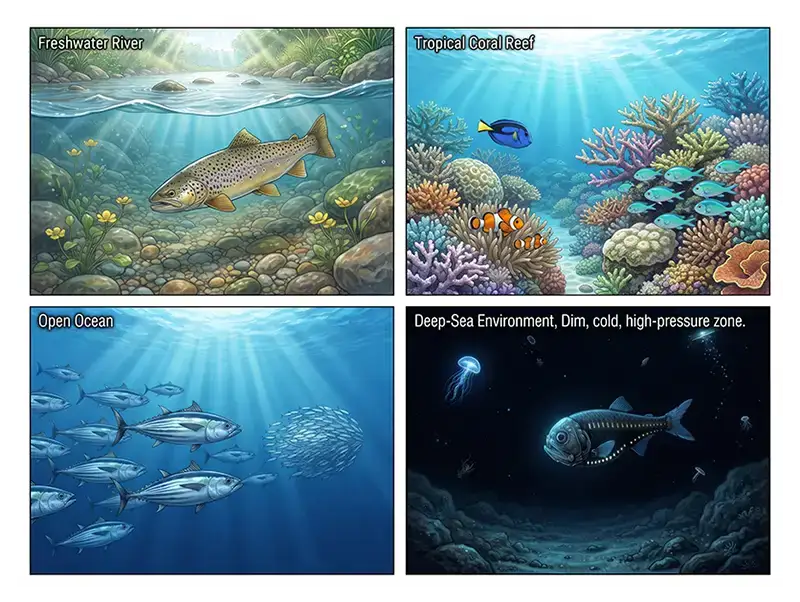
Teleosts occupy an extraordinary range of aquatic environments. Their distribution reflects differences in temperature tolerance, oxygen requirements, salinity, food availability, and reproductive needs.
Freshwater environments
Rivers, streams, lakes, and ponds support many teleosts, including carp, catfishes, trout, and numerous small-bodied fishes. Fast-flowing streams often contain species adapted to strong currents and high oxygen levels. Lakes and ponds support different communities, including fishes that feed on plankton, aquatic plants, insects, or other animals.
Freshwater environments can vary considerably with the seasons. Fish may respond to changes in temperature, water depth, oxygen concentration, and food availability by changing their behavior or moving to other areas.
Coastal waters and coral reefs
Coastal environments include estuaries, mangroves, seagrass beds, rocky shores, and coral reefs. These habitats provide food, shelter, and breeding grounds for many teleosts.
Coral reefs contain highly diverse fish communities. Some species feed on algae, others hunt small invertebrates, and predators such as groupers capture other fishes.
Estuaries, where freshwater mixes with seawater, are important nursery habitats for certain species. Their changing salinity and abundant food can support young fish as they grow.
Open oceans
The open ocean supports schooling fishes such as tuna, sardines, and mackerels, along with many other pelagic species. Pelagic animals spend much of their lives in the water column rather than on the seafloor.
Fast-swimming species often travel long distances in search of prey or suitable breeding grounds. Some migrate across entire ocean basins, while others remain within more restricted regions. Food availability can change with currents, seasons, and the distribution of plankton. These changes influence where many open-ocean teleosts feed and reproduce.
Deep-sea habitats
Deep ocean environments are dark, cold, and often characterized by high pressure. Teleosts living there show a range of adaptations, including sensitive sensory systems, specialized feeding structures, and in some species, bioluminescence.
Deep-sea fishes include many unrelated lineages that have adapted to life at different depths. Some capture scarce prey, while others feed on small organisms or organic material drifting down from shallower waters. Not all deep-sea teleosts look alike. Their body forms reflect differences in depth, food availability, and lifestyle.
Polar waters
Some teleosts live in the cold waters around Antarctica and the Arctic. These environments present challenges involving low temperatures, seasonal changes in daylight, and food availability. Certain Antarctic fishes produce antifreeze proteins that help prevent damaging ice crystals from forming in their body fluids.
Other polar species rely on different physiological and behavioral adaptations. These examples demonstrate how teleosts can persist under environmental conditions that would be difficult for many other fishes.
What Do Teleosts Eat and How Do They Reproduce?
Teleosts have evolved many feeding strategies and reproductive systems. Their diets and life cycles differ according to their species, habitat, body structure, and ecological role.
Feeding strategies
Teleosts can be herbivores, carnivores, omnivores, or specialized feeders. Herbivorous species consume algae and aquatic plants. Many parrotfishes, for example, graze on algae growing on reef surfaces. Carnivorous fishes capture prey such as insects, crustaceans, worms, and other fishes.
Omnivorous species use a mixture of plant and animal food. Carp and many other freshwater fishes can change their diets depending on what is available.
Some teleosts feed on plankton by filtering or collecting tiny organisms from the water. Others specialize in scraping surfaces, crushing hard-shelled prey, or capturing animals through rapid suction feeding. These differences allow many fish species to coexist within the same environment while using different food resources.
External and internal fertilization
In many teleosts, females release eggs and males release sperm into the surrounding water. Fertilization occurs externally, often during spawning events when many individuals reproduce within a short period.
Other species use internal fertilization. Some sharks and rays also reproduce internally, but teleosts show their own varied reproductive adaptations, including specialized reproductive organs in certain lineages.
Most teleosts lay eggs, but a number of species give birth to live young. The details vary, and live-bearing strategies have evolved in multiple lineages.
Spawning and migration
Many species reproduce during particular seasons, when temperature, daylight, water flow, or food conditions are favorable for offspring. Some salmon migrate from the ocean into freshwater rivers to spawn. Other fishes travel between freshwater and saltwater during different parts of their life cycle, while many remain in one general habitat.
Migration can improve access to breeding grounds or food, but it also exposes fish to obstacles, predators, and environmental changes along their routes.
Parental care
Parental care ranges from almost none to extensive protection of eggs and young. Some species release large numbers of eggs and provide no further care. Others guard nests, fan eggs to improve oxygen supply, or protect developing offspring from predators.
In seahorses and some related pipefishes, males carry embryos in a specialized brood pouch or other brood-carrying structure. This is a distinctive reproductive strategy within the fish world. The variety of reproductive methods reflects different ways of balancing offspring survival, energy investment, and environmental risk.
How Are Teleosts Related to Other Fishes?
Teleosts belong to Actinopterygii, the ray-finned fishes. Understanding their position within this broader group helps distinguish them from other living fishes and reveals how different vertebrate lineages evolved.
Teleosts and other ray-finned fishes
Actinopterygii includes teleosts as well as several lineages that diverged earlier in ray-finned fish evolution. Sturgeons, paddlefishes, gars, and bowfins are examples of living non-teleost ray-finned fishes.
These groups share ancestry but differ in important anatomical features. Sturgeons have distinctive rows of bony scutes rather than typical scales, while gars have tough, enamel-like ganoid scales.
Teleosts generally possess a suite of derived anatomical features that distinguishes them from these other lineages. Their success is reflected in their exceptional modern species diversity.
Teleosts and cartilaginous fishes
Sharks, rays, and chimaeras belong to Chondrichthyes, a separate major group of vertebrates. Their skeletons are primarily cartilaginous, although the tissue can be reinforced with mineral deposits. Teleosts, by contrast, have skeletons composed largely of bone. Their gill arrangements, fin structures, and reproductive features also differ from those of cartilaginous fishes.
Both groups are important predators and prey in aquatic food webs, but their evolutionary histories and anatomical organization are distinct.
Teleosts and lobe-finned fishes
Lobe-finned fishes belong to Sarcopterygii, which includes coelacanths, lungfishes, and the lineage that gave rise to tetrapods. Tetrapods include amphibians, reptiles, birds, and mammals.
Lobe-finned fishes have paired fins supported by fleshy, muscular bases with internal skeletal elements arranged differently from the fin rays of typical ray-finned fishes. Teleosts and lobe-finned fishes are both bony vertebrates, but they belong to separate major branches within Osteichthyes, the bony vertebrates.
How evolutionary relationships are reconstructed
Scientists use fossils, anatomy, embryology, and molecular evidence to determine how fish lineages are related. Genetic comparisons are particularly useful for identifying relationships among species that look similar because they evolved comparable adaptations independently.
Evolutionary trees represent hypotheses about shared ancestry. They do not mean that every modern fish group evolved directly from another living group. As new evidence emerges, researchers may revise the placement of particular lineages or the timing of their diversification.
Why Are Teleosts Important?
Teleosts are essential to many aquatic ecosystems and provide substantial benefits to people. Their importance extends from regulating prey populations to supporting food production and scientific research.
Roles in aquatic food webs
Teleosts occupy many levels of aquatic food webs. Small fishes consume plankton and invertebrates, while larger species prey on smaller fish and other animals.
These feeding relationships transfer energy between organisms and help shape community structure. Predatory fishes can influence the abundance and behavior of prey, while schooling fishes provide food for seabirds, marine mammals, and larger predators.
Changes in fish populations can therefore affect many other species within an ecosystem.
Nutrient movement
Some teleosts transport nutrients between different habitats. Migrating salmon, for example, carry nutrients from marine environments into freshwater systems when they return to spawn and later die.
Other fishes move nutrients through feeding, waste production, and migration. These processes help connect aquatic habitats and can influence the productivity of surrounding ecosystems. The strength of these effects depends on species abundance, migration patterns, and local environmental conditions.
Fisheries and aquaculture
Teleosts support fisheries around the world. Salmon, tuna, cod, sardines, carp, and many other species are harvested for food. Aquaculture produces fish in managed systems, including ponds, tanks, and marine cages. Farmed teleosts contribute to food supplies and livelihoods, although production can create environmental challenges if waste, disease, escapes, or feed resources are poorly managed.
Sustainable fishing and responsible aquaculture practices help reduce pressure on wild populations and aquatic ecosystems.
Scientific research
Teleosts are widely used in biological and medical research. Zebrafish, for example, are valuable models for studying development, genetics, disease, and regeneration because their embryos develop externally and are relatively easy to observe.
Other fishes help researchers investigate migration, sensory biology, physiology, behavior, and adaptation to environmental change. Their diversity makes them useful for studying how vertebrates respond to different ecological pressures.
Conservation and environmental monitoring
Fish communities can provide information about the health of aquatic environments. Changes in species composition, abundance, or body condition may indicate pollution, habitat loss, altered water temperatures, or other environmental pressures. Some teleost populations are threatened by overfishing, dams, habitat degradation, invasive species, and climate change.
Conservation efforts may include habitat restoration, fishing regulations, migration corridors, and protection of breeding areas. Maintaining healthy fish populations helps preserve both aquatic biodiversity and the benefits people receive from these ecosystems.
Conclusion
Teleostei is the largest and most diverse major group of living fishes, encompassing familiar species such as salmon, tuna, carp, cod, eels, seahorses, and thousands of others. Their anatomy ranges from streamlined bodies built for fast swimming to specialized forms adapted to life near the seafloor, among vegetation, or in the deep ocean.
Their success reflects the evolution of varied feeding structures, sensory systems, swimming methods, and reproductive strategies. Fossils and molecular studies continue to reveal how teleost lineages developed and diversified over geological time.
Beyond their evolutionary significance, teleosts help maintain aquatic food webs, move nutrients between habitats, support fisheries and aquaculture, and provide important research models. Protecting their habitats and managing their populations responsibly are essential for maintaining aquatic biodiversity and the benefits these fishes provide.
Teleostei is a major group of ray-finned fishes that includes the great majority of living fish species, such as salmon, tuna, carp, cod, and seahorses.
No. Teleosts are one major lineage of bony vertebrates. Sturgeons, paddlefishes, gars, bowfins, lungfishes, and coelacanths belong to other lineages.
Teleosts are bony fishes with skeletons composed largely of bone, while sharks belong to Chondrichthyes and have skeletons made primarily of cartilage.
No. Many have a swim bladder for buoyancy control, but some lack it or have modified it for other functions.
They inhabit marine and freshwater environments, including rivers, lakes, coral reefs, coastal waters, the open ocean, deep-sea habitats, and polar seas.