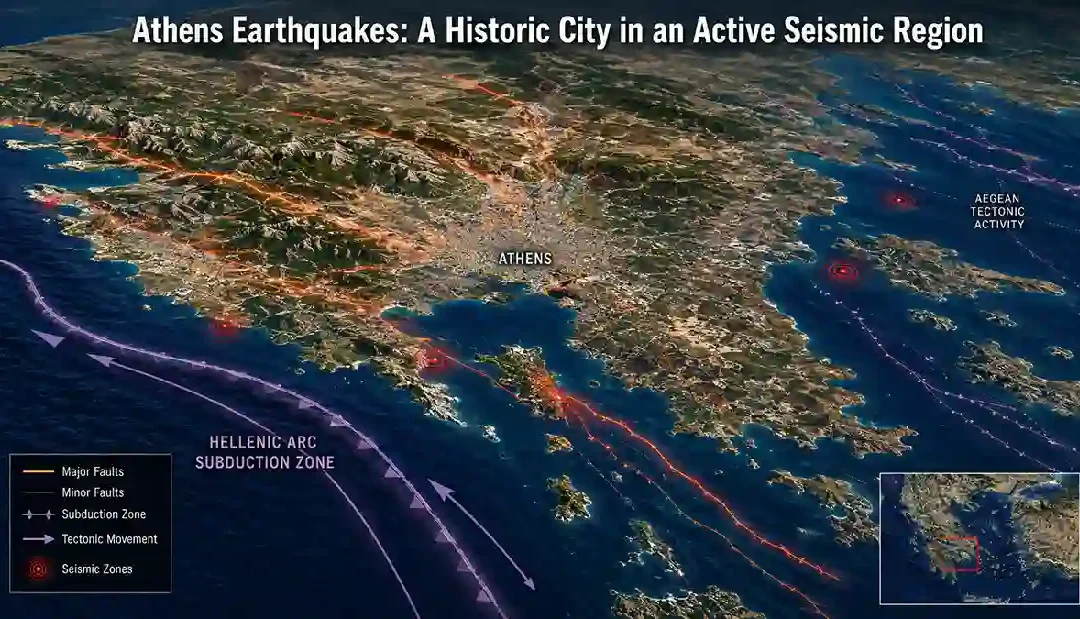
 Athens is one of Europe’s most earthquake-prone capitals. While it doesn’t sit directly on a major plate boundary like Tokyo, it is located within a highly active tectonic region influenced by the collision between the African Plate and the Eurasian Plate This...
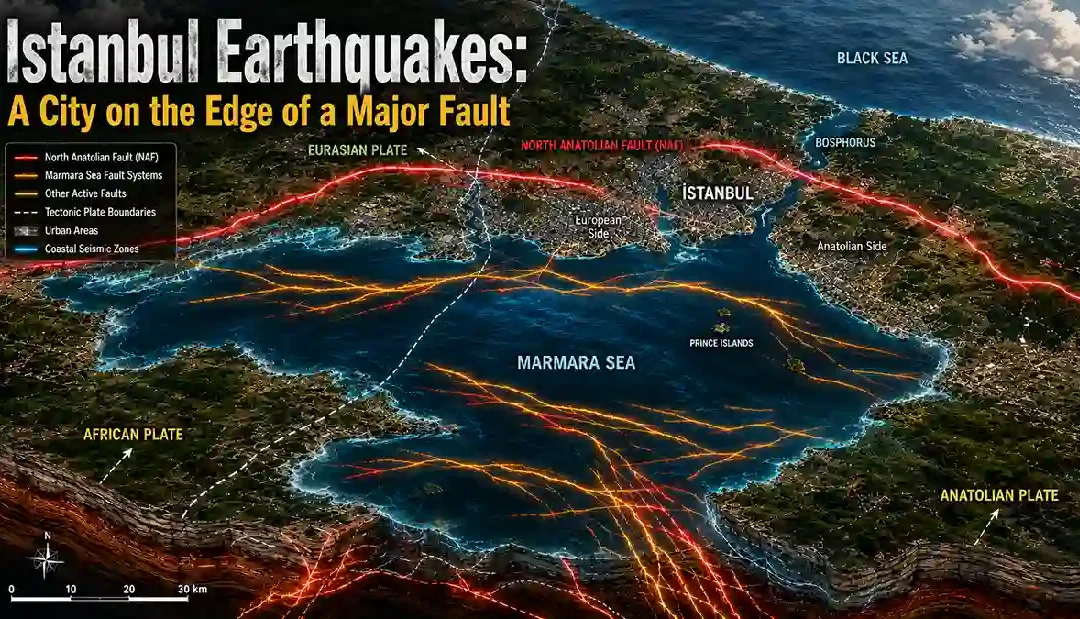 Istanbul is one of the most earthquake-risk cities in the world. The reason lies just south of the city: the North Anatolian Fault, one of the most active fault systems on Earth. This fault runs beneath the nearby Marmara Sea, placing Istanbul extremely close to a...
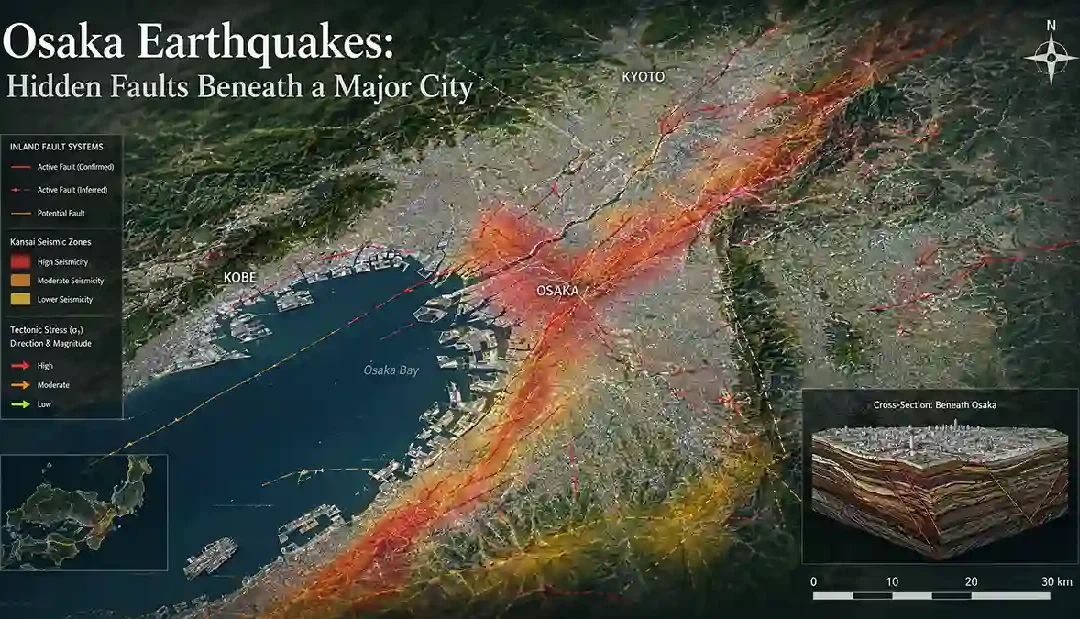 Osaka is one of Japan’s largest cities, located in the Kansai region. Unlike Tokyo, which sits directly near major subduction zones, Osaka’s earthquakes are mainly caused by inland fault systems beneath the crust. That means earthquakes here often happen closer to the...
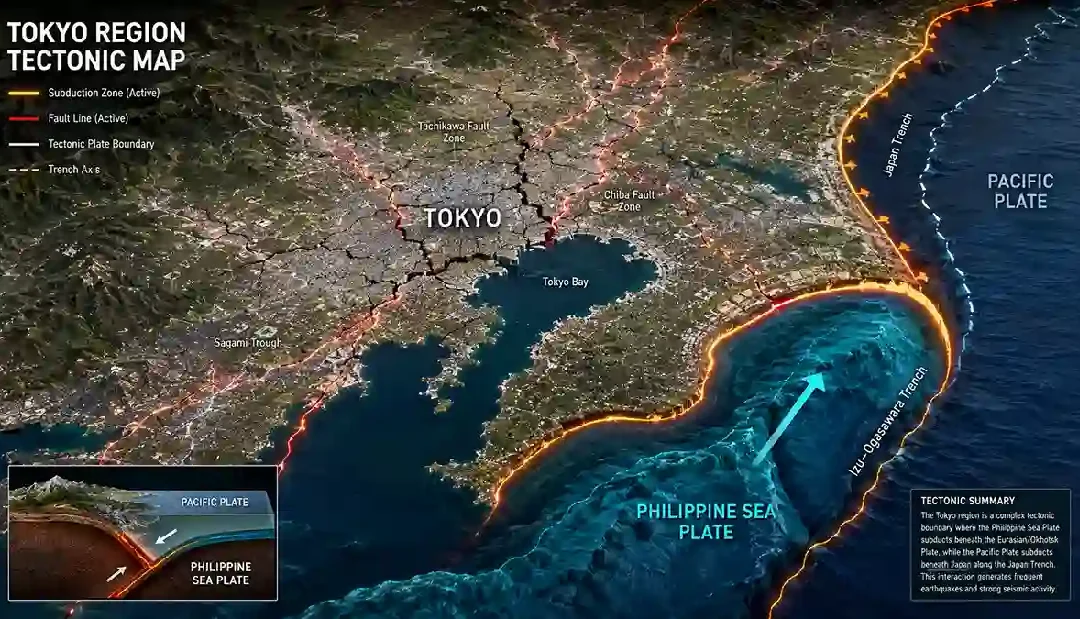 Tokyo is one of the most earthquake-prone megacities in the world. The reason is not just one fault — but multiple tectonic plates interacting beneath the region. Tokyo sits near a triple plate boundary, where several massive plates collide and move. This creates:...
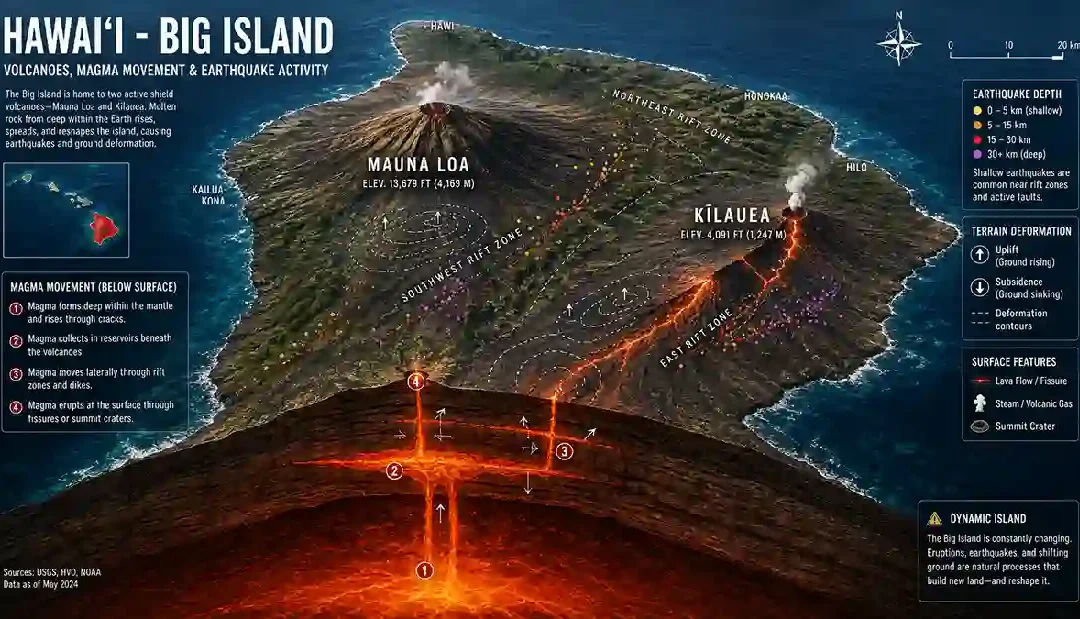 The Big Island of Hawaii is one of the most unique earthquake regions in the world. Unlike most places where earthquakes are caused by tectonic plates colliding or sliding, earthquakes here are mainly driven by volcanoes and magma movement. The island sits above a...
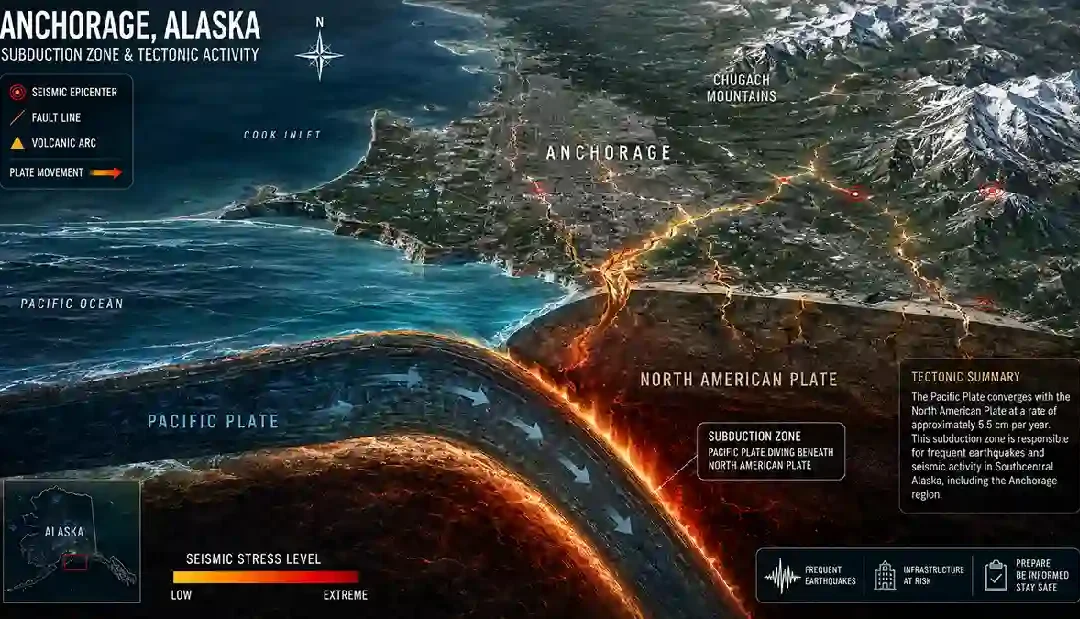 Anchorage, Alaska, is one of the most earthquake-prone cities in the United States. The reason lies deep beneath the ground: a massive subduction zone where one tectonic plate dives beneath another. Unlike California, where plates slide past each other, Anchorage sits...
