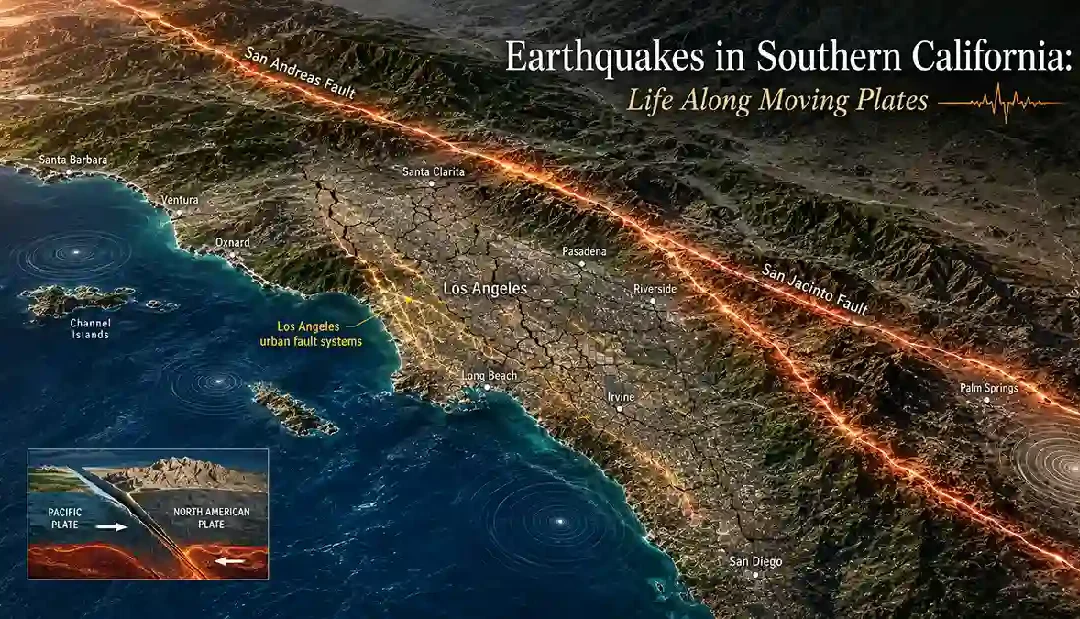
 Southern California is one of the most earthquake-active regions in North America. Cities like Los Angeles, San Diego, and nearby areas sit directly on a network of active fault lines. The region’s seismic activity is driven by the movement of two major tectonic...
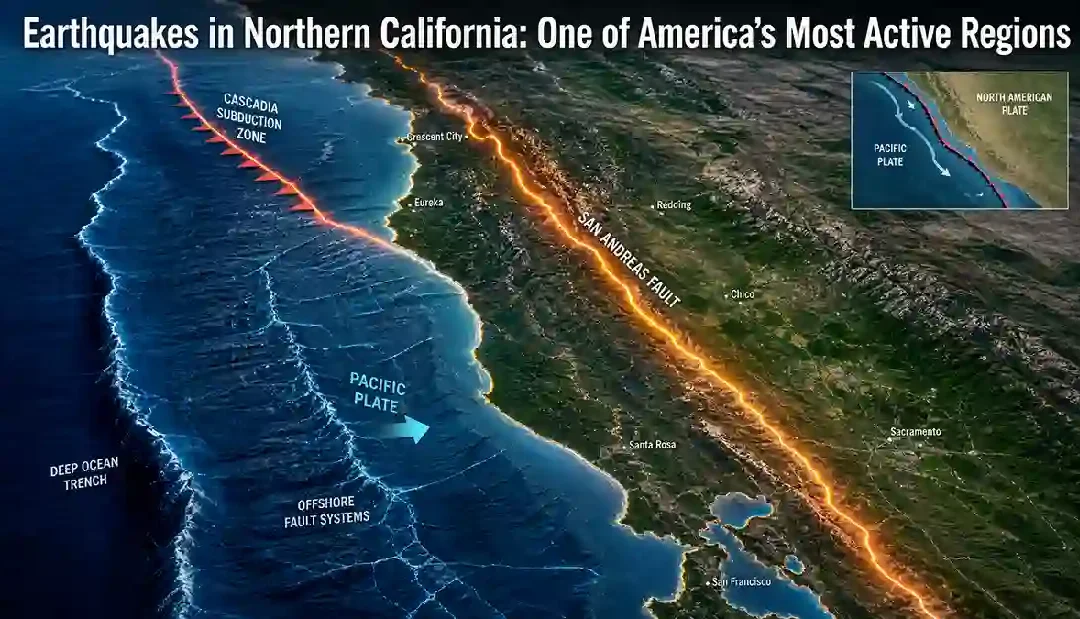 Northern California is one of the most earthquake-prone regions in the United States. The reason is simple: Multiple powerful tectonic systems meet here. Unlike Southern California, which is dominated by one major fault, Northern California combines several different...
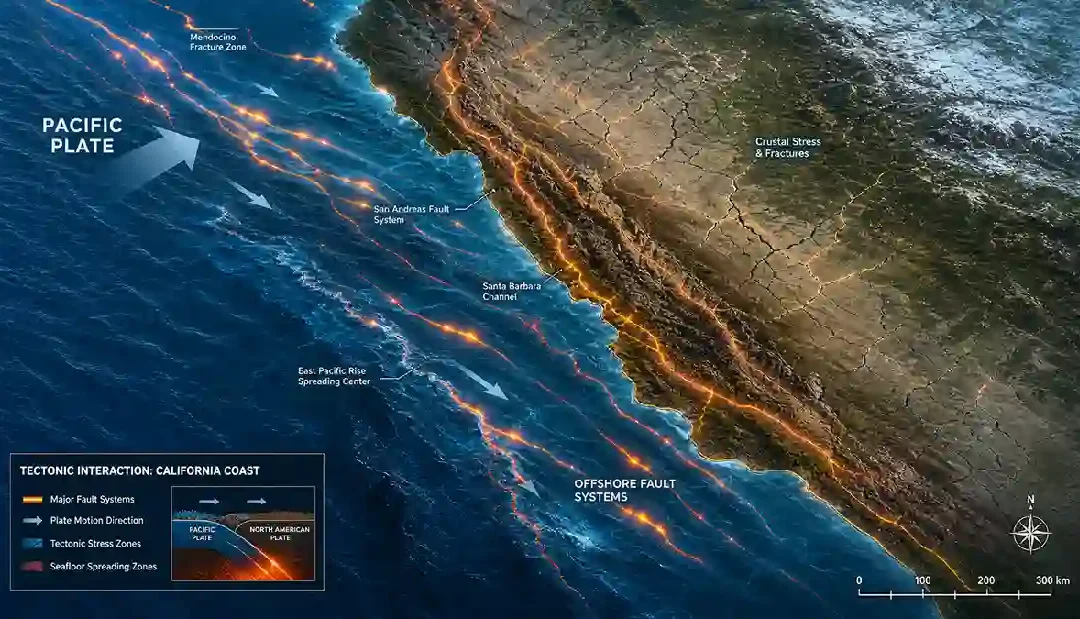 The California coast is one of the most geologically active coastal regions in the world. While most people associate earthquakes with inland faults like the San Andreas Fault, a large amount of seismic activity actually happens offshore beneath the Pacific Ocean....
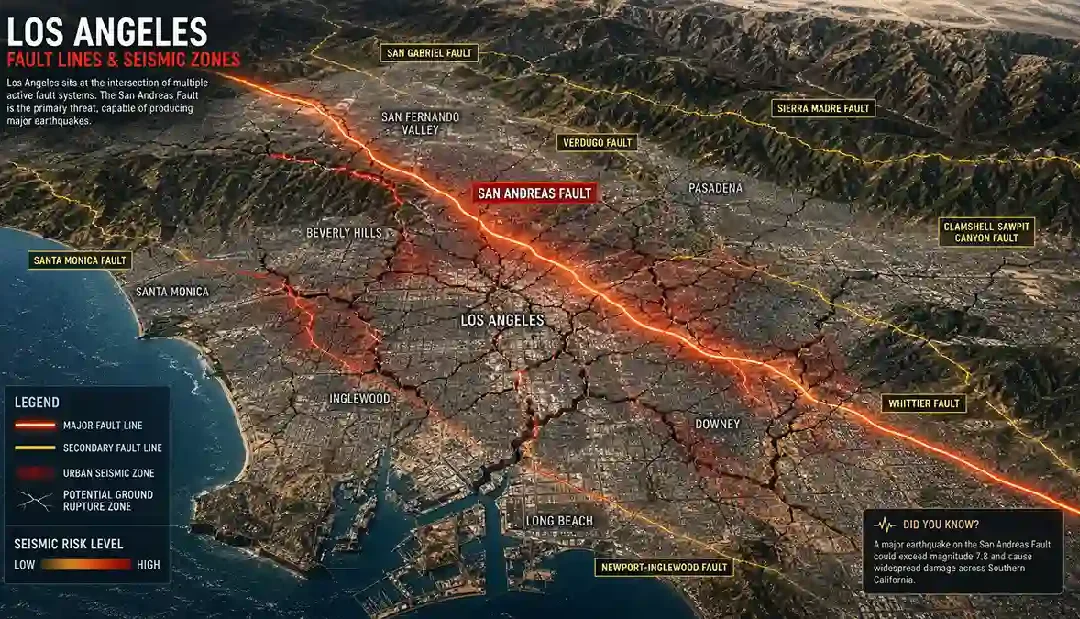 Los Angeles is one of the most earthquake-prone cities in the United States. The reason is simple, it sits on a network of active fault lines, including the famous San Andreas Fault. Unlike regions where plates collide or separate, Los Angeles experiences earthquakes...
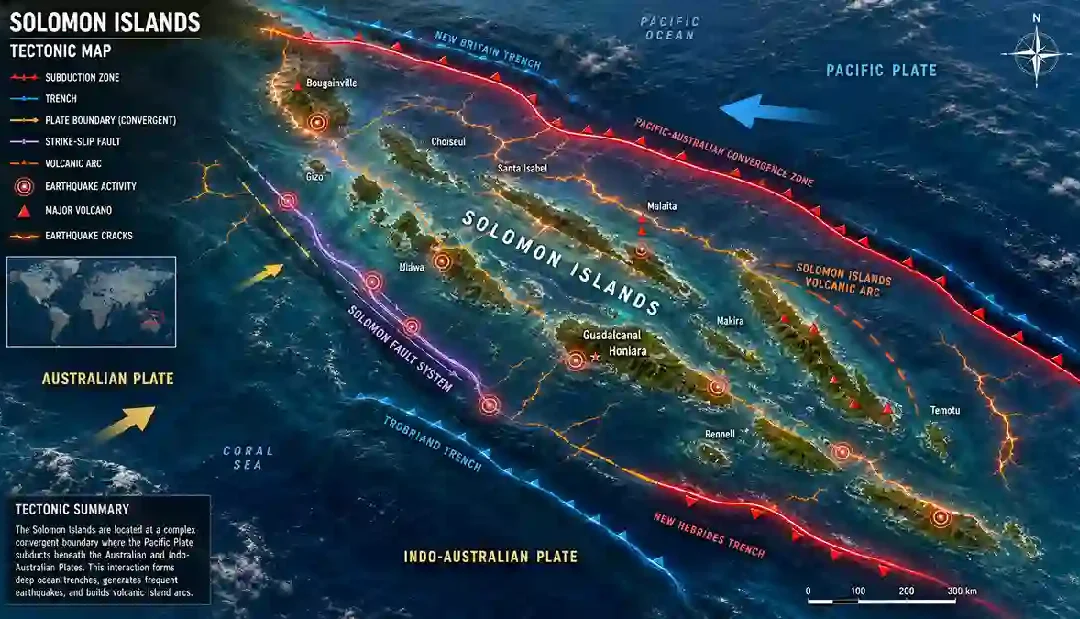 The Solomon Islands may be small, but they sit in one of the most active earthquake regions on Earth. Located deep within the Pacific Ring of Fire, this island chain experiences frequent and sometimes very powerful earthquakes. The reason is simple: Multiple tectonic...
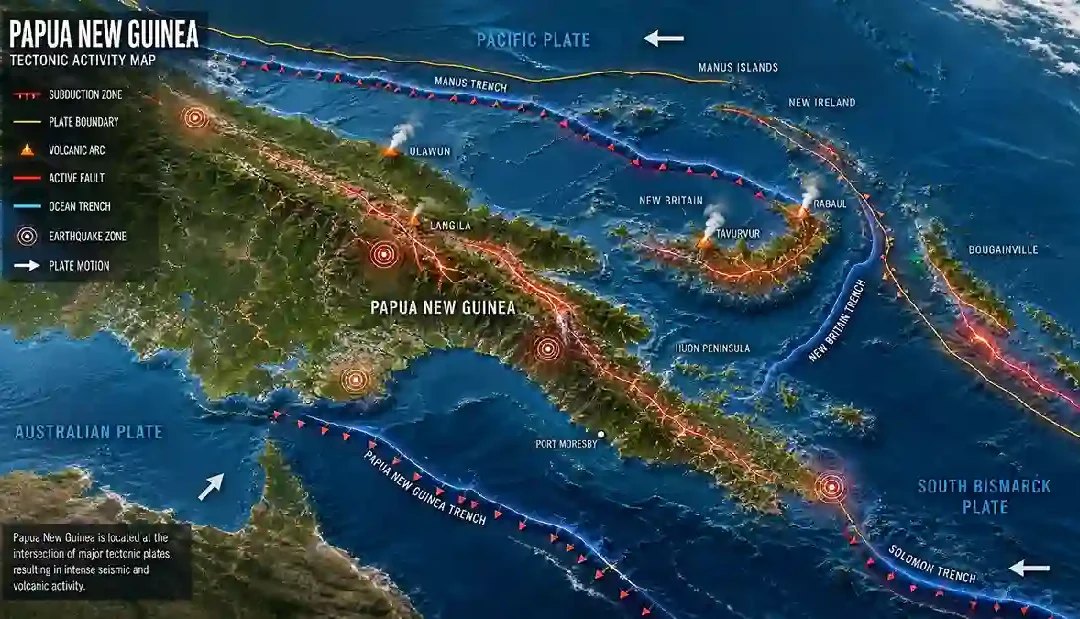 Papua New Guinea is one of the most seismically active places on Earth. The country lies directly on the Pacific Ring of Fire, where multiple tectonic plates collide, slide, and dive beneath each other. This intense geological activity creates: powerful earthquakes...
