
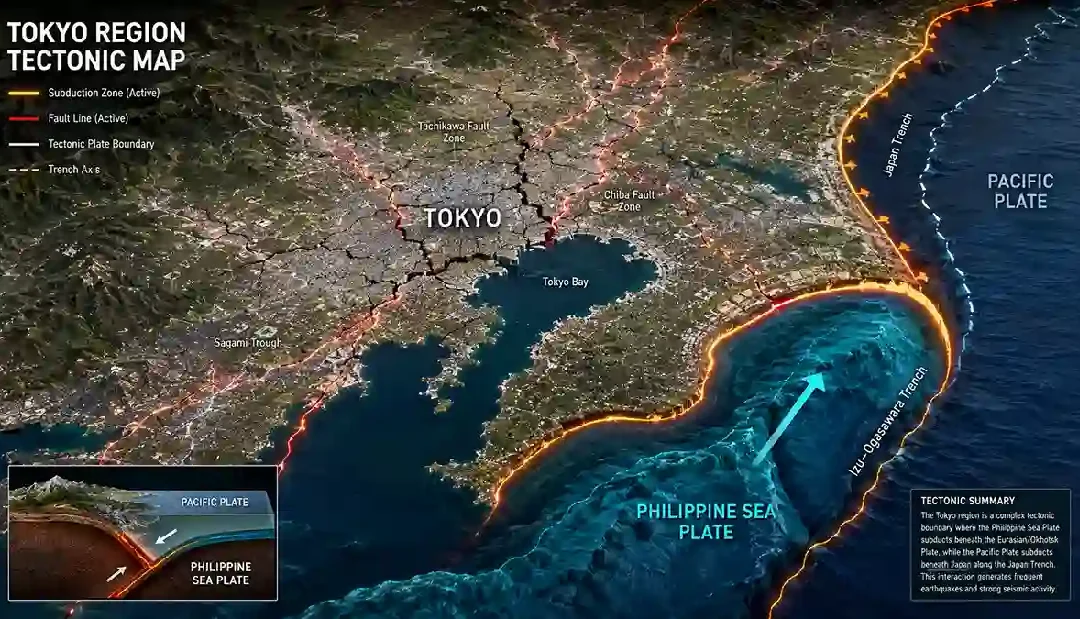
Tokyo is one of the most earthquake-prone megacities in the world. The reason is not just one fault — but multiple tectonic plates interacting beneath the region. Tokyo sits near a triple plate boundary, where several massive plates collide and move.
This creates:
- frequent earthquakes
- powerful seismic events
- tsunami risk from offshore zones
If you’re new to earthquakes, begin here → what is an earthquake
Tokyo Region Seismic Zones
| Zone | Risk Level | Main Cause |
|---|---|---|
| Pacific Subduction Zone | Extremely High | Plate diving |
| Philippine Sea Plate Boundary | Extremely High | Plate interaction |
| Sagami Trough | Very High | Megathrust earthquakes |
| Inland Tokyo Faults | High | Crustal stress |
| Offshore Japan Trench | Extremely High | Deep subduction |
Tokyo experiences multiple earthquake types due to complex tectonics. To understand how faults work → fault lines
Why Do Earthquakes Happen in Tokyo?
Tokyo sits where several tectonic plates meet.
Here’s the simple explanation:
- The Pacific Plate moves westward
- The Philippine Sea Plate moves beneath Japan
- Plates collide and dive beneath each other
- Stress builds along subduction zones
- Earthquakes occur when plates suddenly slip
This creates some of the most powerful earthquakes on Earth.
Learn more → causes of earthquakes
Four Major Earthquake Systems in the Tokyo Region
Subduction Zone Megathrust Earthquakes
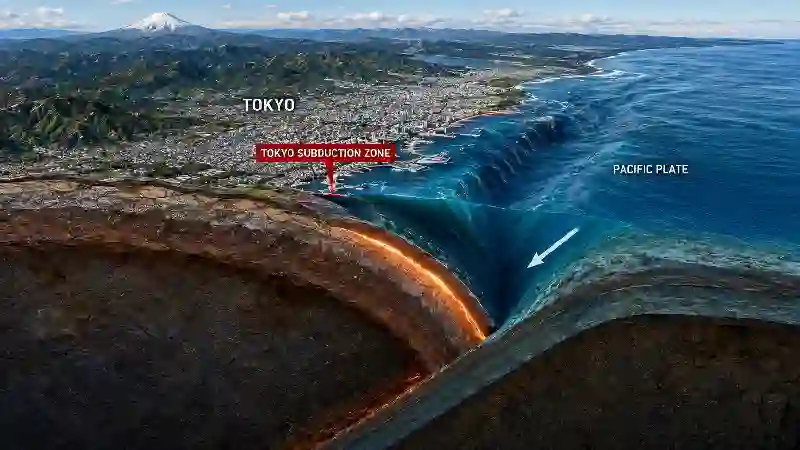
Subduction zones produce the largest earthquakes affecting Tokyo.
- Plates dive beneath Japan
- Massive stress builds
- Capable of M8–M9 earthquakes
- Tsunami risk is high
Explore earthquake types
Sagami Trough Earthquakes (Direct Tokyo Threat)
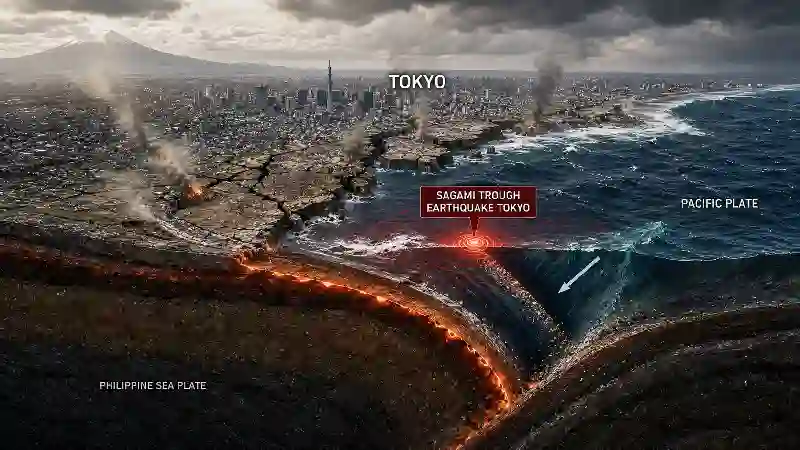
The Sagami Trough is one of the most dangerous earthquake zones near Tokyo.
- Located just offshore
- Responsible for major historical earthquakes
- Direct impact on the Tokyo region
Inland Fault Earthquakes
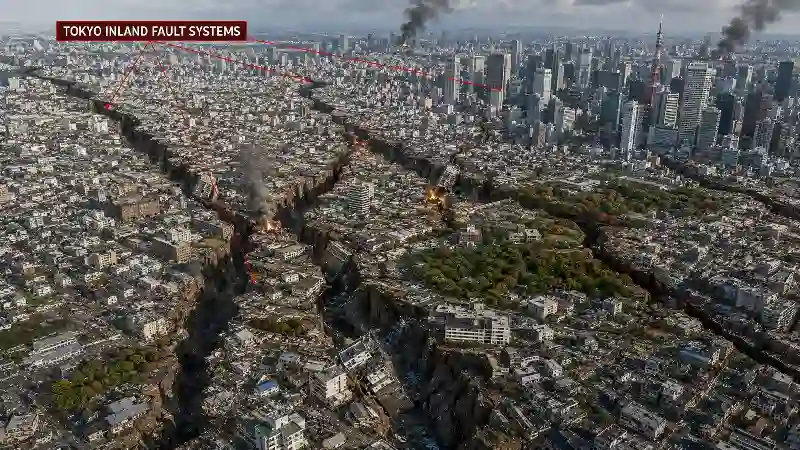
Some earthquakes occur within the crust beneath Tokyo.
- Shallow depth
- Strong local shaking
- High damage potential in urban areas
Deep Japan Trench Earthquakes
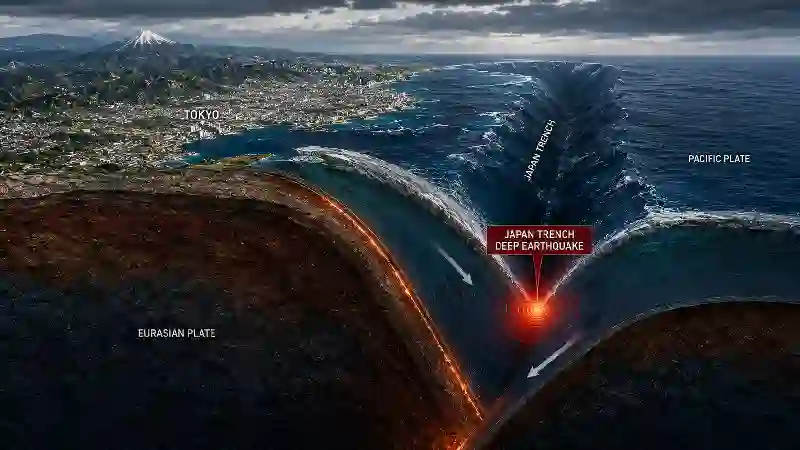
Deep earthquakes occur offshore in the Japan Trench.
- Very deep seismic activity
- Less surface damage
- Important for understanding tectonic movement
Recent Earthquake Activity in Tokyo
Tokyo experiences frequent seismic activity.
Recent patterns show:
- Regular small earthquakes
- Offshore subduction activity
- Occasional moderate earthquakes
Most earthquakes are small, but large events remain a constant risk.
Notable Earthquakes in Tokyo History
Tokyo has experienced several major earthquakes.
- 1923 Great Kanto Earthquake (M7.9)
One of Japan’s most devastating earthquakes. - 2011 Tohoku Earthquake (M9.0)
A massive offshore earthquake affecting the Tokyo region. - Recurring Sagami Trough Earthquakes
Periodic major seismic events near Tokyo.
Understand magnitude vs impact
Tokyo vs Other Earthquake Regions
Tokyo is one of the most complex seismic regions globally.
- Tokyo → multiple subduction zones + inland faults
- California → transform fault earthquakes
- Chile → subduction megathrust earthquakes
- Iceland → tectonic spreading
Few cities face such a combination of seismic risks.
Can Earthquakes in Tokyo Be Predicted?
No — earthquakes cannot be predicted precisely.
Scientists can:
- monitor tectonic plate movement
- track stress buildup
- detect seismic patterns
Japan has one of the world’s most advanced earthquake monitoring systems.
Learn more → Can earthquakes be predicted
Because it sits near multiple tectonic plate boundaries.
A major earthquake from the Sagami Trough or nearby subduction zones.
Yes — small earthquakes occur frequently.
Yes — large earthquakes are expected over long time scales.
Final Thoughts
Tokyo is one of the most seismically active urban regions in the world. With multiple tectonic plates interacting beneath the region, earthquakes are a constant part of life.
Understanding Tokyo’s earthquake systems helps explain how some of the world’s most powerful seismic forces operate beneath densely populated areas.