
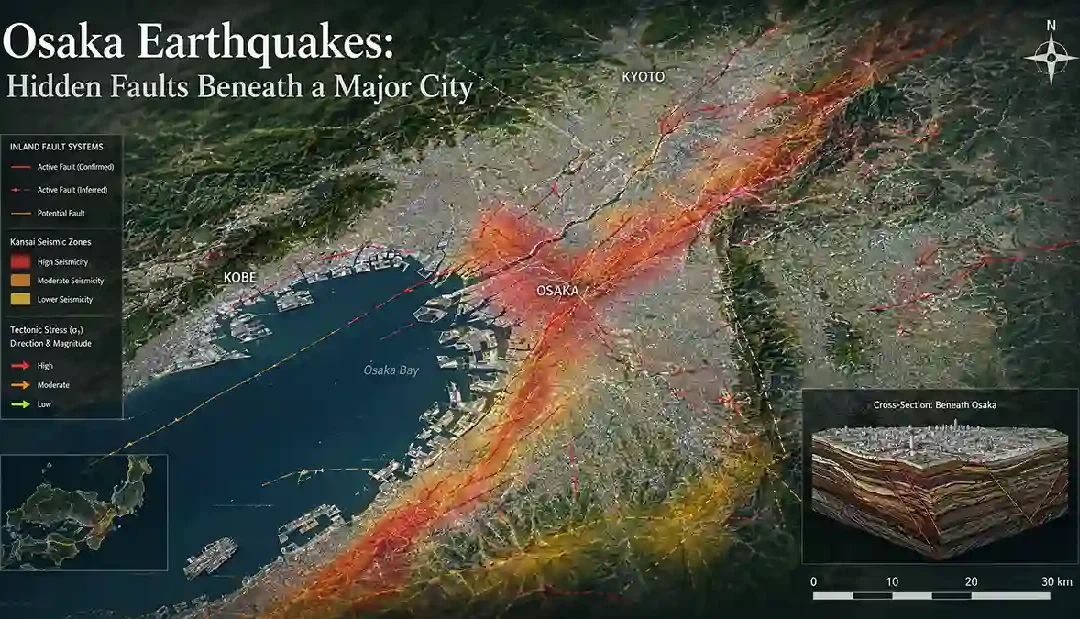
Osaka is one of Japan’s largest cities, located in the Kansai region. Unlike Tokyo, which sits directly near major subduction zones, Osaka’s earthquakes are mainly caused by inland fault systems beneath the crust. That means earthquakes here often happen closer to the surface, which can make them more damaging locally.
If you’re new to earthquakes, begin here → what is an earthquake
Osaka Region Seismic Zones
| Zone | Risk Level | Main Cause |
|---|---|---|
| Inland Kansai Faults | High | Crustal fault movement |
| Osaka Basin | High | Sediment amplification |
| Median Tectonic Line | Very High | Major fault system |
| Nankai Trough (Nearby) | Extremely High | Subduction zone |
| Western Honshu | Moderate–High | Regional tectonic stress |
Osaka faces both inland and nearby subduction-related earthquake risks.
To understand how faults work → fault lines
Why Do Earthquakes Happen in Osaka?
Osaka’s earthquakes come from two main sources:
1. Inland Fault Movement
- Faults beneath the Kansai region accumulate stress
- Shallow earthquakes occur when they slip
2. Nearby Subduction Zone Influence
- The Philippine Sea Plate moves beneath Japan
- This creates stress that affects inland regions
Learn more → causes of earthquakes
Four Major Earthquake Systems in the Osaka Region
Inland Fault Earthquakes (Main Osaka Risk)
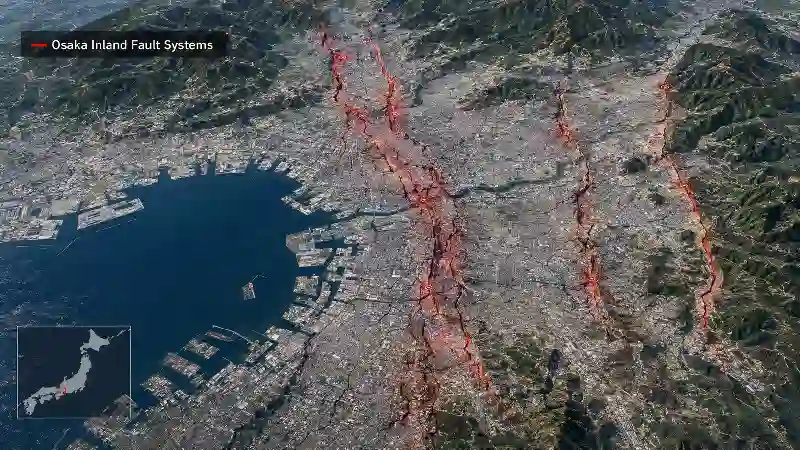
Most earthquakes affecting Osaka are inland.
- Shallow depth
- Strong local shaking
- High impact on cities
Explore earthquake types
Median Tectonic Line (Major Fault System)
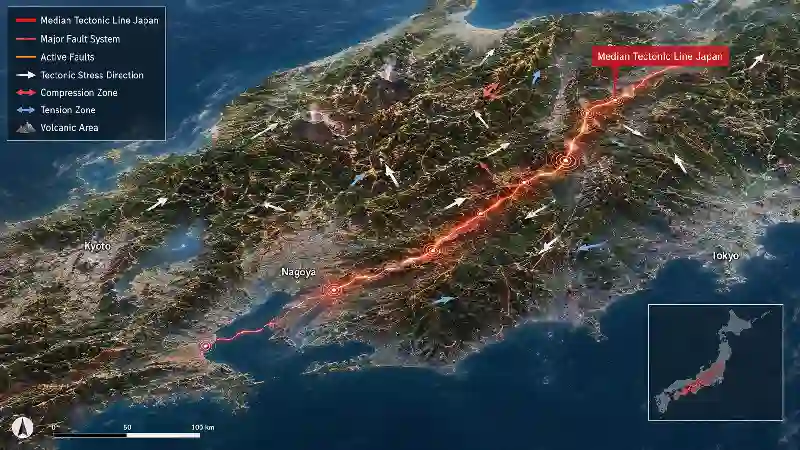
The Median Tectonic Line is one of Japan’s largest fault systems.
- Extends across western Japan
- Capable of significant earthquakes
- Influences seismic activity near Osaka
Nankai Trough (Nearby Subduction Threat)
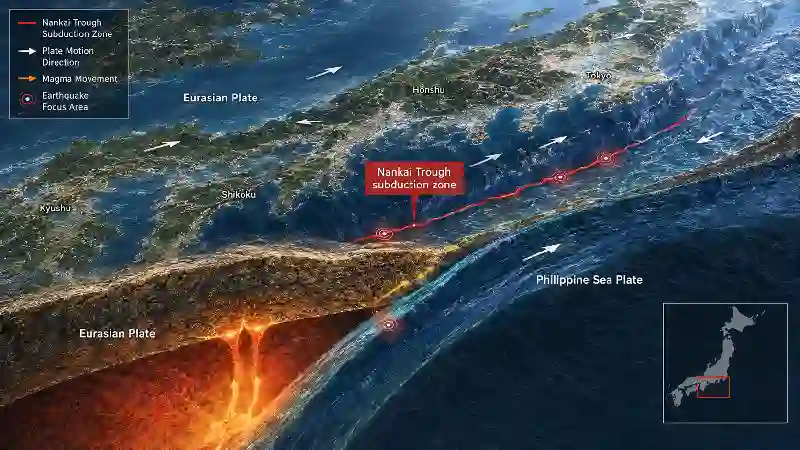
The Nankai Trough lies offshore south of Osaka.
- Major subduction zone
- Capable of very large earthquakes (M8+)
- Can affect Osaka with strong shaking
Osaka Basin Amplification Effect
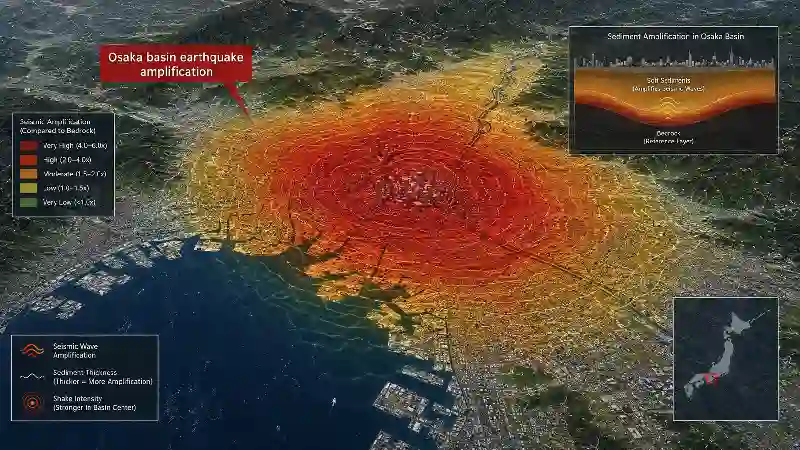
The Osaka Basin can amplify earthquake shaking.
- Soft sediment layers
- Stronger shaking compared to nearby regions
- Increased urban risk
Recent Earthquake Activity in Osaka
Osaka experiences occasional seismic activity.
Recent patterns show:
- Inland earthquakes in Kansai region
- Regional stress from nearby tectonic zones
- Moderate earthquakes felt in urban areas
Earthquakes are less frequent than Tokyo but can still be significant.
Notable Earthquakes Affecting Osaka
Osaka has experienced several important earthquakes.
- 2018 Osaka Earthquake (M6.1)
A strong inland earthquake affecting the city. - Nankai Trough Historical Earthquakes
Large earthquakes that impacted the Kansai region. - Recurring Inland Fault Activity
Periodic seismic events in western Japan.
Understand magnitude vs impact
Osaka vs Tokyo (Key Difference)
Osaka and Tokyo have different earthquake risks.
- Osaka → inland fault + nearby subduction
- Tokyo → multiple subduction zones
- Osaka earthquakes → often shallower
- Tokyo earthquakes → often larger offshore
Osaka earthquakes can feel stronger locally due to shallow depth.
Can Earthquakes in Osaka Be Predicted?
No — earthquakes cannot be predicted precisely.
Scientists can:
- monitor inland fault systems
- track tectonic stress
- observe subduction activity
But exact timing remains unknown.
Learn more → Can earthquakes be predicted
Because of inland fault systems and nearby subduction zones.
A major inland fault earthquake or Nankai Trough event.
Less frequent than Tokyo, but still possible.
Because shallow inland earthquakes produce stronger local shaking.
Final Thoughts
Osaka’s earthquakes may not happen as often as in Tokyo, but they come with a different type of risk. Shallow inland faults and nearby subduction zones combine to create potentially strong and damaging earthquakes in the Kansai region.
Understanding Osaka’s seismic systems helps explain how earthquake risks vary even within the same country.