
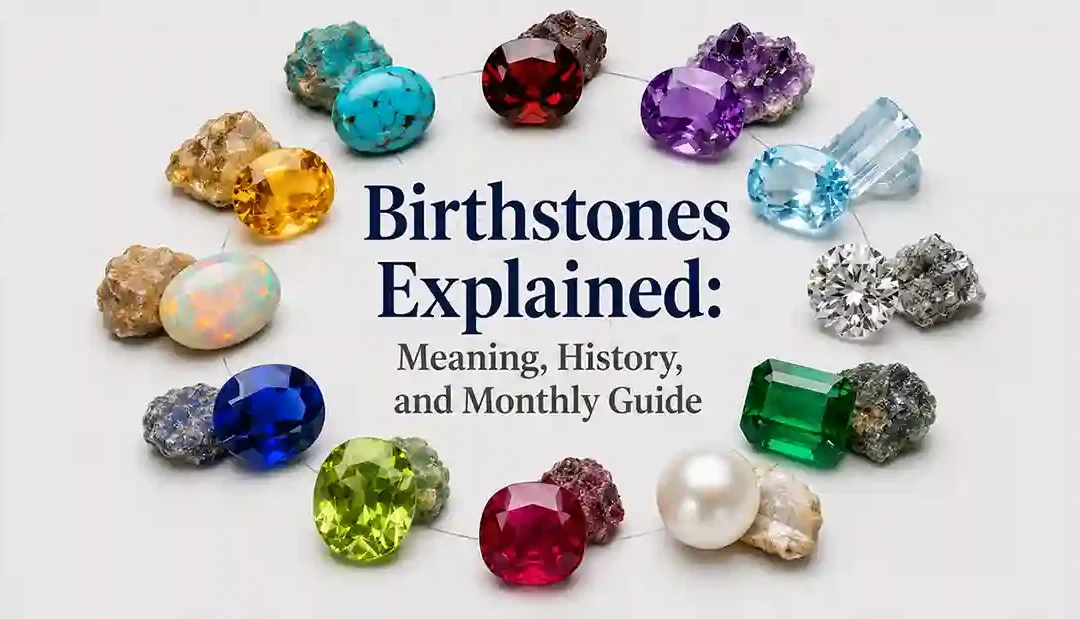
Birthstones are gemstones traditionally associated with each month of the year. For centuries, people have believed that wearing a gemstone connected to their birth month brings luck, protection, prosperity, and personal significance.
Today, birthstones remain among the most popular gemstones used in jewelry, gifts, and personal collections.
Each birthstone possesses unique:
- colors
- mineral properties
- symbolism
- historical traditions
making them both scientifically interesting and culturally significant.
What Are Birthstones?
Birthstones are gemstones assigned to specific months of the year.
People often wear their birthstone as:
- rings
- necklaces
- earrings
- bracelets
- pendants
Birthstones may symbolize:
- protection
- wisdom
- prosperity
- love
- strength
depending on cultural traditions.
History of Birthstones
The concept of birthstones is often linked to:
Biblical Traditions
The Breastplate of Aaron described twelve gemstones representing the twelve tribes of Israel.
Ancient Cultures
Romans, Greeks, Indians, and Persians associated gemstones with astrology and spiritual beliefs.
Modern Birthstones
The modern birthstone list was standardized in 1912 by:
Jewelers of America
and has been updated several times since.
Birthstones by Month
| Month | Birthstone |
|---|---|
| January | Garnet |
| February | Amethyst |
| March | Aquamarine |
| April | Diamond |
| May | Emerald |
| June | Pearl, Alexandrite |
| July | Ruby |
| August | Peridot, Spinel |
| September | Sapphire |
| October | Opal, Tourmaline |
| November | Topaz, Citrine |
| December | Turquoise, Tanzanite, Zircon |
January Birthstone
Garnet
Symbolizes:
- protection
- friendship
- trust
Color:
- deep red
- orange
- green
- pink
Chemical group:
Silicate minerals.
February Birthstone
Amethyst
Symbolizes:
- peace
- clarity
- wisdom
Color:
- purple
- violet
Mineral family:
Quartz.
March Birthstone
Aquamarine
Symbolizes:
- courage
- tranquility
- protection
Color:
- blue
- blue-green
Mineral family:
Beryl.
April Birthstone
Diamond
Symbolizes:
- strength
- purity
- eternal love
Chemical formula:
Diamond is the hardest natural material.
May Birthstone
Emerald
Symbolizes:
- growth
- renewal
- prosperity
Color:
- green
Mineral family:
Beryl.
June Birthstones
Pearl
Symbolizes:
- purity
- honesty
Alexandrite
Known for:
- dramatic color change
- rarity
July Birthstone
Ruby
Symbolizes:
- passion
- love
- courage
Mineral family:
Corundum.
Color:
red
August Birthstones
Peridot
Color:
olive green
Spinel
Colors:
- red
- pink
- blue
- violet
September Birthstone
Sapphire
Symbolizes:
- wisdom
- loyalty
- truth
Mineral family:
Corundum.
Color:
blue
October Birthstones
Opal
Opal
Known for:
- play-of-color
- rainbow flashes
Tourmaline occurs in almost every color.
November Birthstones
Topaz
Colors:
- yellow
- blue
- pink
Citrine
Known for:
- golden-yellow color
- affordability
December Birthstones
Turquoise
Blue-green phosphate mineral.
Tanzanite
Rare blue-violet zoisite.
Zircon
Natural gemstone with exceptional brilliance.
Why Do Birthstones Matter?
Birthstones remain popular because they:
- have personal meaning
- make memorable gifts
- possess historical significance
- showcase beautiful minerals
- connect geology with culture
Many people choose jewelry based on birthstones rather than gemstone value alone.
Mineral Families of Birthstones
| Birthstone | Mineral Family |
|---|---|
| Garnet | Garnet Group |
| Amethyst | Quartz |
| Aquamarine | Beryl |
| Diamond | Native Element |
| Emerald | Beryl |
| Alexandrite | Chrysoberyl |
| Ruby | Corundum |
| Peridot | Olivine |
| Spinel | Spinel Group |
| Sapphire | Corundum |
| Opal | Mineraloid |
| Tourmaline | Tourmaline Group |
| Topaz | Topaz |
| Citrine | Quartz |
| Turquoise | Phosphate |
| Tanzanite | Zoisite |
| Zircon | Zircon |
Birthstone Jewelry
Birthstones are commonly used in:
- rings
- pendants
- necklaces
- bracelets
- custom jewelry
- family jewelry sets
Their personal significance makes them popular gift choices.
Modern vs Traditional Birthstones
Some months have multiple birthstones because:
- gemstone availability changed
- new gemstones gained popularity
- modern jewelry standards evolved
Examples:
- June (Pearl, Alexandrite)
- August (Peridot, Spinel)
- October (Opal, Tourmaline)
- December (Turquoise, Tanzanite, Zircon)
Quick Birthstone Reference
| Month | Main Birthstone |
|---|---|
| January | Garnet |
| February | Amethyst |
| March | Aquamarine |
| April | Diamond |
| May | Emerald |
| June | Alexandrite |
| July | Ruby |
| August | Peridot |
| September | Sapphire |
| October | Opal |
| November | Citrine |
| December | Tanzanite |
A birthstone is a gemstone traditionally associated with a specific month of the year.
Modern gemstone associations have added alternative birthstones to provide more choices and improve availability.
Alexandrite is generally considered one of the rarest birthstones.
Diamond, the April birthstone, is the hardest natural material.
Most birthstones are minerals or mineraloids used as gemstones.
Final Thoughts
Birthstones combine geology, gemology, history, and personal tradition into one fascinating subject. From the deep red garnet of January to the vibrant turquoise and tanzanite of December, each birthstone tells a unique geological and cultural story.
Whether chosen for symbolism, beauty, or personal connection, birthstones remain among the most cherished gemstones in the world. Understanding their origins, mineral properties, and meanings provides a deeper appreciation for both Earth's natural treasures and the traditions that celebrate them.
Continue learning with → /beryl-minerals-explained/, /garnet-gemstones-explained/, and /opal-formation-explained/.