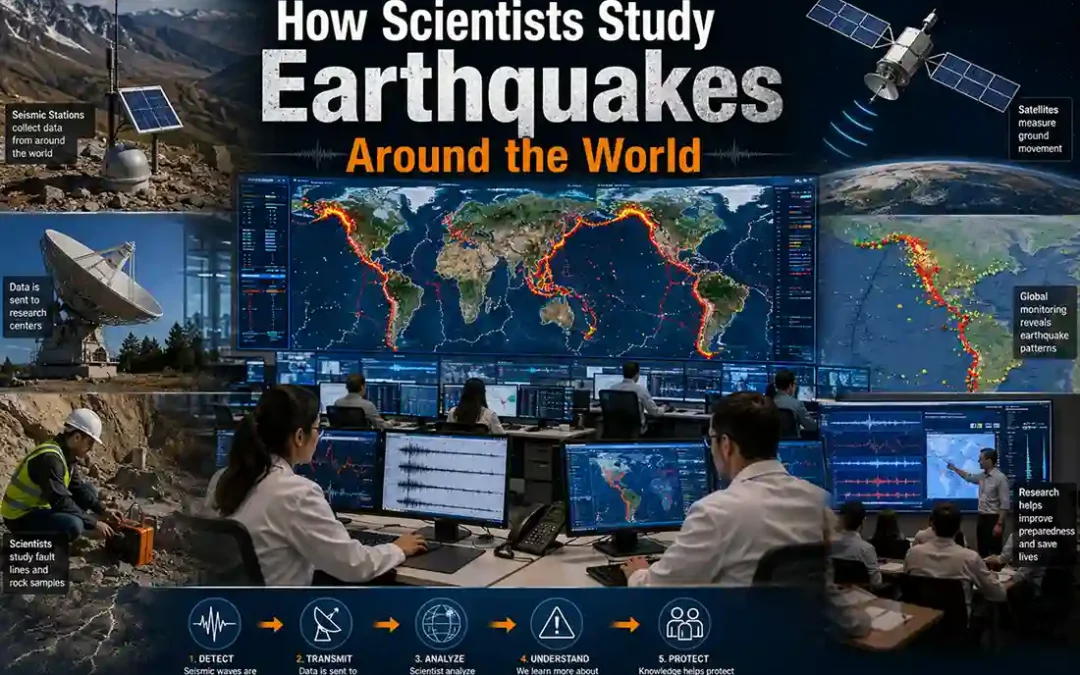
 Scientists study earthquakes to understand how and why Earth’s crust suddenly releases energy. By analyzing seismic waves, tectonic plate movement, fault systems, and ground shaking, researchers can learn how earthquakes begin and how they affect different regions....
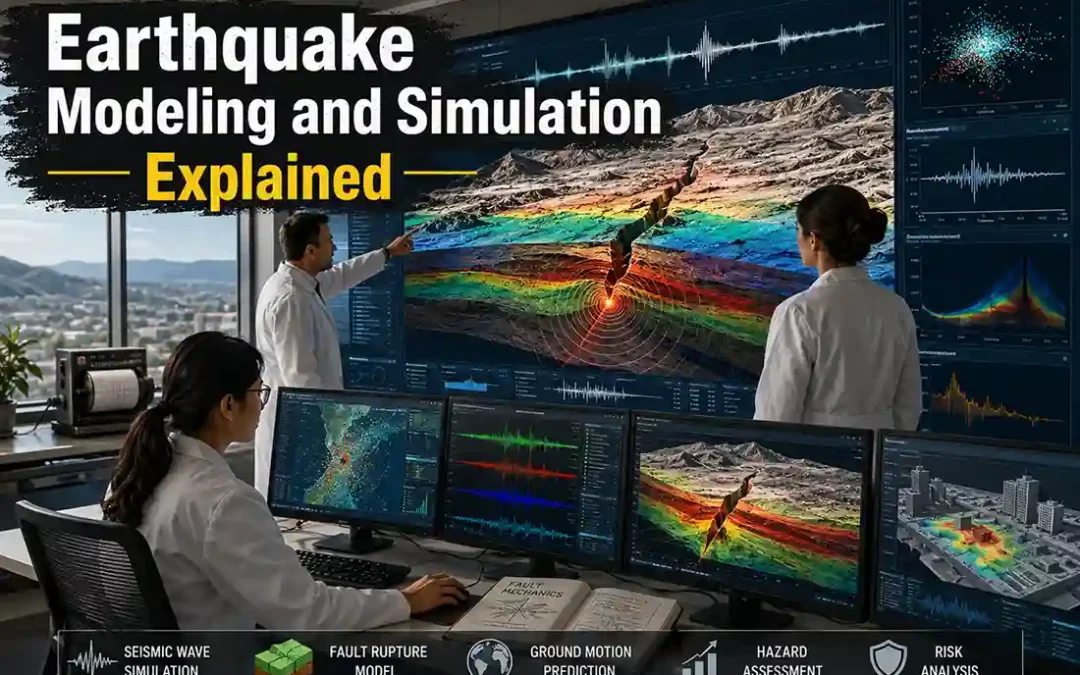 Earthquake modeling and simulation help scientists understand how earthquakes begin, spread, and affect the ground. Using computers, seismic data, and geological information, researchers create digital earthquake scenarios that simulate fault rupture and seismic wave...
 Seismographs are scientific instruments used to detect and record earthquakes. They help scientists measure ground motion caused by seismic waves traveling through Earth. When an earthquake occurs: the ground shakes seismic waves spread outward seismographs record the...
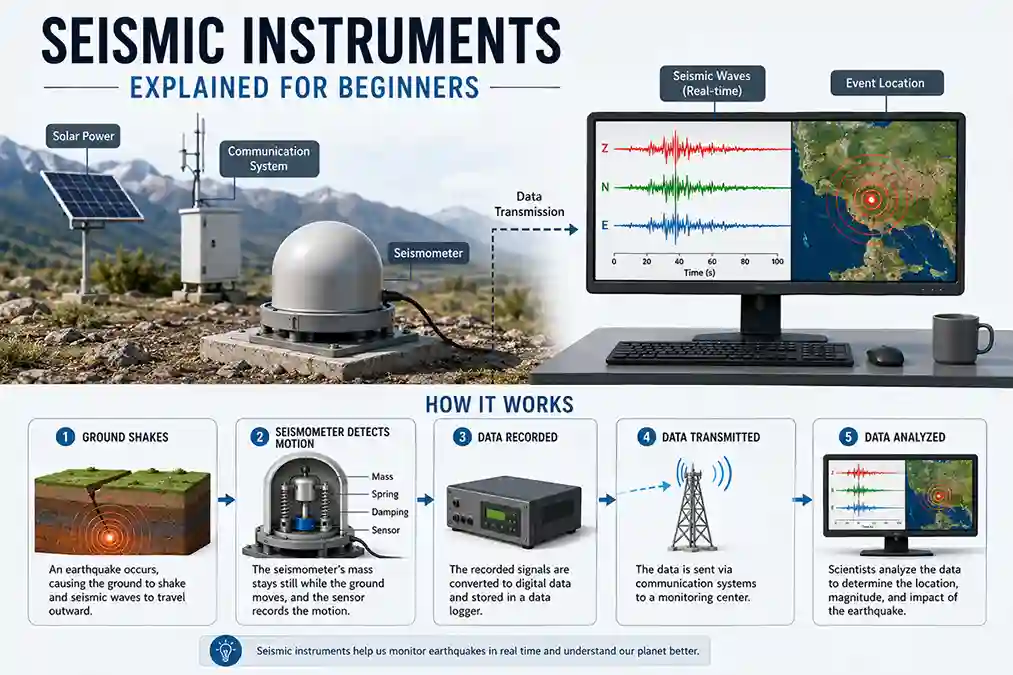 Scientists use seismic instruments to detect, measure, and study earthquakes. These tools record seismic waves traveling through Earth and help researchers understand earthquake location, magnitude, depth, and ground motion. Modern seismic instruments are extremely...
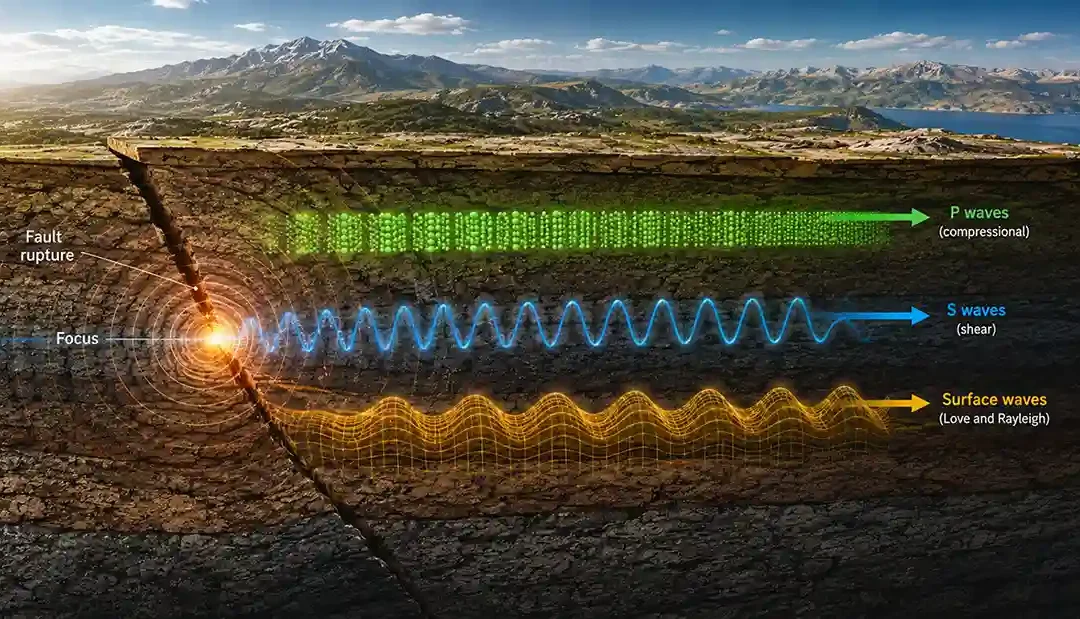 When an earthquake happens, energy travels through Earth in the form of seismic waves. These waves move outward from the earthquake source and create the shaking people feel on the surface. Scientists study earthquake wave types to understand: how earthquakes spread...
