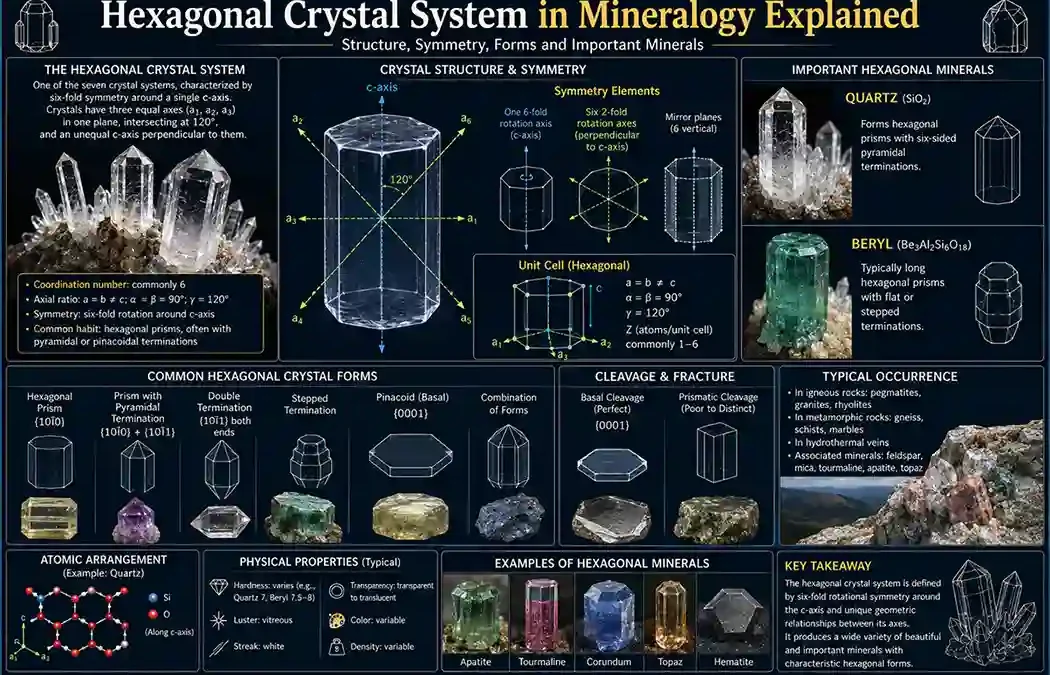
 The Hexagonal Crystal System is one of the seven major crystal systems in mineralogy and crystallography. It is known for its distinctive six-fold symmetry and beautiful six-sided crystal shapes. Many famous minerals belong to the hexagonal system, including: Quartz...
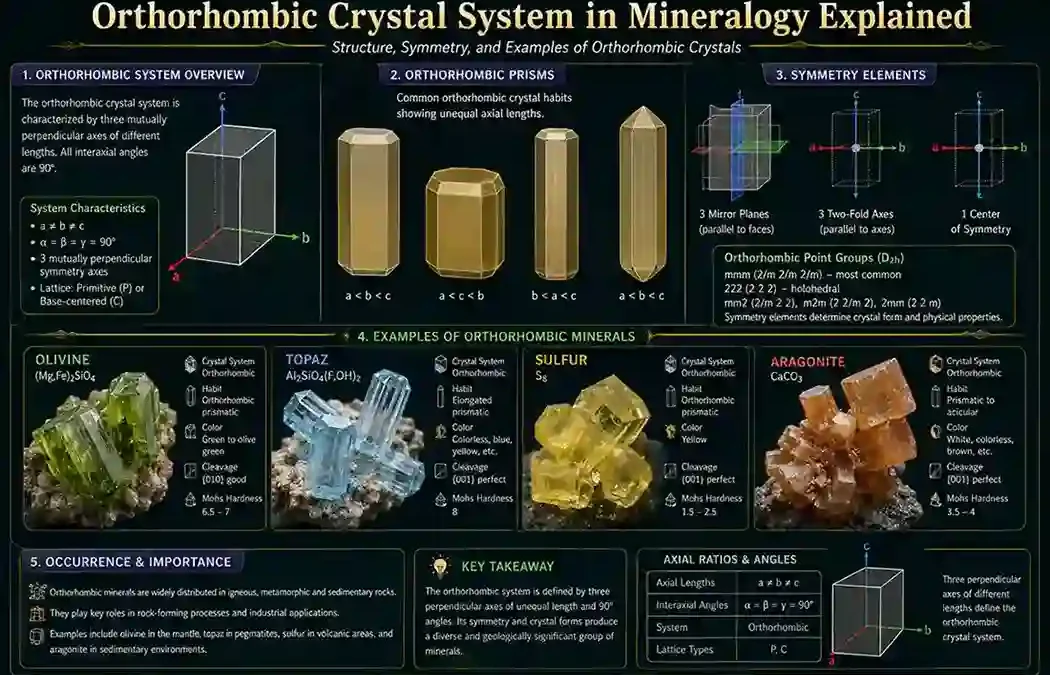 The Orthorhombic Crystal System is one of the seven crystal systems used in mineralogy to classify crystals based on their symmetry and geometry. Minerals in this system have three crystal axes of unequal lengths, but unlike some lower-symmetry systems, all axes...
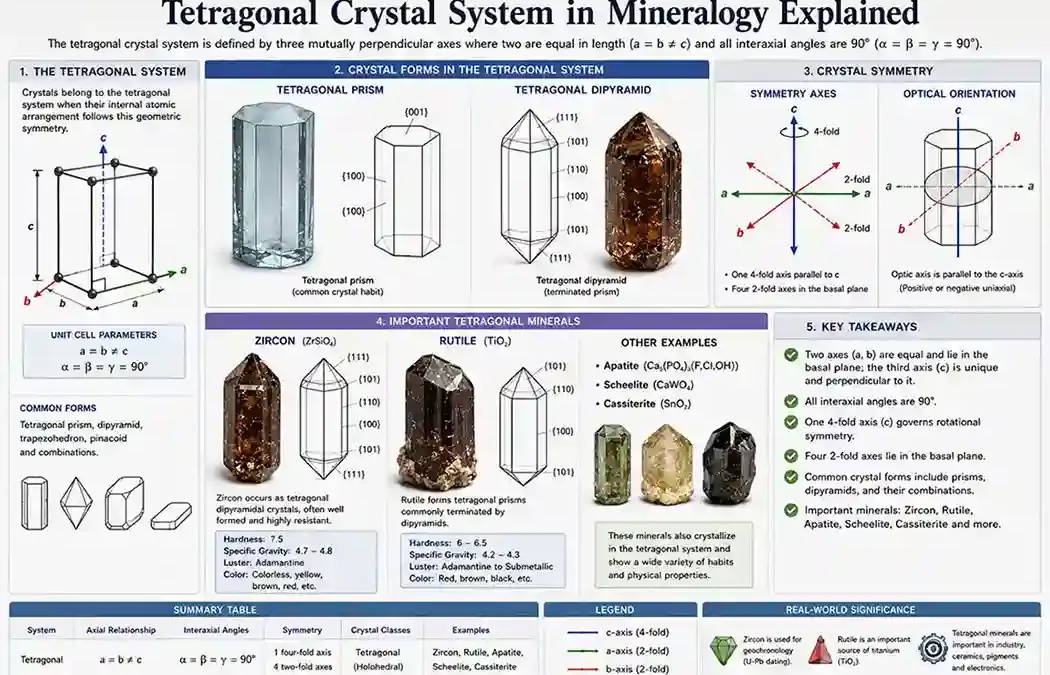 The Tetragonal Crystal System is one of the seven crystal systems used in mineralogy to classify minerals based on crystal symmetry and geometry. It resembles the cubic (isometric) system but differs because one crystal axis is longer or shorter than the other two....
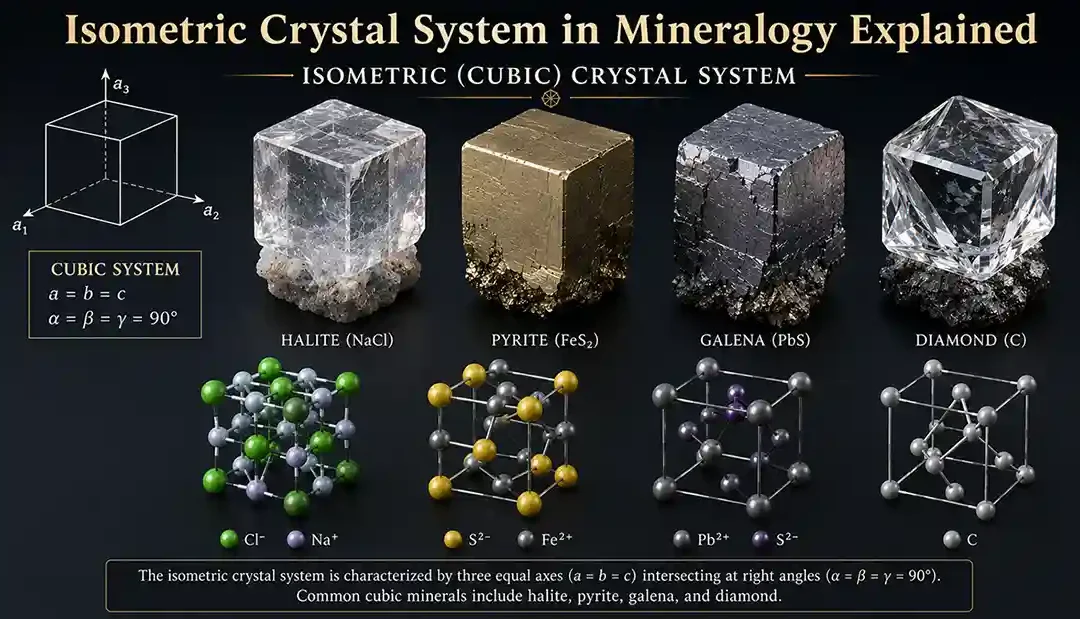 The Isometric Crystal System, also known as the Cubic Crystal System, is the most symmetrical of the seven crystal systems. Minerals in this system have three crystal axes of equal length that intersect at right angles. Because of its high symmetry, the isometric...
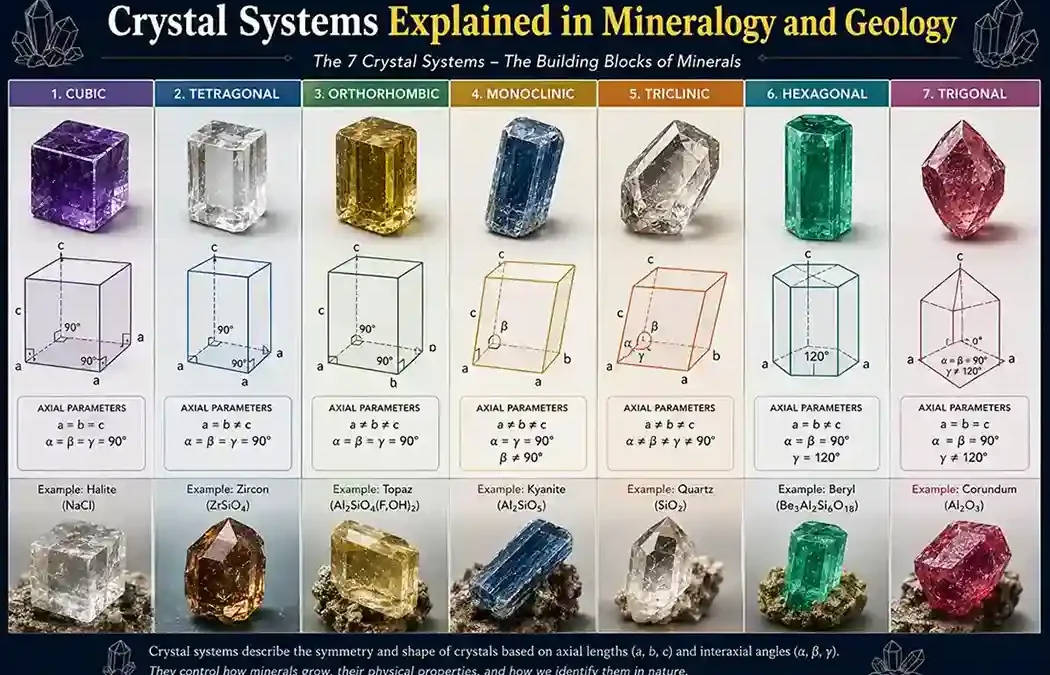 Every mineral crystal grows according to a specific geometric pattern. These patterns are grouped into seven crystal systems, which form the foundation of crystallography and mineral classification. Crystal systems describe: crystal symmetry axis lengths crystal...
