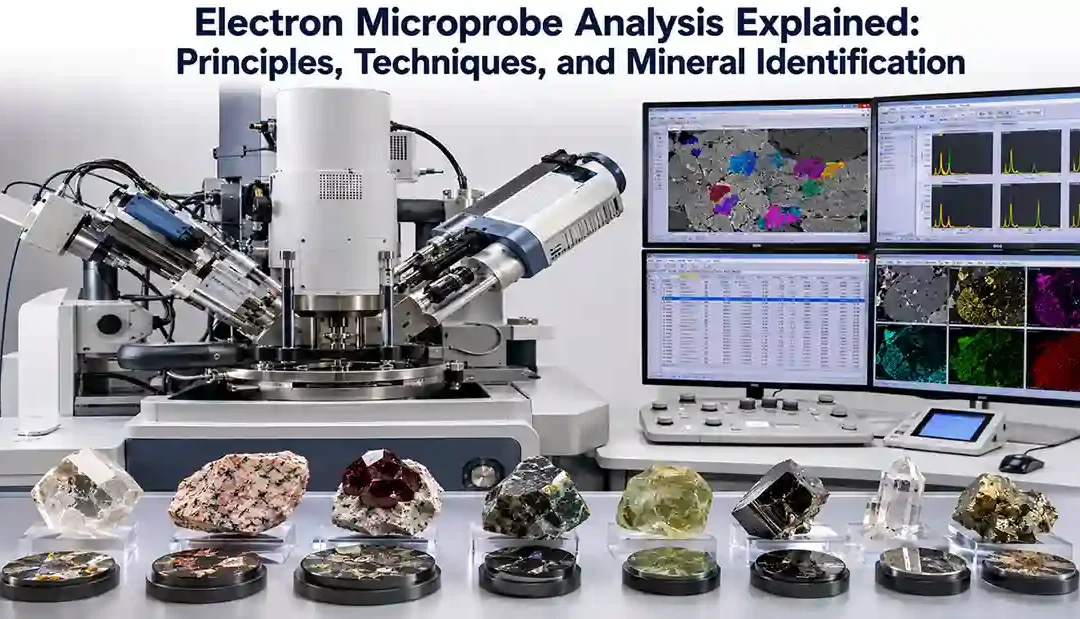
 Electron Microprobe Analysis (EPMA) is one of the most accurate laboratory techniques used to determine the chemical composition of minerals. Unlike optical methods that identify minerals by their physical or optical properties, EPMA measures the concentrations of...
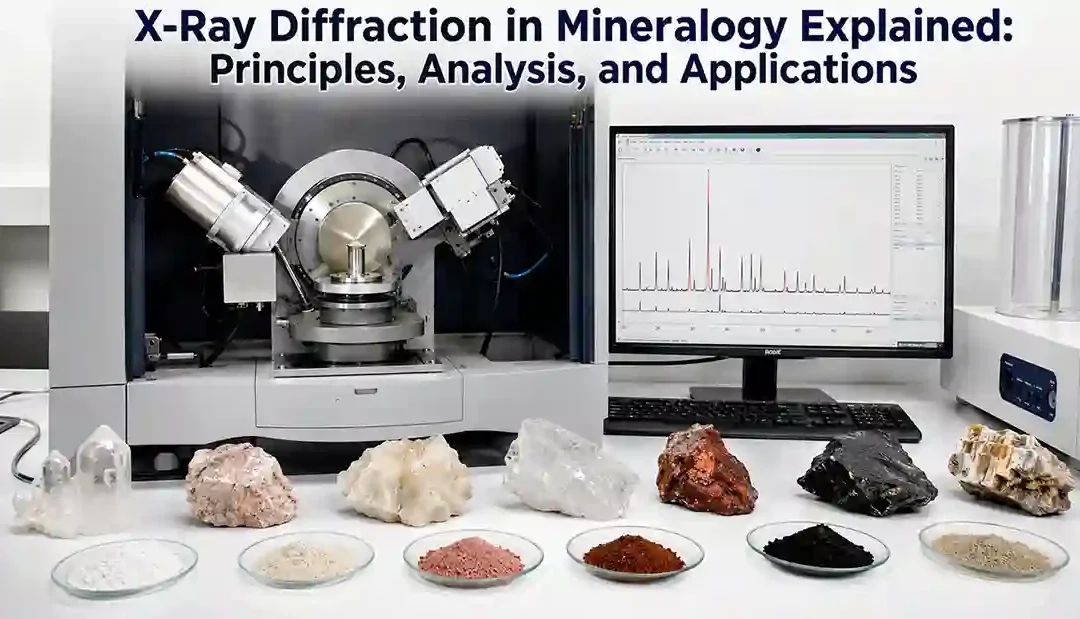 X-ray diffraction (XRD) is one of the most powerful laboratory techniques used in mineralogy to identify minerals and determine their crystal structures. Unlike hand-specimen observations or optical microscopy, XRD examines the arrangement of atoms inside a mineral by...
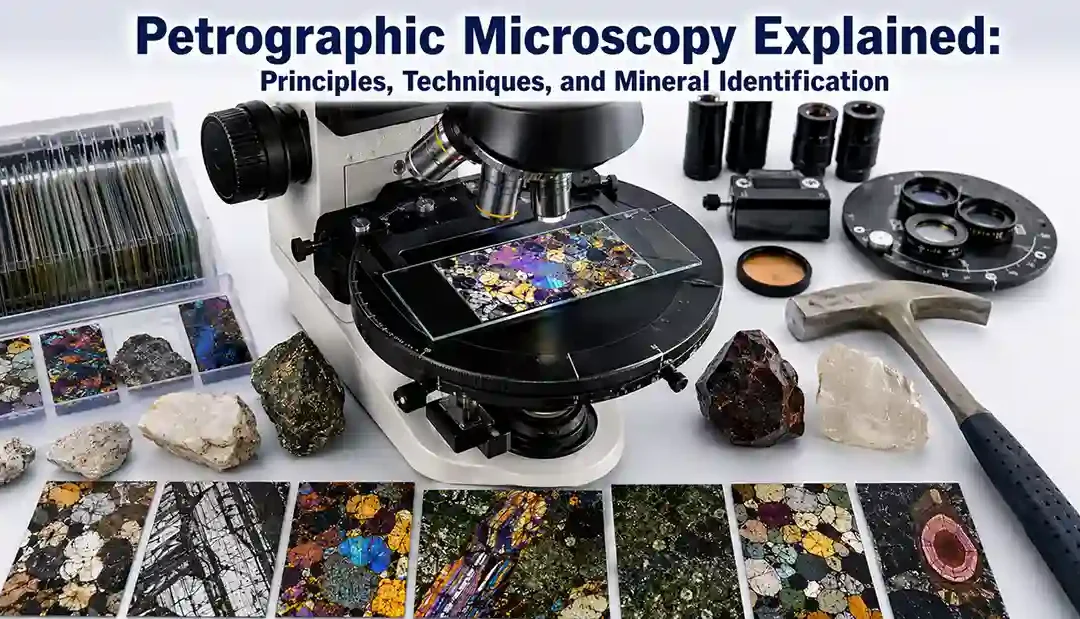 Petrographic microscopy is one of the most important analytical techniques in geology, mineralogy, and petrology. It uses a specialized polarized light microscope to study minerals and rocks in thin sections, allowing geologists to identify minerals based on their...
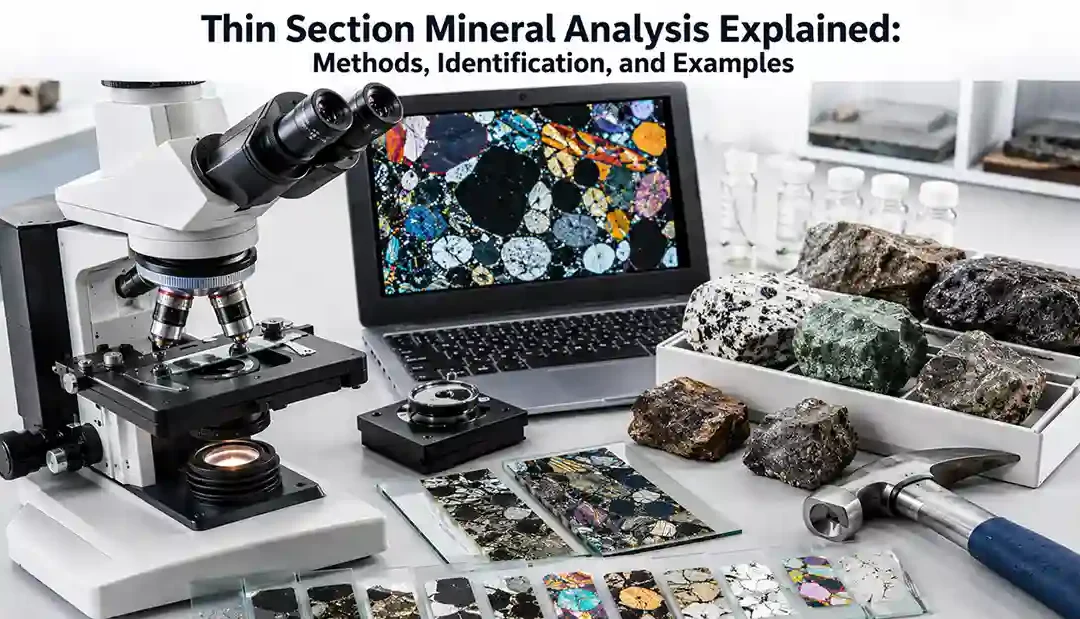 Thin section mineral analysis is one of the most important laboratory techniques in mineralogy, petrology, and geology. It involves preparing an extremely thin slice of rock—typically 30 micrometers (0.03 mm) thick—and examining it under a polarized light microscope....
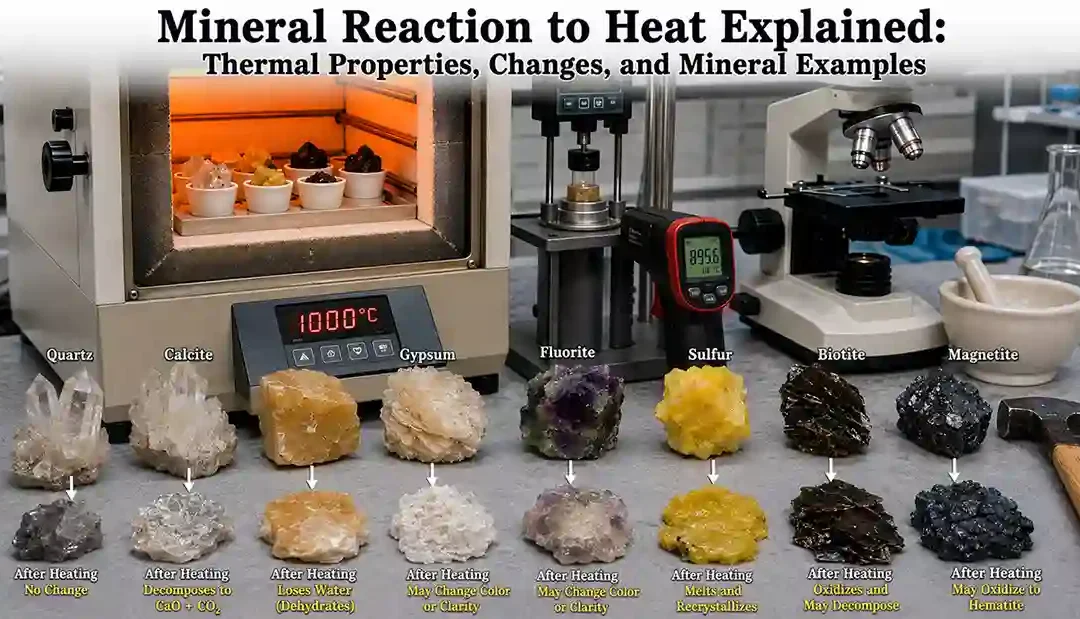 Heat plays a fundamental role in the formation, transformation, and destruction of minerals. From the crystallization of minerals in cooling magma to the alteration of rocks during metamorphism, changes in temperature continuously reshape Earth’s crust. When...
