
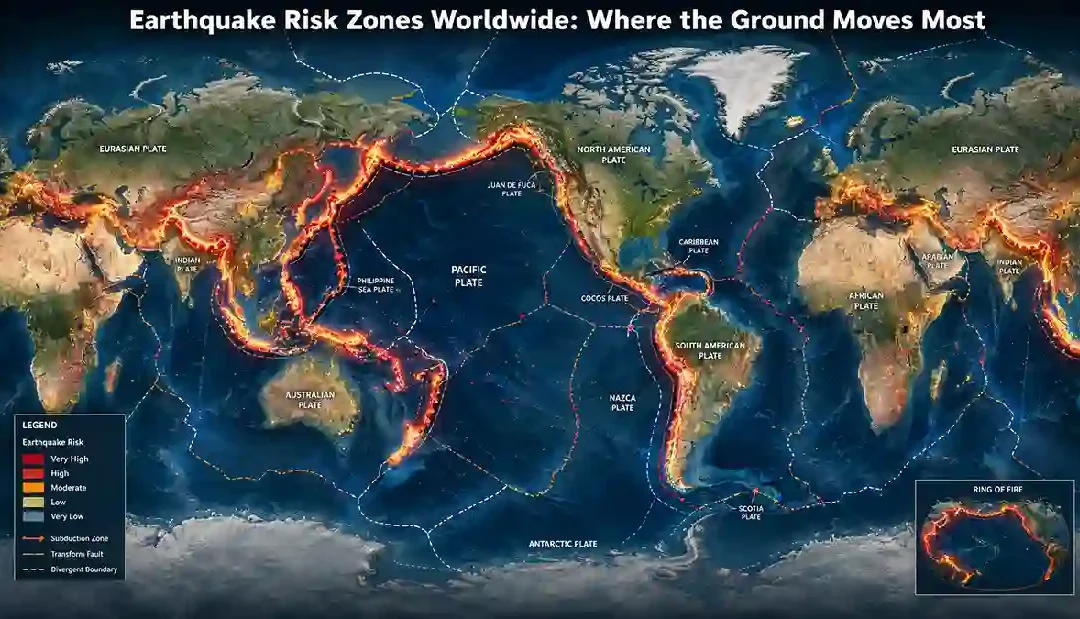
Earthquakes do not happen randomly. Most major earthquakes occur in specific regions where tectonic plates interact beneath Earth’s surface.These areas are known as earthquake risk zones or seismic belts.
Some regions experience only occasional small earthquakes, while others face powerful megathrust events capable of reshaping entire coastlines.
If you’re new to earthquakes, begin here → what is an earthquake
Major Earthquake Risk Zones Worldwide
| Region | Main Tectonic Process | Risk Level |
|---|---|---|
| Pacific Ring of Fire | Subduction + volcanic activity | Extremely High |
| Himalaya Collision Zone | Continental collision | Extremely High |
| Mediterranean Region | Complex plate interaction | High |
| San Andreas System | Transform faulting | High |
| East African Rift | Crustal spreading | Moderate–High |
Most global earthquakes occur near tectonic plate boundaries. To understand how faults work → fault lines
Why Are Some Regions More Earthquake-Prone?
Earthquake zones form where tectonic plates interact.
Here’s the simple explanation:
- Plates collide
- Plates slide past each other
- Plates pull apart
- Stress builds underground
- Earthquakes occur when stress is released
The stronger the plate interaction, the higher the seismic risk.
Learn more → causes of earthquakes
Five Major Earthquake Risk Zones on Earth
Pacific Ring of Fire (World’s Largest Seismic Belt)
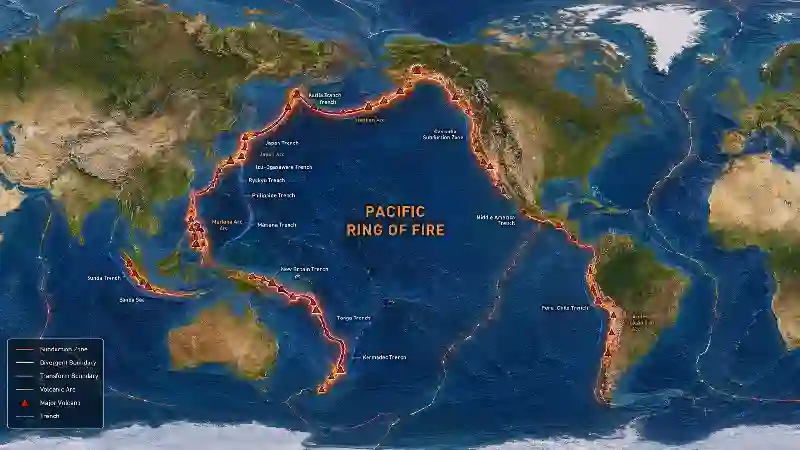
The Pacific Ring of Fire surrounds the Pacific Ocean.
It includes:
- Japan
- Indonesia
- Chile
- Alaska
- New Zealand
- Philippines
Around 75% of the world’s volcanoes and many major earthquakes occur here.
Main Features
- Subduction zones
- Megathrust earthquakes
- Tsunamis
- Volcanic activity
Explore earthquake types
Himalayan Collision Zone
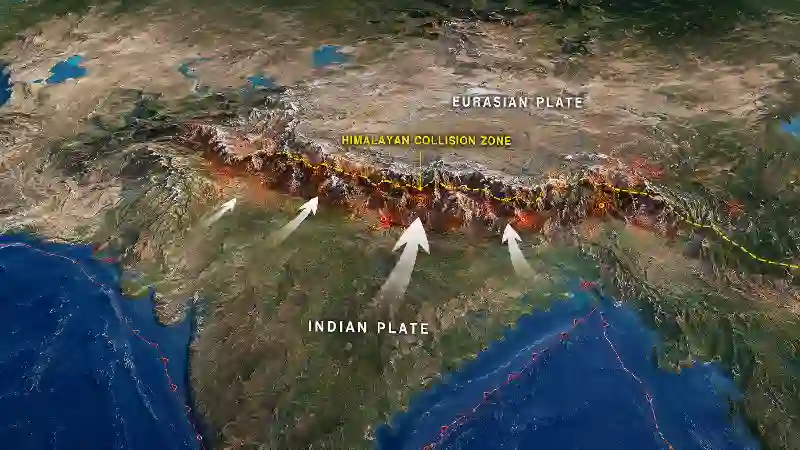
The Himalayas formed from the collision between the Indian Plate and Eurasian Plate.
This affects:
- Nepal
- Northern India
- Pakistan
- Tibet
Main Features
- Continental collision
- Mountain uplift
- Large shallow earthquakes
Learn more → earthquakes Nepal
Mediterranean & Middle East Seismic Belt
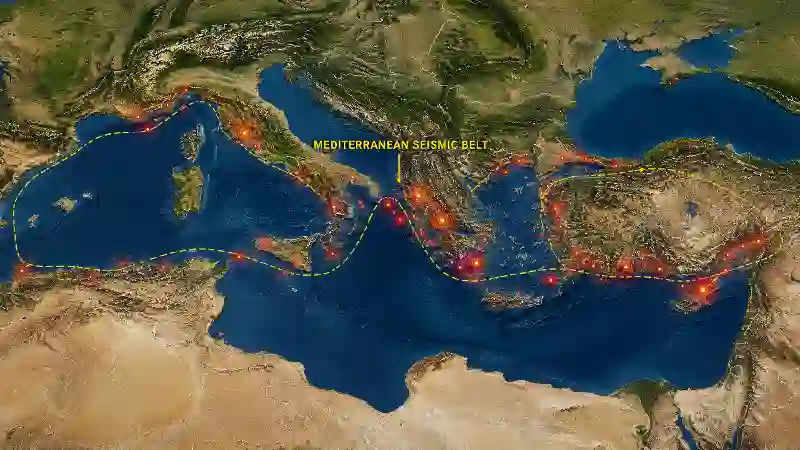
This region includes:
- Turkey
- Greece
- Italy
- Iran
Main Features
- Complex plate interactions
- Transform faults
- Volcanic systems in some areas
Some of Europe’s most dangerous earthquake zones are located here.
You can explore → earthquakes Istanbul
Transform Fault Zones (California & Beyond)
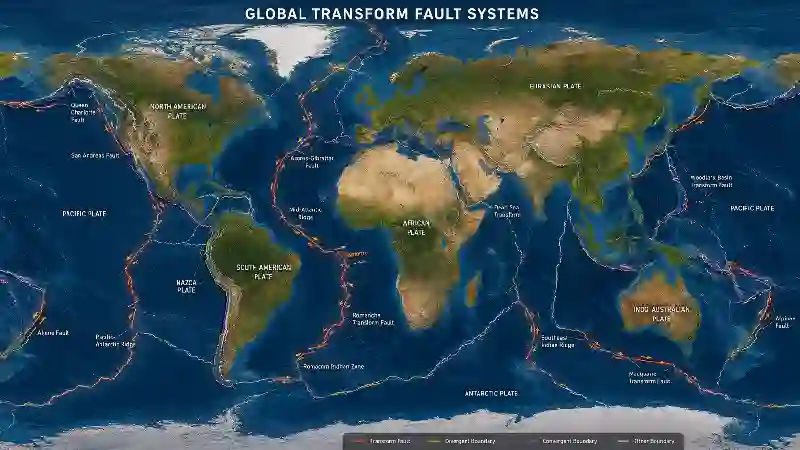
Transform faults occur where plates slide past each other.
Famous examples include:
- San Andreas Fault
- North Anatolian Fault (Turkey)
- Alpine Fault (New Zealand)
Main Features
- Horizontal plate movement
- Frequent moderate earthquakes
- Large strike-slip ruptures
Learn more → earthquakes Southern California
Rift Zones & Volcanic Regions
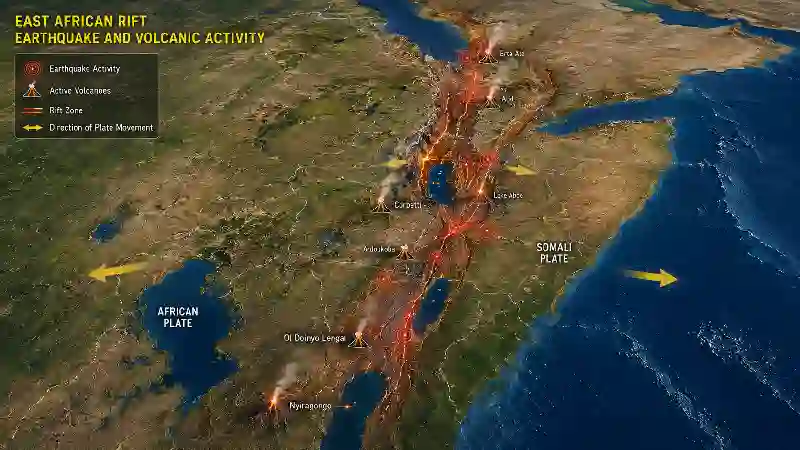
Some earthquakes occur where plates pull apart.
Examples include:
- East African Rift
- Iceland
- Parts of the Red Sea region
Main Features
- Crustal stretching
- Volcanic earthquakes
- Rift valley formation
See our guide → earthquakes Iceland
Countries With the Highest Earthquake Risk
| Country | Main Risk Type |
|---|---|
| Japan | Subduction megathrust |
| Indonesia | Subduction + volcanoes |
| Chile | Megathrust earthquakes |
| Turkey | Transform faults |
| Iran | Continental collision |
| New Zealand | Transform + subduction |
| Philippines | Fault + subduction |
| Mexico | Subduction earthquakes |
Many high-risk countries lie within the Pacific Ring of Fire.
Why Coastal Regions Often Face Stronger Earthquakes
Many major subduction zones lie beneath oceans.
This means coastal regions often experience:
- strong offshore earthquakes
- tsunamis
- amplified seismic waves
Examples include:
- Japan
- Chile
- Indonesia
- Vancouver
- Alaska
Learn more → earthquakes Vancouver
The Strongest Earthquakes Ever Recorded
Some of the world’s largest earthquakes occurred in high-risk seismic zones.
| Earthquake | Magnitude |
|---|---|
| Chile (1960) | 9.5 |
| Alaska (1964) | 9.2 |
| Sumatra (2004) | 9.1 |
| Japan (2011) | 9.0 |
These earthquakes mostly occurred along subduction zones.
Understand magnitude vs impact
Can Earthquake Risk Zones Be Predicted?
Scientists cannot predict exact earthquakes.
However, they can identify:
- active fault systems
- subduction zones
- stress accumulation areas
- historical seismic patterns
This helps determine where future earthquakes are most likely.
Learn more → Can earthquakes be predicted
The Pacific Ring of Fire.
Because tectonic plates constantly move and build stress.
Not always — inland faults can also produce strong earthquakes.
Tokyo, Istanbul, Mexico City, Jakarta, Santiago, and others.
Final Thoughts
Earthquake risk zones worldwide are shaped by the constant movement of tectonic plates beneath Earth’s surface. From the Pacific Ring of Fire to continental collision zones and transform faults, each seismic region has its own unique geological behavior.
Understanding these global patterns helps explain why earthquakes repeatedly occur in certain parts of the world — and why some regions face much greater seismic risk than others.