
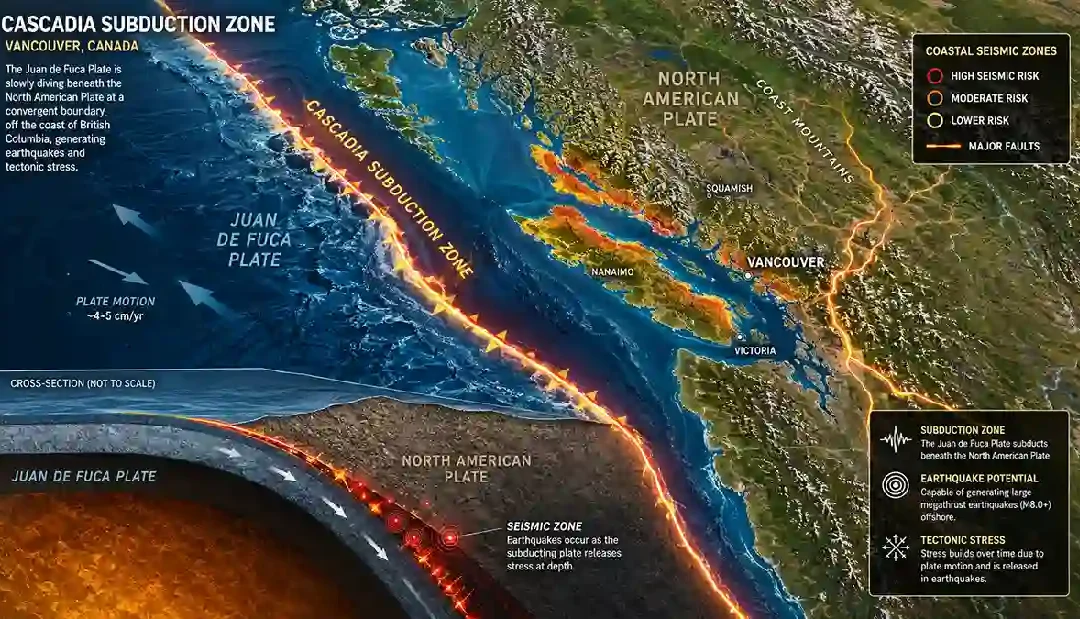
Vancouver is one of the most earthquake-risk cities in Canada. Although earthquakes are less frequent here than in places like Japan or Chile, the region sits above a massive tectonic system capable of producing extremely powerful earthquakes.
The main source is the Cascadia Subduction Zone, located offshore along the Pacific coast. This system is considered one of North America’s greatest natural hazards.
If you’re new to earthquakes, begin here → what is an earthquake
Vancouver Seismic Zones
| Zone | Risk Level | Main Cause |
|---|---|---|
| Cascadia Subduction Zone | Extremely High | Plate diving |
| Offshore Pacific Coast | Extremely High | Megathrust earthquakes |
| Georgia Strait Region | Moderate–High | Crustal fault activity |
| Vancouver Basin | High | Ground amplification |
| Inland British Columbia Faults | Moderate | Regional tectonics |
Vancouver’s earthquake risk comes mainly from offshore tectonic activity. To understand how faults work → fault lines
Why Do Earthquakes Happen in Vancouver?
Vancouver lies near a major subduction zone.
Here’s the simple explanation:
- The Juan de Fuca Plate moves eastward
- It dives beneath the North American Plate
- Massive pressure builds underground
- Plates lock together over time
- When they suddenly slip → large earthquakes occur
These are called megathrust earthquakes.
Learn more → causes of earthquakes
Four Major Earthquake Systems Affecting Vancouver
Cascadia Subduction Zone (Main Threat)
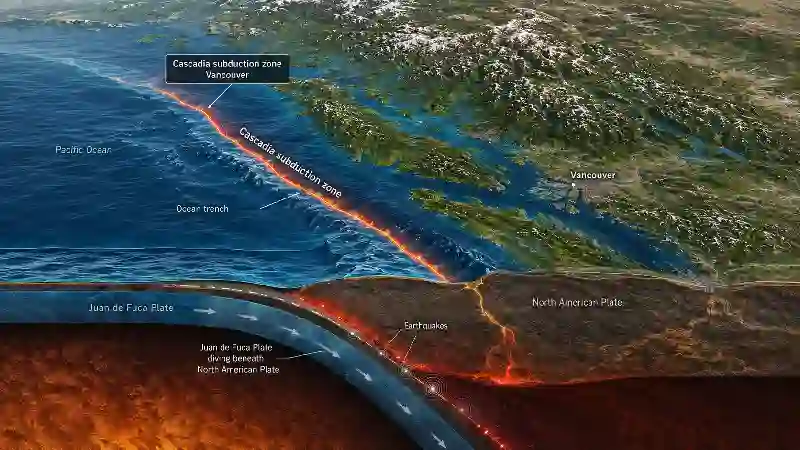
The Cascadia Subduction Zone is the region’s largest seismic threat.
- Massive offshore fault system
- Capable of M8–M9 earthquakes
- Tsunami potential exists
Explore earthquake types
Offshore Pacific Megathrust Earthquakes
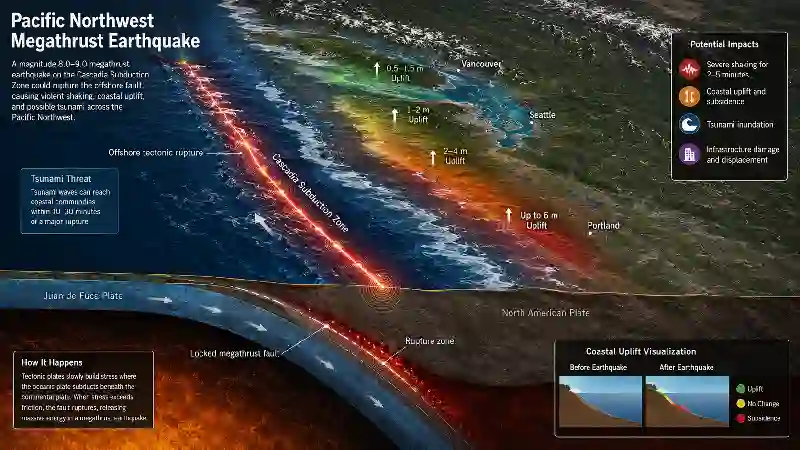
Large earthquakes can occur beneath the Pacific Ocean.
- Huge rupture zones
- Strong shaking across the coast
- Regional tsunami risk
Crustal Fault Systems Near Vancouver
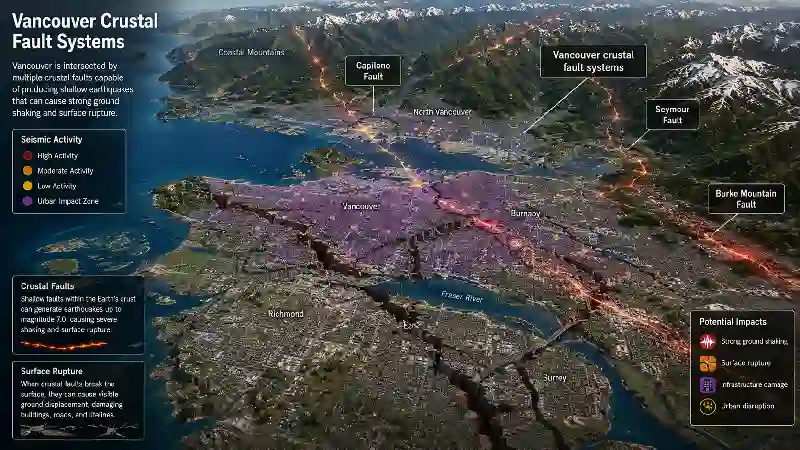
Smaller crustal faults also exist near Vancouver.
- Shallow earthquakes possible
- Moderate seismic activity
- Localized shaking effects
Vancouver Basin Amplification
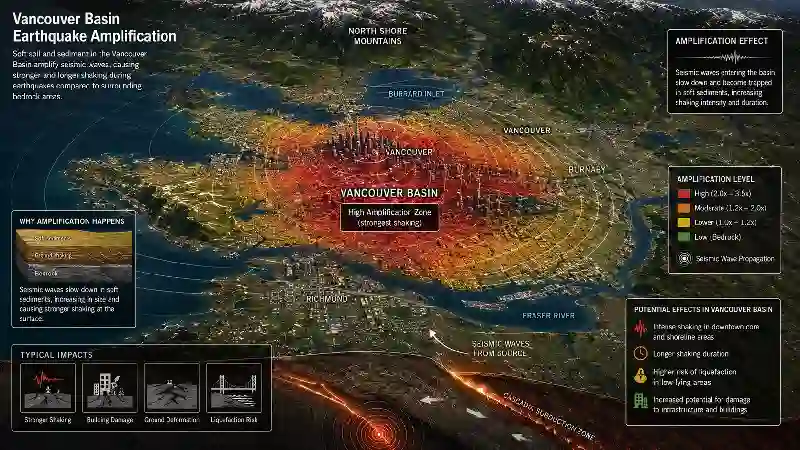
Ground conditions can increase shaking intensity.
- Sediment-filled basin areas
- Amplified seismic waves
- Increased urban risk
Recent Earthquake Activity Around Vancouver
Vancouver experiences regular low-level seismic activity.
Recent patterns show:
- Offshore earthquakes along Cascadia
- Small regional tremors
- Ongoing tectonic stress buildup
Scientists monitor the Cascadia zone closely because of its long-term earthquake potential.
Notable Earthquakes Affecting Vancouver
The Vancouver region has a significant seismic history.
- 1700 Cascadia Megathrust Earthquake
A massive earthquake estimated near M9. - 1946 Vancouver Island Earthquake (M7.3)
One of Canada’s strongest recorded earthquakes. - Regular Offshore Seismic Activity
Continuous tectonic movement along the Pacific Northwest.
Understand magnitude vs impact
Vancouver vs Other Earthquake Regions
Vancouver shares similarities with major Pacific Rim regions.
- Vancouver → subduction + megathrust earthquakes
- Tokyo → subduction zones
- Chile → plate collision earthquakes
- California → transform faults
Vancouver is part of the Pacific Ring of Fire.
Can Earthquakes in Vancouver Be Predicted?
No — earthquakes cannot be predicted precisely.
Scientists can:
- monitor tectonic movement
- study offshore seismic activity
- estimate long-term risk
But exact timing remains uncertain.
Learn more → Can earthquakes be predicted
Because it lies near the Cascadia subduction zone.
A large megathrust earthquake offshore.
Small earthquakes occur occasionally across the region.
Yes — offshore megathrust earthquakes could generate tsunamis.
Final Thoughts
Vancouver’s earthquake risk comes from one of the most powerful tectonic systems in North America. Although the region may appear quieter than other seismic zones, the Cascadia subduction system remains capable of producing very large earthquakes.
Understanding Vancouver earthquakes helps explain how hidden offshore tectonic forces shape seismic risk along Canada’s Pacific coast.