
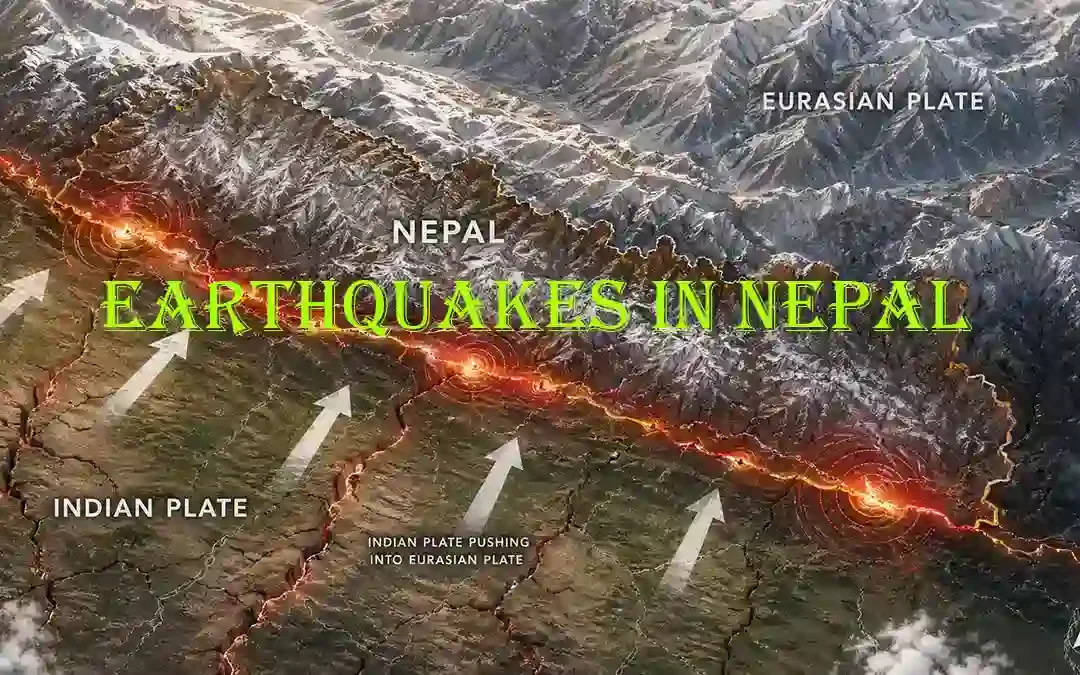
Nepal may seem quiet on the surface, but beneath the Himalayas, enormous tectonic forces are constantly at work.
The country sits directly on a major collision zone where two massive plates push against each other. Over time, this pressure builds — and when it releases, it can cause powerful earthquakes.
If you’re new to this topic, it helps to understand the basics first — you can explore what is an earthquake to see how these events begin.
Earthquake Risk Zones in Nepal (Quick Overview)
| Region | Risk Level | Main Cause |
|---|---|---|
| Central Nepal (Kathmandu region) | Very High | Plate collision stress |
| Western Nepal | High | Active fault zones |
| Eastern Nepal | High | Tectonic compression |
| Himalayan Foothills | Very High | Crustal movement |
| Southern Plains (Terai) | Moderate | Wave propagation |
To understand how stress builds in these areas, you can explore fault lines
Why Do Earthquakes Happen in Nepal?
Earthquakes in Nepal are caused by the collision between the Indian Plate and the Eurasian Plate.
In simple terms:
- The Indian Plate moves north
- It pushes into the Eurasian Plate
- The crust compresses and folds
- Stress builds along faults
- Eventually, the energy is released as an earthquake
This is known as a continental collision zone — and it’s one of the most powerful tectonic processes on Earth.
For a deeper explanation, see causes of earthquakes
Major Earthquake Zones in Nepal
Himalayan Collision Zone (Highest Risk)
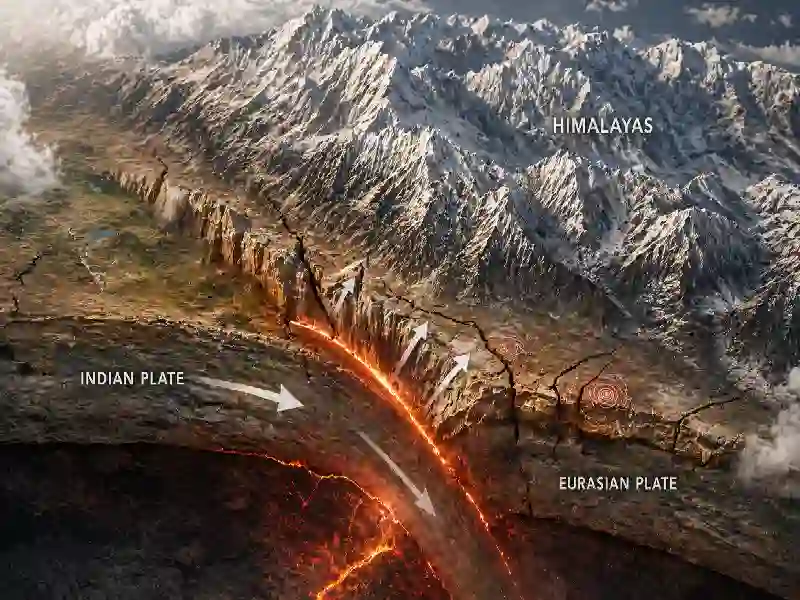
Nepal lies within the active Himalayan collision zone.
- Continuous tectonic pressure
- Frequent moderate to strong earthquakes
- Potential for large, destructive events
This type of earthquake is driven by compression rather than subduction.
You can learn more about these types in types of earthquakes
Kathmandu Valley (High Impact Area)
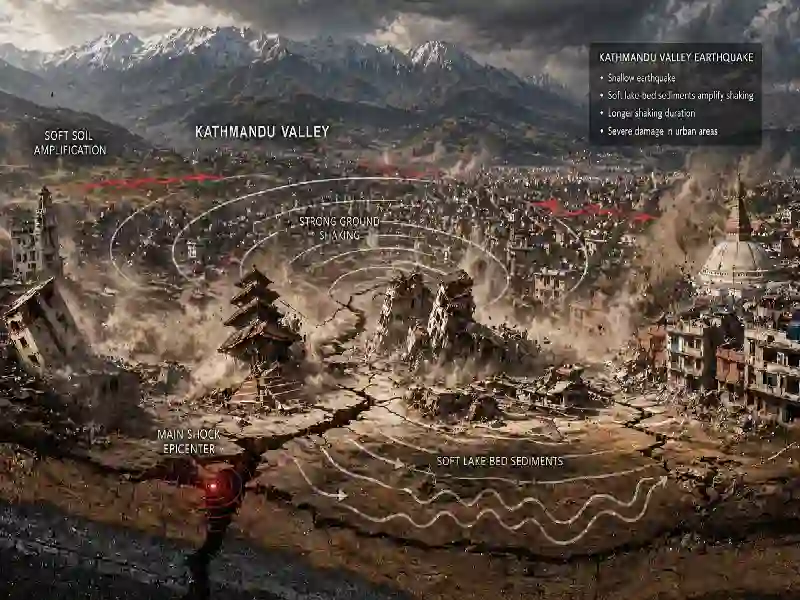
Kathmandu is especially vulnerable due to its geological structure.
- Built on soft sediments
- Seismic waves are amplified
- Even moderate earthquakes can cause strong shaking
This makes the city one of the highest-risk areas in Nepal.
Western & Eastern Nepal Fault Zones
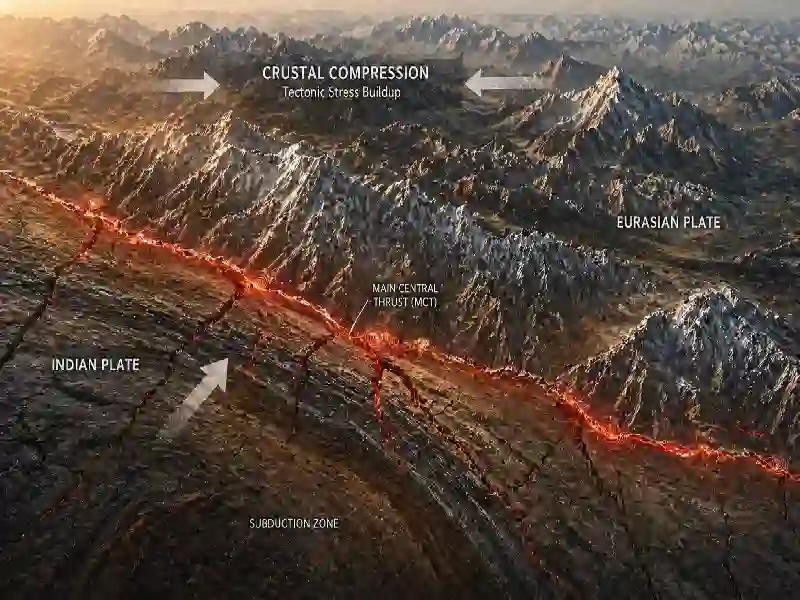
Both western and eastern Nepal experience ongoing tectonic stress.
- Active fault systems
- Potential for large earthquakes
- Long-term pressure buildup
Recent Earthquake Activity in Nepal
Nepal continues to experience regular seismic activity.
In recent years:
- Small to moderate earthquakes occur frequently
- Aftershock sequences can last for months
- Stress continues to build along the Himalayan fault system
These patterns suggest that the region remains highly active.
Notable Earthquakes in Nepal
Historical earthquakes highlight the scale of risk.
- 2015 Gorkha Earthquake (M7.8)
A devastating earthquake that caused widespread destruction across Nepal. - 1934 Bihar–Nepal Earthquake (M8.1)
One of the largest earthquakes in the region’s history. - 1988 Udayapur Earthquake (M6.9)
A significant event that affected eastern Nepal.
To understand how magnitude relates to impact, see magnitude vs intensity
Nepal vs Other Earthquake Regions
Nepal’s earthquake pattern is unique.
- Nepal → continental collision (Himalayas)
- Indonesia → subduction zone earthquakes
- Turkey → fault-driven earthquakes
- California → transform faults like the San Andreas Fault
This makes Nepal’s earthquakes driven mainly by compression rather than plate sliding.
Can Earthquakes in Nepal Be Predicted?
No — earthquakes cannot be predicted precisely.
Scientists can:
- monitor seismic activity
- study fault systems
- estimate long-term risk
But exact timing remains unknown.
You can explore this further in can earthquakes be predicted
Because it lies on a major tectonic collision zone between two plates.
Central Nepal, especially the Kathmandu Valley.
Yes — smaller earthquakes occur regularly.
Yes — the tectonic pressure continues to build.
Final Thoughts
Nepal shows how powerful Earth’s tectonic forces can be when two continents collide.
The Himalayas themselves are a result of this ongoing process — and earthquakes are a natural part of it.
Understanding these patterns helps explain not just Nepal, but the broader mechanics of our planet.