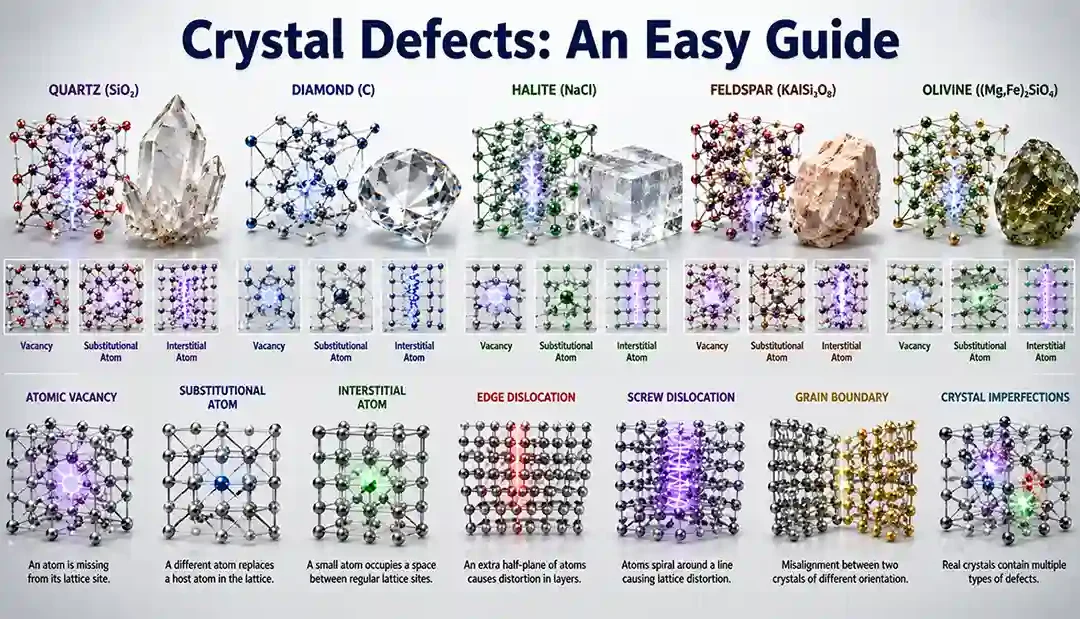
 Although minerals are often described as perfectly ordered crystals, no natural crystal is completely flawless. Nearly all minerals contain crystal defects, which are irregularities or imperfections in the otherwise orderly arrangement of atoms within a crystal...
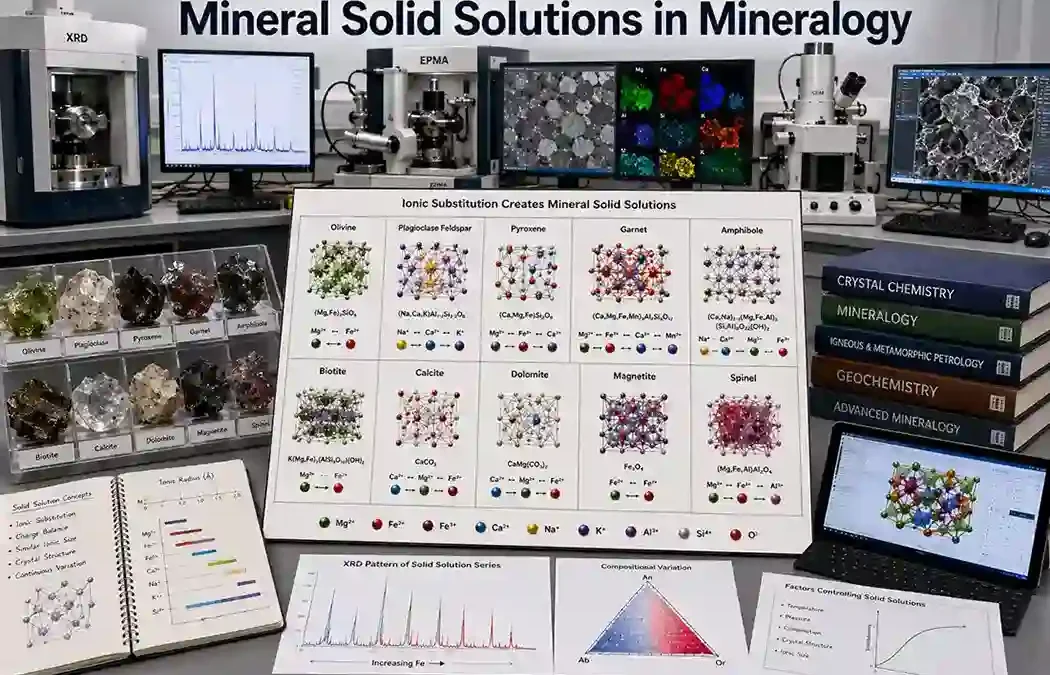 Mineral solid solutions are one of the most important concepts in mineralogy and crystal chemistry. A solid solution occurs when atoms or ions of one chemical element replace those of another within a mineral’s crystal structure without changing the overall...
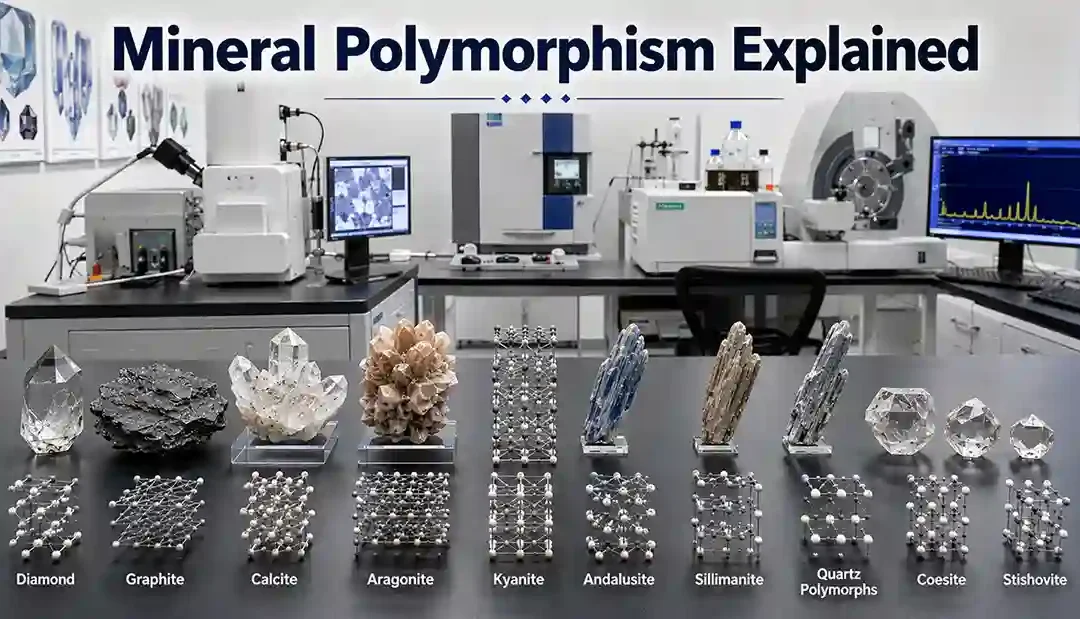 Mineral polymorphism is the phenomenon in which two or more minerals have the same chemical composition but different crystal structures. Because the arrangement of atoms differs, each polymorph has unique physical, chemical, and optical properties, even though the...
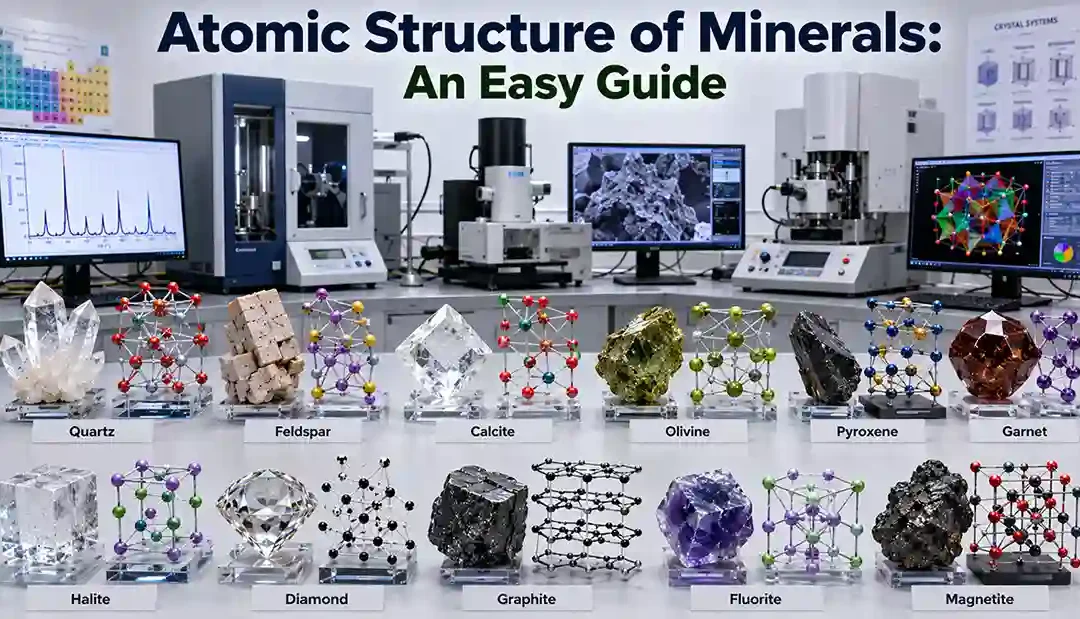 Every mineral is built from atoms arranged in a highly ordered three-dimensional pattern called a crystal lattice. This internal atomic arrangement determines nearly every property of a mineral, including its hardness, cleavage, density, crystal shape, color, optical...
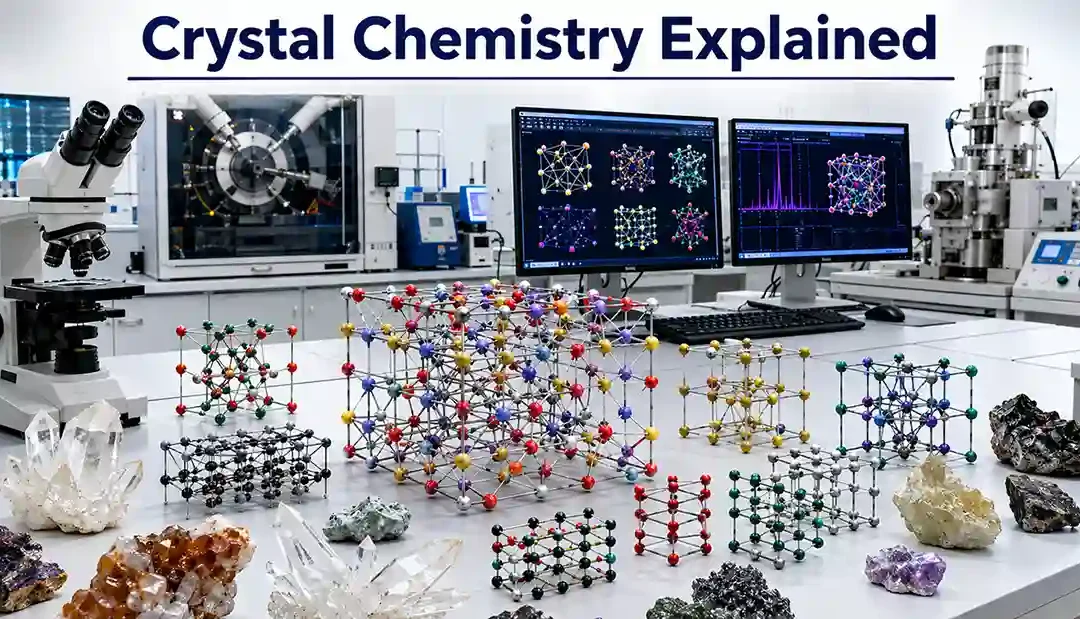 Crystal chemistry is the branch of mineralogy that studies the relationship between a mineral’s chemical composition and its crystal structure. It explains how atoms, ions, and chemical bonds are arranged within crystals and how these arrangements determine a...
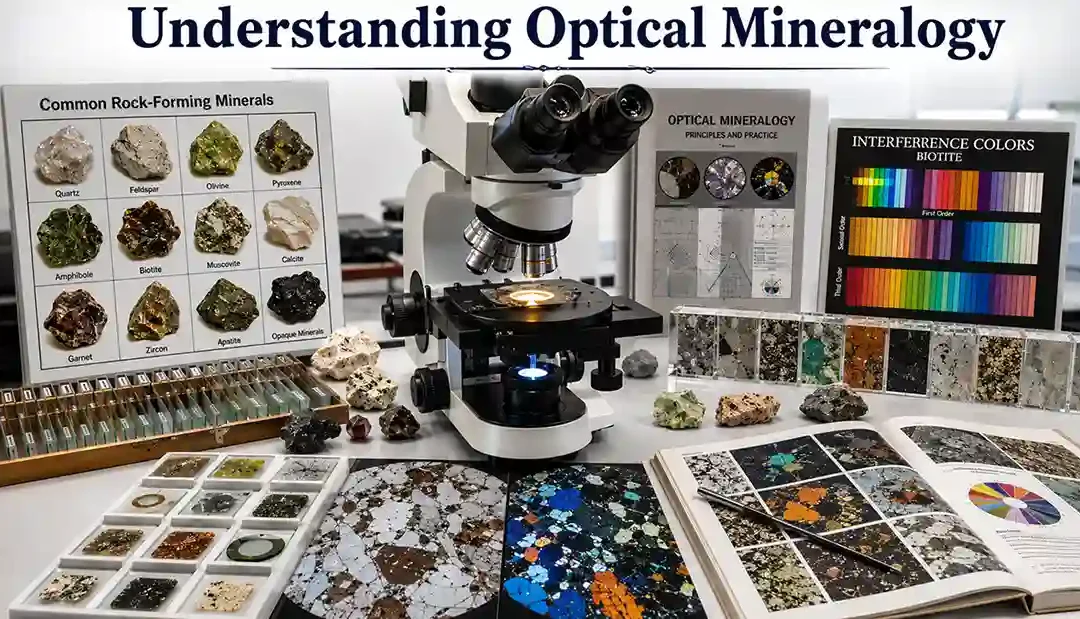 Optical mineralogy is the branch of mineralogy that studies minerals using polarized light microscopy. By observing how minerals interact with light, geologists can identify their crystal structure, optical properties, chemical composition, and geological history....
