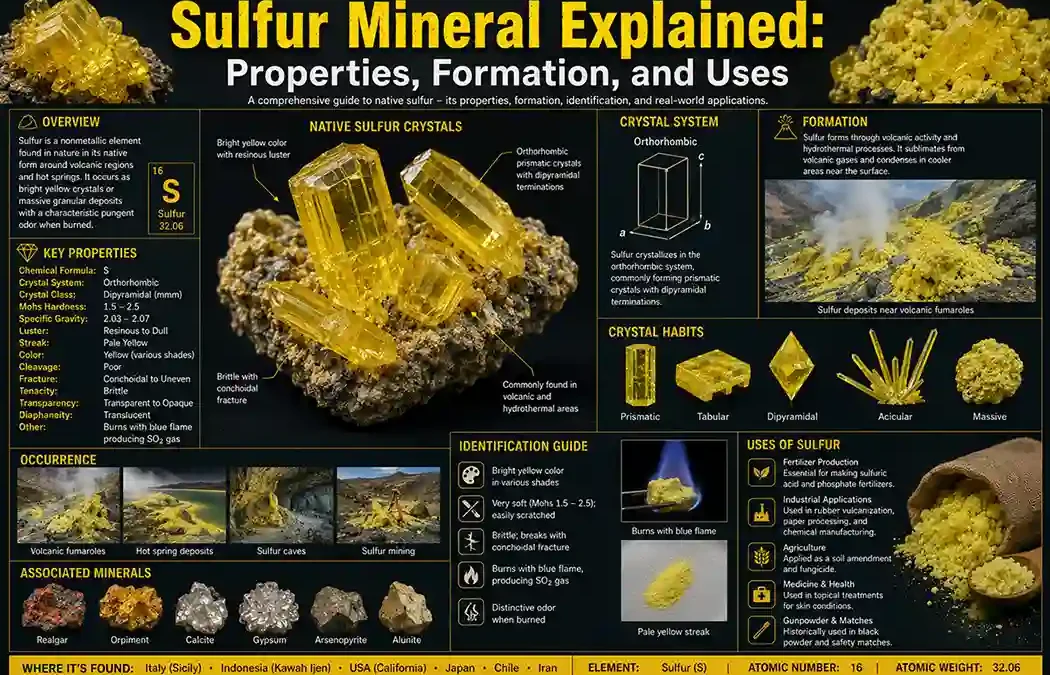
 Sulfur is one of the few minerals that occur naturally as a pure chemical element. Its bright yellow color, low density, and association with volcanic activity make it one of the most recognizable minerals in geology. Sulfur has been used by humans for thousands of...
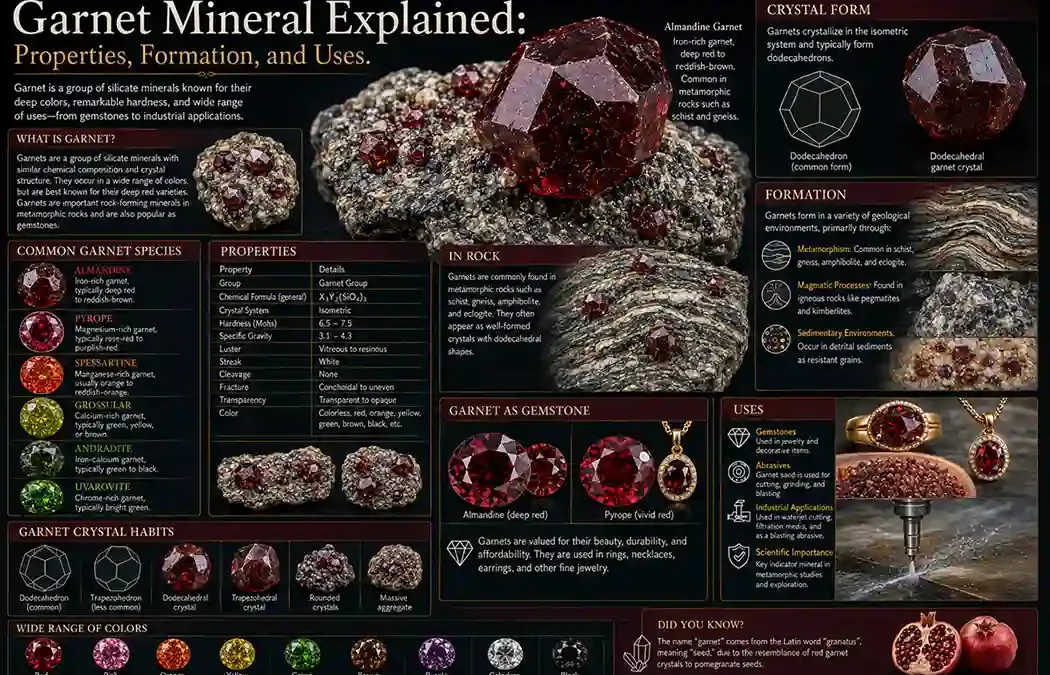 Garnet is a group of closely related silicate minerals famous for their beautiful crystal forms, rich colors, and widespread occurrence in metamorphic rocks. While most people recognize garnet as a red gemstone, the garnet group includes minerals of many different...
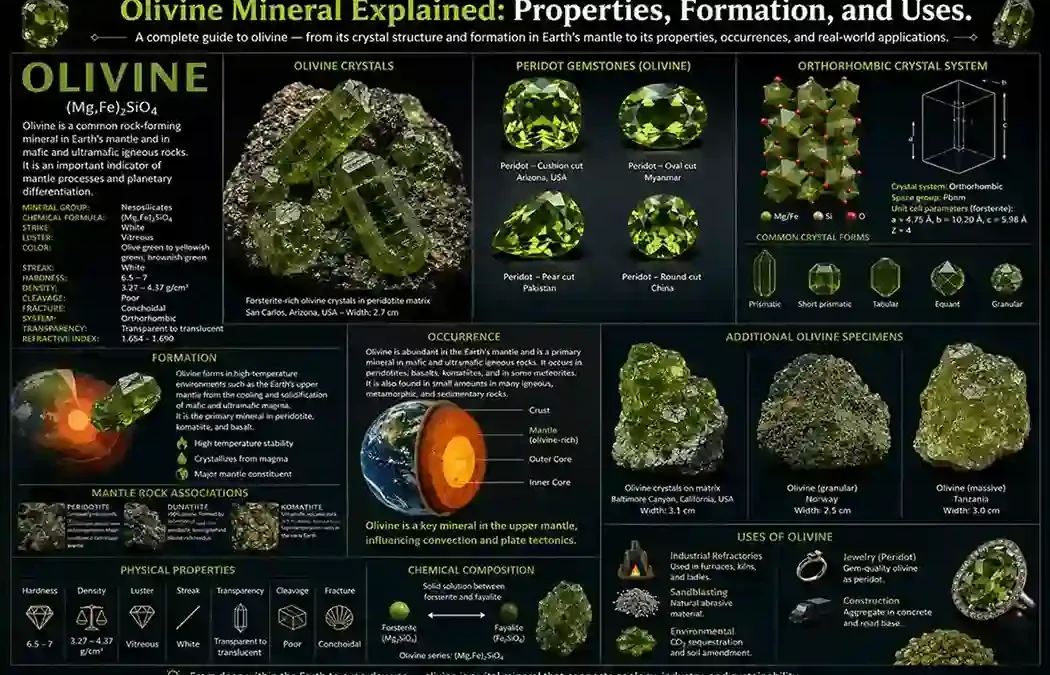 Olivine is one of the most important rock-forming minerals on Earth and a major component of the upper mantle. Known for its distinctive olive-green color, olivine occurs in igneous rocks, mantle-derived rocks, and some meteorites. Olivine is especially significant...
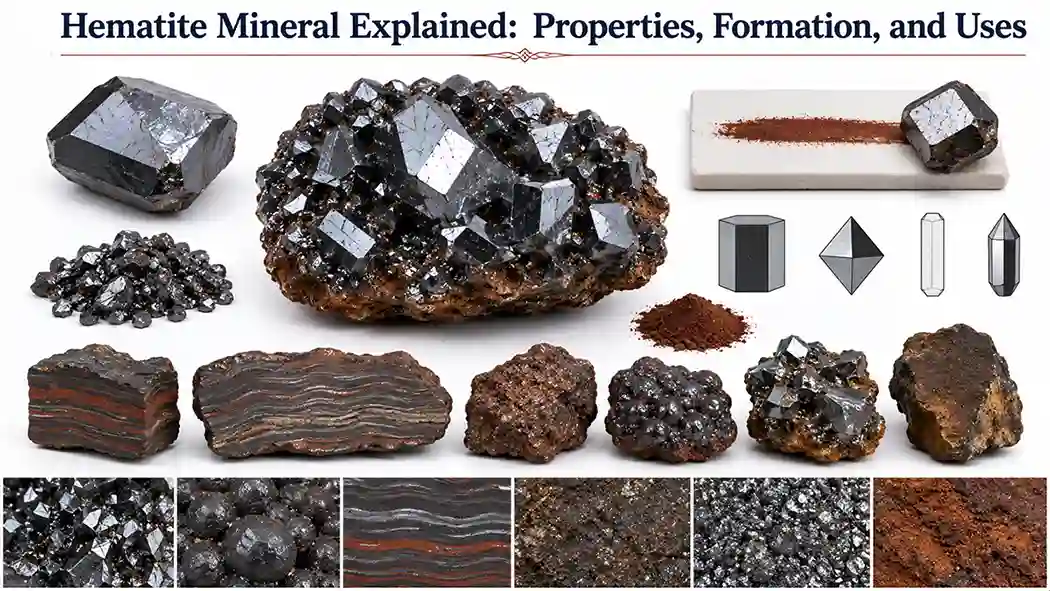 Hematite is one of the most important iron oxide minerals and a major source of iron worldwide. It is known for its metallic appearance, reddish-brown streak, and economic importance in steel production. Although hematite can appear silver-gray or black externally,...
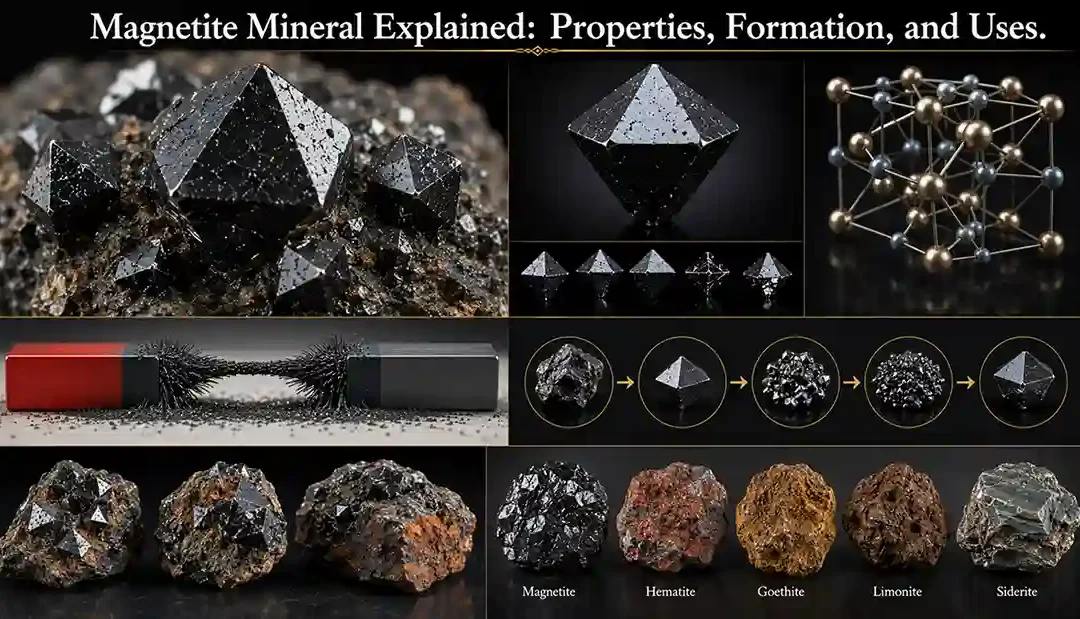 Magnetite is one of the most important iron minerals on Earth and is famous for its strong magnetic properties. It is the most magnetic naturally occurring mineral and serves as a major source of iron for steel production worldwide. Magnetite occurs in a wide variety...
