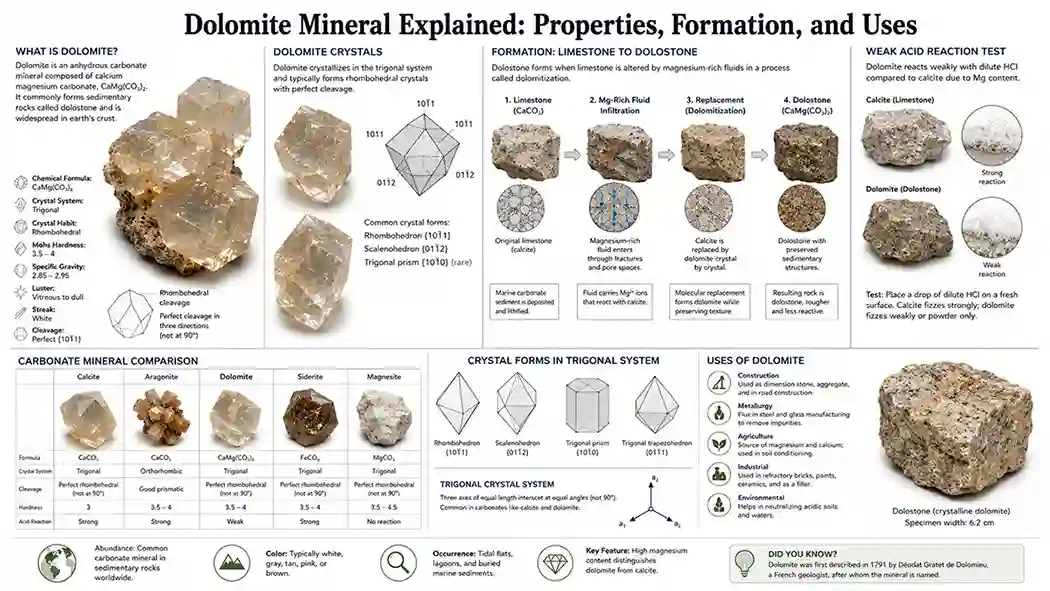
 Dolomite is an important carbonate mineral composed of calcium magnesium carbonate. It is a major rock-forming mineral found in sedimentary environments and is the primary constituent of the rock known as dolostone. Dolomite plays a significant role in: sedimentary...
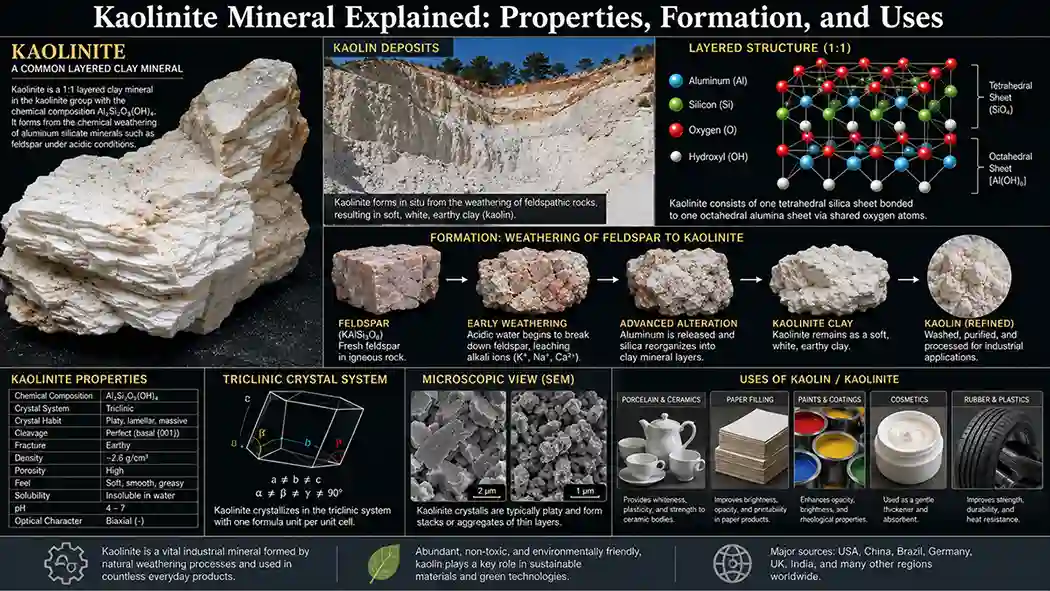 Kaolinite is one of the most important clay minerals on Earth. It forms through the weathering of feldspar-rich rocks and is a major component of many soils, sedimentary deposits, and industrial clay resources. The mineral is best known as the primary component of:...
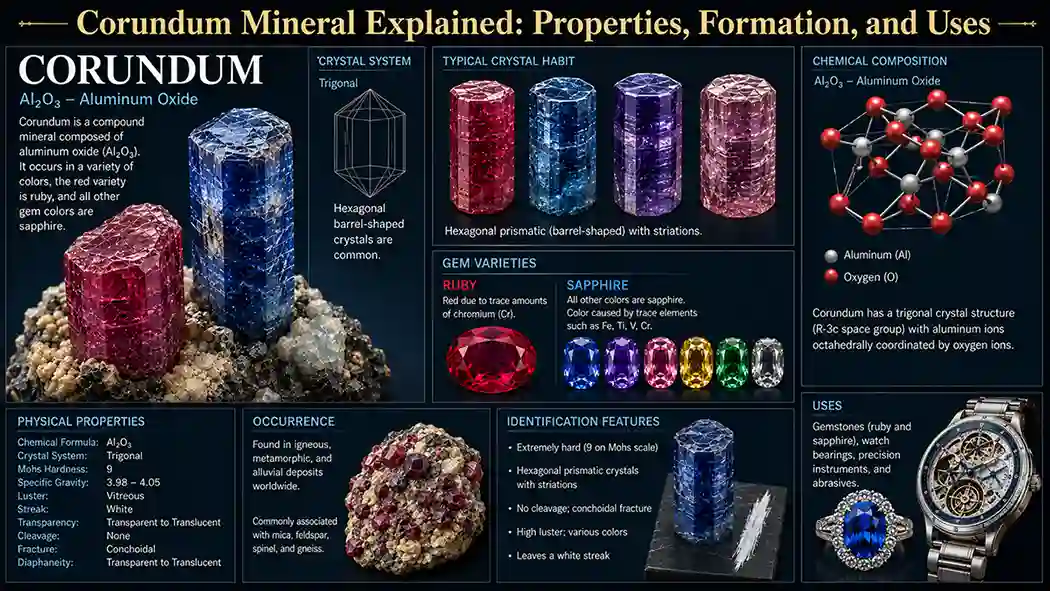 Corundum is one of the most valuable and scientifically important minerals on Earth. It is best known as the mineral that forms the gemstones ruby and sapphire, two of the most prized gems in the world. Composed of aluminum oxide, corundum is exceptionally hard and...
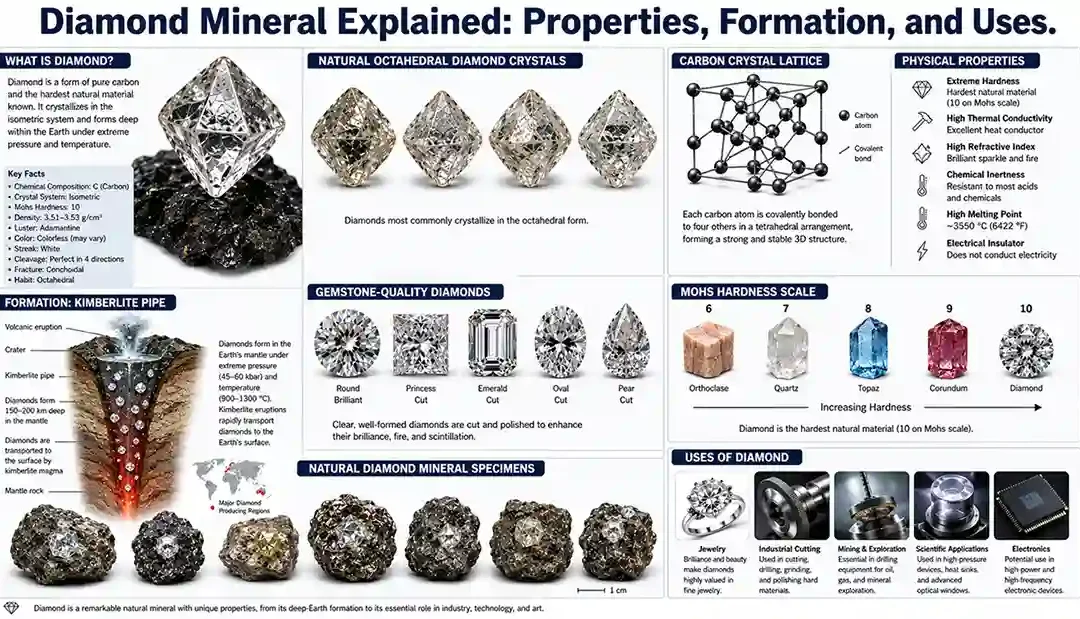 Diamond is one of the most famous minerals in the world and is renowned for being the hardest naturally occurring substance on Earth. Composed entirely of carbon, diamond is valued as both a precious gemstone and an important industrial material. Diamonds form deep...
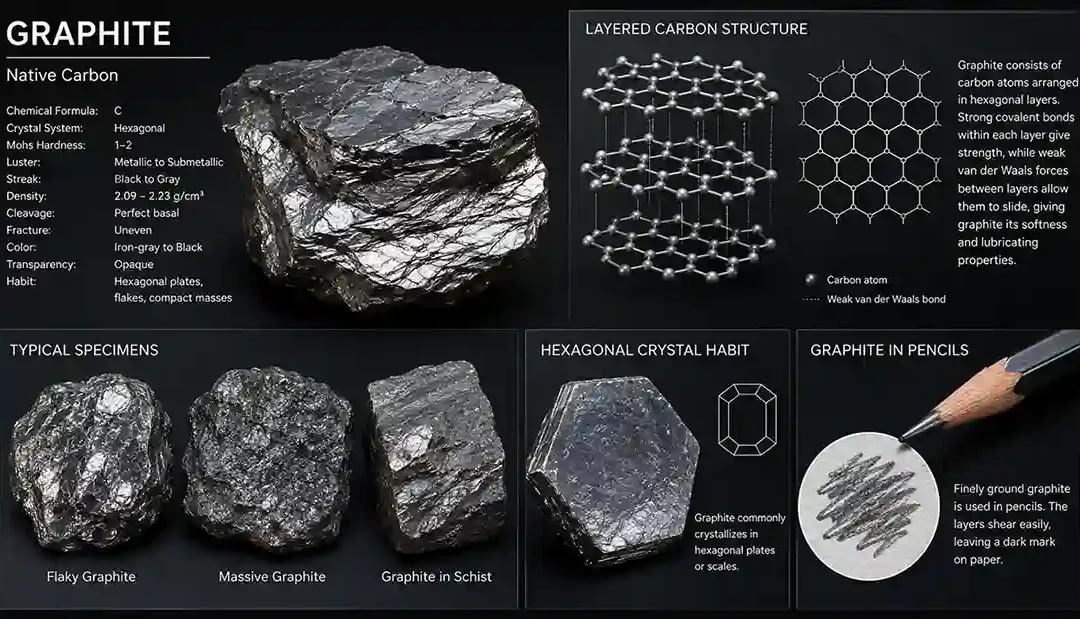 Graphite is a naturally occurring mineral composed entirely of carbon. It is one of the few minerals classified as a native element and is well known for its soft texture, metallic appearance, and excellent electrical conductivity. Graphite is widely used in modern...
