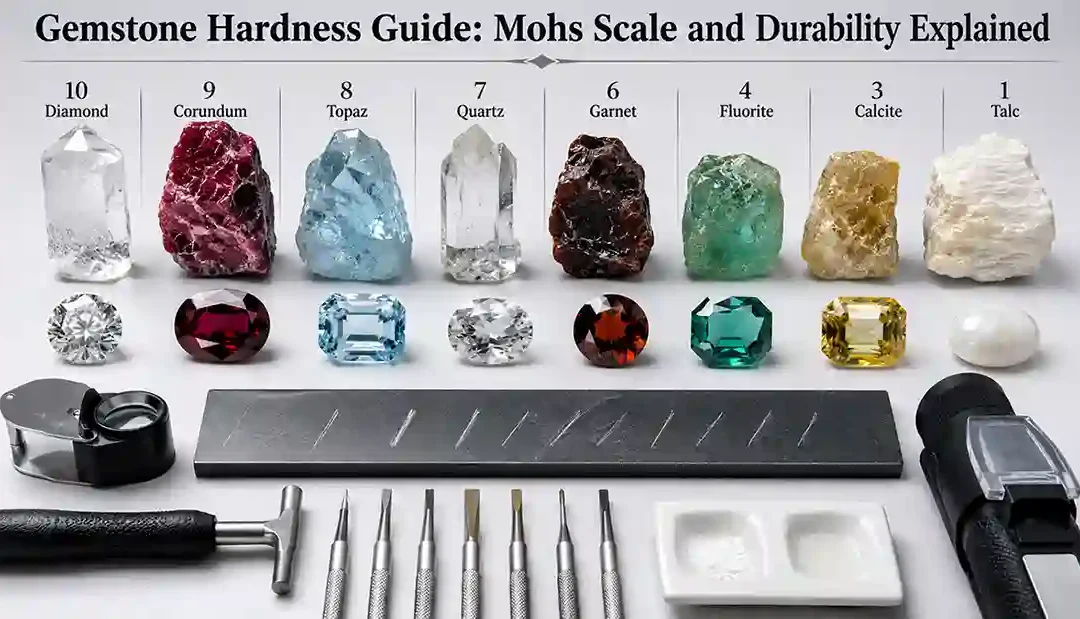
 Hardness is one of the most important properties used to identify gemstones and minerals. It measures a gemstone’s resistance to scratching and helps gemologists determine durability, suitability for jewelry, and mineral identity. The most widely used hardness...
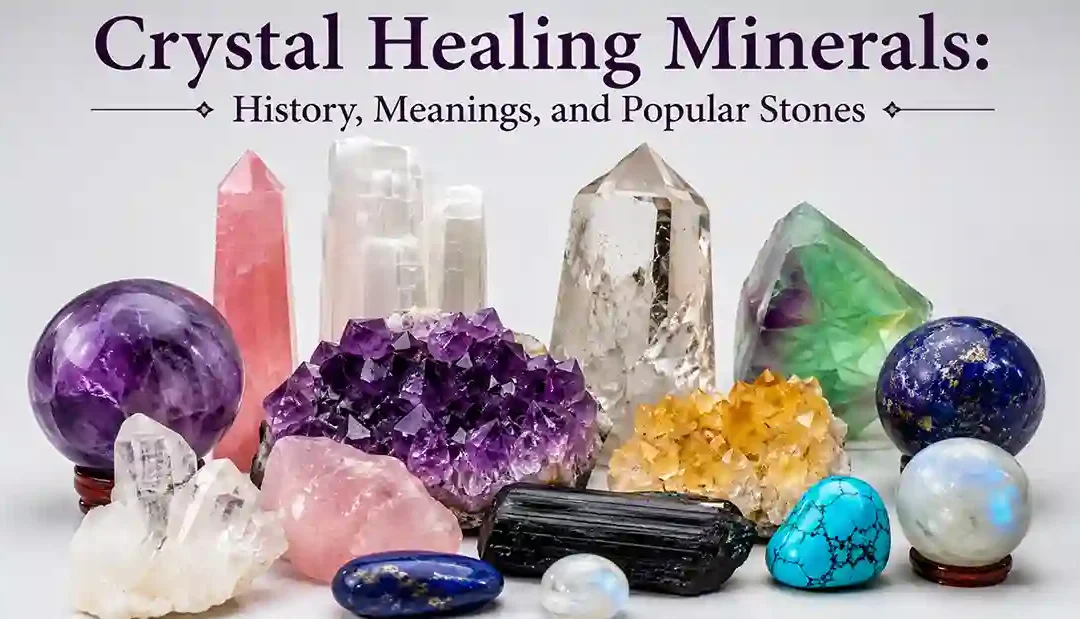 Crystal healing is the practice of using minerals and gemstones as part of spiritual, cultural, and wellness traditions. For thousands of years, civilizations around the world have believed that certain crystals possess symbolic or energetic properties that may...
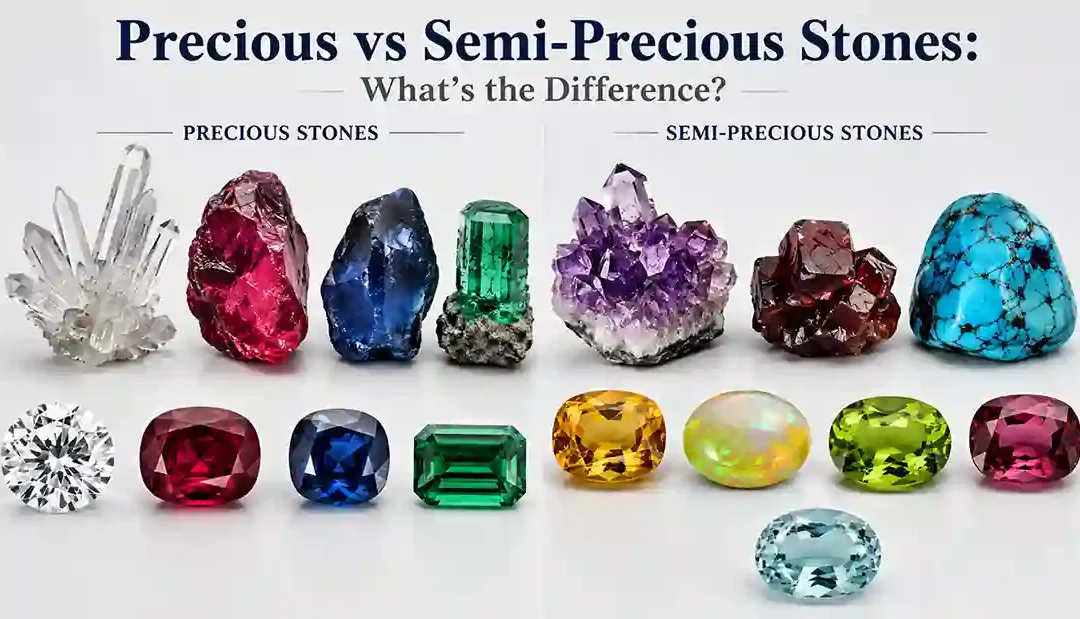 The terms precious and semi-precious stones have been used for centuries to classify gemstones. Traditionally, only four gemstones were considered precious, while all others were grouped into the semi-precious category. However, modern gemologists recognize that this...
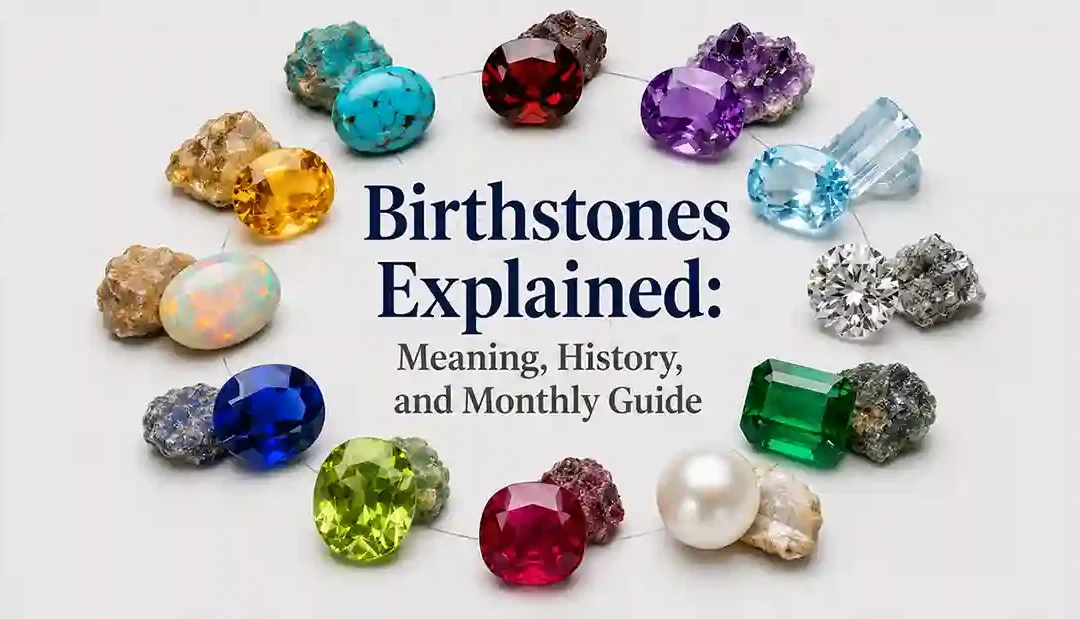 Birthstones are gemstones traditionally associated with each month of the year. For centuries, people have believed that wearing a gemstone connected to their birth month brings luck, protection, prosperity, and personal significance. Today, birthstones remain among...
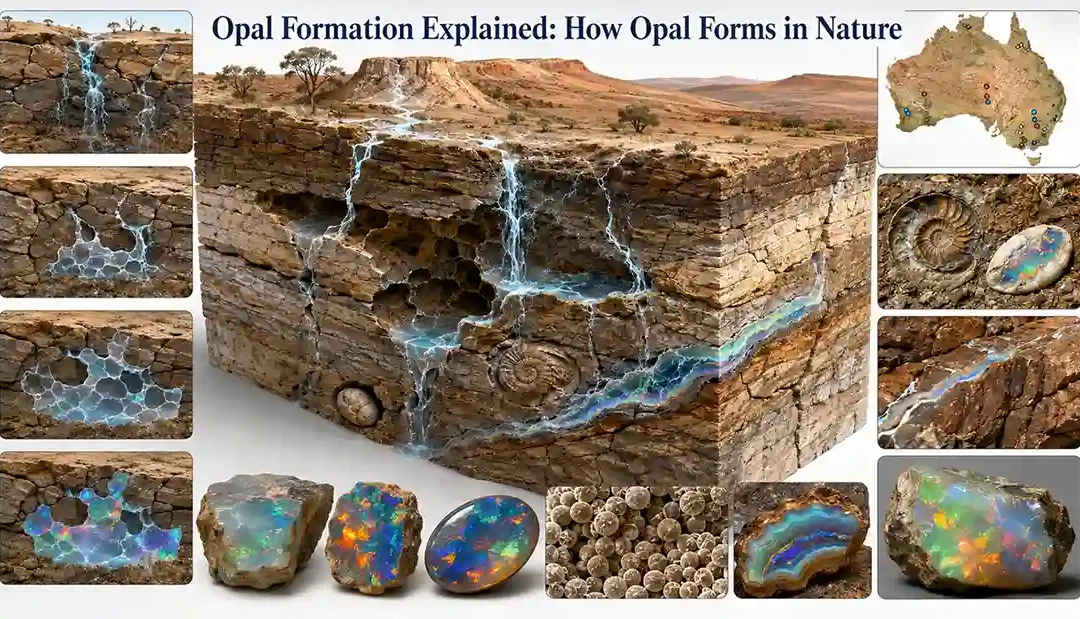 Opal is one of the most fascinating gemstones in the world because it forms differently from most minerals. Unlike crystalline gemstones such as diamond, ruby, or emerald, opal develops when silica-rich water slowly deposits microscopic silica spheres within rock...
