 Metasomatism is the process by which the chemical composition of a rock changes due to the addition or removal of elements by chemically active fluids. Unlike ordinary metamorphism, which mainly changes a rock’s mineralogy through heat and pressure, metasomatism...
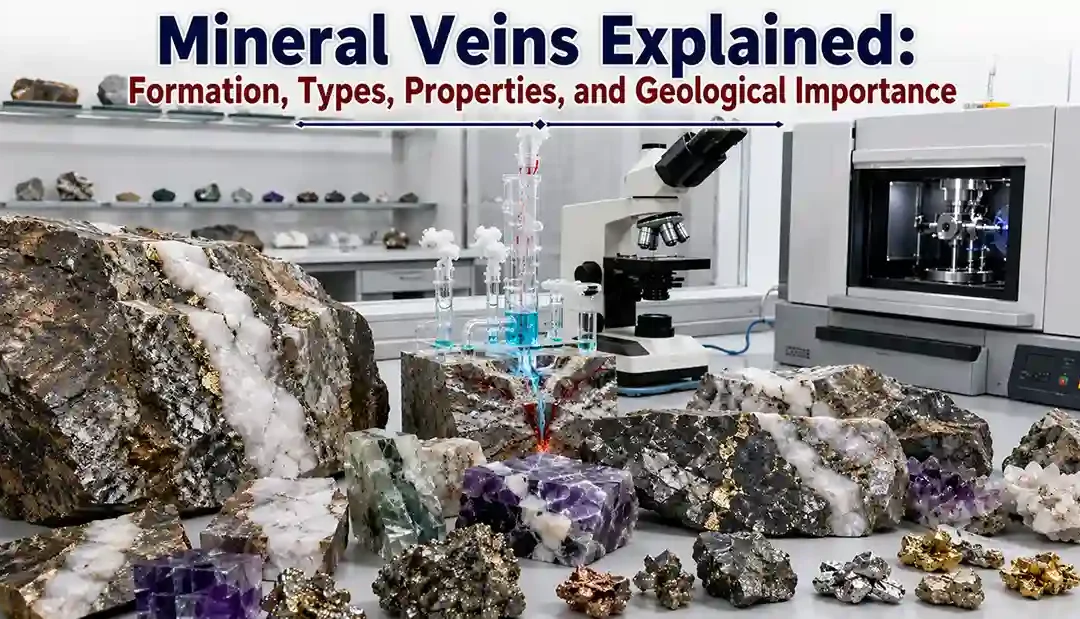 Mineral veins are sheet-like bodies of minerals that fill fractures, faults, joints, or cracks within rocks. Most veins form when hot, mineral-rich hydrothermal fluids circulate through the Earth’s crust and deposit dissolved minerals as temperature, pressure,...
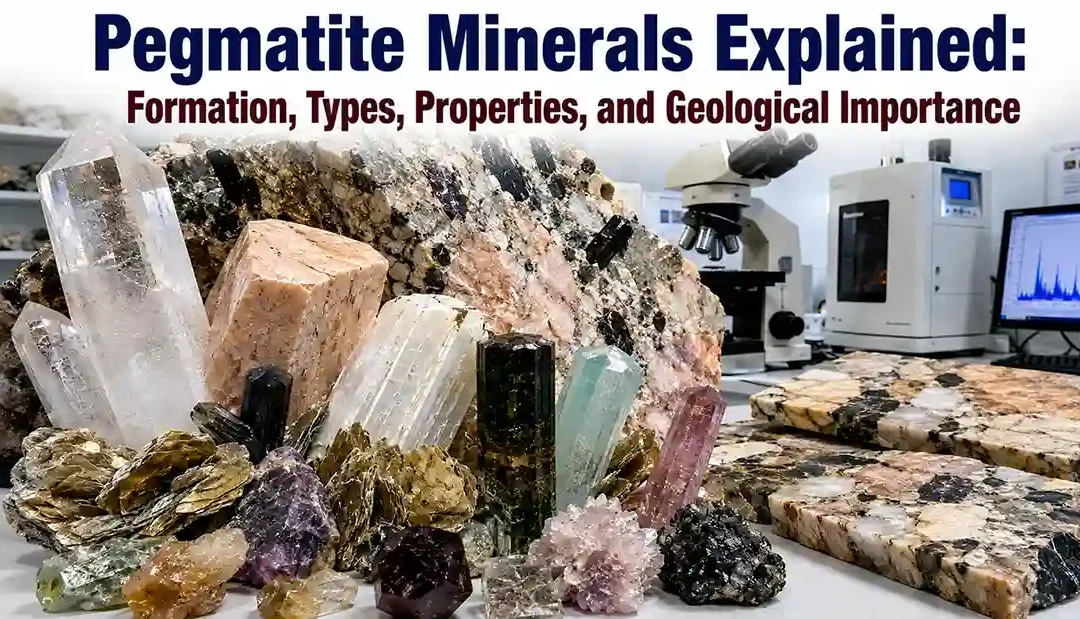 Pegmatite minerals are the exceptionally coarse-grained minerals that crystallize from the final, volatile-rich stages of magma solidification. Pegmatites are famous for producing some of the largest mineral crystals on Earth, spectacular gemstones, and many of the...
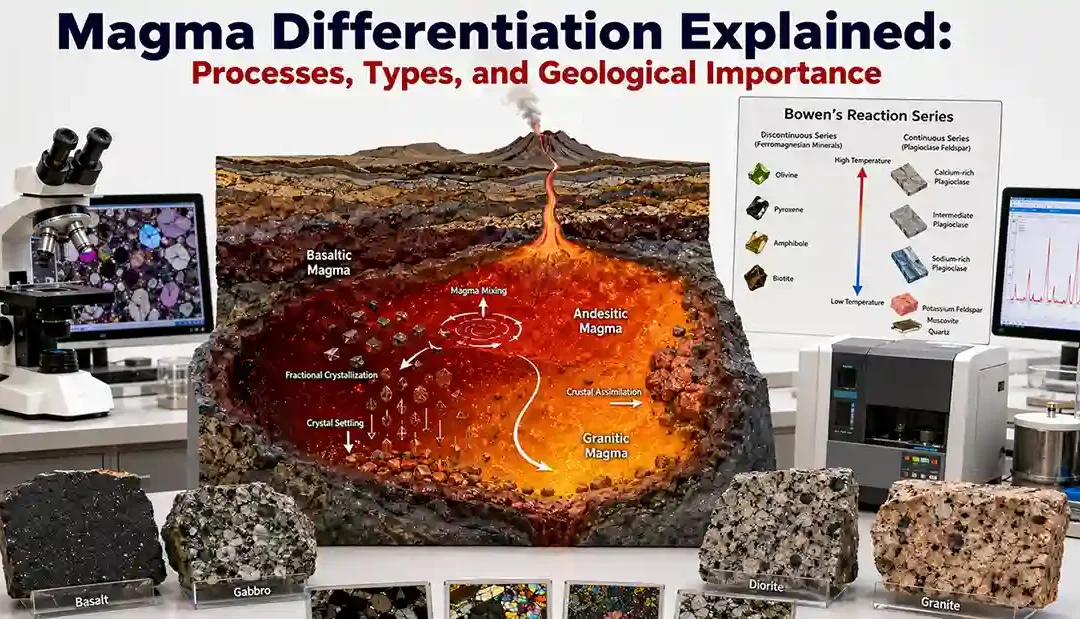 Magma differentiation is the process by which a single parent magma evolves into magmas with different chemical compositions. Rather than remaining chemically uniform, magma changes continuously as minerals crystallize, melt, settle, mix, or interact with surrounding...
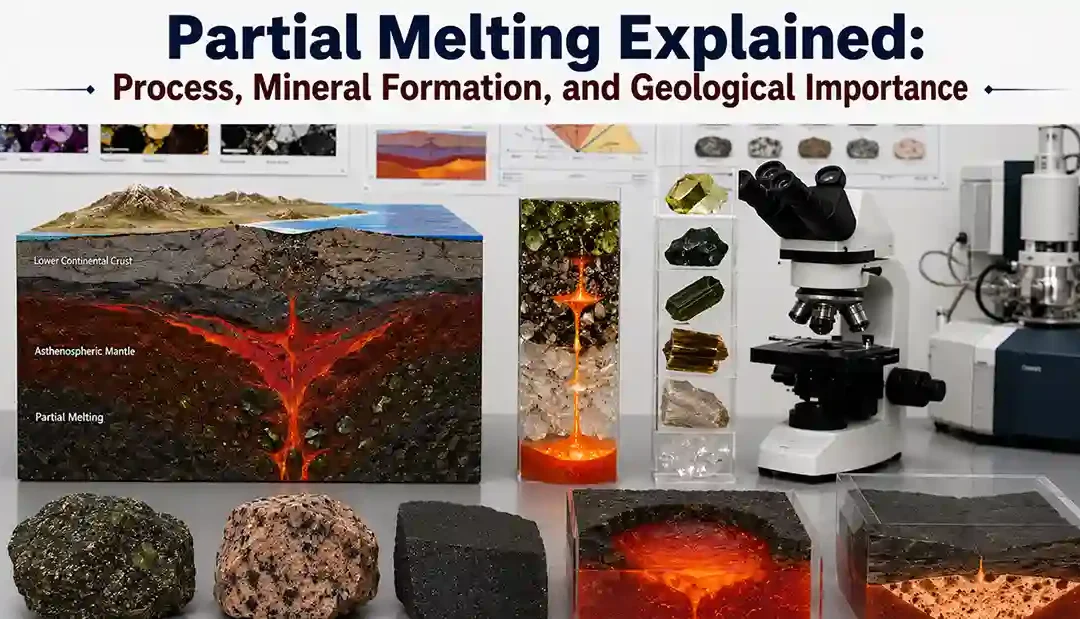 Partial melting is one of the most fundamental geological processes responsible for generating magma inside Earth. Unlike complete melting, where an entire rock becomes liquid, partial melting occurs when only certain minerals melt while others remain solid. Because...
