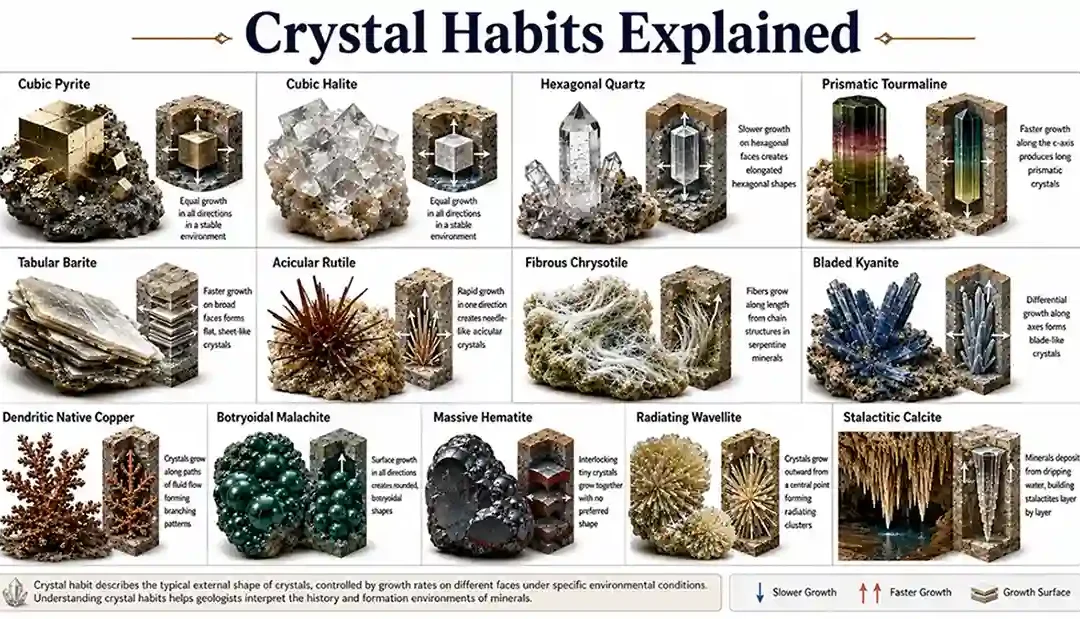
 Crystal habit describes the external shape or appearance that a mineral crystal develops during growth. Although a mineral’s internal atomic arrangement determines its crystal structure, environmental conditions such as available space, temperature, pressure,...
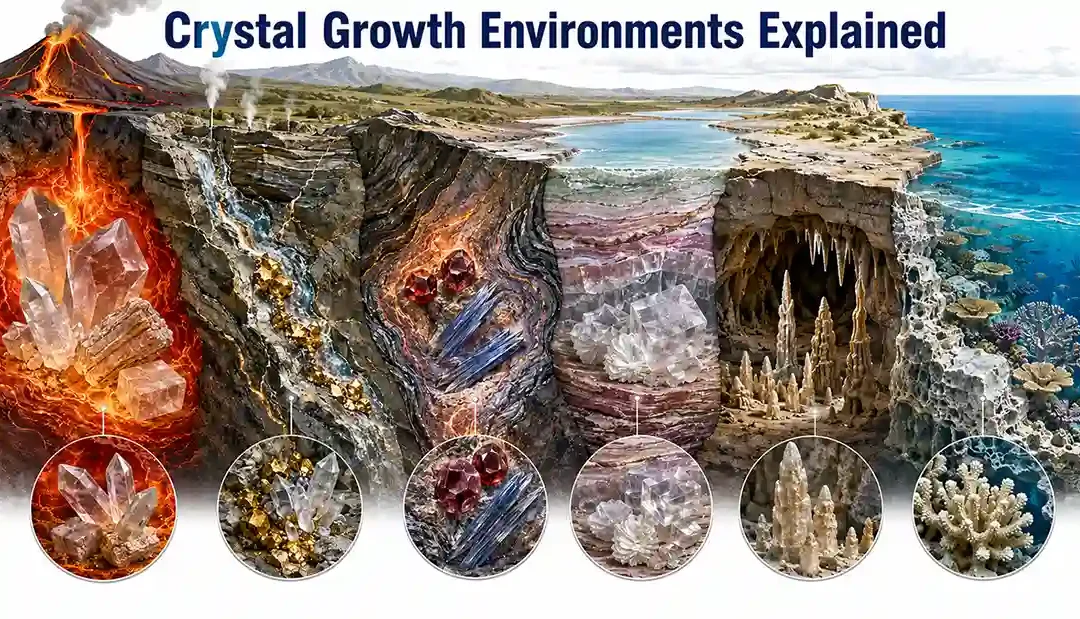 Crystals form in a wide variety of geological environments, each providing the conditions necessary for atoms to organize into ordered crystal structures. These crystal growth environments differ in temperature, pressure, fluid chemistry, cooling rate, and available...
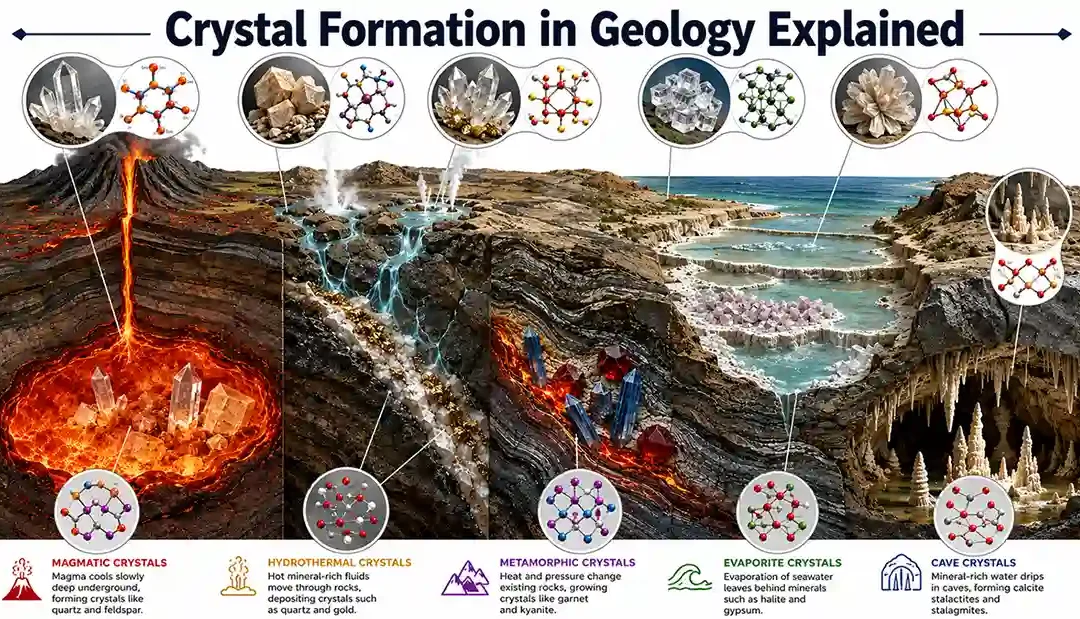 Crystals are one of nature’s most remarkable creations. Every crystal begins as tiny atoms, ions, or molecules that gradually organize into a highly ordered and repeating three-dimensional pattern known as a crystal lattice. Over time, these microscopic building...
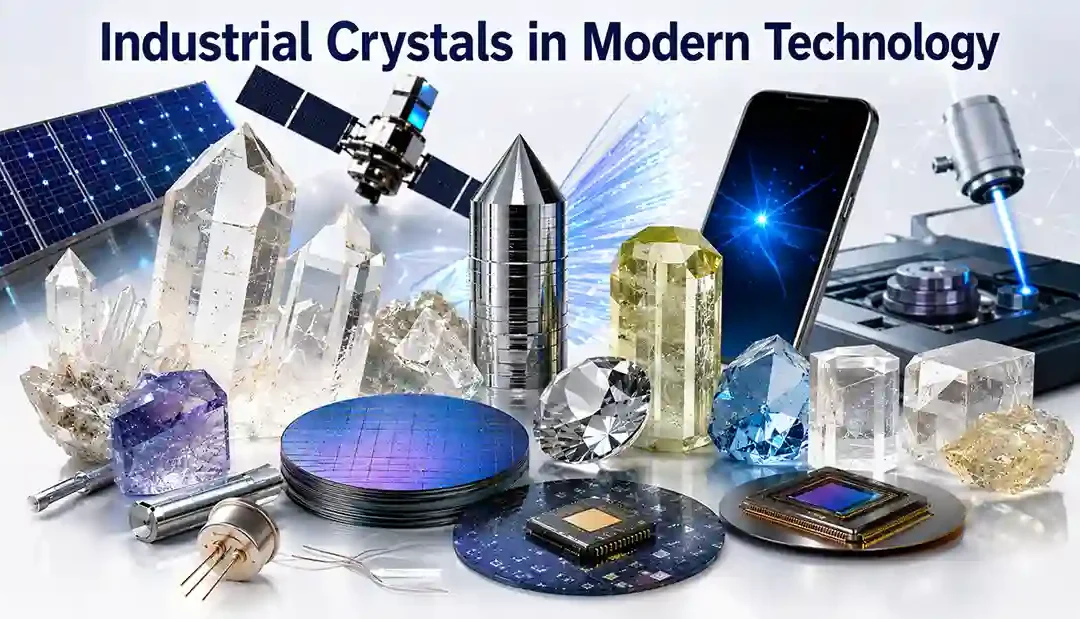 Industrial crystals are naturally occurring or laboratory-grown crystals that are used in manufacturing, electronics, construction, medicine, optics, energy production, and many other industries. Unlike gemstones, which are valued primarily for their beauty,...
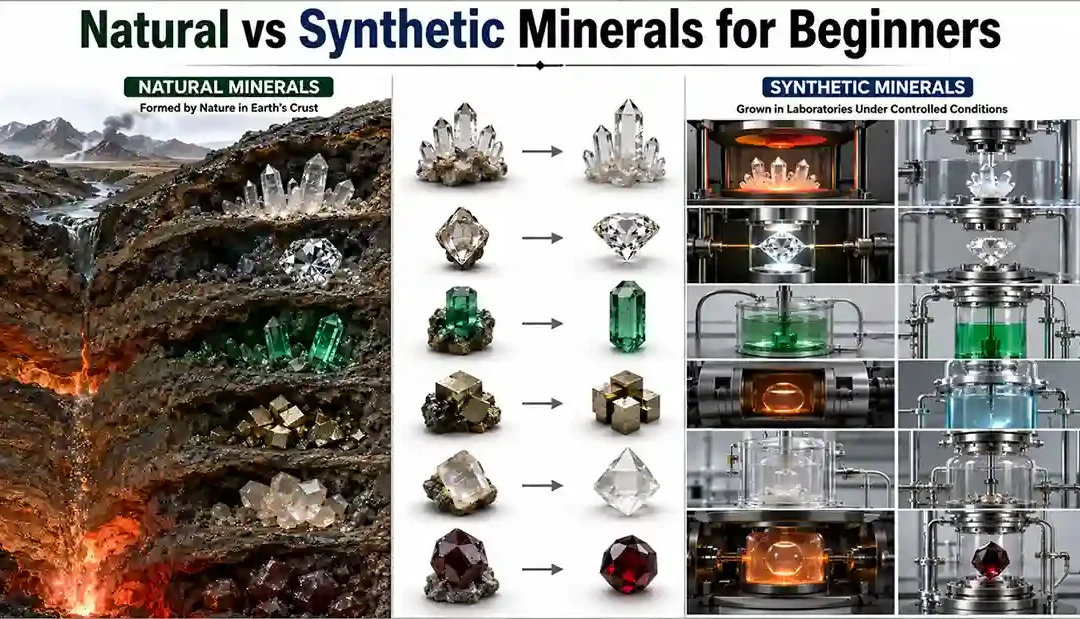 Minerals can form naturally through geological processes or be produced artificially under controlled laboratory conditions. Natural minerals develop over thousands to millions of years through processes such as magma crystallization, hydrothermal activity,...
