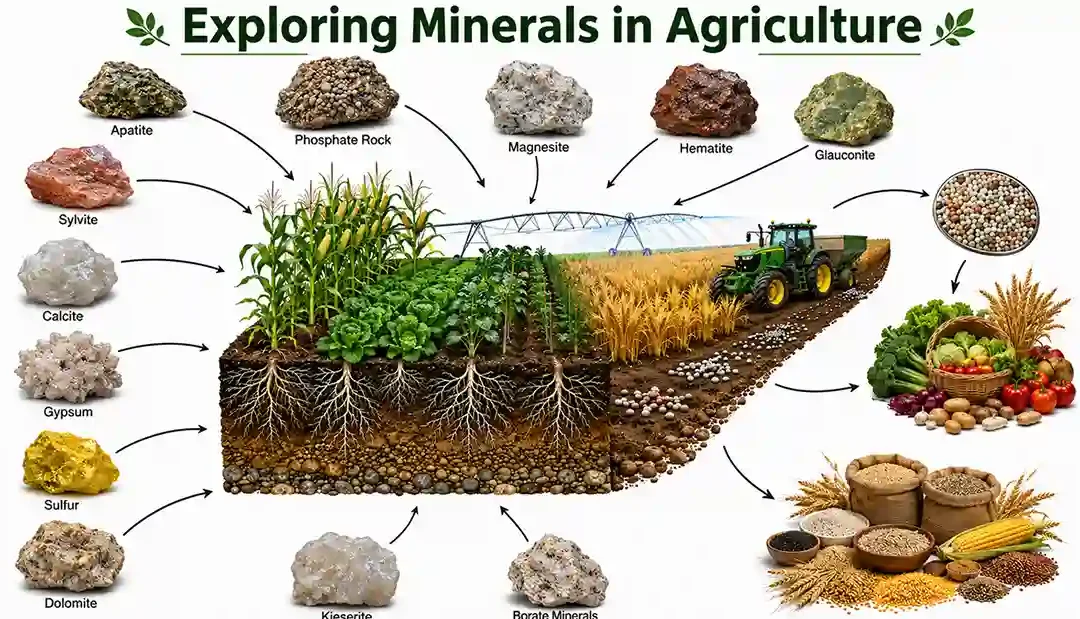
 Introduction Agriculture depends on minerals to maintain fertile soils, produce healthy crops, and sustain global food production. Every plant requires mineral nutrients for growth, while farmers rely on mineral fertilizers and soil amendments to replenish nutrients...
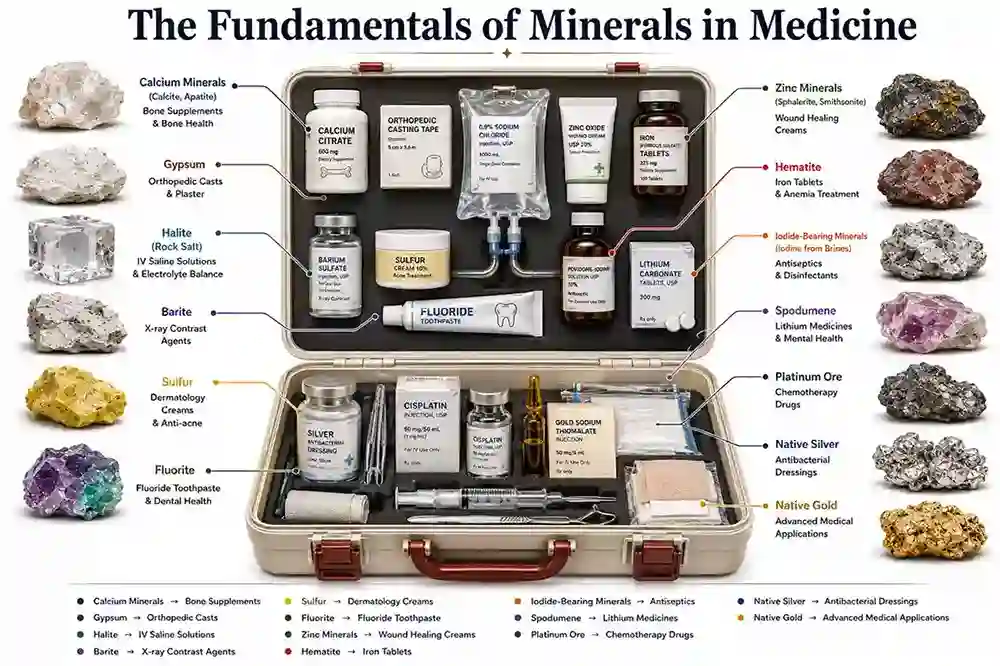 Medicine depends on minerals far more than most people realize. Many life-saving drugs, diagnostic agents, medical devices, and nutritional supplements either contain minerals directly or are manufactured using mineral-derived materials. From calcium tablets that...
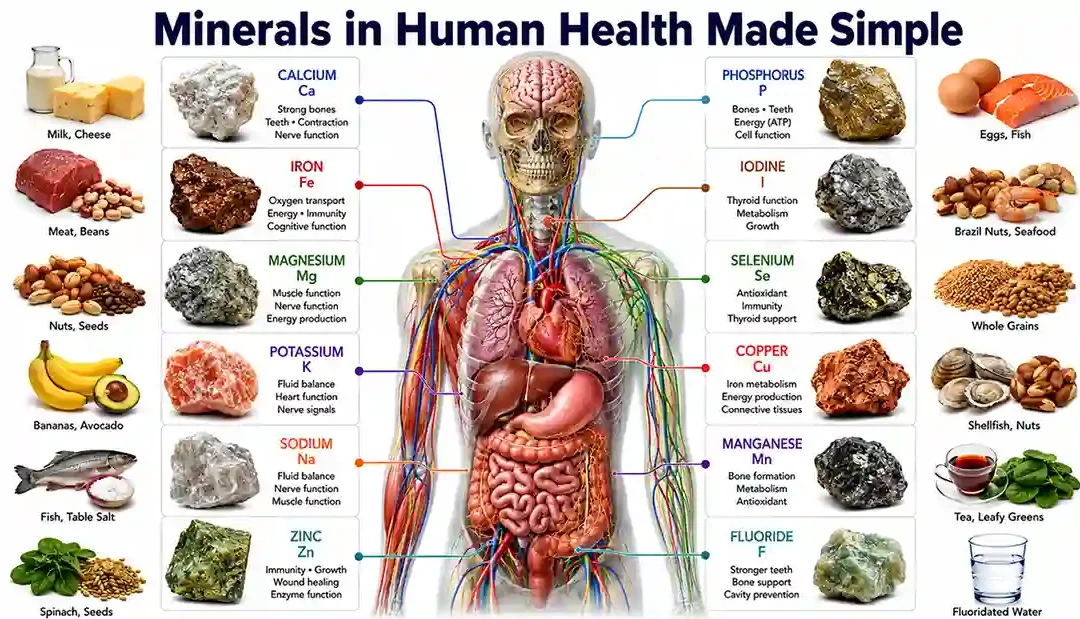 Minerals are essential inorganic nutrients that the human body requires for normal growth, development, and survival. Unlike vitamins, proteins, carbohydrates, and fats, minerals originate from rocks and soils before entering the food chain through plants, animals,...
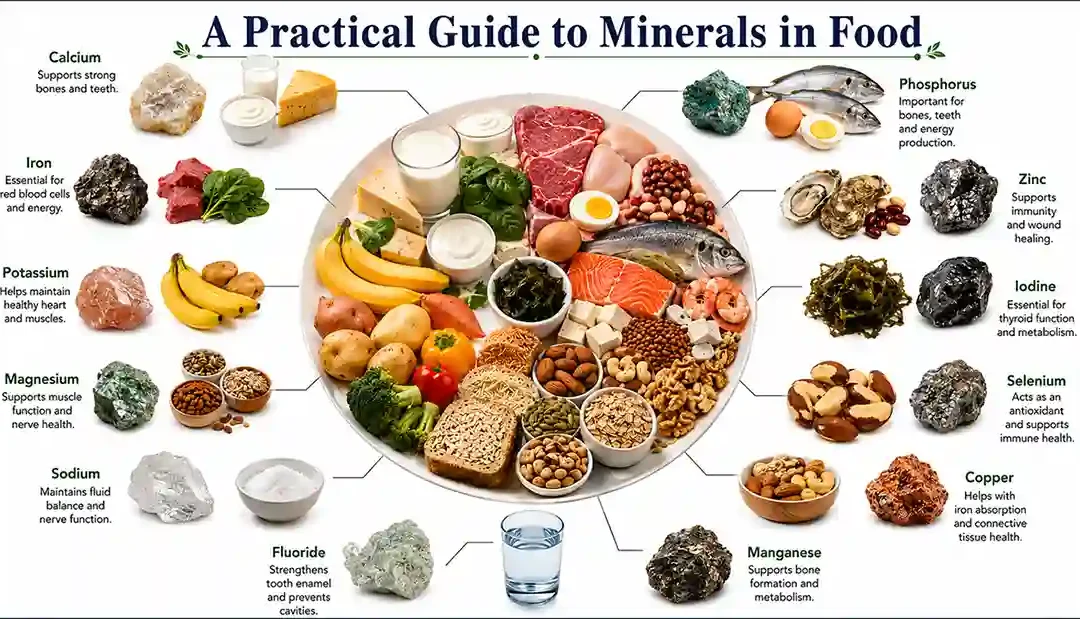 Minerals are essential nutrients that the human body requires to grow, function, and remain healthy. Unlike carbohydrates, proteins, and fats, minerals are inorganic elements naturally found in rocks, soils, and water before entering the food chain through plants and...
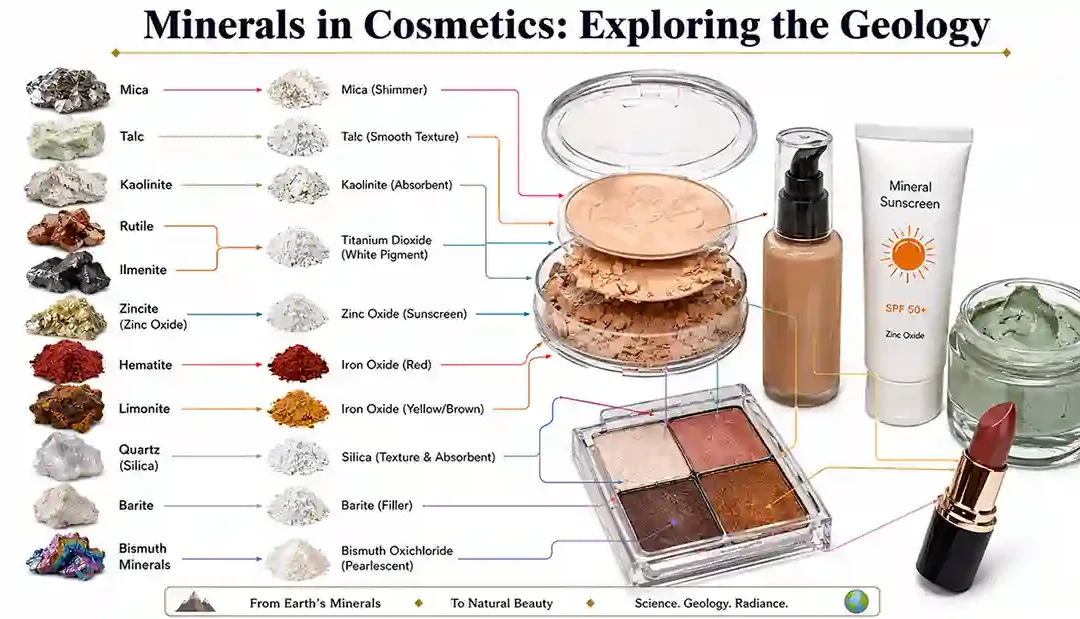 Cosmetics have been used for thousands of years to enhance appearance, protect the skin, and express personal style. Today, modern beauty products rely on carefully refined minerals extracted from the Earth’s crust to provide color, texture, shine, sun...
