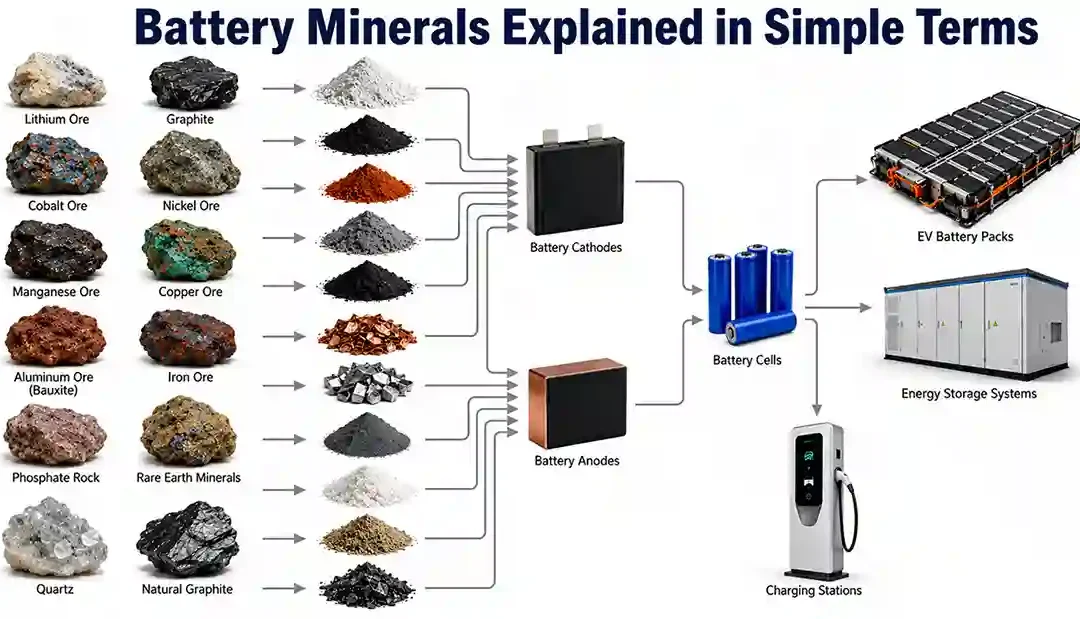
 Rechargeable batteries have become one of the most important technologies in modern society. They power smartphones, laptops, electric vehicles (EVs), renewable energy storage systems, and countless portable electronic devices. Behind every battery is a group of...
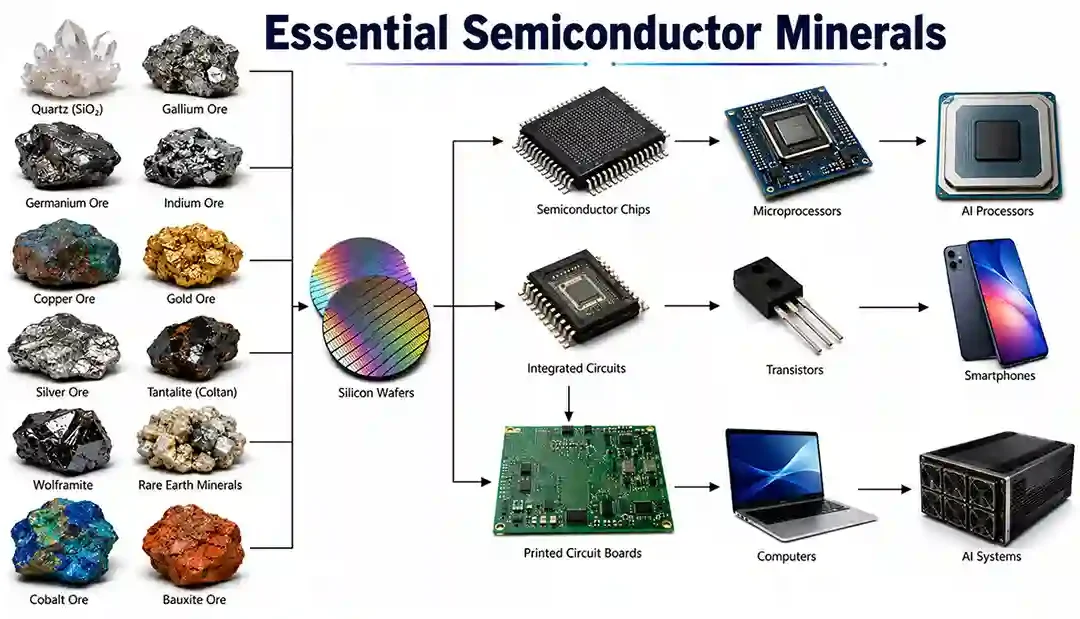 Semiconductors are the foundation of modern electronics. Every computer, smartphone, AI processor, electric vehicle, communication system, and medical device depends on semiconductor materials manufactured from minerals extracted from the Earth’s crust. These...
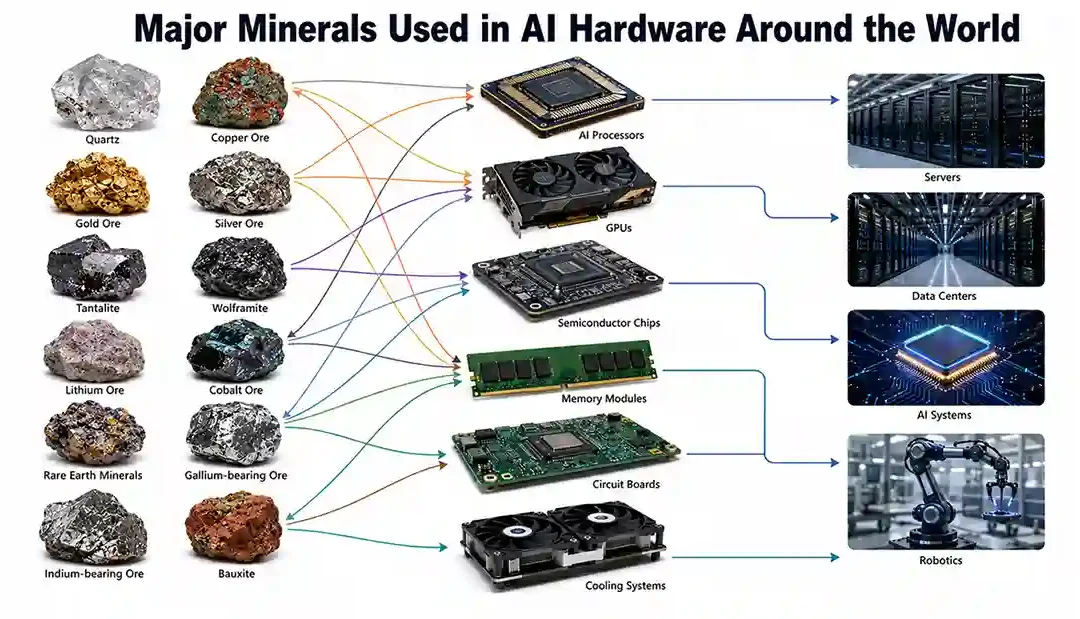 Artificial intelligence (AI) depends on powerful computer hardware capable of processing enormous amounts of data. AI chips, graphics processing units (GPUs), servers, data centers, networking equipment, and storage devices all rely on minerals extracted from the...
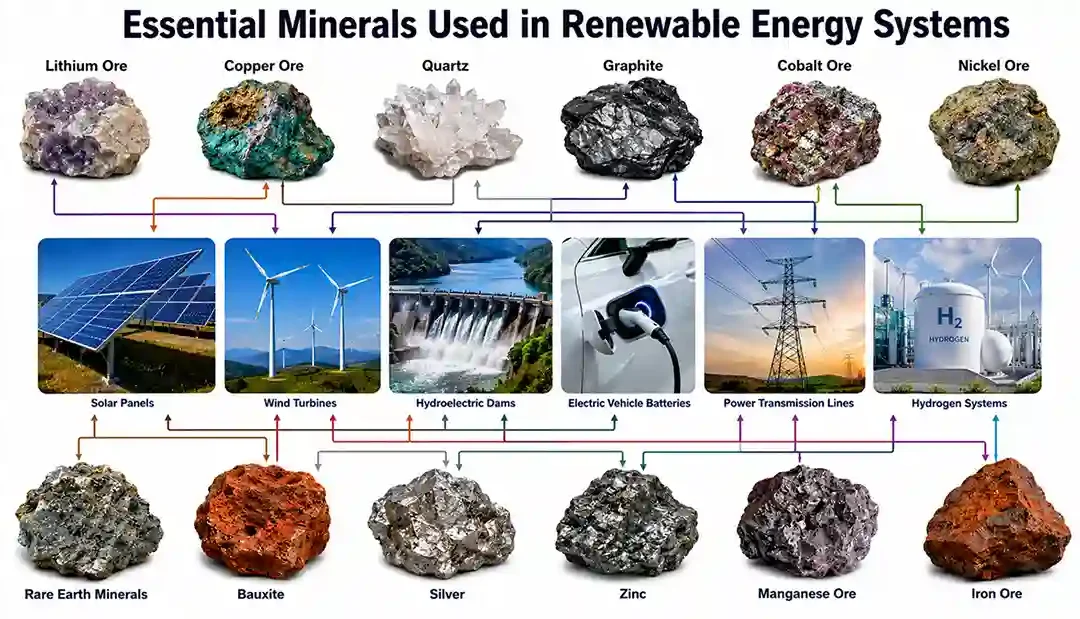 Renewable energy technologies rely on many naturally occurring minerals. Solar panels, wind turbines, electric vehicles, battery storage systems, and power grids all require specific minerals that provide electrical conductivity, energy storage, corrosion resistance,...
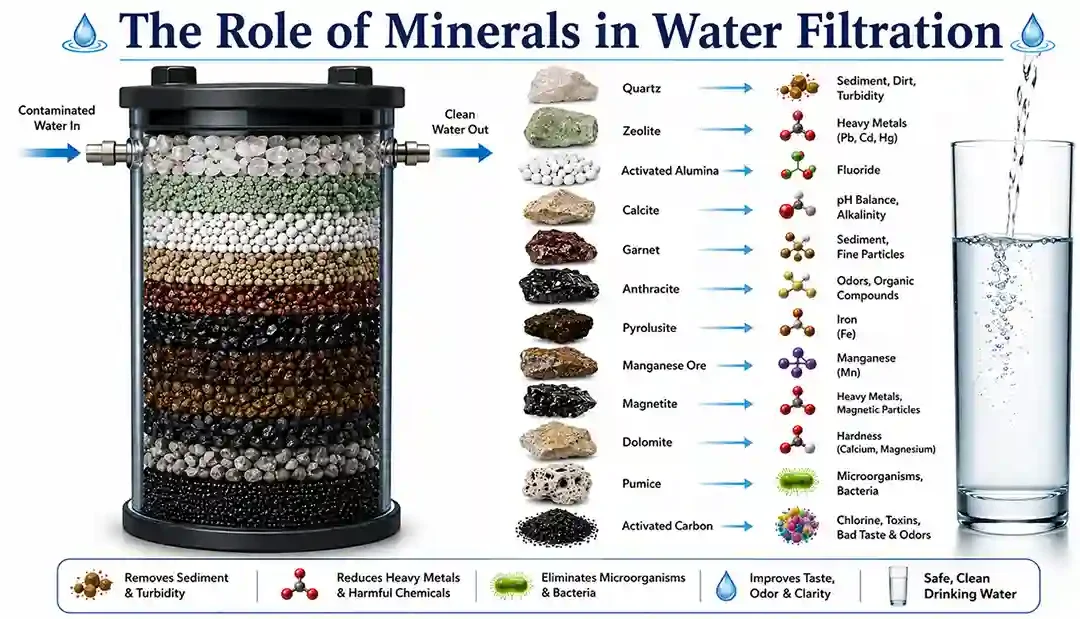 Clean water is essential for human health, agriculture, and industry. Natural minerals play a major role in modern water treatment by removing suspended particles, heavy metals, harmful chemicals, unpleasant odors, and excess minerals from water. Many municipal...
