
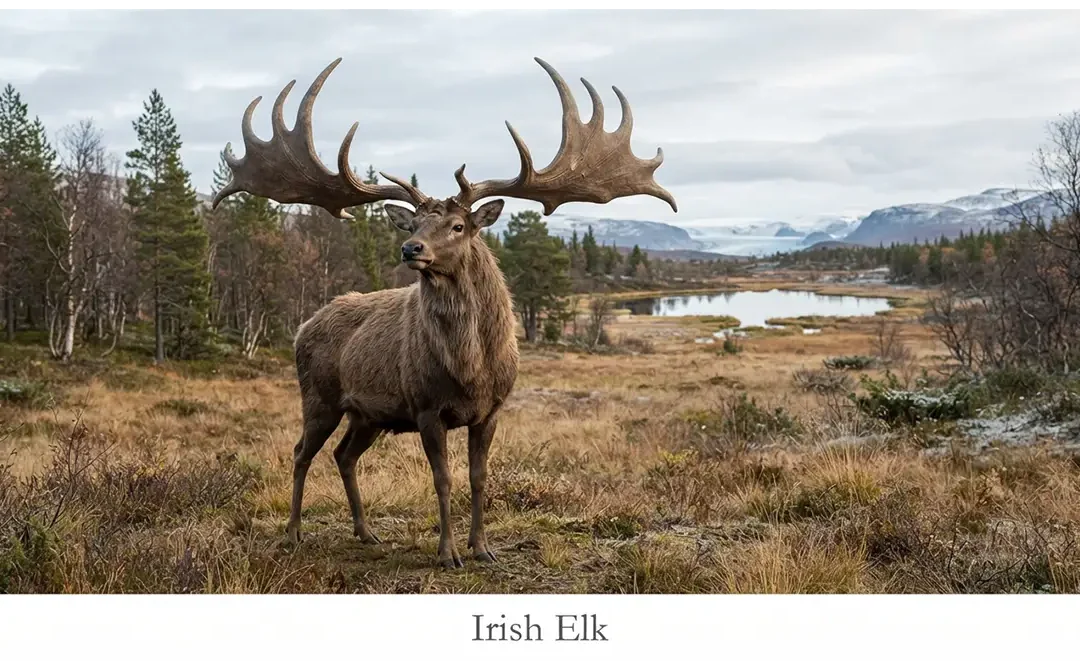
Irish Elk was the common name for Megaloceros giganteus, a giant deer that lived across parts of Europe and western Asia during the Late Pleistocene and early Holocene. Despite its name, it was not a true elk and was actually a member of the deer family.
The animal is best known for its enormous antlers, which could reach about 3.5 meters across in some large males. Its large body, powerful legs, and impressive antlers made it one of the most remarkable deer known from the fossil record.
Irish elk fossils have been found in many parts of Europe and beyond, providing information about its size, diet, habitat, behavior, and changing environment. Although it is strongly associated with the Ice Age, some populations survived until several thousand years ago.
What Was the Irish Elk?
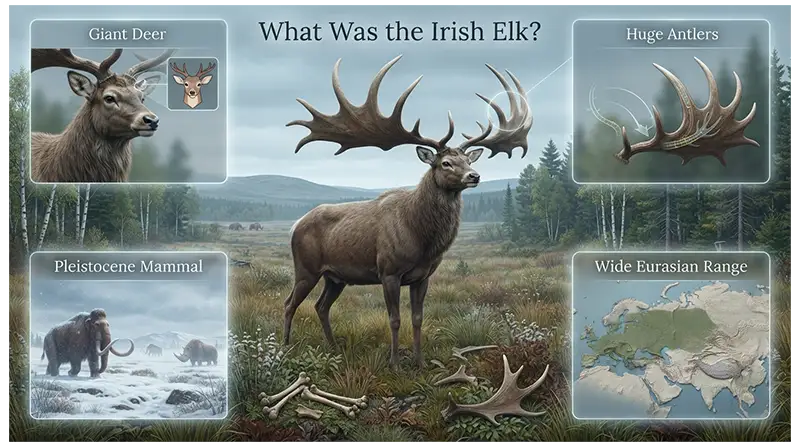
The Irish elk was a large extinct deer scientifically known as Megaloceros giganteus. It belonged to the deer family, Cervidae, and was one of the largest deer species that ever lived. The name “Irish elk” can be misleading. The animal was not closely related to modern elk simply because of its common name. It is better understood as a giant deer.
The species is especially famous because of the enormous antlers carried by adult males. However, the antlers were only one part of the animal's anatomy. Irish elk also had a large body, long legs, a relatively short tail, and a deer-like head.
The species lived during a period when much of Europe experienced repeated changes in climate and vegetation. It occupied landscapes that included open grasslands, woodland edges, wetlands, and other environments where suitable food was available.
Its fossil record is particularly valuable because preserved bones, teeth, antlers, and other remains allow scientists to investigate how this giant deer lived and responded to environmental changes.
How Big Was the Irish Elk?
The Irish elk was a very large deer, although its exact size varied between individuals and populations. Large males could stand roughly 2 meters or more at the shoulder, and some individuals were considerably heavier than most living deer. The largest animals had massive bodies supported by long, strong legs. Its enormous antlers made the animal appear even larger. In some specimens, the antlers measured approximately 3.5 meters from tip to tip.
The combination of body size and antler size made the Irish elk particularly impressive. However, not every individual had the same measurements. Body size and antler dimensions changed among populations and were influenced by factors such as age, sex, nutrition, and environmental conditions.
Body Size and Antler Size
Male Irish elk generally had much larger antlers than females. The antlers were grown and shed as part of the normal deer antler cycle. Large antlers required substantial amounts of minerals and energy during their development. This means that the animal needed access to sufficient food and nutrients, especially during periods of rapid antler growth.
The relationship between body size, nutrition, climate, and antler development provides scientists with useful information about the environments in which different Irish elk populations lived.
Why Did the Irish Elk Have Such Huge Antlers?
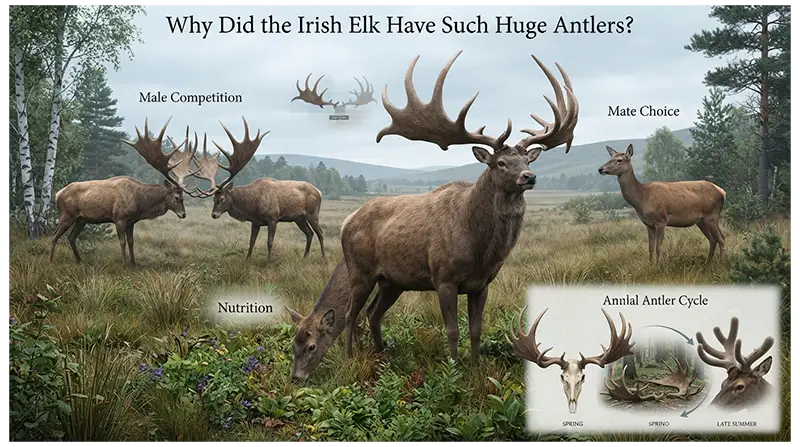
The enormous antlers of the Irish elk are one of the most famous examples of antler development in the deer family. Scientists generally associate these large structures with sexual selection. Large antlers may have helped males compete with other males and could also have influenced mate choice.
During the breeding season, males could use their antlers in displays and physical competition. Large antlers could therefore provide advantages in reproductive competition, although they also required considerable energy and nutrients to grow. The antlers were not permanent structures. Like those of living deer, they were made of bone and were shed and regrown.
Why Did Antlers Become So Large?
Several factors may have contributed to their extreme size:
- Competition between males
- Female choice during reproduction
- Large body size
- Abundant food in some environments
- Evolutionary sexual selection
- The ecological conditions experienced by different populations
The idea that Irish elk became extinct simply because their antlers became “too large” is not supported as a complete explanation. Large antlers may have created energetic and physical costs, but extinction involved broader environmental and ecological factors. Antler size also varied between populations, showing that the species was not simply evolving toward endlessly larger antlers.
What Did the Irish Elk Look Like?
The Irish elk had the general body shape of a large deer, but its enormous size gave it a distinctive appearance. It had a large torso, long legs, a relatively short tail, and a deer-like head. Males had massive branching antlers that extended widely on both sides of the head.
Its coat was probably adapted to the cold and changing environments of the Pleistocene. The exact appearance and coloration cannot be known with complete certainty because soft tissues are rarely preserved in the fossil record. The animal's long legs were suitable for moving across open landscapes, while its large body helped it retain heat in colder conditions.
The antlers were probably the most visually noticeable feature. They could extend far beyond the sides of the body, creating a very broad silhouette. Although many popular illustrations show the Irish elk in snowy landscapes, it did not always live in deeply frozen environments. Its habitat changed as climate and vegetation changed through the Pleistocene and early Holocene.
Where Did the Irish Elk Live?
The Irish elk lived across a broad region of Europe and parts of western and central Asia. It was not restricted to Ireland. The species became particularly common in parts of Europe where suitable open vegetation and wetlands were available.
Fossils have been discovered in areas including:
- Ireland
- Britain
- Continental Europe
- Russia
- Other parts of western and central Eurasia
The animal lived in a variety of environments rather than occupying one single type of habitat. Open grasslands and steppe-like landscapes could provide abundant vegetation, while woodland edges and wet areas could also offer suitable feeding opportunities.
The famous association with Ireland comes from the large number of well-preserved Irish specimens found in places such as former lake and bog environments. Changes in climate repeatedly altered the distribution of grasslands, forests, wetlands, and other habitats. As these environments changed, Irish elk populations also shifted across their geographic range.
What Did the Irish Elk Eat?
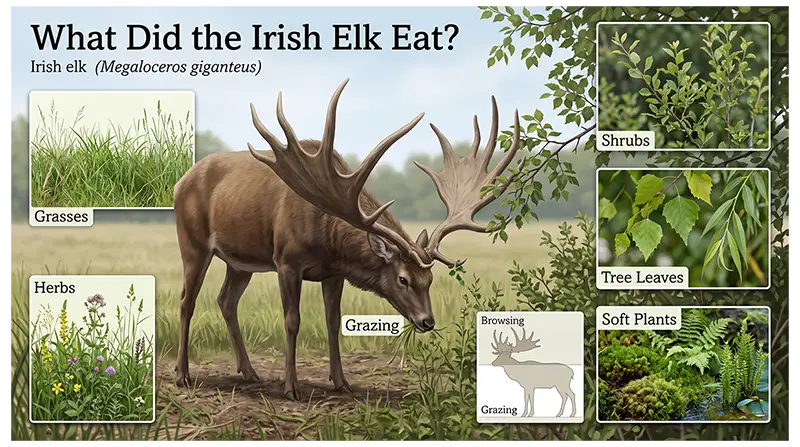
The Irish elk was a herbivore that fed on plants. Its diet probably varied according to season, location, and the vegetation available in its environment. Scientists use fossil teeth, preserved plant remains, isotope studies, and comparisons with living deer to investigate its feeding ecology.
Potential food sources included:
- Grasses
- Herbs
- Leaves
- Shrubs
- Other soft plant material
Its large body required substantial amounts of food, particularly during periods of antler growth and reproduction.
Diet and Changing Vegetation
Irish elk populations lived during a time of major environmental changes. Glacial periods and warmer intervals altered the distribution of grasslands, forests, and wetlands. During colder phases, open vegetation could become widespread. During warmer periods, forests expanded in many regions.
These changes affected the availability of different types of food. The Irish elk therefore had to live in environments capable of supporting a large herbivore. Access to nutritious vegetation would have been especially important for males growing large antlers.
How Did the Irish Elk Live and Behave?
Much of Irish elk behavior must be reconstructed from fossils because direct behavioral observations are impossible. Scientists can use its anatomy, antlers, age structure, fossil locations, and comparisons with living deer to develop reasonable interpretations.
Social Behavior
Irish elk may have formed groups, particularly when food was abundant. However, the exact size and structure of these groups probably varied according to season and environmental conditions. Large males may have competed with each other during the breeding season. Their antlers would have been important in displays and physical contests.
Reproduction
Like living deer, Irish elk likely had a seasonal breeding period. Males with large antlers may have competed for access to females. Young animals would have depended on their mothers for food and protection during early life.
Movement
Their long legs and large body were well suited to movement across open landscapes. Populations may have moved between feeding areas as vegetation and seasonal conditions changed.
However, scientists cannot reconstruct every aspect of their movement or social behavior with certainty.
When Did the Irish Elk Live?
The Irish elk lived mainly during the Late Pleistocene, but its history extended into the early Holocene. The Pleistocene was characterized by repeated glacial and interglacial climate changes. During this period, ice sheets expanded and retreated, sea levels changed, and vegetation shifted across Europe and Asia.
Irish elk populations lived through several of these environmental changes. Importantly, the species did not disappear everywhere exactly at the end of the Pleistocene. Some populations survived into the early Holocene. Fossil evidence indicates that Irish elk survived in parts of Eurasia until roughly 8,000 years ago.
This makes its extinction later than the end of the Pleistocene itself. This timeline is important because it shows that the extinction of large Ice Age mammals was not a single event occurring at one exact moment. Different species disappeared at different times and in different regions.
What Do Irish Elk Fossils Reveal?
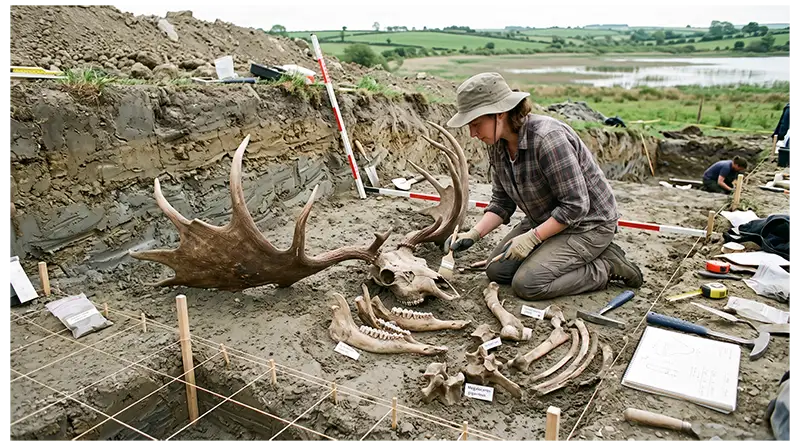
Irish elk fossils provide important information about the animal's anatomy, environment, diet, and history.
The fossil record includes:
- Skulls
- Jaws
- Teeth
- Leg bones
- Vertebrae
- Antlers
- Other skeletal remains
Antlers are particularly common in some fossil deposits and can provide information about the age and sex of individuals.
Fossil Teeth
Teeth can provide clues about diet. Their shape, wear patterns, and microscopic features can help researchers determine the types of plants an animal consumed. Scientists can also use chemical information preserved in teeth and bones to investigate diet, movement, and environmental conditions.
Fossil Antlers
Antlers provide valuable information about the animal's growth and reproductive biology. Researchers can examine antler size, shape, growth patterns, and injuries to understand how males developed and used these structures.
Fossil Locations
Some Irish elk remains are especially well preserved in former lake and wetland environments. These deposits can contain not only bones and antlers but also pollen, plant remains, sediments, and other environmental evidence. Together, these materials help reconstruct the ecosystems in which the animals lived.
Why Did the Irish Elk Become Extinct?
The extinction of the Irish elk was probably influenced by multiple factors, and the importance of each factor may have varied between regions. Climate and environmental change were important because the Pleistocene ended with major shifts in temperature, vegetation, and landscapes.
As forests expanded in some regions, open habitats changed. This could have affected the availability of the vegetation preferred by large deer. Human activity may also have contributed in some areas. As human populations expanded, hunting pressure and changes to landscapes could have affected large mammals.
However, extinction should not be explained by a single cause such as oversized antlers.
Major Factors That May Have Contributed
Several factors are considered when studying the decline of Irish elk:
- Climate change
- Changes in grassland and woodland distribution
- Changes in food availability
- Habitat fragmentation
- Human hunting
- Population isolation
- Nutritional stress in some environments
- Long-term environmental instability
The survival of some populations until the early Holocene also shows that the species did not disappear immediately when the last major Ice Age ended. Its extinction was therefore a complex process involving changing environments and population conditions.
Why Is the Irish Elk Important to Paleontology?
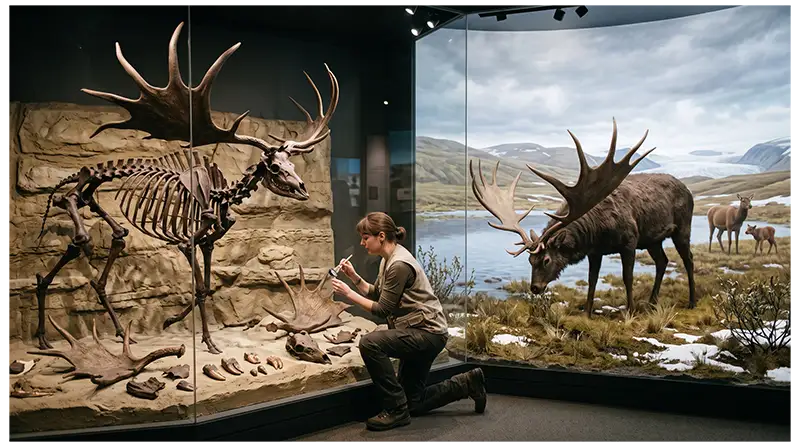
The Irish elk is important because it provides a detailed example of how large mammals responded to changing environments during the late Quaternary. Its fossils help scientists study megafauna, climate change, herbivore ecology, sexual selection, evolution, and extinction.
Its enormous antlers are especially useful for studying the evolution of sexually selected traits. The species also demonstrates why common names can sometimes be misleading. Despite being called the “Irish elk,” it was a giant deer rather than a true elk.
Its fossil record also helps scientists understand the relationship between climate change and megafaunal extinction. Because some populations survived well into the Holocene, the Irish elk provides an important case study for understanding how extinction can happen gradually rather than at one single moment.
The animal also helps connect paleontology with other Earth sciences. Fossil bones and antlers can be studied alongside sediments, pollen, plant remains, and climate evidence to reconstruct ancient ecosystems.
Conclusion
The Irish elk, or Megaloceros giganteus, was one of the largest and most spectacular deer in the fossil record. Despite its common name, it was a giant deer rather than a true elk.
Its most famous feature was its enormous antlers, which were probably shaped by sexual selection and competition between males. The species lived across broad areas of Europe and western Eurasia, feeding on vegetation in changing Pleistocene environments.
Irish elk fossils reveal important information about their body size, diet, growth, habitats, and behavior. Their survival into the early Holocene also shows that their extinction did not occur immediately at the end of the Pleistocene.
Changing climate, vegetation, habitat conditions, and possible human pressure all likely played roles in their decline. For paleontologists, the Irish elk remains an important example of Ice Age megafauna, evolutionary adaptation, environmental change, and extinction.
No. The Irish elk was actually a giant deer called Megaloceros giganteus. The common name “Irish elk” is traditional but scientifically misleading.
Large individuals could stand around 2 meters or more at the shoulder, while some males had antlers reaching approximately 3.5 meters across.
The large antlers were probably related mainly to sexual selection, including competition between males and possibly mate choice.
Irish elk lived across much of Europe and parts of western and central Asia. They were not restricted to Ireland.
Humans may have contributed to the decline of some populations through hunting and landscape changes, but extinction was probably influenced by several interacting factors.