
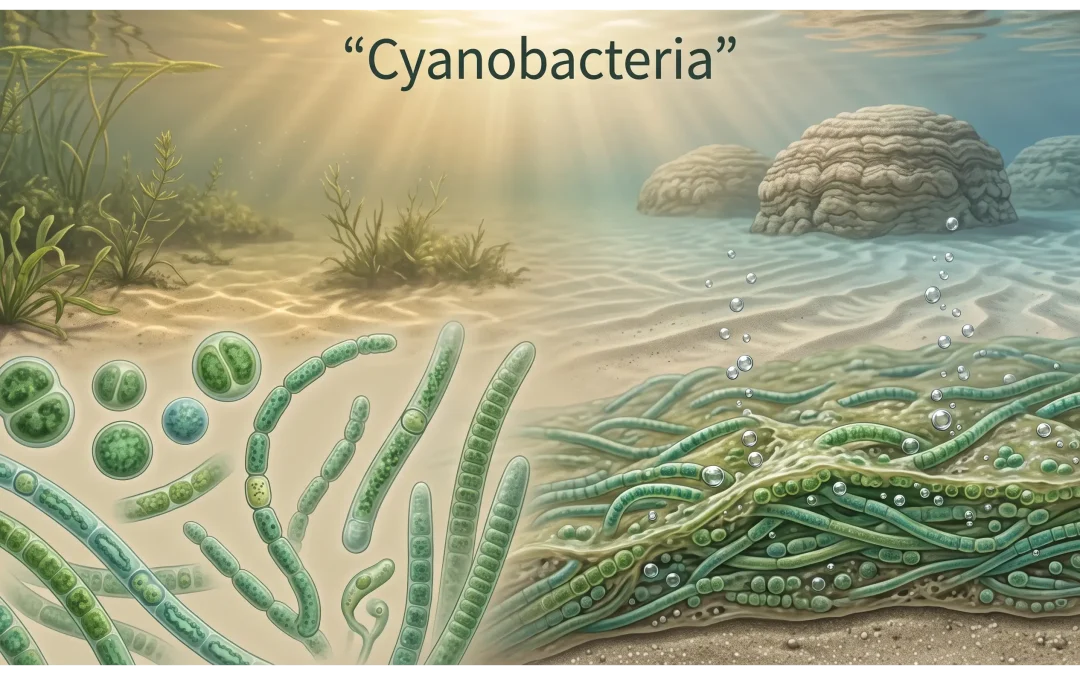
Cyanobacteria are ancient photosynthetic bacteria that have played a major role in Earth's biological and geological history. They can capture sunlight, use carbon dioxide to build organic matter, and many species release oxygen as a product of photosynthesis.
Today, cyanobacteria live in oceans, freshwater, soils, wetlands, hot springs, deserts, and other environments. Some form thin microbial mats, while others grow as colonies or long filaments. Their ability to photosynthesize and, in some species, fix atmospheric nitrogen makes them important parts of many ecosystems.
Cyanobacteria are also important to Earth history. Their ancestors were among the organisms responsible for increasing oxygen levels in Earth's atmosphere, and their activities are closely associated with ancient microbial ecosystems and stromatolites. Their evolutionary history also has a connection to the origin of chloroplasts in plants and algae.
What Are Cyanobacteria?
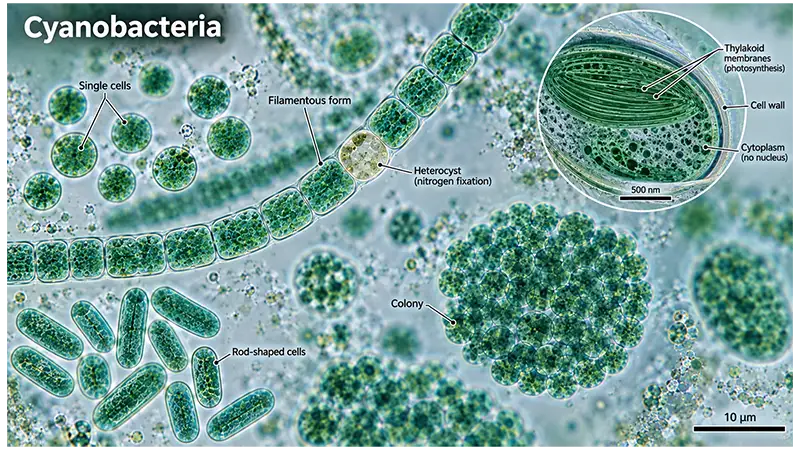
Cyanobacteria are a group of photosynthetic bacteria that obtain energy primarily from sunlight. They belong to the domain Bacteria, so they are fundamentally different from plants, algae, and cyanobacteria-like organisms that are classified as eukaryotes. Unlike eukaryotic cells, cyanobacteria do not have a membrane-bound nucleus. Their DNA is located within the cell rather than enclosed inside a nucleus. They also lack chloroplasts and other membrane-bound organelles found in complex eukaryotic cells.
The name “cyanobacteria” comes from the bluish-green pigments found in many species. They were historically called blue-green algae because they live in aquatic environments and perform photosynthesis. However, this older name can be misleading because cyanobacteria are bacteria rather than true algae.
Cyanobacteria are particularly important because they perform oxygenic photosynthesis. This means they use water as an electron donor during photosynthesis and release oxygen. This ability has had enormous consequences for Earth's atmosphere and the evolution of life.
Some cyanobacteria can also convert atmospheric nitrogen into biologically useful forms through nitrogen fixation. This allows them to contribute nutrients to ecosystems where usable nitrogen is limited.
What Do Cyanobacteria Look Like?
Cyanobacteria are microscopic, but their forms can be surprisingly diverse. Some species consist of individual cells, while others form colonies, sheets, or long chains of connected cells.
Common cyanobacterial forms include:
- Unicellular forms consisting of individual cells
- Colonial forms in which many cells live together
- Filamentous forms made of chains of cells
- Mucilaginous colonies surrounded by a protective gelatinous material
- Microbial mats formed by dense communities of microorganisms
Many cyanobacteria contain chlorophyll a and additional pigments called phycobiliproteins. These pigments help absorb different wavelengths of light and can give cyanobacteria blue, green, reddish, brownish, or even nearly black appearances depending on the species and environment.
Inside cyanobacterial cells are specialized internal membranes called thylakoid membranes. These membranes contain many of the molecular components needed for photosynthesis. Some filamentous cyanobacteria also contain specialized cells called heterocysts. These cells can provide a suitable low-oxygen environment for nitrogen fixation in species capable of this process.
The physical appearance of cyanobacteria therefore varies considerably. Their structure is closely connected to how they obtain nutrients, capture light, reproduce, and survive in their particular environment.
How Do Cyanobacteria Perform Photosynthesis?
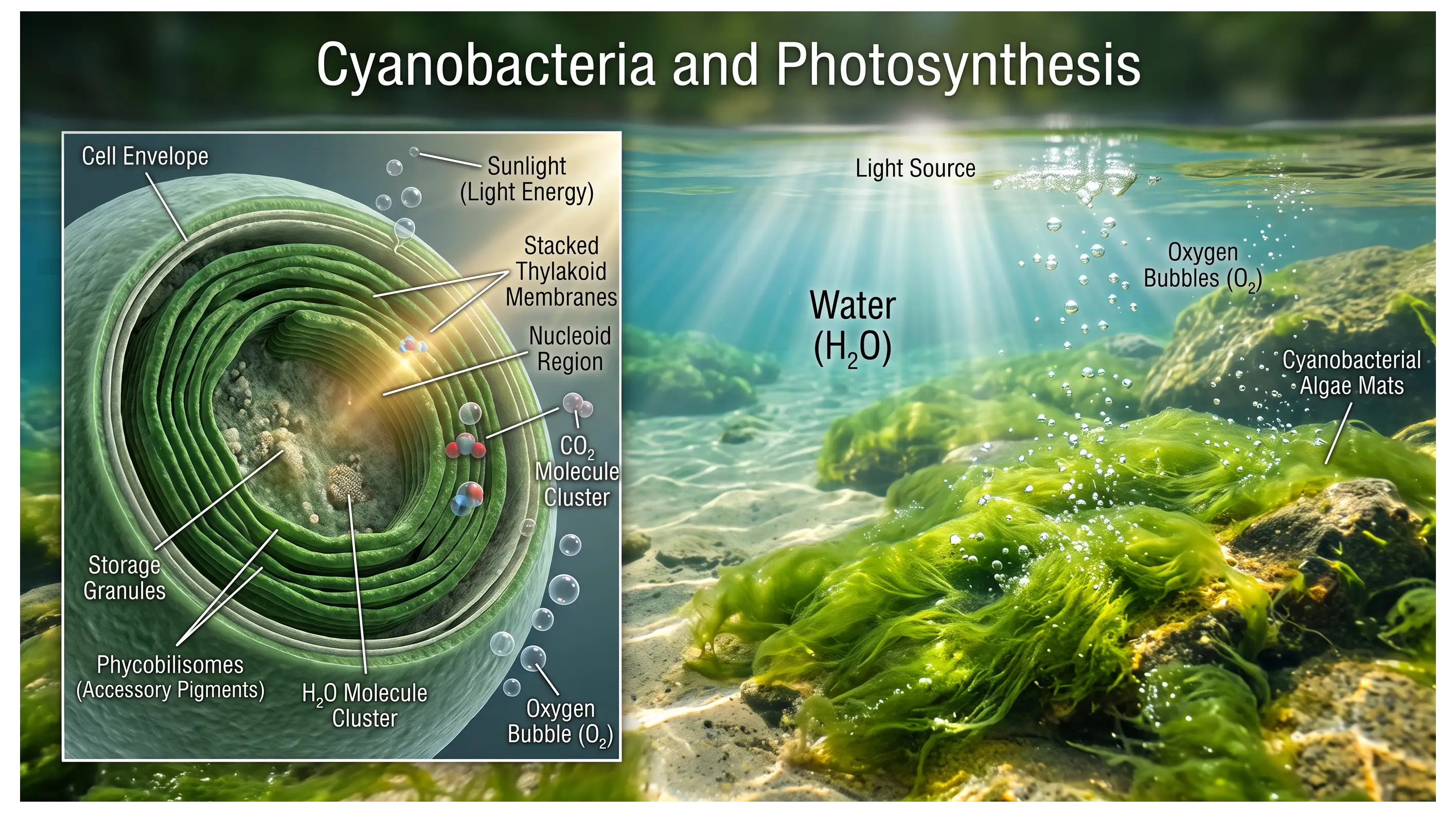
Photosynthesis is one of the most important biological processes performed by cyanobacteria. Through oxygenic photosynthesis, they use light energy to convert water and carbon dioxide into organic compounds while releasing oxygen.
The simplified overall process can be represented as:
Carbon dioxide + water + light energy → organic matter + oxygen
The process occurs through a series of molecular reactions associated with the cyanobacterial photosynthetic machinery. Light is captured by pigments such as chlorophyll a and phycobiliproteins. The absorbed energy drives electron-transfer reactions that ultimately help produce chemical energy for the cell.
Water provides electrons for the photosynthetic process. When water molecules are split, oxygen is released as a by-product. This is particularly significant because the oxygen produced by oxygenic photosynthesis can enter surrounding water and, eventually, the atmosphere. Cyanobacteria perform photosynthesis using internal thylakoid membranes rather than chloroplasts. This is one important difference between cyanobacteria and plants.
However, the basic photosynthetic chemistry has a deep evolutionary connection to plants and algae. Chloroplasts in modern plants and many algae originated from ancient cyanobacteria through an evolutionary process known as endosymbiosis. This relationship means that studying cyanobacteria provides scientists with valuable information about the evolution of photosynthesis and complex photosynthetic cells.
Where Do Cyanobacteria Live?
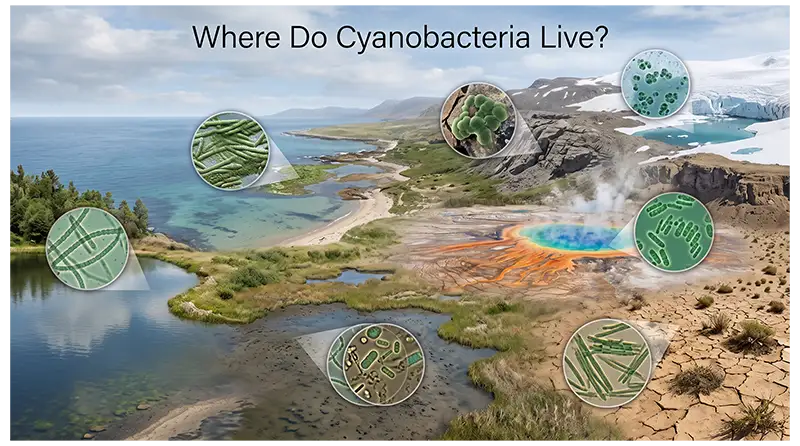
Cyanobacteria are found across a remarkably wide range of environments. Although many people associate them with ponds and lakes, they are not restricted to freshwater.
They occur in:
- Freshwater lakes and rivers
- Oceans and coastal environments
- Wetlands and sediments
- Soils and biological soil crusts
- Hot springs
- Deserts
- Polar and high-altitude environments
- Rocks and exposed surfaces
- Intertidal environments
Different species have different environmental requirements. Some thrive in warm, nutrient-rich water, while others can survive intense sunlight, freezing temperatures, high salinity, or limited water availability.
Cyanobacteria are particularly successful at colonizing surfaces where other organisms may struggle. In deserts, for example, they can contribute to biological soil crusts. In aquatic environments, they may grow as floating populations, attached communities, or dense microbial mats.
Their widespread distribution reflects their metabolic flexibility and long evolutionary history. Environmental conditions such as temperature, light, water availability, nutrient concentration, salinity, and oxygen levels can strongly influence where cyanobacteria grow.
How Do Cyanobacteria Grow and Reproduce?
Cyanobacteria generally reproduce asexually, meaning they do not require sexual reproduction to produce new cells. Many unicellular species reproduce through cell division. A parent cell grows and then divides, producing new daughter cells.
Filamentous cyanobacteria can also reproduce through fragmentation. Sections of a filament can separate from the original structure and continue growing as independent units. Some cyanobacteria form specialized structures that help with survival or dispersal under changing environmental conditions.
Growth depends on access to essential resources. Cyanobacteria require light for photosynthesis, carbon sources, water, and various nutrients. Nitrogen is particularly important because it is needed to build proteins and genetic material. Certain cyanobacteria can perform nitrogen fixation, converting atmospheric nitrogen into forms that can enter biological processes.
In some filamentous species, specialized heterocyst cells provide an environment suitable for nitrogen fixation. This ability gives cyanobacteria an important role in ecosystems where biologically available nitrogen is limited. When environmental conditions are favorable, cyanobacterial populations can increase rapidly. Under less suitable conditions, their growth can slow or stop.
What Are Cyanobacterial Blooms?
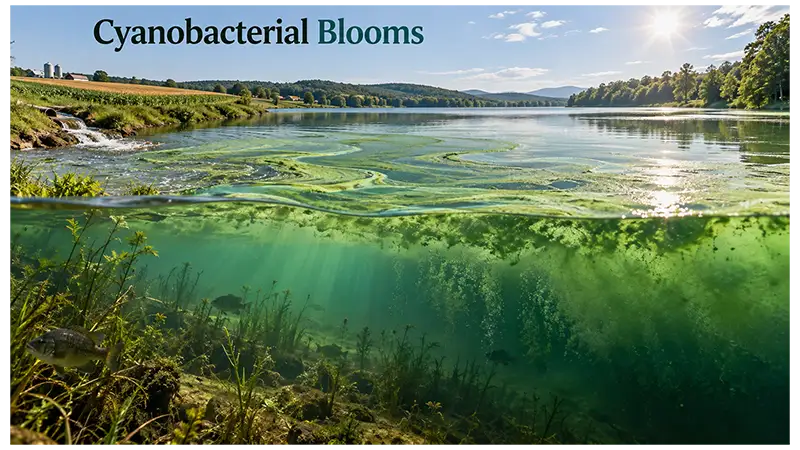
A cyanobacterial bloom occurs when cyanobacteria increase rapidly and become unusually abundant in a body of water. Blooms are especially common in lakes, reservoirs, ponds, and slow-moving freshwater systems.
Several environmental conditions can encourage bloom formation. One of the most important is excess nutrient availability, particularly phosphorus and nitrogen. Nutrient enrichment can result from agricultural runoff, wastewater, urban drainage, soil erosion, and other human activities. Warm temperatures, strong sunlight, and stable water conditions can further favor cyanobacterial growth.
Dense blooms can change the appearance of water, sometimes producing green, blue-green, or surface scum. However, not every cyanobacterial bloom is toxic. Some cyanobacteria produce cyanotoxins, which are biologically active compounds that can harm aquatic organisms, wildlife, livestock, and humans when exposure levels are sufficiently high.
Potential effects depend on the species involved, the toxin produced, its concentration, and the type of exposure. Blooms can also affect aquatic ecosystems by altering oxygen concentrations, reducing light penetration, and changing the availability of nutrients and food for other organisms. For this reason, monitoring cyanobacterial blooms is important for both ecosystem management and water quality.
What Are Stromatolites?
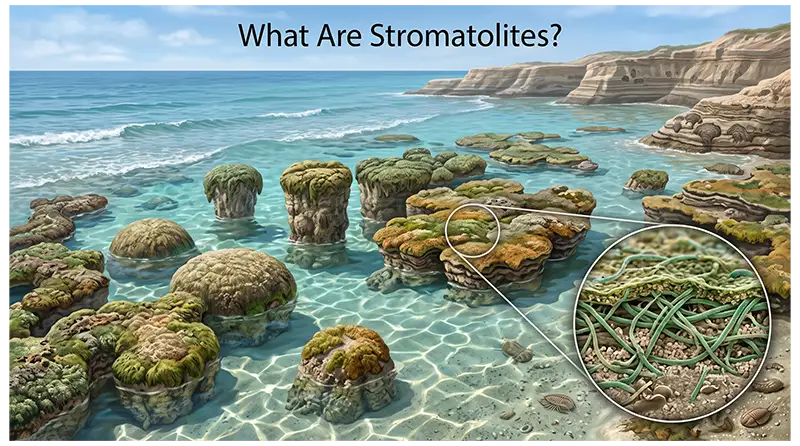
Stromatolites are layered structures produced through the activities of microbial communities. They are among the most important geological records of ancient microbial ecosystems. Many stromatolites form when microorganisms grow in dense communities called microbial mats.
These communities can trap and bind sediment particles. Microbial activity can also influence the precipitation of minerals, gradually producing layered structures. Cyanobacteria can play an important role in the formation of stromatolites because their photosynthetic growth helps create and maintain microbial mats in suitable environments.
Modern stromatolites occur in places such as shallow marine environments, including areas where conditions limit grazing by larger organisms. Ancient stromatolites are much more widespread in the geological record. Stromatolites are particularly valuable because they preserve evidence of microbial activity even when the microorganisms themselves are no longer present.
However, an important scientific caution is necessary: not every ancient stromatolite can automatically be identified as having been produced specifically by cyanobacteria. Different microbial communities can contribute to stromatolite formation, and interpreting ancient structures requires geological, chemical, and biological evidence.
How Did Cyanobacteria Change Early Earth?
Cyanobacteria had a profound influence on Earth's environmental history because of their ability to perform oxygenic photosynthesis. Early Earth had an atmosphere and ocean system very different from those of today. Free oxygen was present at much lower levels than it is now. As oxygen-producing microorganisms became widespread, oxygen began accumulating in some environments.
This long-term environmental transition is associated with the Great Oxidation Event, which occurred roughly 2.4 billion years ago, although oxygenation was a prolonged and complex process rather than a single sudden event. The increasing presence of oxygen changed Earth's chemistry.
Oxygen reacted with minerals and dissolved substances, altered ocean chemistry, and created new environmental conditions. These changes also affected organisms that were poorly adapted to oxygen-rich environments. At the same time, oxygen eventually made new forms of metabolism possible, including highly efficient aerobic respiration.
The consequences extended far beyond microorganisms. Changes in atmospheric and ocean chemistry influenced the long-term development of Earth's biosphere and helped create environmental conditions under which more complex forms of life could eventually diversify. Cyanobacteria therefore represent an important connection between microbial evolution, atmospheric chemistry, geology, and the history of life.
What Do Cyanobacteria Fossils Reveal?
The fossil record of cyanobacteria is mainly preserved through microfossils, microbial structures, and stromatolites rather than large recognizable body fossils. Because cyanobacteria are microscopic and lack mineralized skeletons, their ancient remains can be difficult to identify with certainty. Researchers therefore examine multiple types of evidence.
Important evidence includes:
- Microbial structures preserved in ancient rocks
- Stromatolite layers
- Filament-like microfossils
- Carbon-rich microscopic structures
- Sedimentary textures associated with microbial mats
- Chemical and isotopic signatures
Some ancient structures have been interpreted as cyanobacteria or cyanobacteria-like microorganisms, but these interpretations can sometimes be debated. Scientists therefore combine microscopy, sedimentology, geochemistry, and comparisons with modern microbial communities.
The fossil record shows that microbial ecosystems were important components of Earth's early environments. Stromatolites and other microbial structures provide evidence that microorganisms were interacting with sediments and influencing local environments billions of years ago.
The evolutionary importance of cyanobacteria extends beyond their own fossil record. Evidence from genetics and cell biology shows that chloroplasts, the photosynthetic organelles of plants and many algae, originated from an ancient cyanobacterial lineage that became incorporated into another cell. This endosymbiotic event transformed the evolution of complex photosynthetic life.
Why Are Cyanobacteria Important?
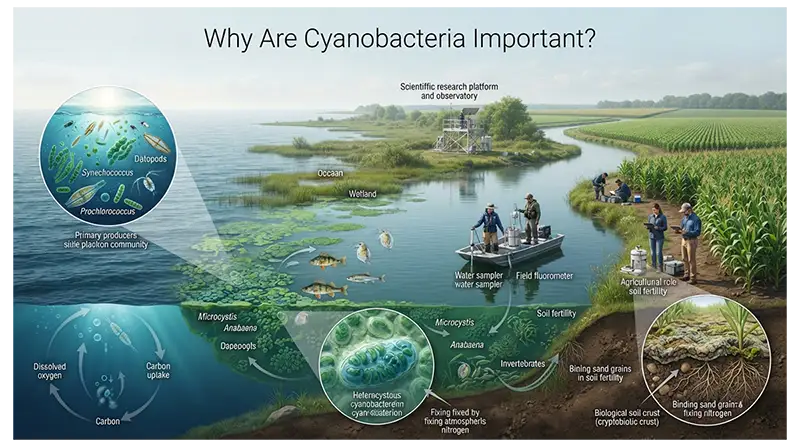
Cyanobacteria remain important today because they influence ecosystems at several levels. They are primary producers, meaning they convert light energy into organic matter that can support food webs. In aquatic environments, cyanobacteria can contribute to the production of biomass consumed directly or indirectly by other organisms.
Some cyanobacteria also fix atmospheric nitrogen, making them important participants in the nitrogen cycle. Their activity can increase the availability of biologically useful nitrogen in particular environments. They also participate in the carbon cycle by taking up carbon dioxide during photosynthesis and incorporating carbon into organic compounds.
Their ecological importance extends across:
- Freshwater ecosystems
- Marine environments
- Soils
- Wetlands
- Microbial mats
- Biological soil crusts
- Agricultural environments
Cyanobacteria are also valuable in scientific research. Their relatively simple cellular organization makes them useful for studying photosynthesis, cellular regulation, evolution, and environmental adaptation.
Researchers also investigate cyanobacteria for potential applications in biotechnology, including bioactive compounds, sustainable production systems, nitrogen management, and photosynthetic research. However, the practical value of these applications varies among species and technologies.
At the same time, cyanobacteria can have negative effects when certain populations form harmful blooms. This contrast illustrates their ecological importance: cyanobacteria can be essential components of healthy ecosystems while particular species and environmental conditions can create water-quality problems.
Conclusion
Cyanobacteria are microscopic bacteria with an enormous influence on Earth. Their ability to perform oxygenic photosynthesis allows them to produce organic matter and release oxygen, while some species can also fix atmospheric nitrogen.
Their importance extends from modern lakes, oceans, soils, and wetlands to ancient microbial ecosystems preserved in the geological record. Stromatolites and other microbial structures provide evidence of early biological activity, while the evolutionary relationship between cyanobacteria and chloroplasts connects these ancient microorganisms with modern plants and algae.
From photosynthesis and nutrient cycling to Earth's oxygenation and the evolution of complex life, cyanobacteria demonstrate how microscopic organisms can produce changes that shape the entire planet.
Cyanobacteria are bacteria. They were historically called blue-green algae because they perform photosynthesis, but they are prokaryotic organisms and are not true eukaryotic algae.
Many cyanobacteria perform oxygenic photosynthesis and release oxygen as a by-product. This ability has played an important role in Earth's long-term oxygenation.
Some cyanobacteria can fix atmospheric nitrogen. Certain filamentous species use specialized cells called heterocysts for nitrogen fixation.
Excess nutrients, particularly phosphorus and nitrogen, can promote blooms. Warm temperatures, sunlight, and stable water conditions can also favor rapid cyanobacterial growth.
No. Not every bloom produces toxins. However, some cyanobacteria can produce cyanotoxins, making certain blooms a serious concern for water quality and animal or human health.