
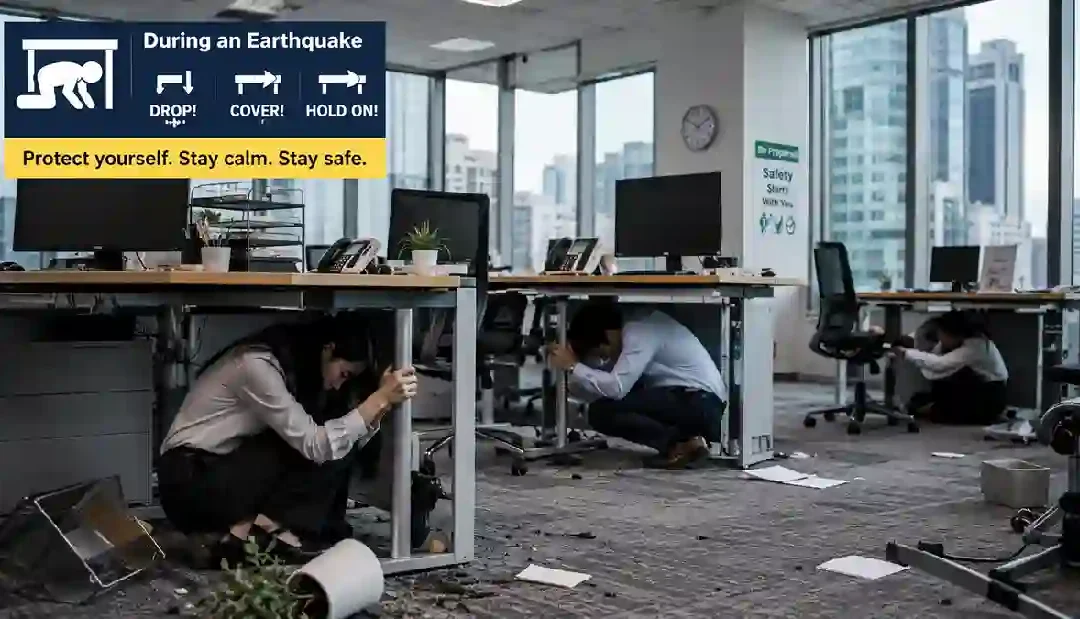
Office buildings can become dangerous during strong earthquakes.
Inside workplaces:
- furniture may topple
- ceiling materials may fall
- windows can shatter
- elevators may stop working
- panic may spread quickly
Earthquake preparedness helps offices:
- protect employees
- reduce injuries
- improve emergency response
- minimize workplace disruption
If you’re new to earthquakes, begin here → what is an earthquake
Top Office Earthquake Safety Priorities
Main Workplace Earthquake Safety Priorities
Most important earthquake preparedness actions for office environments.
| Priority | Importance |
|---|---|
| Protect employees during shaking | 10 |
| Emergency evacuation planning | 9 |
| Securing office equipment | 9 |
| Communication systems | 8 |
| Emergency supplies | 8 |
The Most Important Office Earthquake Response
During strong shaking, employees should immediately:
Drop, Cover, and Hold On
Drop
Get low before being knocked down.
Cover
Take shelter under sturdy desks or tables.
Hold On
Hold onto shelter until shaking stops. This is the safest action in most office earthquake situations.
Make Office Spaces Safer Before Earthquakes
Many office injuries come from falling objects.
Secure:
- bookshelves
- filing cabinets
- monitors and TVs
- ceiling equipment
- heavy office furniture
Safety Tip
Keep heavy items low and securely attached whenever possible.
Stay Away From Glass and Windows
Large office buildings often contain:
- glass walls
- windows
- mirrors
During an Earthquake:
- move away from glass
- avoid exterior walls
- protect your head and neck
Shattered glass is a major workplace hazard during earthquakes.
Office Evacuation Planning
After shaking stops:
- damaged buildings may need evacuation
- stairways may become crowded
- elevators may fail
Important Safety Rules
- use stairs instead of elevators
- follow emergency coordinators
- move calmly to assembly areas
Organized evacuations improve safety significantly.
Emergency Communication Systems
Workplaces should prepare:
- emergency contact systems
- internal alert procedures
- employee accountability plans
Important Communication Tools
- radios
- emergency messaging systems
- backup power for communication devices
Clear communication reduces confusion during emergencies.
Workplace Emergency Kits
Office emergency kits may include:
- first aid supplies
- flashlights
- batteries
- water
- emergency food
- blankets
Large earthquakes may leave employees stranded temporarily.
Earthquake Safety for High-Rise Offices
Tall office towers behave differently during earthquakes.
Important Facts
- skyscrapers may sway slowly
- upper floors may feel stronger movement
- elevators may automatically stop
Safety Tips
- stay indoors during shaking
- avoid windows
- take cover immediately
Modern skyscrapers are often engineered to flex safely during earthquakes.
Learn more → earthquake safety in buildings
Common Office Earthquake Safety Mistakes
| Mistake | Risk |
|---|---|
| Using elevators | Entrapment danger |
| Running during shaking | Falling injuries |
| Blocking exits | Evacuation delays |
| Unsecured office furniture | Falling hazards |
| No emergency plan | Panic and confusion |
Preparation greatly improves workplace safety.
Earthquake Drills in Offices
Regular workplace drills help employees:
- react faster
- reduce panic
- learn evacuation routes
- improve emergency coordination
Drills Often Practice:
- Drop, Cover, and Hold On
- emergency evacuation
- communication procedures
Repetition improves emergency readiness.
Countries With Advanced Workplace Earthquake Preparedness
Earthquake-prone countries often require office preparedness systems.
Examples include:
- Japan
- New Zealand
- Chile
- United States (California)
Prepared workplaces commonly use:
- seismic-safe building standards
- emergency drills
- workplace disaster planning
Japan is especially known for advanced workplace earthquake safety culture.
Psychological Preparedness in Offices
Earthquakes can create:
- fear
- confusion
- panic
Prepared employees often respond more calmly because they:
- understand safety procedures
- know evacuation routes
- practice emergency drills regularly
Confidence improves emergency response.
Can Offices Receive Earthquake Warnings?
Some regions use:
- earthquake early warning systems
- automated alarms
- emergency notifications
These systems may provide:
- a few seconds of warning
- enough time for protective action
Learn more → earthquake early warning systems
Drop, Cover, and Hold On.
No — use stairs instead.
Because falling objects are a major cause of injuries.
They improve safety, coordination, and emergency response.
Final Thoughts
Earthquake safety for offices depends on preparation, employee training, safer workplace design, and organized emergency response systems. By securing office spaces, practicing drills, and planning evacuations, workplaces can greatly reduce injuries and improve safety during seismic emergencies.
Understanding workplace earthquake preparedness helps create safer environments for employees in earthquake-prone regions around the world.