
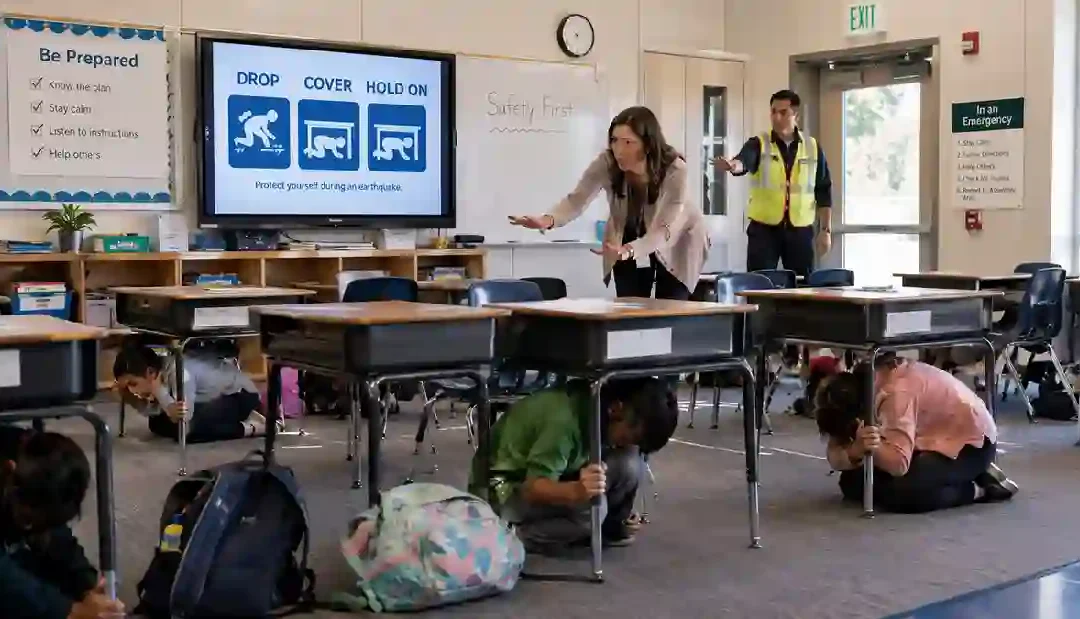
Schools must be prepared for earthquakes because large numbers of students and staff may be inside buildings when shaking begins. During strong earthquakes:
- classroom objects may fall
- windows can shatter
- power systems may fail
- panic can spread quickly
Proper earthquake safety planning helps schools:
- reduce injuries
- improve evacuation safety
- protect students and teachers
- respond more effectively during emergencies
If you’re new to earthquakes, begin here → what is an earthquake
Most Important School Earthquake Safety Priorities
Top School Earthquake Safety Priorities
Most important earthquake preparedness actions for schools and classrooms.
| Priority | Importance |
|---|---|
| Student protection during shaking | 10 |
| Regular earthquake drills | 9 |
| Safe classroom setup | 9 |
| Emergency communication plans | 8 |
| Evacuation preparedness | 8 |
The Most Important Classroom Safety Rule
During an earthquake, students and teachers should immediately use:
- Drop,
- Cover, and
- Hold On
Drop
Get low before shaking knocks you down.
Cover
Take shelter under desks or sturdy furniture.
Hold On
Hold onto the desk or table until the shaking stops. This is the most widely recommended earthquake safety action in schools.
Safe Classroom Preparation
Classrooms should be arranged to reduce earthquake hazards.
Important Safety Measures
- secure bookshelves to walls
- avoid heavy objects above desks
- keep exits clear
- reduce falling object risks
Classroom preparation greatly reduces injuries.
Emergency Supplies for Schools
Schools often store emergency supplies such as:
- first aid kits
- flashlights
- emergency water
- student contact information
- radios or communication devices
Large earthquakes may delay outside emergency assistance.
Why Earthquake Drills Matter
Earthquake drills help students:
- react faster
- stay calmer
- remember safety actions
Drills Often Practice:
- Drop, Cover, and Hold On
- evacuation procedures
- emergency assembly points
Repetition improves emergency response.
School Evacuation Planning
After strong shaking stops:
- students may need to evacuate safely
- damaged buildings should be avoided
- emergency assembly areas should be used
Important Safety Tips
- stay calm
- follow teacher instructions
- avoid pushing or running
Organized evacuations improve safety.
Earthquake Safety for Teachers
Teachers play a major role during emergencies.
Teacher Responsibilities May Include:
- guiding students calmly
- checking injuries
- leading evacuations
- communicating with emergency responders
Calm leadership helps reduce panic.
Tsunami Safety for Coastal Schools
Schools near coastlines may also prepare for tsunami risks.
Important Preparations
- tsunami evacuation routes
- high-ground assembly areas
- warning system awareness
Strong offshore earthquakes may require rapid evacuation.
Common School Earthquake Safety Mistakes
| Mistake | Risk |
|---|---|
| No regular drills | Slower reactions |
| Unsecured classroom furniture | Falling injuries |
| Blocked exits | Dangerous evacuation |
| Poor communication planning | Confusion |
| Panic during evacuation | Increased injuries |
Preparation greatly improves school safety.
Why Children Need Earthquake Education
Children who understand earthquake safety are more likely to:
- stay calm
- protect themselves correctly
- follow emergency instructions
Safety Education Helps Students:
- recognize hazards
- respond faster
- reduce panic during emergencies
Earthquake knowledge improves long-term preparedness.
Countries Known for Strong School Earthquake Preparedness
Countries with major earthquake risk often invest heavily in school safety.
Examples include:
- Japan
- New Zealand
- Chile
- United States (California)
These regions commonly use:
- regular earthquake drills
- seismic-safe school buildings
- emergency preparedness programs
Japan is especially known for advanced school earthquake drills.
Earthquake-Resistant School Buildings
Modern schools in seismic zones may include:
- reinforced structural systems
- flexible engineering designs
- safer evacuation routes
Strong building design helps protect students during earthquakes.
Learn more → earthquake safety in buildings
Can Schools Receive Earthquake Warnings?
Some countries use:
- earthquake early warning systems
- automated alarms
- emergency notifications
These systems may provide:
- a few seconds of warning
- enough time to take protective action
Learn more → earthquake early warning systems
Drop, Cover, and Hold On.
They improve reaction speed and reduce panic.
Yes — emergency supplies are very important after disasters.
Teachers guide students to safe evacuation or assembly areas if necessary.
Final Thoughts
Earthquake safety for schools depends on preparation, education, emergency planning, and calm response during shaking. Regular drills, safer classrooms, and clear evacuation procedures help protect students and teachers during one of nature’s most sudden disasters.
Understanding school earthquake safety helps create safer learning environments in earthquake-prone regions around the world.