
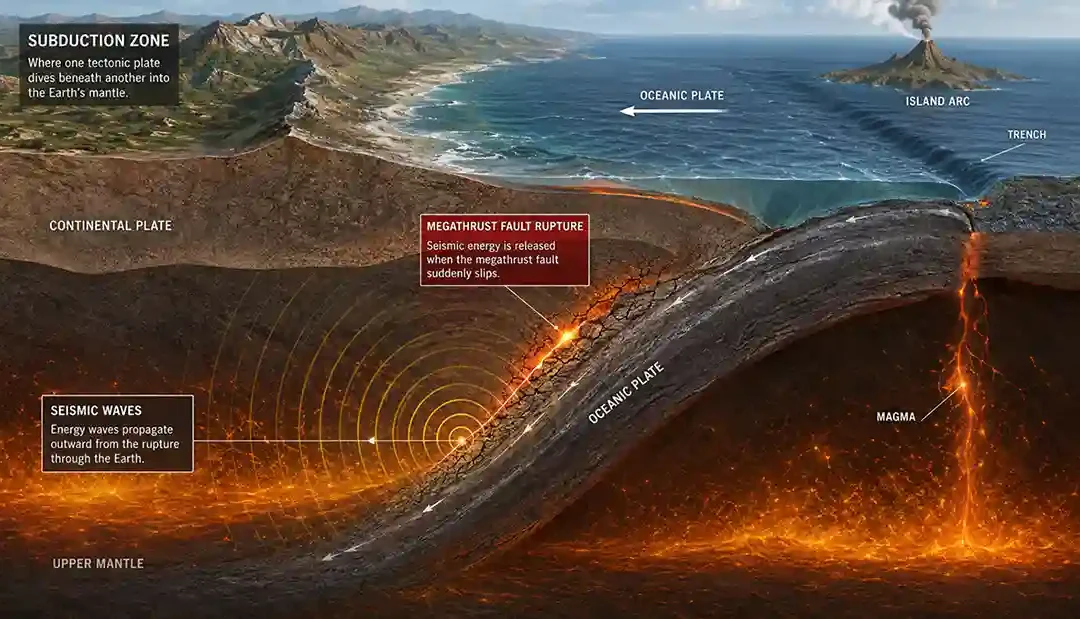
Some of the world’s most powerful earthquakes happen in places called subduction zones. These massive tectonic boundaries form where one tectonic plate sinks beneath another deep into Earth’s interior.
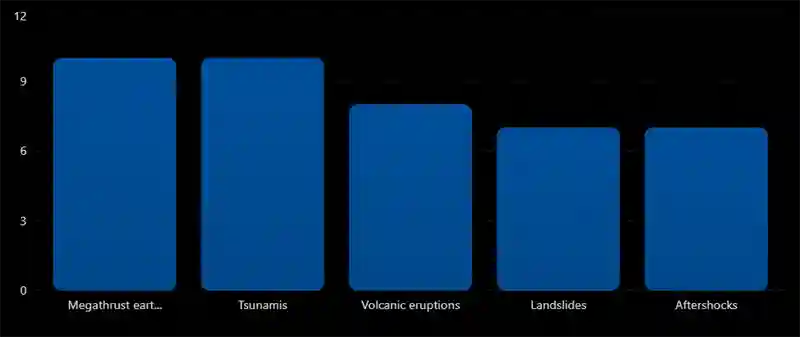
Subduction zones are responsible for:
- giant megathrust earthquakes
- tsunamis
- volcanic arcs
- deep ocean trenches
They are among the most dangerous geological regions on Earth.
If you’re new to earthquakes, begin here → what is an earthquake
Why Subduction Zones Are So Dangerous
Major Hazards at Subduction Zones
Subduction zones create some of Earth’s most powerful geological hazards.
What Is a Subduction Zone?
A subduction zone forms when one tectonic plate dives beneath another.
Usually:
- a dense oceanic plate sinks downward
- a lighter continental or oceanic plate remains above
This process happens at convergent plate boundaries, where tectonic plates move toward each other.
How Subduction Happens
As plates collide:
- pressure builds
- friction locks the plates together
- stress increases over decades or centuries
Eventually, the plates suddenly slip.
This creates:
- giant earthquakes
- seismic waves
- possible tsunamis
Learn more → plate tectonics and earthquakes
Why Subduction Zones Produce Giant Earthquakes
Subduction zones contain:
- enormous fault surfaces
- massive stress buildup
- deep tectonic compression
This allows them to produce megathrust earthquakes. These are the strongest earthquakes on Earth.
Megathrust Earthquake Energy
Megathrust Earthquake Power
Subduction zones produce the most powerful earthquakes on Earth.
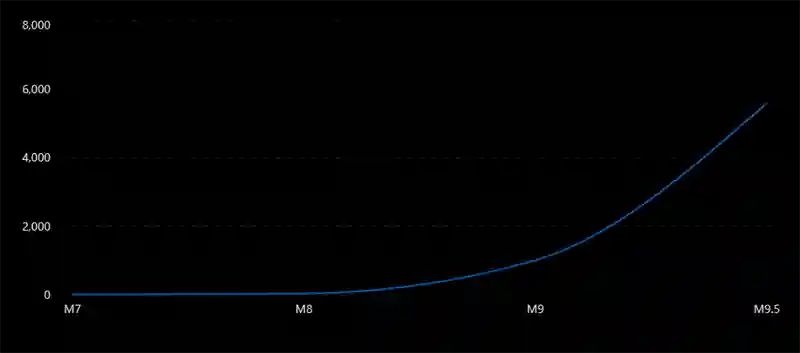
Even small magnitude increases release dramatically more energy.
Subduction Zones and Tsunamis
Subduction earthquakes often occur beneath oceans. When the seafloor suddenly shifts, huge amounts of water may be displaced. This can generate tsunamis. Some of history’s deadliest tsunamis came from subduction zones.
Why Volcanoes Form Near Subduction Zones
As the descending plate sinks:
- heat and pressure increase
- water escapes from rocks
- mantle material melts
This melted rock rises upward as magma.
That’s why many subduction zones also contain:
- volcano chains
- volcanic arcs
- explosive eruptions
Famous Subduction Zones Around the World
Japan Trench
The Pacific Plate sinks beneath Japan here.
Famous Event
- 2011 Tohoku Earthquake (M9.0)
This earthquake triggered a devastating tsunami.
Peru–Chile Trench
The Nazca Plate subducts beneath South America.
Famous Event
- 1960 Chile Earthquake (M9.5)
The strongest recorded earthquake in history.
Cascadia Subduction Zone
Located off the Pacific Northwest coast of North America. Scientists believe this region could produce a future giant earthquake and tsunami.
Indonesia Subduction Zones
Indonesia sits on multiple active subduction boundaries.
Famous Event
- 2004 Indian Ocean Earthquake & Tsunami
One of the deadliest natural disasters in modern history.
Characteristics of Subduction Zone Earthquakes
| Feature | Description |
|---|---|
| Magnitude | Often very large |
| Tsunami risk | Extremely high |
| Depth range | Shallow to deep |
| Aftershocks | Common |
| Duration | Can last several minutes |
Subduction earthquakes are often long and extremely powerful.
Deep Earthquakes in Subduction Zones
Some subduction earthquakes occur hundreds of kilometers underground. These happen because the sinking plate continues deforming deep inside Earth.
Deep Earthquake Features
- felt over wide areas
- usually less surface damage
- occur inside descending slabs
Learn more → earthquake depth explained
The Pacific Ring of Fire
Most subduction zones lie within the Pacific Ring of Fire
This region contains:
- major earthquake zones
- volcano chains
- deep ocean trenches
Most of Earth’s largest earthquakes occur here.
How Scientists Monitor Subduction Zones
Scientists use:
- GPS systems
- seafloor sensors
- seismic networks
- satellite measurements
These tools help monitor:
- plate movement
- stress buildup
- tsunami risk
Learn more → earthquake monitoring technology
Why Subduction Zones Matter
Subduction zones shape Earth by:
- recycling oceanic crust
- building mountains
- creating volcanoes
- producing giant earthquakes
They are one of the most powerful geological systems on the planet.
Could Future Megathrust Earthquakes Happen?
Yes.
Scientists continue monitoring major subduction zones because future giant earthquakes are expected in regions such as:
- Japan
- Chile
- Cascadia
- Indonesia
Preparedness remains extremely important in these areas.
A tectonic boundary where one plate sinks beneath another.
They produce giant earthquakes, tsunamis, and volcanoes.
An extremely powerful earthquake caused by subduction zone rupture.
At subduction zones around the Pacific Ring of Fire.
Final Thoughts
Subduction zones are among Earth’s most powerful and dangerous tectonic systems. As massive tectonic plates collide and one sinks beneath another, enormous stress builds underground until giant earthquakes and tsunamis can occur.
Understanding subduction zones helps explain why some regions experience the world’s strongest earthquakes and why earthquake preparedness remains critical in tectonically active coastal areas.